★★★☆☆
George Sikharulidze’s feature debut explores the fractured dual life of a Tbilisi teenager caught between religious surveillance and repressed desire.
In the landscape of Georgian cinema, few titles arrive with as much conceptual weight as George Sikharulidze’s feature debut, Panopticon. Having earned its stripes at the 2024 Karlovy Vary International Film Festival, the film has been selected as Georgia’s official entry for Best International Feature Film at the 2026 Academy Awards —a nomination that raises some questions.
The state-run National Film Centre is putting forward a film that indirectly mirrors the political tensions gripping the country. Adding to the friction is the fact that both the director and lead actor have been vocal critics of the government — indeed, Georgia’s National Film Centre is currently facing a massive boycott from the country’s filmmakers over politics and censorship accusations. This paradox lends Panopticon a layer of meta-commentary.
The film takes its name from Jeremy Bentham’s 18th-century architectural design for a prison where a single prison guard can observe all inmates without them knowing they are being watched. In the movie, however, there is no guard — instead, the role is manifested through a patriarchal world, stereotypes, and deep-seated insecurities and fears.
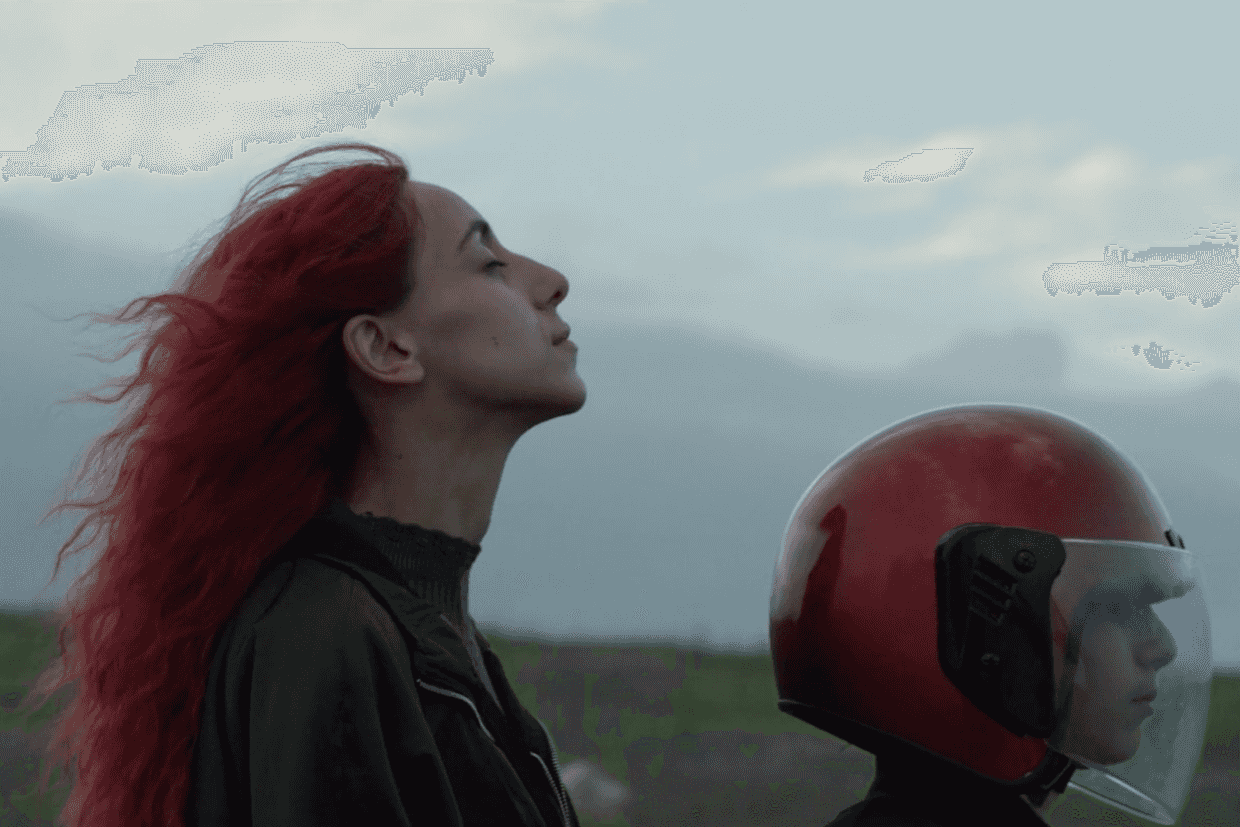
The film centers on Sandro (Data Chachua), an 18-year-old navigating the grey, transitional reality of Tbilisi’s outer Varketili district. His family is a fragment of the post-Soviet Georgian experience: his mother, a former opera singer, has been forced into economic exile abroad to support the household, while his father, who was already a priest, decides to retreat further from the world by becoming a monk.
Left in the care of a grandmother who harbors a deep resentment for the patriarchal traditions that, as she says, stalled her daughter’s career, Sandro is caught in a spiritual and hormonal vice. For Sandro, his father remains a pillar of sanctity, yet the boy’s private reality is dominated by a frantic sexual awakening. He navigates a ‘dual life’, balancing fervent prayer with a compulsion for masturbation. In a world where his family has fallen apart and his future is uncertain, Sandro’s body is the only thing he truly owns. He comes up with many ways to pleasure himself anywhere — in the cinema or the salon, he is carving out a private space that the ‘Eye of God’ cannot penetrate. The contrast is very noticeable — he prays with the same intensity with which he explores his body.

Subscribe to the Culture Dispatch
A bi-weekly newsletter featuring film, book, and music recommendations from the Caucasus, handpicked by our team.
While people on social media have argued that the film’s focus on masturbation feels ‘un-Georgian’, this critique misses the point. It is precisely because this topic is taboo in the Georgian public square that its inclusion is so vital.
Sandro is a character who is not easy to love, but he is impossible to dismiss. Chachua plays the character with a physical intensity that keeps the viewer tethered to Sandro’s internal struggle even as he displays a terrifying array of ‘red flags’. These flaws are presented as the collateral damage of a young man trying to find his footing in a world that offers him only silence and judgment.
In one of the film’s sequences, Sandro shames his girlfriend, because she wants to have sex before the marriage. He is weaponising the very ‘purity’ he feels he is losing. Later, he yells at his classmate, Lana, for dancing in a nightclub to support herself. By shaming others, Sandro attempts to reclaim a ‘moral high ground’ that he feels is slipping away every time he is alone with his own desires.
All this leads Sandro toward the radical nationalist groups — a plot point that feels hauntingly ‘real’ in the context of Georgia’s current political and social climate. He finds a substitute in the collective aggression of these movements, soon participating in the shaming of immigrants and the protection of a moral code, and even physically being up someone.
The film’s budget constraints occasionally make the massive protest scenes feel a bit hollow or staged, but it’s still possible to see Sandro’s personal journey throughout. The cinematography makes excellent use of the Makhata Church and the surrounding Varketili district, with the location operating as a character in itself, something isolated yet overlooking the city, much like the Panopticon itself.
There are a few scenes in the movie when Sandro’s nose bleeds, a recurring visual motif that emerges during moments of peak internal conflict. It is a visceral representation of a body that is literally bursting under the pressure of maintaining two identities.
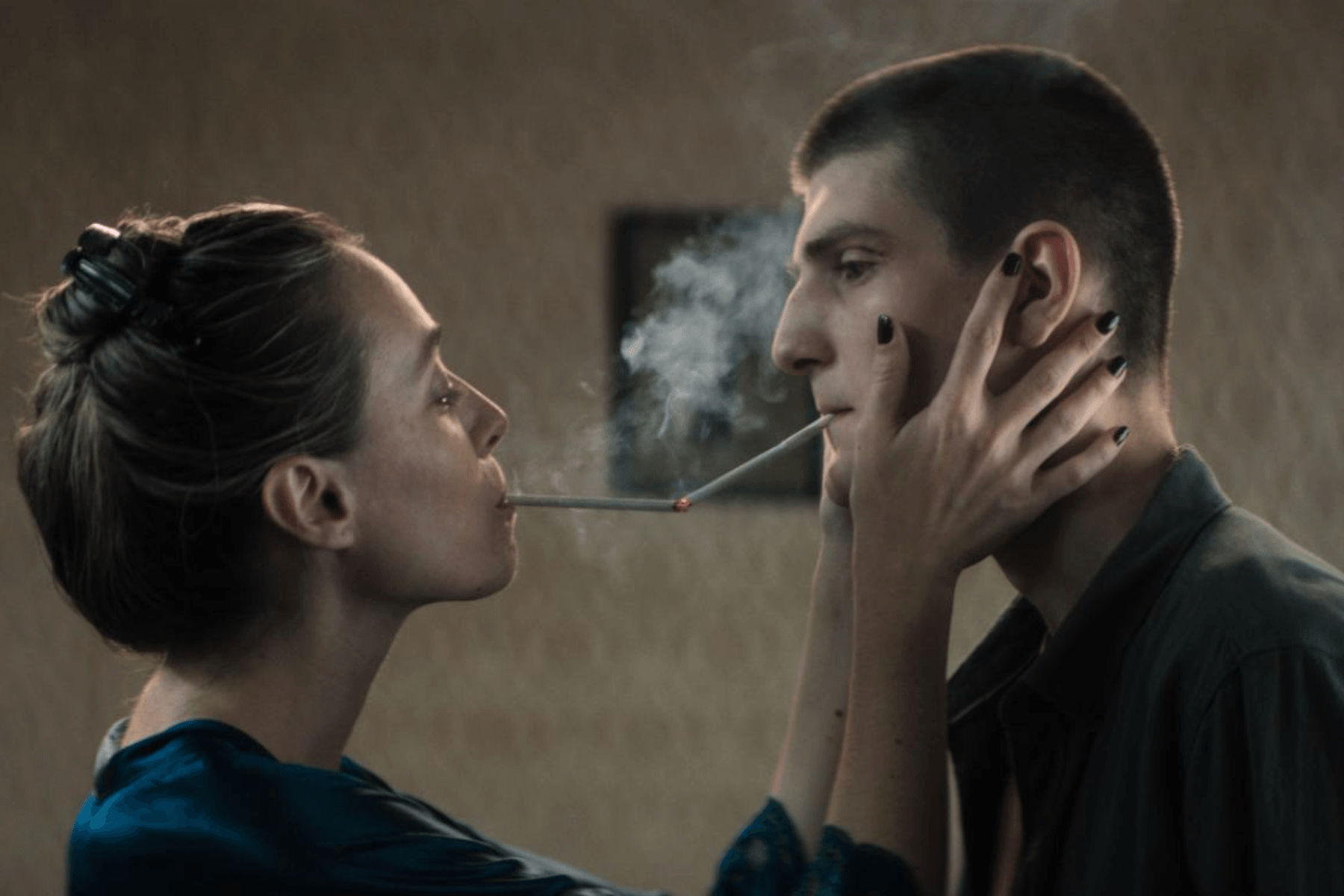
If the father represents the judgmental ‘prison guard’, the character played by Ia Sukhitashvili, the mother of Sandro’s friend, represents the parent who is radically opposite. She is easy-going, shameless, and willing to discuss sexual topics with a frankness that shocks and relieves him, but that also leads them into a very strange sexual tension.
Panopticon is not a perfect film. At times, the movie becomes overly dramatic and reliant on heavy-handed music to tell the audience how to feel. Some of the political subplots feel rushed, and the slow-burn pace occasionally threatens to stall the narrative.
However, it tries to portray Georgia’s dual mentality in an overall quality work that is worth watching, one that captures the specific ‘state of the nation’ through the eyes of a boy who is both a victim of his environment and a perpetrator of its violence.
Film details: Panopticon (2024), directed by George Sikharulidze, is available to stream on Cavea+.