When Eagle Hills comes to town: what its European projects reveal about the risks for Georgia
Eagle Hills projects across Europe have failed to generate meaningful profits for host states, despite promises of long-term returns.

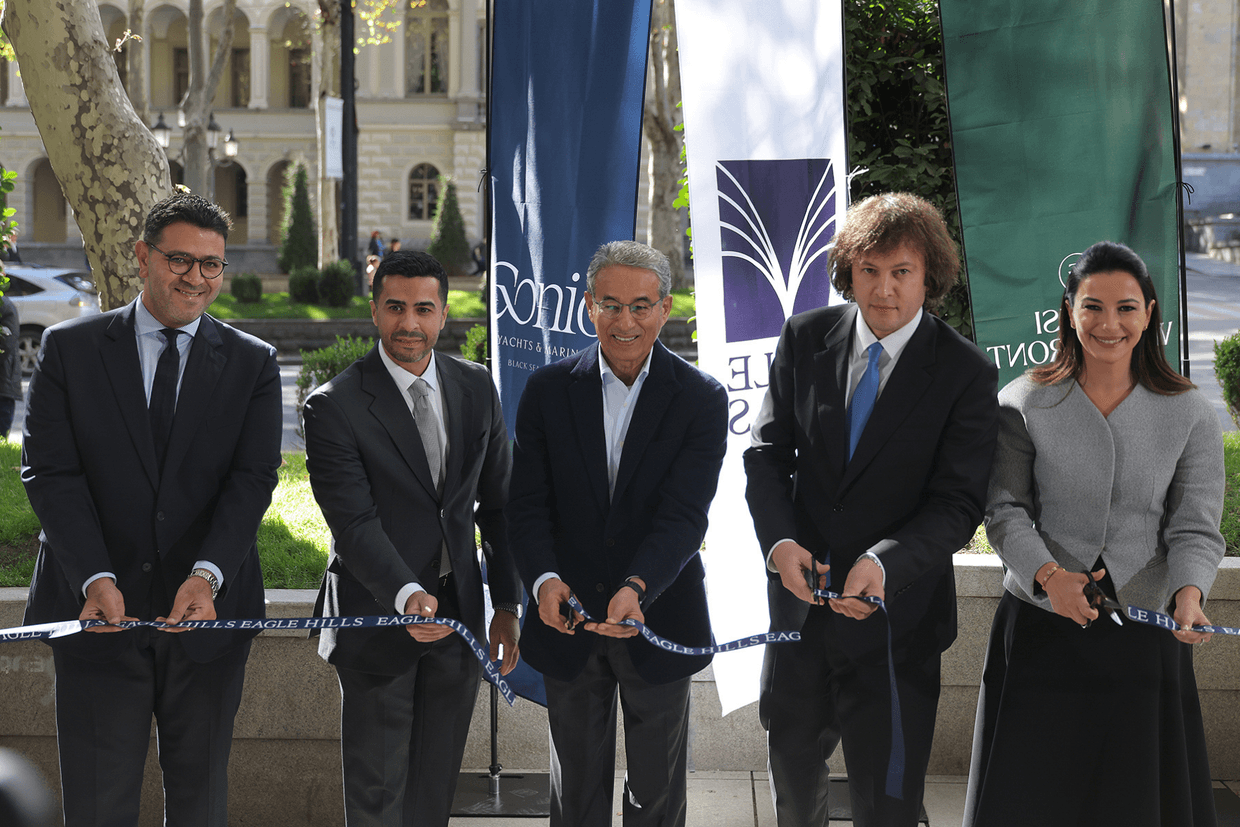
In January 2021, a luxury restaurant in Dubai posted an Instagram reel showcasing its interior on a busy night. To most, the video would seem unremarkable — in Albania, however, it ignited controversy.
Without realising it, the restaurant had just exposed a secret meeting between their country’s leadership and Eagle Hills CEO Mohammed Alabbar. A waitress, in effect, had made the first public announcement of a €2.5 billion ($2.9 billion) mega-project, one that had not yet been disclosed, debated, or formally recorded. This was not the first time Eagle Hills projects had come under fire — Albanians, outraged at their government’s lack of transparency, could find solidarity close by.
According to a 2018 report by Equal Times, out of the promised $3 billion as a starting investment promised to Serbia for the $10 billion Belgrade Waterfront project, Eagle Hills had so far only delivered $300 million. The government’s initial promises of 200,000 jobs had fallen to only 1,700.
Beyond economic rationale, the same project had drawn attention after two construction workers fell 22 stories to their deaths. Then, 80 Turkish citizens brought illegally into Serbia to work on the development staged a protest demanding payment of two months’ unpaid wages.
These stories create the backdrop for the recent Georgian government announcement of a $6.5 billion investment by Eagle Hills. The ruling Georgian Dream party has presented the project as a major economic opportunity for the country, emphasising the state’s planned 33% ownership stake. Pro-government media has promised large-scale job creation, new urban infrastructure, and long-term budget revenues, with senior political figures personally championing the project.
At the same time, the investment agreement details between Georgia and Eagle Hills have been classified, shielding the project’s financial, legal, and governance terms from public scrutiny.
 Helena Bedwell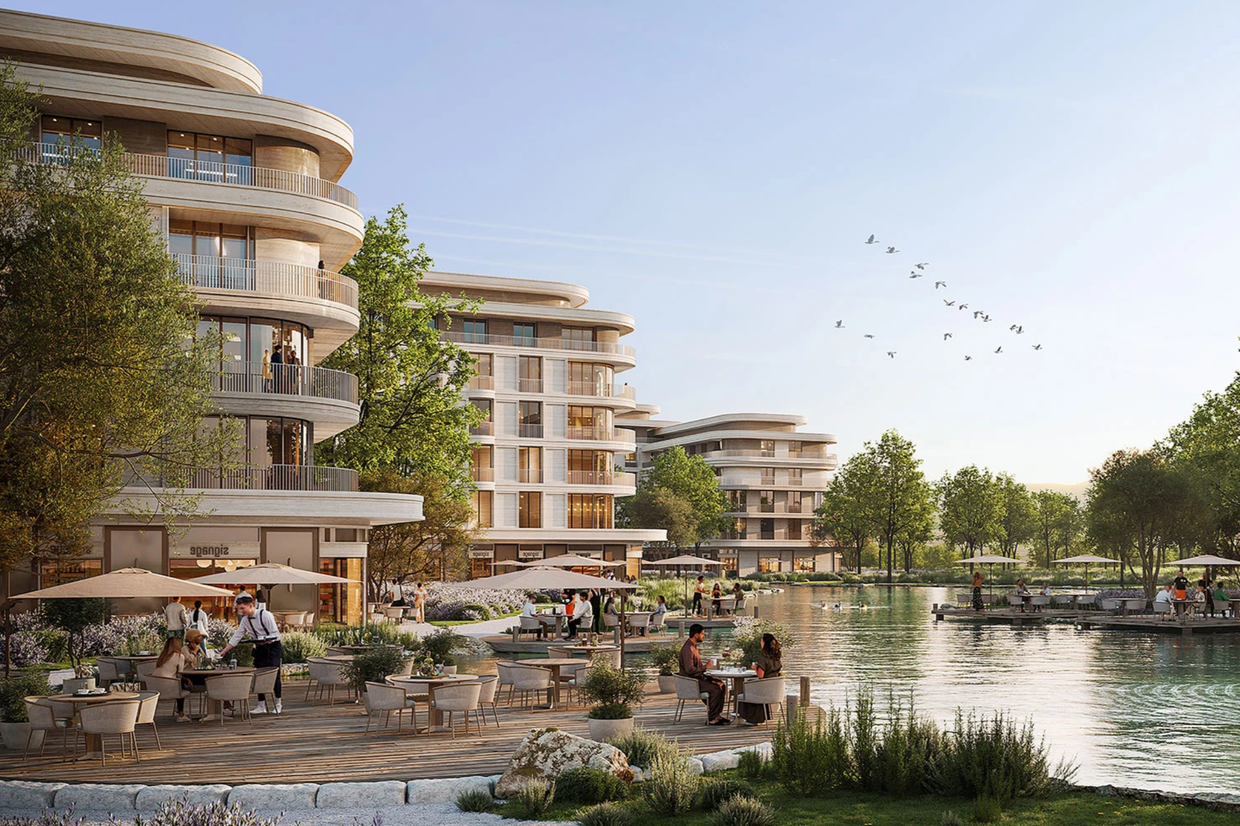
While the specifics of the Georgian deal remain inaccessible, extensive public records document Eagle Hills developments elsewhere in Europe, where near-identical project structures have been implemented across multiple countries. These cases offer rare insight into how the Georgian project is likely to function — and the risks it may carry — despite the secrecy surrounding the agreement itself.
What, or who, is Eagle Hills?
It is impossible to discuss the rapid success of Eagle Hills without mentioning the man at the top of the real-estate empire: Mohammed Alabbar. Alabbar is best known in business circles for his role at Emaar Properties, the UAE-based conglomerate behind landmark projects such as the Burj Khalifa and the Dubai Mall. Eagle Hills, however, operates differently: it is Alabbar’s private venture. Alabbar functions not only as the primary dealmaker but also links the successes of Emaar as a source of political credibility, leveraging personal relationships with heads of state to enable projects across jurisdictions. Despite his enormous success in the UAE, he is very interested in Europe.
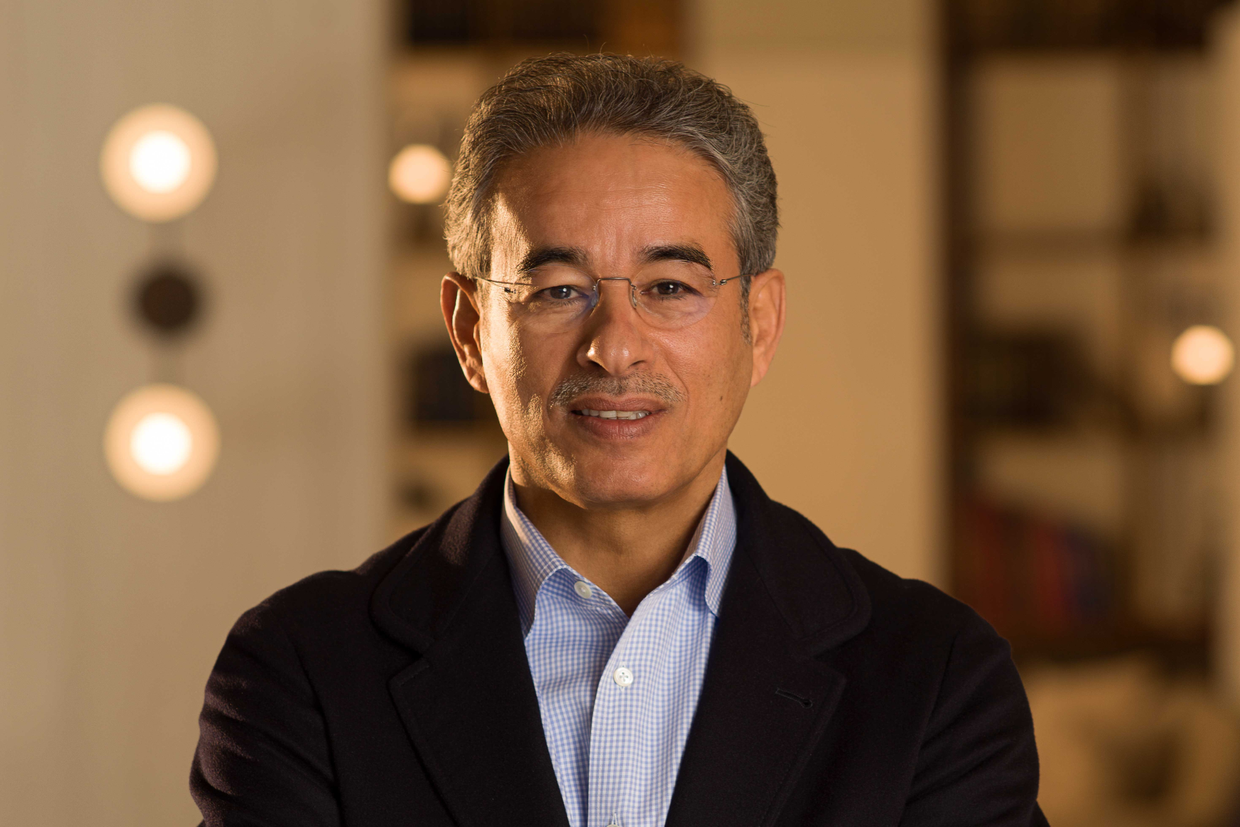
As an investigative report by Forbes Serbia found, Eagle Hills is not really a firm as such, but a constellation of country-specific subsidiaries, known ‘special purpose vehicles’ (SPVs) united under the brand: Mohammed Alabbar. Each holding-company model operates via a ‘copy and paste’ method, with each local subsidiary having a separate parent company in the UAE. For example, Eagle Hills Croatia, is owned by Eagle Hills Croatia Properties in Abu Dhabi. The local entities maintain almost no staff, in some cases only one or two people. The supervisory board — the decision making bodies-of these subsidiaries — are dominated by the Emirates.
In October 2025, a new firm, Eagle Hills Georgia LLC, set up shop at 5 Shota Rustaveli Avenue in Tbilisi, directly across from the Georgian Parliament. Like the other subsidiaries, Alabbar remains front and centre here, too.
Months later, the Georgian outlet Commersant published a small piece announcing Tornike Zirakishvili, the former Deputy Director of Enterprise Georgia, as the company’s new director and setting out the structure of the company’s supervisory board, the majority of which, following the copy and paste method, is Emirati controlled:
- Irakli Nadareishvili: Deputy Minister of Economy and Sustainable Development
- Tornike Zirakishvili
- Mohammed Alabbar
- Rashid Mohamed Ali Rashed Alabbari: Mohammed Alabbar’s son
- Hisham Mohamed Ibrahim Soliman: Director of Eagle Hills Montenegro
It is important to note that the projected ₾200 million ($75 million) per year cited by Georgian officials may remain subject to board discretion and not guaranteed to the state. Economy and Sustainable Development Minister Mariam Kvrivivshvili, however, remains steadfast that the project is ‘genuinely Georgian’ placing heavy influence on the co-ownership with Eagle Hills Georgia to affirm this.
What might be included in the investment agreement?
Kobakhidze’s decision to classify the investment agreement is also not unique to Georgia. The Carnegie Endowment for International Peace reported that Albania, Hungary, Montenegro, and Serbia all featured classified agreements that were only discovered after leaks or public pressure. The New East Archive also featured a piece on Croatia’s agreement being classified until leaked. Notably, Georgia’s initiatives also did not go through a competitive tendering process in which Georgian firms would compete to develop the land.
The European Commission has repeatedly acknowledged that the approach taken by Eagle Hills undermines the European ambitions of states that have taken on similar projects. Kobakhidze, by contrast, has dismissed these concerns, arguing that the agreement conforms to international standards and that the state has nothing to hide from its citizens.

While the agreement remains classified, we can look at other case studies, particularly those from the Balkan countries, to understand what Georgia’s agreement might produce.
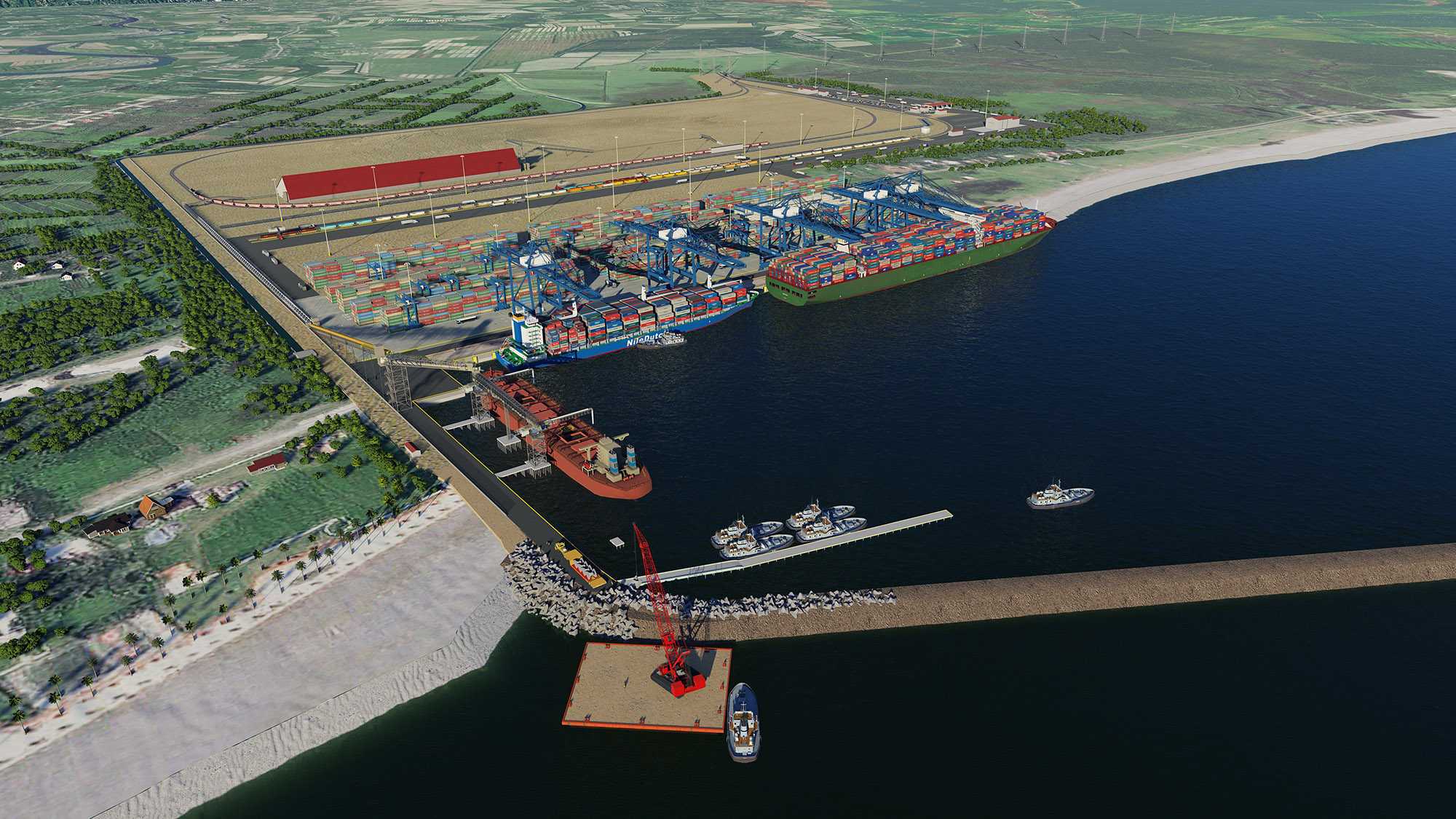
As the Port of Durrës had been Albania’s primary economic engine for decades, it was a shock to many when the government suddenly fast-tracked a privatisation of the port, transferring the land to Eagle Hills, and ordering all industrial operations moved to the still unbuilt Porto Romano. Experts called the transfer unconstitutional; the atmosphere was one of confusion. An Albanian professor of maritime studies, as quoted by Balkanweb, said the decision was made ‘overnight’ and ‘without consultation in accordance with any defined strategy of the maritime transport sector’.
Following the subsequent leak of the Albanian agreement, Balkanweb quickly flagged irregularities in the project’s financing structure. According to the agreement, the state would allow Eagle Hills to build on its land which the developer avoided putting down much of its own capital — the project’s success, therefore, depended almost entirely on foreign and diaspora buyers purchasing high-priced apartments in advance, allowing their payments to finance construction.
Although the project was marketed as a €2 billion development, Eagle Hills would put down just €160 million ($190 million) of its own money. If real-estate sales slowed, construction would halt, and some of Albania’s most valuable land would be caught up in the project.
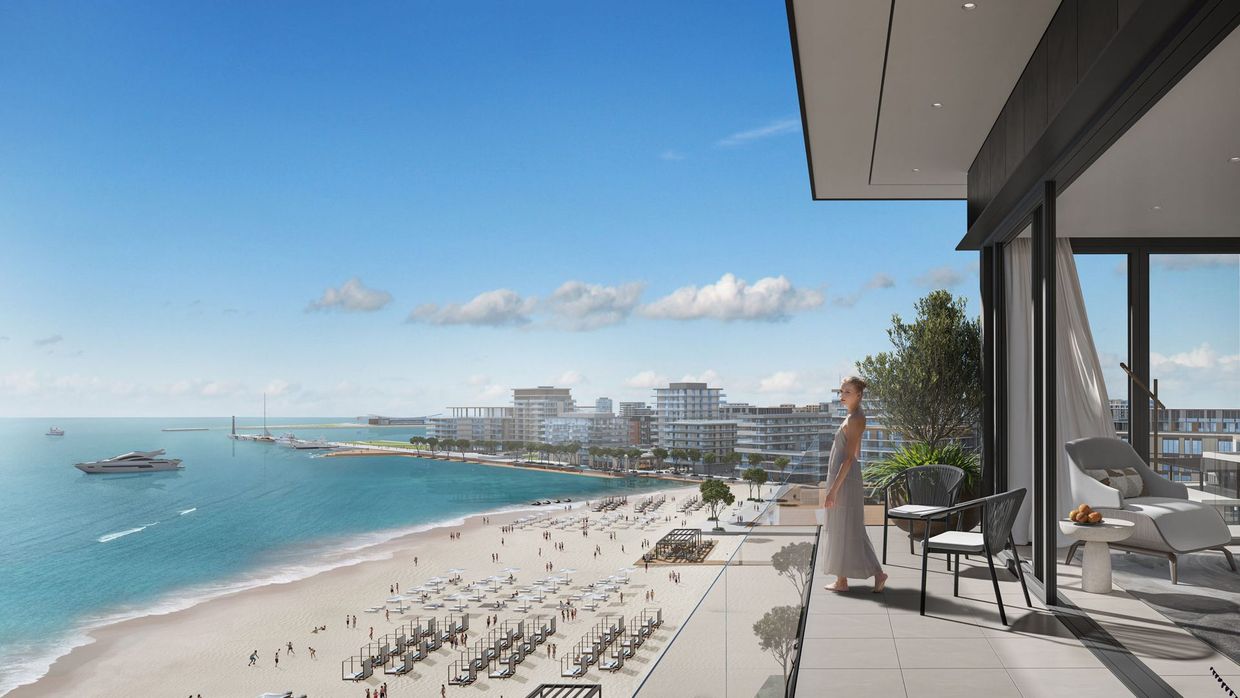
A similar strategy seems to be playing out in Georgia with Zurab Makharadze, the leader of the far-right Alt-Info group claiming that the project will bring a ‘compact settlement of foreigners’ to Georgia. Kobakhdize has strongly rejected the claim.
Precedent, however, suggests that Makharadze is largely incorrect; developments by Eagle Hills do not turn into ‘Arab villages’. Nor, however, do they turn into bustling hubs of economic activity — most just remain empty.
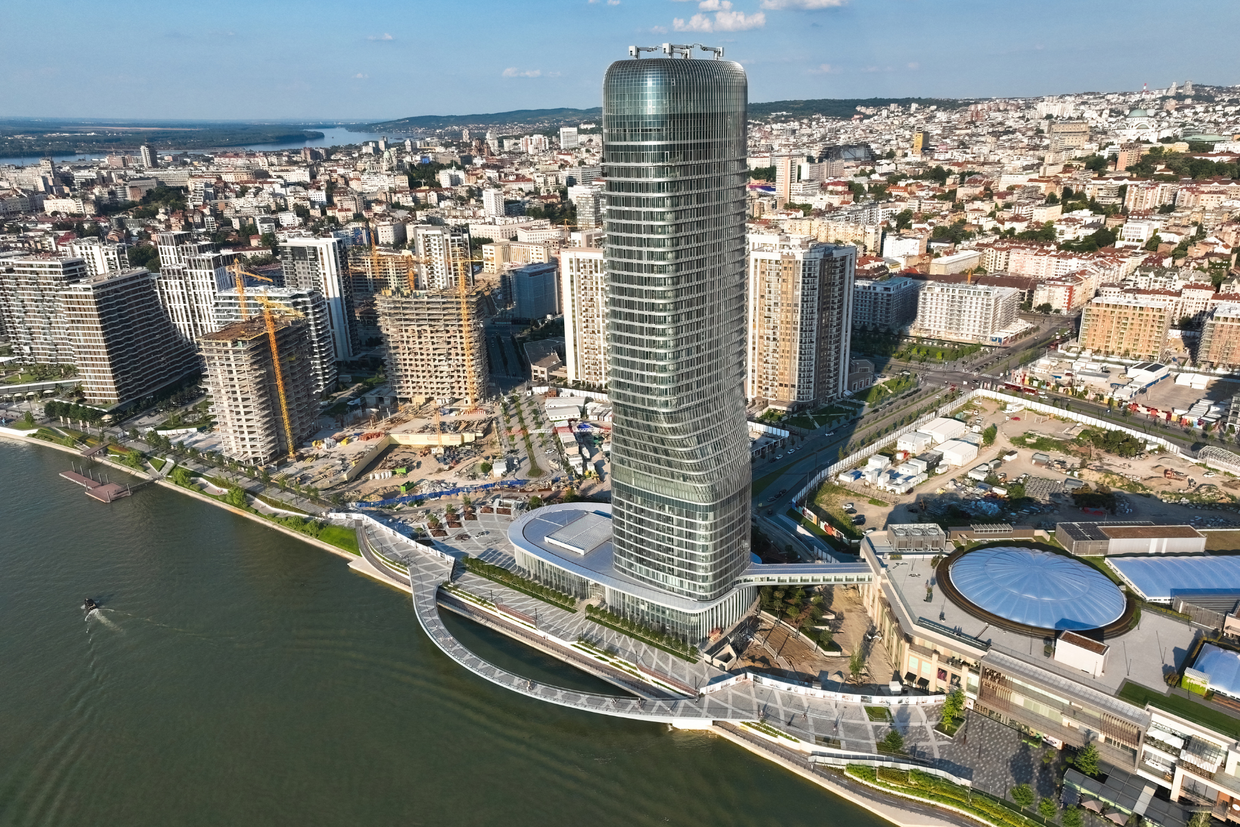
According to the Albanian Centre for Quality Journalism, the Eagle Hills Belgrade Waterfront property is a ghost town, with locals largely avoiding the area. A taxi-driver, navigating through the grid of empty high-rises, described the project as ‘not his Belgrade’ — the prices, to him, are just too high. Indeed, the apartments start at €10,000 ($12,000) per square metre in a place where the average local salary is less than $850 per month.

The Albanian financial model has also, according to Reporteri, priced locals out of the market, with the majority of apartments instead sold to foreigners. The real estate data suggests buyers typically rent out the flats short-term (Airbnb-style), rent seasonally to tourists, or hold the properties as assets. Real Estate agencies such as Century 21 Durrës also strongly promote the properties as a path to obtaining residency, even providing buyers access to trusted lawyers to assist in the process.
Latvia is in a similar situation, with advertisements, including on the project’s website, heavily focusing on purchasing apartments in their Eagle Hills development as a means to secure EU residency. According to Latvian law, after 10 years of holding residency, one can apply for citizenship through the Golden Visa residency programme.
Deputy Minister of Economy and Sustainable Development Irakli Nadareishvili has rejected speculation that Eagle Hills’ projects target foreign nationals. On 1TV.ge, Nadareishvili described the idea as ‘utterly absurd’, noting that ‘the government is familiar with Eagle Hills projects in various countries’, and that ‘such risks are unthinkable’.
Nadareishvili’s statement, however, appears to contradict Alabbar himself, who stated he expects sales to foreigners in Georgia will be roughly 60%. Kobakhidze later publicly defended Alabbar’s statement, while also remaining adamant that the percentage of nationals who buy apartments is actually irrelevant.
According to him, the true number of importance is 33%, in reference to the proposed 67/33 profit split between Eagle Hills and the Georgian state. The logic is as follows: who cares to whom apartments are sold to, so long as the state makes money.
However, where agreements follow a similar structure, host states have consistently received only marginal financial returns, despite formally holding significant shares. An ownership split of the same arrangement is a defining feature of these projects.
In 2024, the Serbian newspaper Radar reported while the Belgrade Waterfront project, with its own 68/32 profit split, had generated over €830 million ($980 million) in apartment sales, the Serbian state only received €9.9 million ($11.7 million) in profit — less than 1.2%. Dividing this number by Serbia’s population of 6.6 million equals roughly €1.50 ($1.80) per citizen.
So where does the money go? Well, here is where the partnership starts feeling a little less equal. Eagle Hills is not only Serbia’s partner, but also its creditor. Simply put, Eagle Hills in the UAE, the parent company, loans its local subsidiary, Eagle Hills Serbia, large loans at high interest rates to finance construction.
The interest on the loans are then treated as costs that must be paid back to the parent company before Eagle Hills Serbia, with its 68/32 split, can make profit. These loans are serviced every year, generating ever greater interest payments if Eagle Hills Serbia cannot pay its loans on time. As a result of this scheme, Eagle Hills, plus its local branch, takes not 68%, but nearly 10 times as much money as the Serbian state is left with.
An investigative report by BalkanWeb found that the Albanian Durrës Marina and Yachts agreement, like Serbia’s, ensured Eagle Hills captured the majority of project revenue through its debt-interest scheme rather than through its 67% ownership.
These findings do not appear to bother the Georgian government, however, who forecast a total of ₾2 billion ($750 million) in profits over 10 years from the state’s 33% stake.
Another red-flag nested within the Serbian agreement occurs during the actual moment of split between Eagle Hills and the state, long after most of the profit has been sucked out of the project — a feature that allows Eagle Hills’ to forcibly reinvest profits owed to the state into other Eagle Hills Serbia projects.
Despite holding a 32% minority stake, the Serbian state is not meaningfully consulted on profit distribution. Instead, the company’s board — the majority of which, as in the Georgian case, is controlled by Eagle Hills — approves decisions to reinvest earnings into additional Eagle Hills developments, effectively preventing the state from exercising meaningful control over the use of its share of profits. In response to this finding, the Serbian Monitor noted it would ‘take over a thousand years to see a return on the projects’.
The question worth $6.5 billion: why the red carpet?
All of this information is public, and easily found online. And yet, governments appear to trip over one another to get a project. Across the board, host states appear ready to ignore laws, or in some cases, change existing rules to accommodate Eagle Hills projects, with the official justification being ‘speed’. As a result, Eagle Hills is accustomed to disregarding ordinary planning procedures, environmental regulations, and accountability mechanisms.
Mikheil Gvadzabia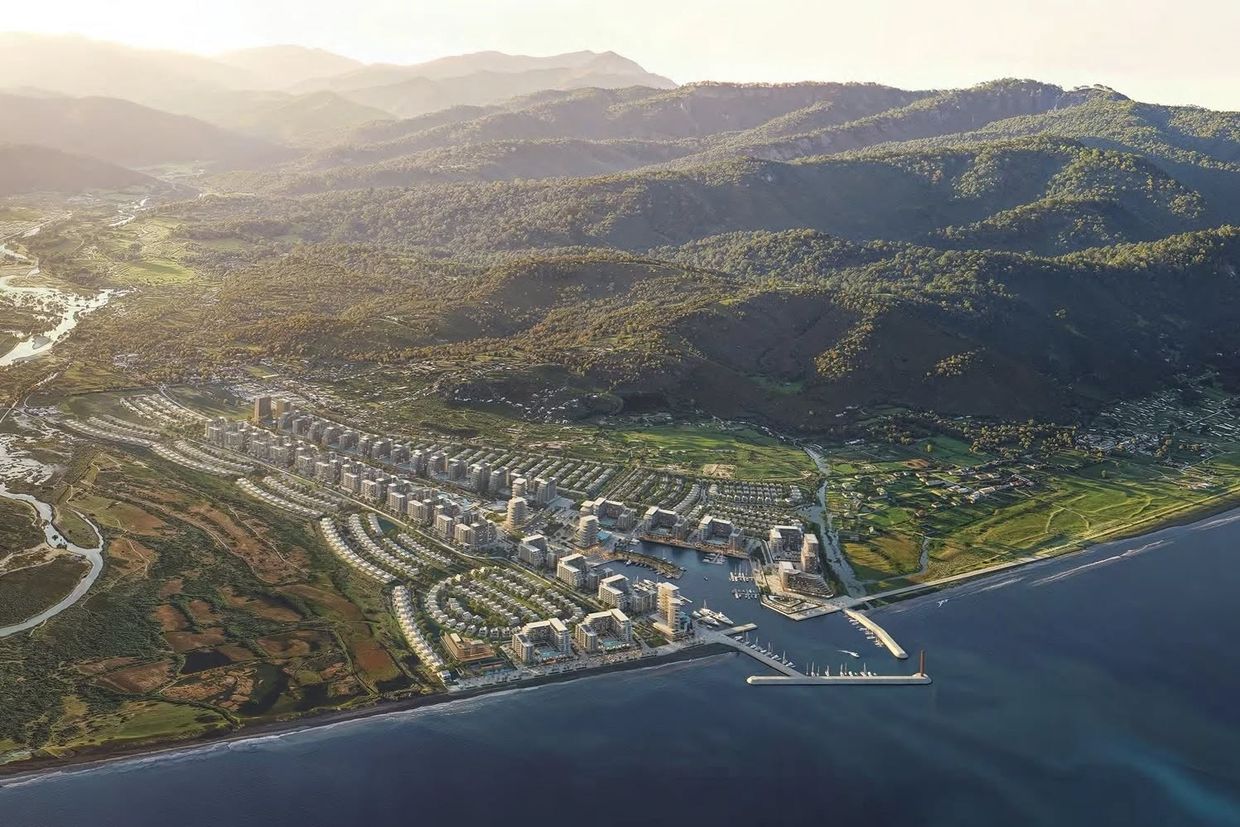
Many familiar with the developer are quick to reference the New York Times report on Serbia’s notorious 2018 election night incident, in which masked men tied up witnesses and used bulldozers to illegally demolish buildings in the project zone, while police were ordered not to respond. While this remains the most dramatic episode, more mundane forms of legal irregularity and administrative abuse across Eagle Hills’ projects appear to be somewhat routine.
Construction workers at the Belgrade Waterfront were not given basic safety equipment such as harnesses or ear protection. Interviewed labourers described severe toilet shortages that forced workers to relieve themselves on site, as well as widespread labour violations, including monthly wages of just €422 ($500) and 60-hour workweeks despite contracts specifying 40 hours.
Separately, Pamfleti.net reported Hungary’s project was to be treated with the ‘rapid facilitation of administrative procedures and reduction of bureaucratic obstacles’. Montenegro was given the same treatment in the name of expediting the project. BalkanInsight has shown that the same strategy was employed in Croatia; following objections that the Zagreb Manhattan project violated the city’s General Urban Plan, the city assembly attempted to amend it to accommodate the project.Latvia, however, offers a useful contrast. There, Eagle Hills appears to have behaved much as it has elsewhere — pushing ahead with development while disregarding local planning rules and advertising requirements — but without first securing the legal and political accommodations seen in the Balkans. As a result, the Riga City Council accused the developer of violating the city’s spatial planning framework and placing illegal advertisements without the required local permits. The episode suggests that Eagle Hills’ approach is not shaped primarily by local legal culture, but by how much resistance host institutions are willing to apply.

As years of publicly available reporting shows, Eagle Hills projects have failed to generate meaningful profits for host states, despite promises of long-term returns. The same record suggests Georgia risks holding a nominal ownership stake while remaining subordinate in practice, with major decisions controlled by Emirati partners. Eagle Hills developments also tend to operate under legal exceptionalism, seeking exemptions from ordinary planning, labour, and regulatory frameworks, which raises concerns about the quantity and quality of jobs created. Finally, housing produced under this model is typically unaffordable for local residents and instead marketed to foreign buyers as investment property.
The public information raises a broader question: why do governments, including Georgia’s, go to such lengths to defend projects that repeatedly place financial and legal risk on the state while delivering limited public returns? Until the full terms of Georgia’s agreement are disclosed and subjected to independent scrutiny, the public is being asked to trust not only that the deal serves the national interest, but that domestic institutions can successfully regulate and enforce obligations against a developer that has elsewhere operated with persistent disregard for local law.