When the night glows, the Circassian New Year begins
The Circassian New Year, once an important occasion marking the beginning of spring, has resurfaced — but does it have a place in today’s society?
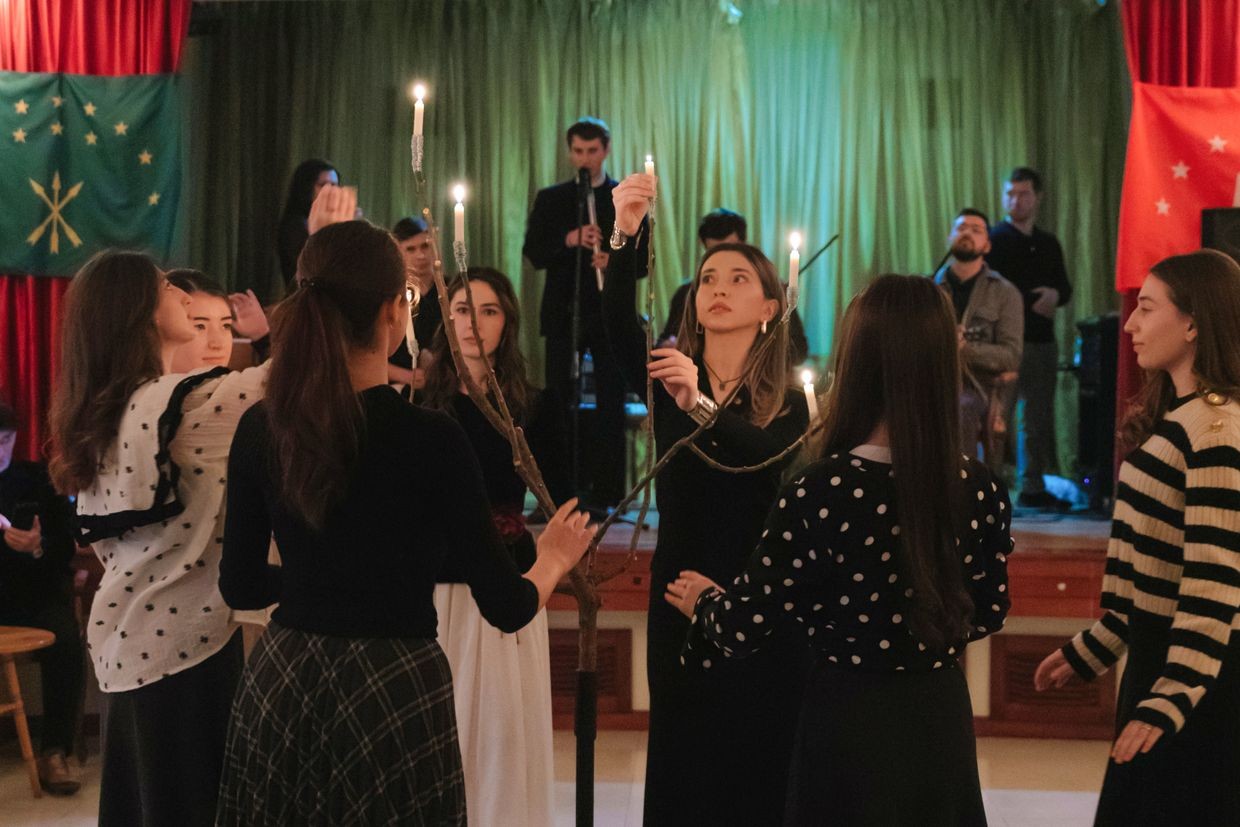
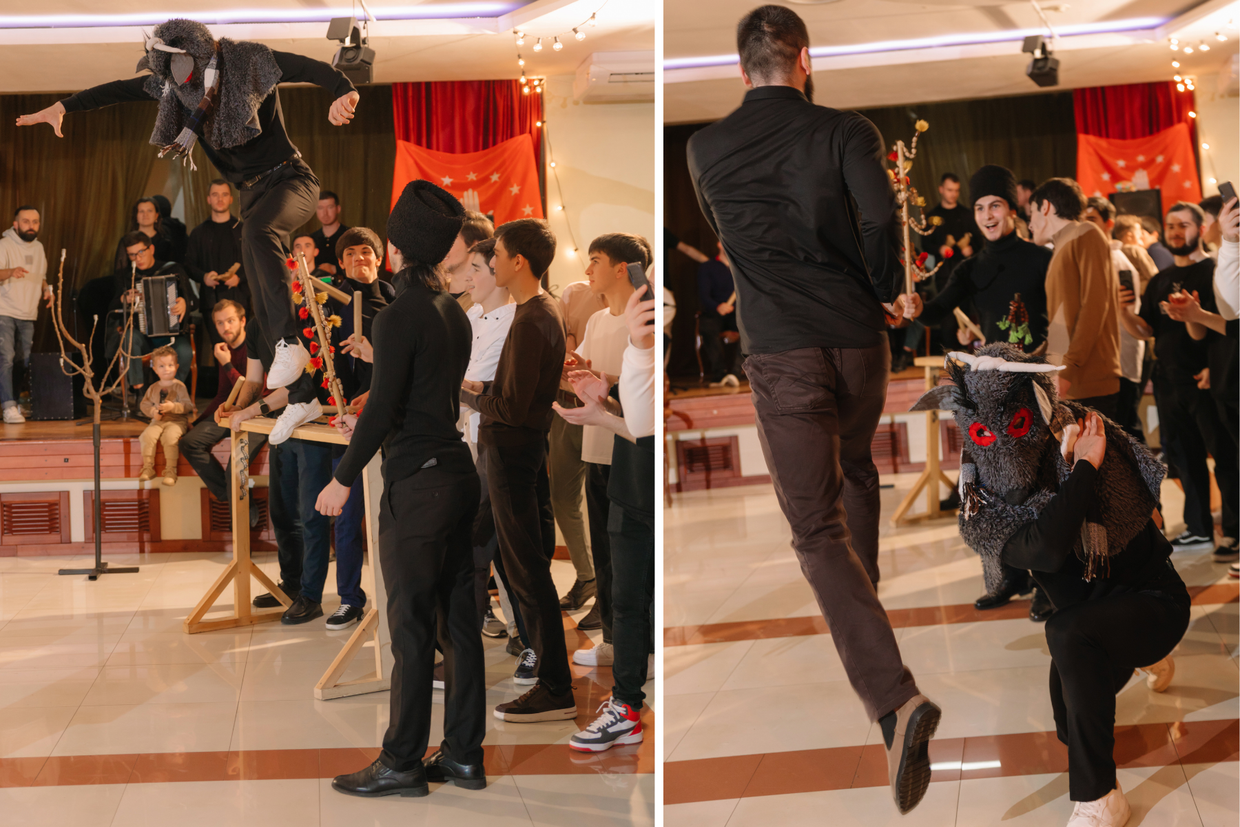
On the eve of the New Year in times past, Circassians would avoid hunting, and men would leave their weapons at home. Even eggs were left untouched, as it was believed new life should not be broken before the year began. That evening, the night would glow as people lit seven candles in a sapling with seven branches. Doors would remain unlocked as families gathered, ready to offer sweets and blessings to whomever visited. In the light of the candles, the village would become timeless, transforming the night into a path for the spring — or at least that was the case many years ago.
The New Year, or, as it is known in the Circassian language, Ilhesyshhe Zeblechyghu (literally meaning the ‘alternation of the heads of the years’), arrives with the spring equinox and lasts for three days, between 21–23 March. In older practices, it was a family-centric celebration of the end of winter and the beginning of the working year, and was marked by visits, plentiful food, and ancient rituals.
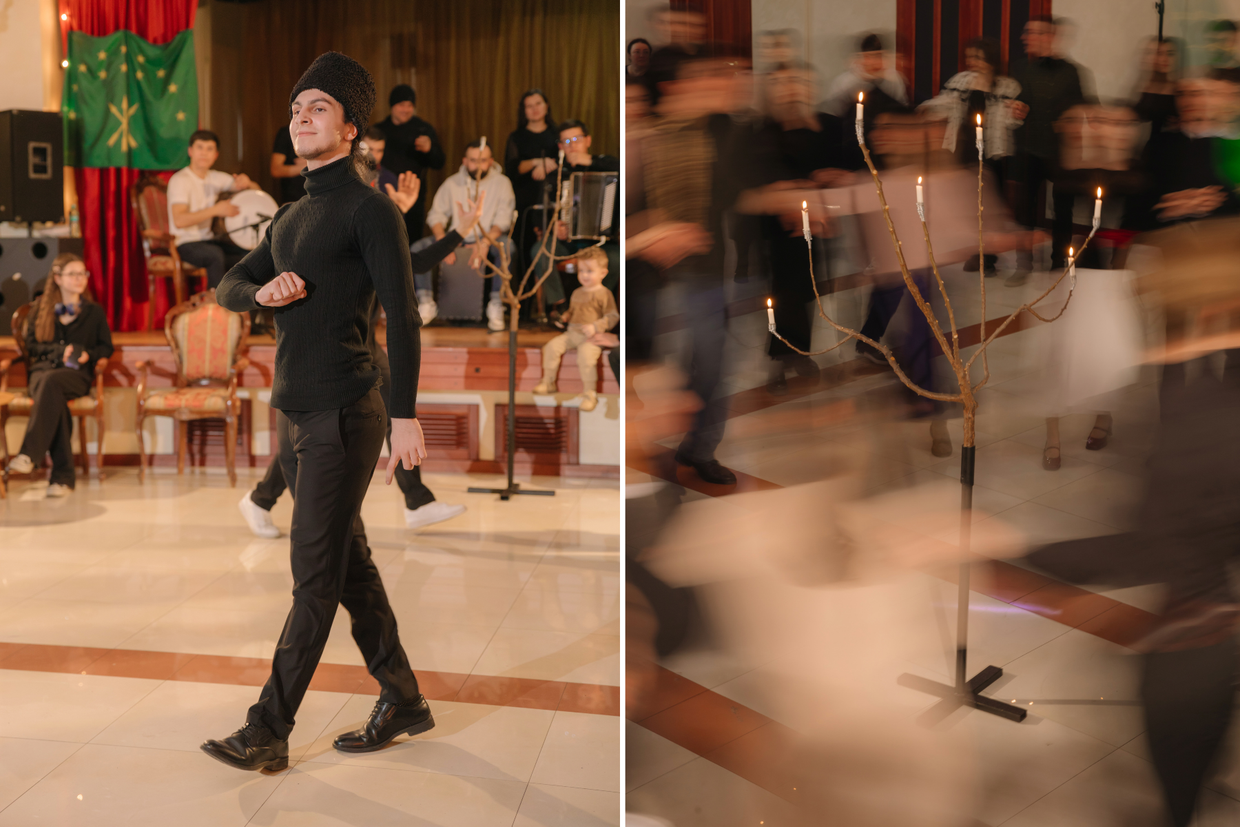
Today, however, as many Circassians move away from their traditional villages to bigger cities, the significance of the Circassian New Year has vanished.
Yet the tradition persists in one form or another in Circassian cities and villages, reimagined as a festival, with concerts and city-organised events in Adygea, and smaller, more solemn events in Kabarda–Balkaria. For some, it is a cultural memory worth preserving at any cost. For others, it is theatrical, branding, or paganism in disguise.
Tradition steps on stage
The turning point in Maykop, the capital of Adygea, was Halloween.
The scholar Asfar Kuyek, who spearheaded the resurrection of the Circassian New Year in the republic, wrote in his memoirs that he came up with the idea after seeing the younger generation start ‘bringing disfigured pumpkins, intended to drive out evil spirits, into the yard’.
‘And I mentioned it right there, at the Halloween party, the idea to revive the Circassian New Year’, he wrote, before going on to detail how he and his colleagues began unearthing descriptions of ancient rites associated with the holiday to bring back to modern times.
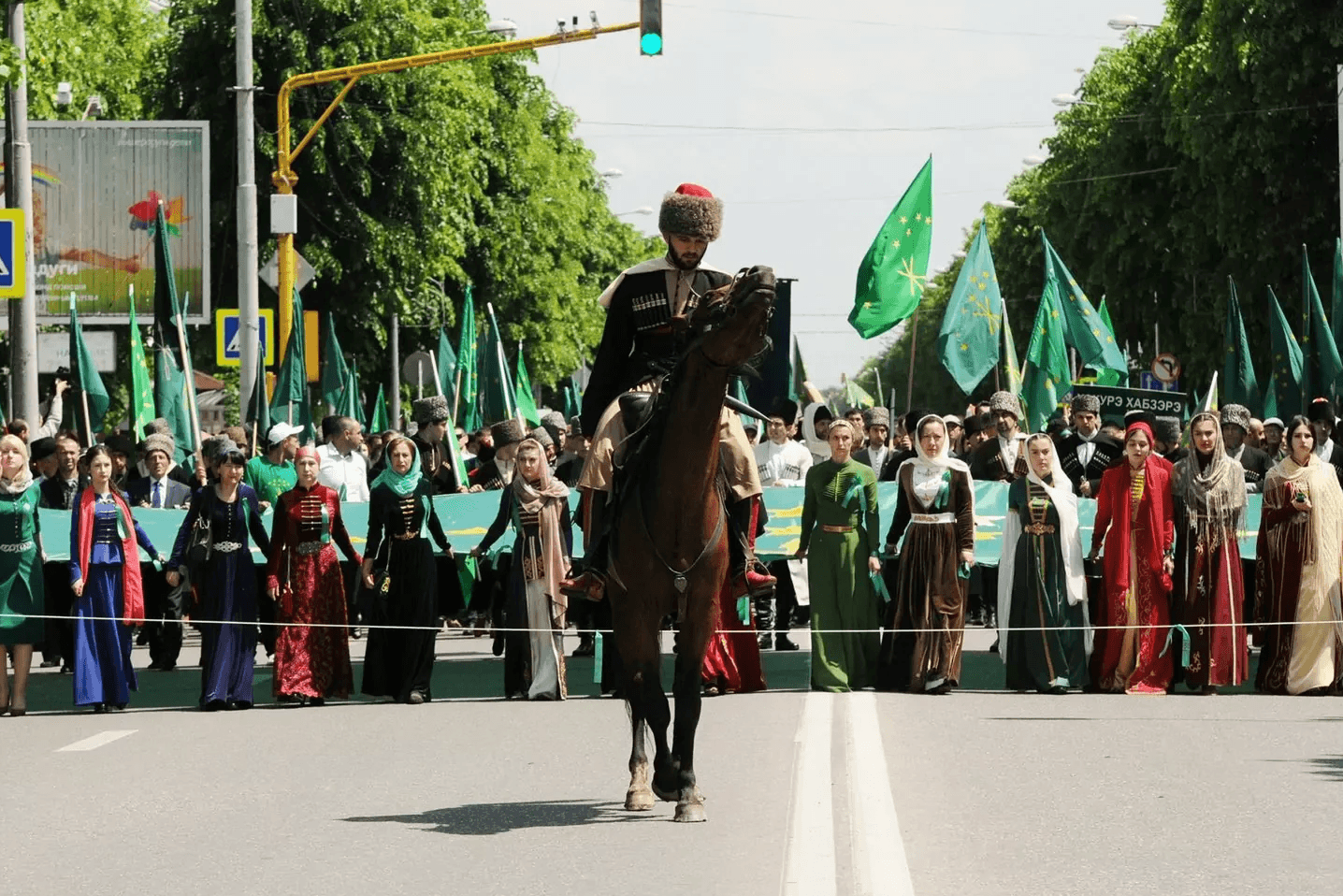
By 2004, the Circassian New Year became an official holiday in Adygea, with the authorities organising and sponsoring events marking it.
Celebrations that year began at Maykop’s Philharmonic Hall, and by the early 2010s, they moved to the monument Unity and Harmony near the central mosque.
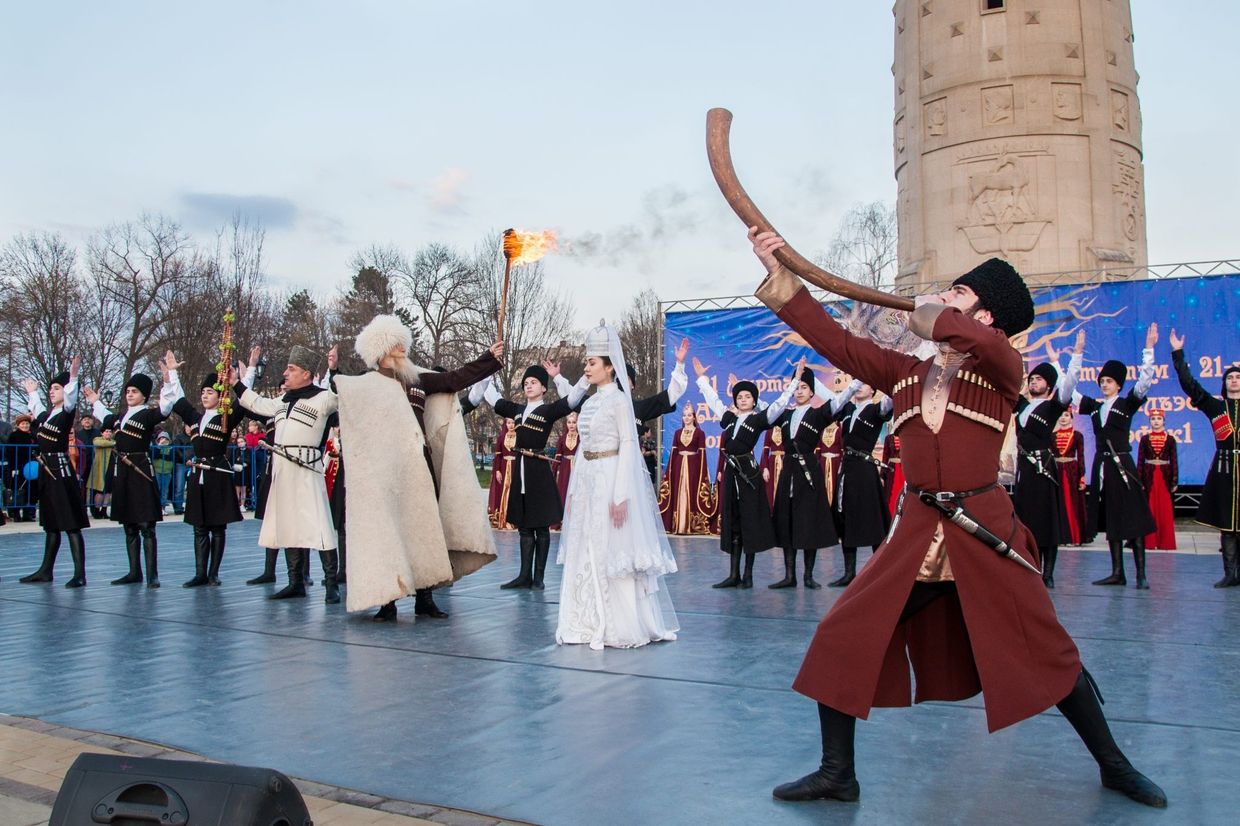
Bulat Khalilov, the co-founder of the ethnographic label Ored Recordings, argues that Adygea managed to preserve a distinctly Soviet-style cultural celebration, and that this format of celebrations is for many, the natural way to celebrate collective identity.
However, he questions the necessity of reviving the holiday, which he views as an attempt to manufacture a local festival analogue of Halloween: ‘If Halloween exists, then why are we making our own Halloween?’.
In Khalilov’s view, the holiday never fully returned as a lived practice since the meaning of the revival was not clear for a large number of people beyond national pride. And because there was no deeper social need to sustain the holiday as a living ritual, public enthusiasm began to fade.
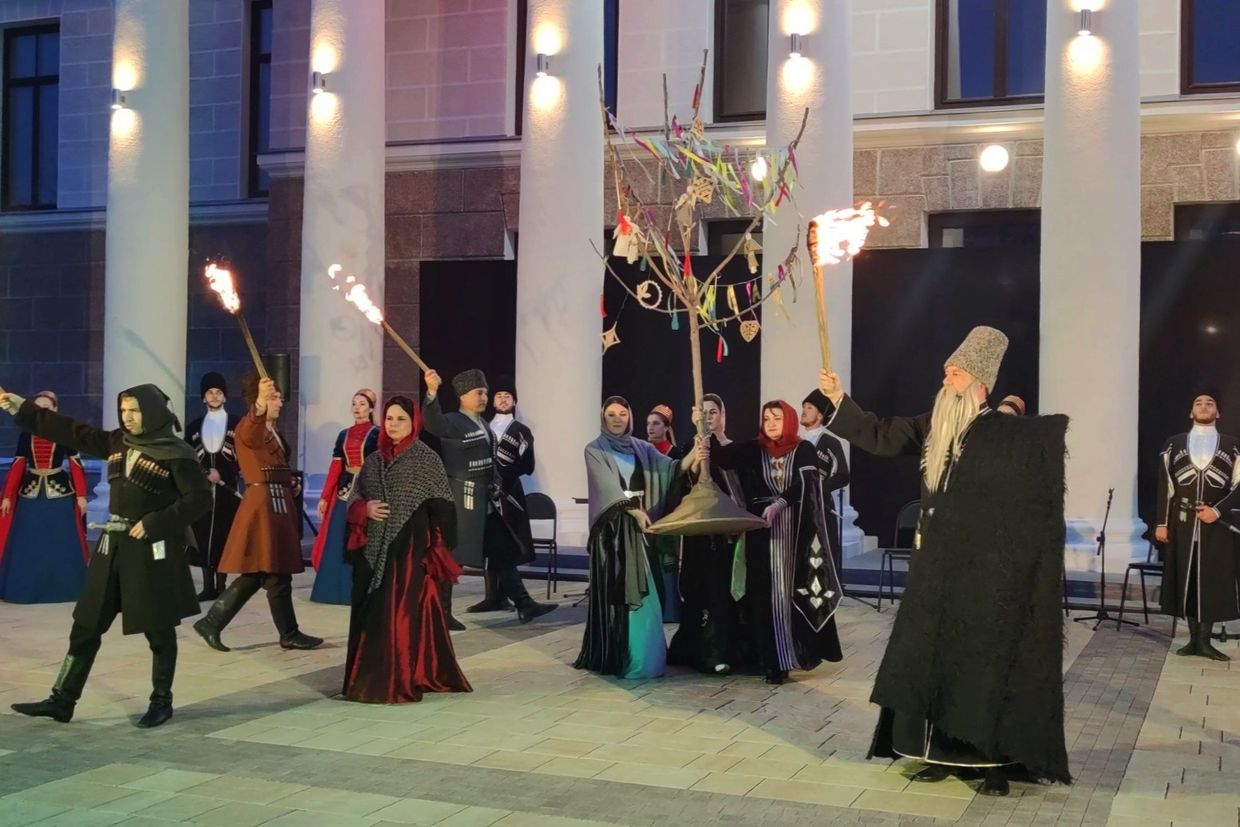
For nearly a decade, the Circassian New Year was marked in the open with dances, performances and public celebration. Today, however, what once filled a large square has been pushed into a smaller space in front of the republic’s drama theatre, as if the once family-centred celebration has become a definitely theatrical performance.
Reviving the unforgotten
In Nalchik, the capital of Kabarda-Balkaria, where Kabardians, or eastern Circassians live, the holiday was never officially ‘revived’.
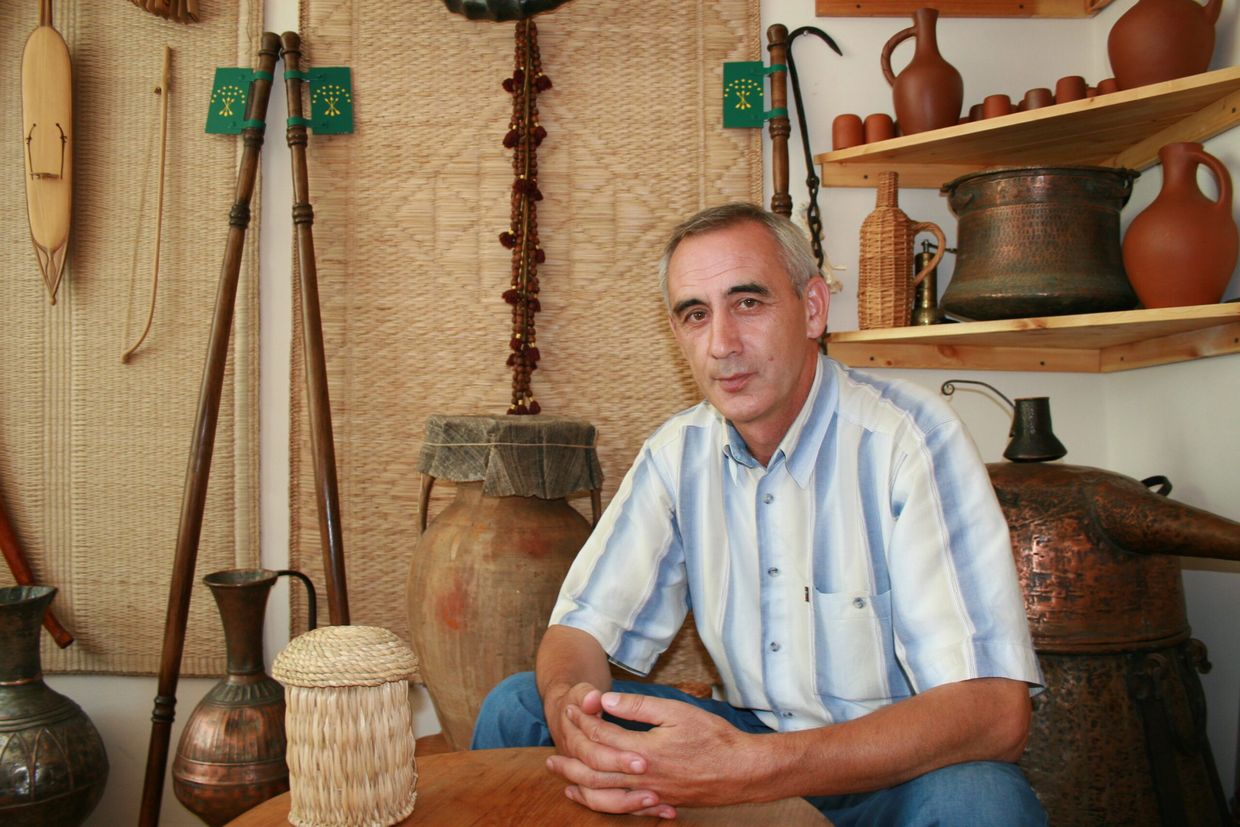
Astemir Shebzukho, a local Circassian blogger, argues that the holiday was never completely forgotten, ‘it just kept changing its form’. In doing so, it lost its ritual force and richness, surviving in simpler, adapted forms in the Soviet and post-Soviet periods. By the time it reached his childhood in the 1990s, the holiday was still there, but not in the same, fully-formed shape.
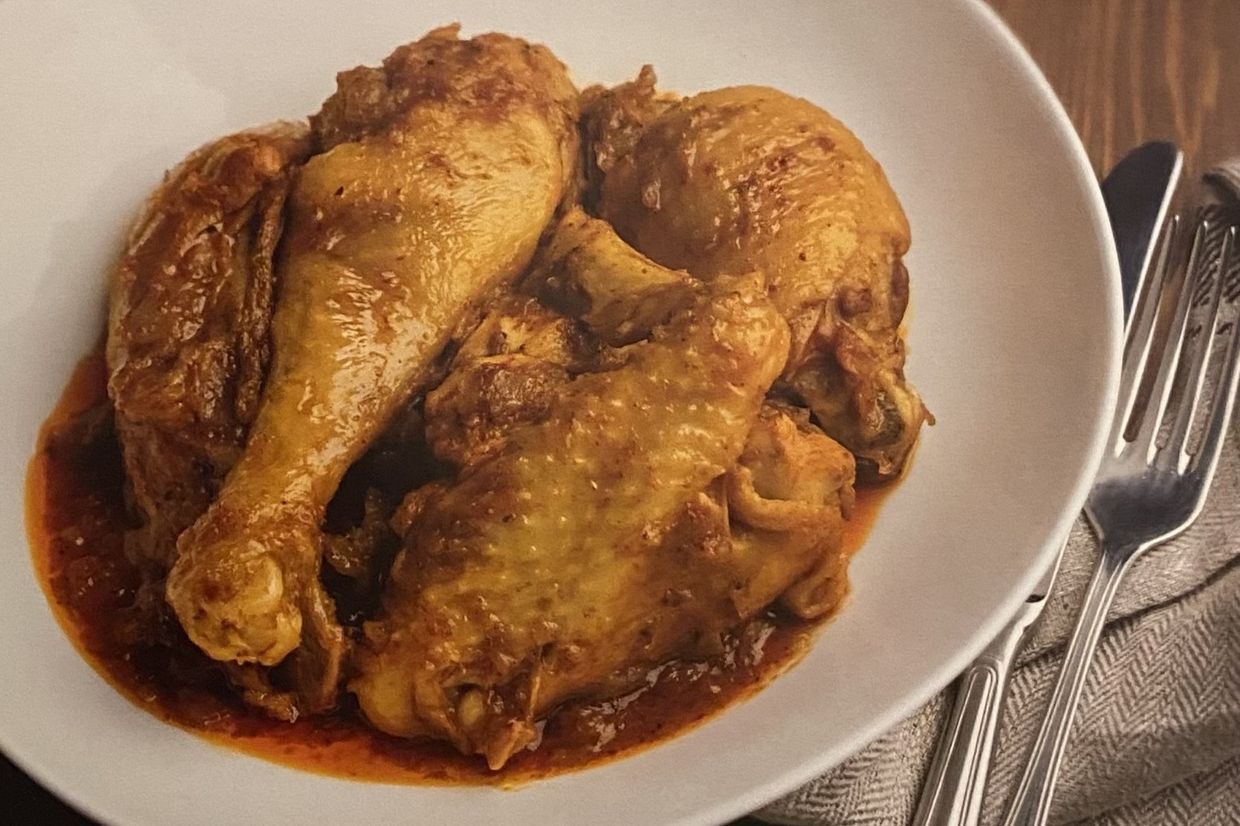
Shebzukho remembers celebrating the holiday throughout his childhood, telling OC Media it was a family affair. He recalls how his grandmother was always on the lookout for a black-feathered chicken to sacrifice on 20–21 March every year — an ancient tradition. Once slaughtered, she would cook djedlibzhe — chicken stewed in sour cream.
As a child, Shebzukho earnestly believed that on this day, ‘a battle between good and evil’ was taking place. ‘And there was always this feeling that something is happening today, that some cycle is changing’, he says.
That feeling was deeply rooted to agrarian life, where seasons were not a metaphor, but survival. After his family moved to the city of Nalchik, they no longer raised chickens, and no longer needed to pray for a good harvest. His mother still cooked djedlibzhe, he says, but it wasn’t made from a black-feathered chicken.
The day lost its ‘special charm’, he says, as its rites seemed redundant in the city.
In the early 2000s, there was an attempt to bring the celebration of New Year back to Nalchik, organised by the late ethnographer Aslan Tsipinov. Though Shebzhukho was not there in-person, he remembers that the celebration was held on Abkhazia Square in the middle of the city, and that he saw photos with a black chicken with its legs tied lying on the square.
Following Tsipinov’s murder in 2010, however, Shebzukho says attempts to revive the holiday ‘disappeared completely’.
Culture, faith, and those in-between
Despite being predominantly Muslim, Circassians have long practiced syncretism, mixing and matching elements from their traditional pagan beliefs with Islam and Christianity.
The boundary between ‘Muslim’ and ‘pagan’ was never clean inside Shebzukho’s home. His grandmother not only sacrificed the chicken, but also held a traditional Islamic fast.
‘For them, it was basically always syncretism anyway, just in different mixes and versions’, he says, noting that Circassians did not erase older customs upon becoming Muslims, but instead absorbed and mixed them in quietly.
However, state-sponsored events commemorating this traditionally pagan holiday appear to be making this division between Islam and paganism clearer than ever.
Shebzukho notes that both individuals and institutions sponsoring these events receive backlash from those opposed to reviving ancient traditions. He says that his own work often receives comments such as: ‘Why are you posting about this?’ or ‘You’re not a Muslim, this is apostasy’. Shebzukho attributes this attitude to a growing intolerance towards ‘different ways of being a Circassian’.
Among those who have criticised the commemorations is Asfar Myss, chair of the religious organisation Muslims of Adygea, who, in a comment to Caucasian Knot, compared those who celebrated the Circassian New Year to ‘Elvis Presley at the end of his life’.
‘He was a poor, confused drug addict who wore a cross, a crescent moon, and Buddhist symbols around his neck’, Myss said.
Myss also argued that the holiday itself was ‘invented’ as an analogue to Novruz, the traditional Persian New Year, also celebrated on the same dates.
Similarly, Shebzukho believes that the holiday belongs to a world that no longer exists, one where everyone’s ‘whole life was subordinate to this idea of agriculture, of a rich harvest, because their life depended on it directly’.
He says that the revival of this holiday and its rites as a ‘real religious practice’ is not only impossible, but even harmful. He insisted instead that it should be utilised as a tool to remember Circassian history ‘as a festival, as nostalgia for your history, for your culture, as just some kind of thread connecting you with the past.’
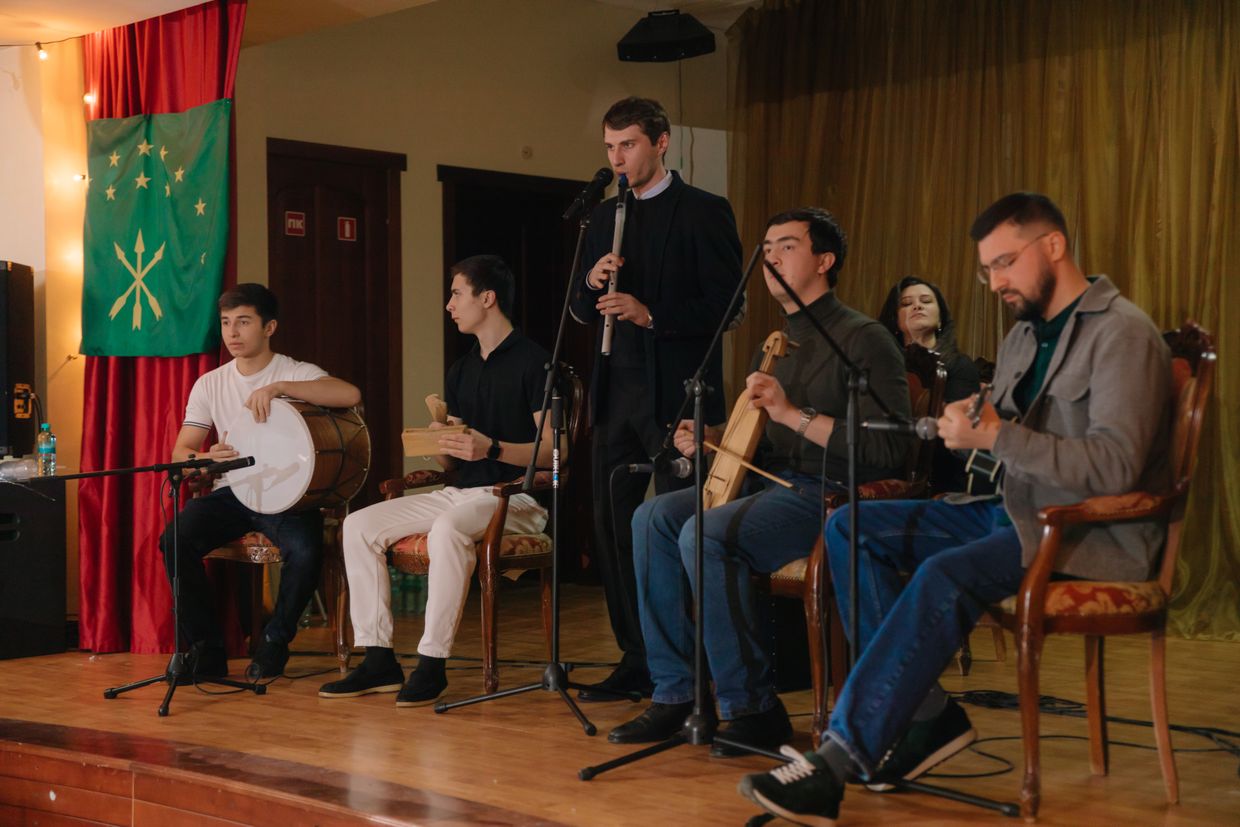
While the revival of such traditions has received mixed reception among Circassians, Khalilov argues that there are merits to both arguments stemming from Islamic and traditionalist views.
‘I’m glad that despite these contradictions — sometimes even ones that seem hard to resolve, like one side saying “it’s haram”, and the other saying “no, we have to do it” — both sides still consider themselves Adyghe’, he says.
‘It’s important to them that Circassian culture, since it’s their culture too, should align with religious norms’, Khalilov says. ‘In that sense, I think it’s good for our identity that there are people who, even while being religious, still find space for our culture and our identity within whatever religious system. That’s cool.’
At the same time, however, Khalilov argues that marking the holiday no longer has a point following the continued demise of the once-strong Circassian agricultural tradition. He believes that even referring to the event as ‘Circassian New Year’ feels less like a return to an ancient tradition or its revival, and more like a postmodern attempt to manufacture a new tradition.
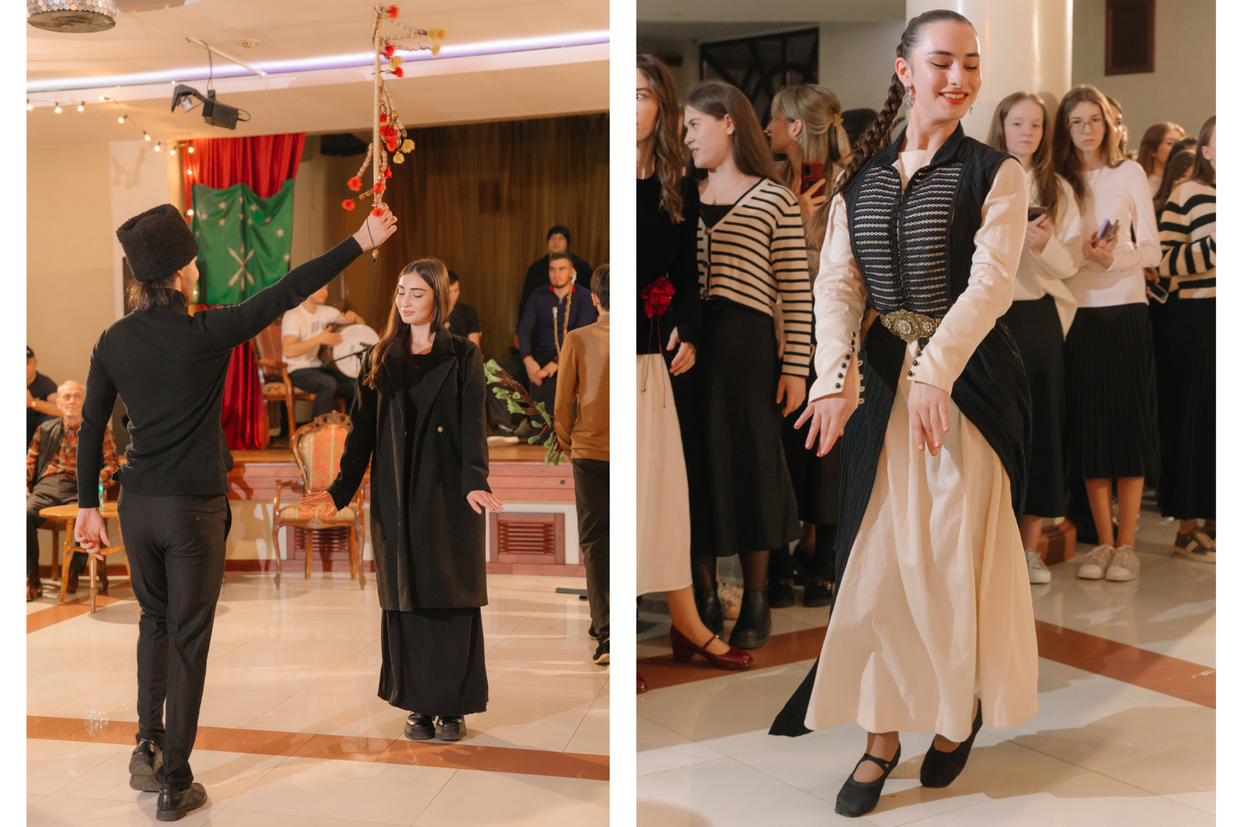
For Khalilov, the revival of such a holiday requires ‘adding meaning to it’. He likens this renewed interest in Circassian paganism to modern theatrical performances, instead.
‘When I see people in the 21st century seriously treating pagan holidays as if they’re not just a tribute to culture and tradition, but like they’re actually worshipping ancient gods now, it seems strange to me’, Khalilov says.
‘I’m not sure it’s needed, or that it’s possible’, he says. ‘But it seems to me that for this to happen, the people for whom it really matters have to keep doing it no matter what. And maybe even sceptics like me will end up thinking: “Actually, this is kind of cool. Now I see the point” ’.