Analysis | Why did Georgia really phase out its public employment programme?
Social allowance remains Georgia’s only major social welfare pillar, with as much as 18% of the population enrolled in subsistence allowances.

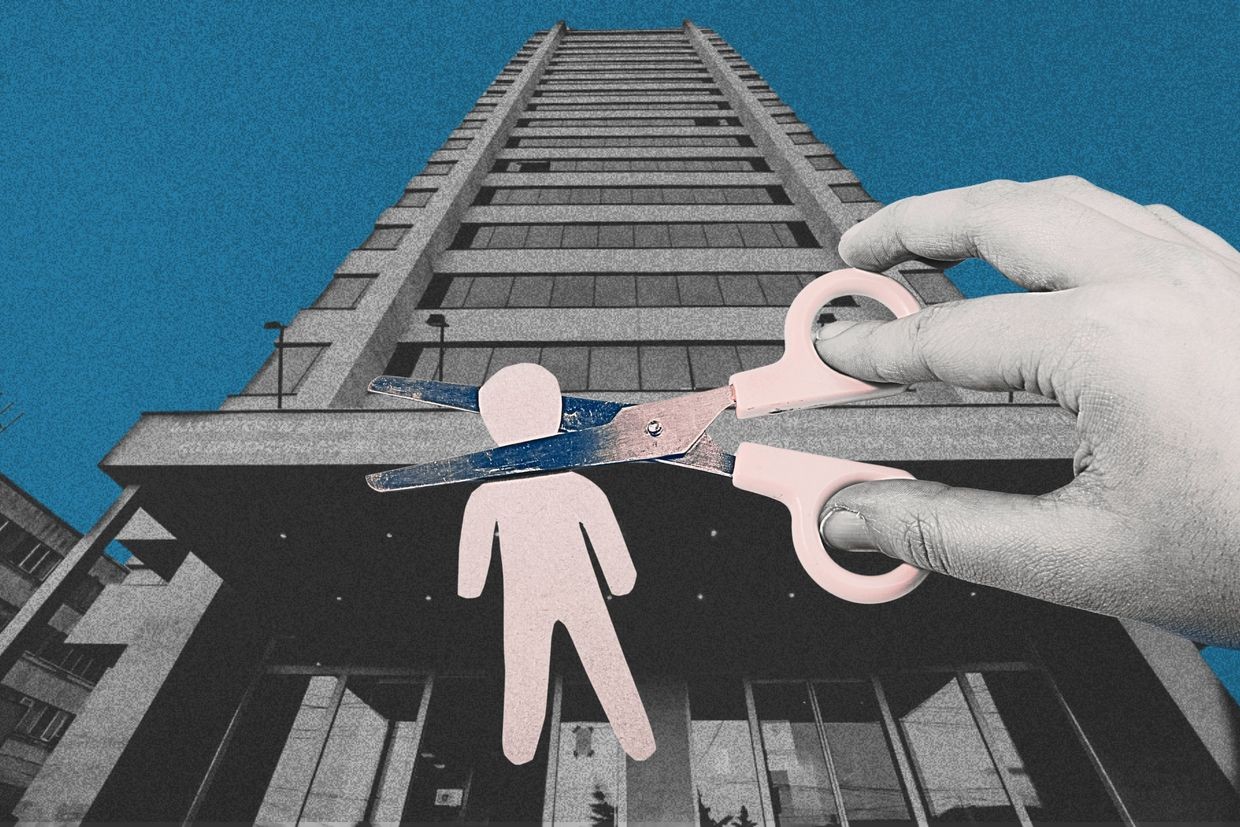
In December 2025, news broke that the Georgian government was preparing to scale back one of its largest social welfare programmes — the Public Employment Programme (PEP) — a move that is expected to pave the way for its eventual phase-out. As a first step, the government is sharply decreasing funding — from ₾113 million ($42 million) in 2025 to ₾21 million ($8 million) in 2026.
Internationally, social policy systems are shaped by the interaction of three core components: social services (such as care facilities), social allowances (cash benefits), and social insurance (including pensions and various contribution schemes). Georgia has been heavily exploiting only one of these components — social allowances, with very little investment in either social services or insurance.
When PEP was introduced in 2022, it added ₾48 million ($18 million) to the already vast budget — ₾609 million ($225 million) — of the Social Allowance Programme. Already by that stage, there were a number of reputable studies, including by the World Bank and International Labour Organisation, advising Georgia to downscale the allowance programme and increase investments in other social policy directions. But the government did not listen.
A large part of this can be explained by the fact that the growing volume of direct monetary transfers to Georgian citizens was helping the ruling Georgian Dream party win elections. Indeed, a 2024 study by the local Social Justice Centre has shown that the government has historically spent more money on subsistence allowances in the years leading up to elections than in election years themselves. Notably, in the districts where average social subsistence spending was higher, so too was support for the ruling party.

So, why is Georgian Dream shutting the PEP down now?
The formal substantiation by officials claims the PEP was beginning to contribute to a labour force shortage. Indeed, according to official statistics, since 2022, the time when PEP was introduced, the unemployment rate has decreased from 17.3% to 13%–14%. But here is what the authorities are not telling people:
To start, the introduction of the PEP had nothing to do with unemployment statistics. Public employment programmes, both globally and in Georgia, are designed to activate individuals who are currently outside the labour force (such a population is not regarded as ‘unemployed’ by the national statistics). In order for us to believe that the PEP was contributing to labour shortages, we need to believe that job creation was outpaced by the PEP beneficiaries who were successfully ‘graduating’ from the programme and seeking employment on the open labour market. Yet, the government has not provided any evidence towards this fact, and there are no other facts substantiating the assumption that the PEP activated a sizable portion of the non-active labour force.
Additionally, while the government is creating the impression that job-creation rates are high through their mention of ‘economic growth’ in the official statement, we should be careful not to be misled by this narrative. Each year, the PEP created roughly 30,000–40,000 temporary positions within local municipal bodies and their sub-agencies. It’s important for the public to understand that these jobs should not be counted as part of the country’s regular employment creation statistics — they are a component of the social welfare system, not indicators of market-driven job growth. The real question is whether genuine job creation in the open market has actually been strong — or whether the persistent narrative of labour shortages is driven instead by large-scale emigration and an ageing population.
 Jeff Vize
What experts repeatedly highlighted — and the government consistently overlooked
Georgia’s Social Allowance Programme, introduced in 2006 to replace earlier cash-transfer schemes, has gone through multiple adjustments over the years — both minor and substantial. Yet it remains the country’s only major social welfare pillar built entirely on the logic of testing the means of its applicants for eligibility, targeting the poorest of the poor. Recommendations to reform the system have surfaced repeatedly, especially as the number of households receiving subsistence allowances continued to rise even during periods of economic growth and Georgia’s transition from a lower income to a middle income country. Currently, as much as 18% of Georgia’s population is enrolled in it.
For the PEP to have been successful in activating the non-active labour force among subsistence allowance recipients, international best practice shows that it needed to function towards the two main goals:
- Equip its beneficiaries/workers with new skills that are in demand on the labour market;
- Induce ‘behavioural change’ and make the economically inactive population want to work and the individuals unemployed for over a year want to go back to a work routine.
Regarding the first, it is already a well-known fact — as voiced by several politicians and covered in the media — that jobs created by the PEP were redundant if not outright fictitious. For example, since its establishment, the PEP has created positions for library book fetchers at village libraries that were barely functional, bloated staff at cleaning services of village cemeteries, and has even assigned people to street or outdoor facility maintenance work without being provided the necessary equipment. Lists of such jobs have been constantly mocked, shared as evidence of inefficient government planning and alleged electoral fraud: local bureaucrats had to be pressuring the poor to vote for the government in exchange for employment by the PEP.
When it comes to the second, it is important to note that official employment statistics are unable to grasp the scale of nonformal employment.
Zachary Fabos
‘Officially, the programme was defined as an instrument for implementing active labour market policy aimed at employing socially vulnerable individuals in public works. However, if there are no specific, measurable and documented goals behind the formulation, a legitimate question arises — what does this mean in practice and what specific results did it achieve?’, Gia Kakachia, a social policy expert, questions while speaking to OC Media.
‘At the level of political statements, we would understand its goal was the gradual replacement of socially vulnerable families with those with decent jobs and social income. But these goals are not clearly reflected in official documents, are not read as result-oriented indicators and are not accompanied by monitoring and evaluation mechanisms’, he emphasises.
In its first year, the PEP attempted to introduce incentives encouraging subsistence allowance recipients engaged in informal work to formalise their employment. However, by 2024, these incentives were withdrawn after failing to meet their objectives and proving difficult to implement in practice. It became evident to all parties that many eligible-for-work recipients preferred to remain formally unemployed or continue working only informally. In reality, this finding should have mattered the most, but the lessons from the programme’s first year never led to real changes — instead, the formalisation component got eliminated altogether.
To elaborate, subsistence allowance beneficiaries are not inherently reluctant to work or earn an income, nor are they particularly afraid of losing the allowance itself — what they fear most is losing the social benefits and status that accompany it.
If beneficiaries have a recorded legal income, they may lose reduced-fee or no-cost access to social services — such as food banks, day care, pre-schools, and children’s developmental services — benefits that practically no employer provides in Georgia. Subsistence allowance is also associated with preferential treatment by the universal healthcare system, reduced rates on public transport, and higher access to other in-kind or cash benefits on municipal level — none of which comes via employment on the open market.
Nino Zubashvili
Additionally, shortcomings in ensuring decent work standards often lead beneficiaries to prefer remaining informally employed with welfare programmes rather than seeking formal employment with strongly exploitative work conditions. Roughly-speaking, the PEP consistently provided safer workplaces than many open-market jobs, offered positions close to beneficiaries’ homes — which was particularly important in peripheral regions — and allowed flexible work hours to accommodate household responsibilities, standards often lacking in the broader labour market.
‘From the very onset, policy-makers were acknowledging that the programme lacked the graduation mechanism, the mechanisms for its successful completion, but there was never a necessary resource allocated to add this part into the design of the programme’, Ana Diakonidze, an expert on labour protection and active labour market policies, says.
‘If they wanted PEP beneficiaries to become competitive at the open labour market, elements of this should have been included from the very beginning in the design of PEP — you can’t expect low-competence jobs, or a programme without a training component in it to grow employability.’
Beyond this, the PEP was also counterproductive in the overall social policy landscape because it was inherently designed as an additional cash benefit — ₾300 ($110) for full time employment for social allowance recipients.
International best practices include PEP as a condition for maintaining the social allowance, but not as an additional pay and not for such an extended period as it was in Georgia — four years. Instead, a period of only a few months is recommended, time that is enough to provide skills training or behavioural change. By extending PEP for such a long time, the government discouraged participants from graduating from the programme, instead encouraging them to cling to social allowances even more strongly.
There is also no evidence the government gave any careful consideration to wage setting, despite international practice finding that very low wages may draw overall salaries down while high wages may disincentivise beneficiaries from graduating.
‘They are shutting PEP down because there is no vision about its continuation’, Diakonidze emphasises. ‘I think after some time passed, they realised that they either had to continue by inertia, or close it because it was creating pressure on the budget’.