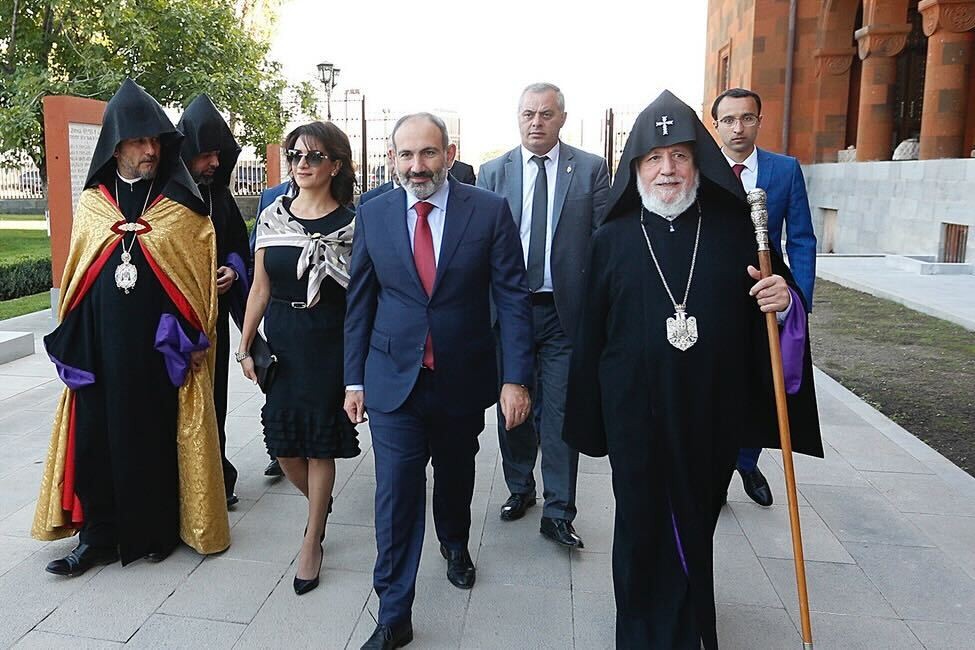
As tensions with the Armenian Apostolic Church enter a new phase following the signing of a Church reform agenda in early January, Prime Minister Nikol Pashinyan and his allies are framing their confrontation with the Church to pursue similar goals to those of the 2018 Velvet Revolution, which brought Pashinyan to power.
On Sunday, Pashinyan’s wife, Anna Hakobyan, drew such parallels in a Facebook post.
‘Today, as the people who were the first to adopt Christianity as a state religion, we stand up with the same determination, not allowing unworthy people to humiliate our spiritual “self” and the Armenian Apostolic Church’, Hakobyan wrote.
She recalled how in 2018, through the nationwide protests, the Armenian population 'stood up for our freedom and civil rights’, which led to the resignation of then-Prime Minister Serzh Sargsyan.
 Arshaluys Barseghyan
‘We do not allow unworthy individuals to humiliate our spiritual authority, lay our faith and soul at the feet of foreigners, thereby weakening our identity and our state’, Hakobyan concluded.
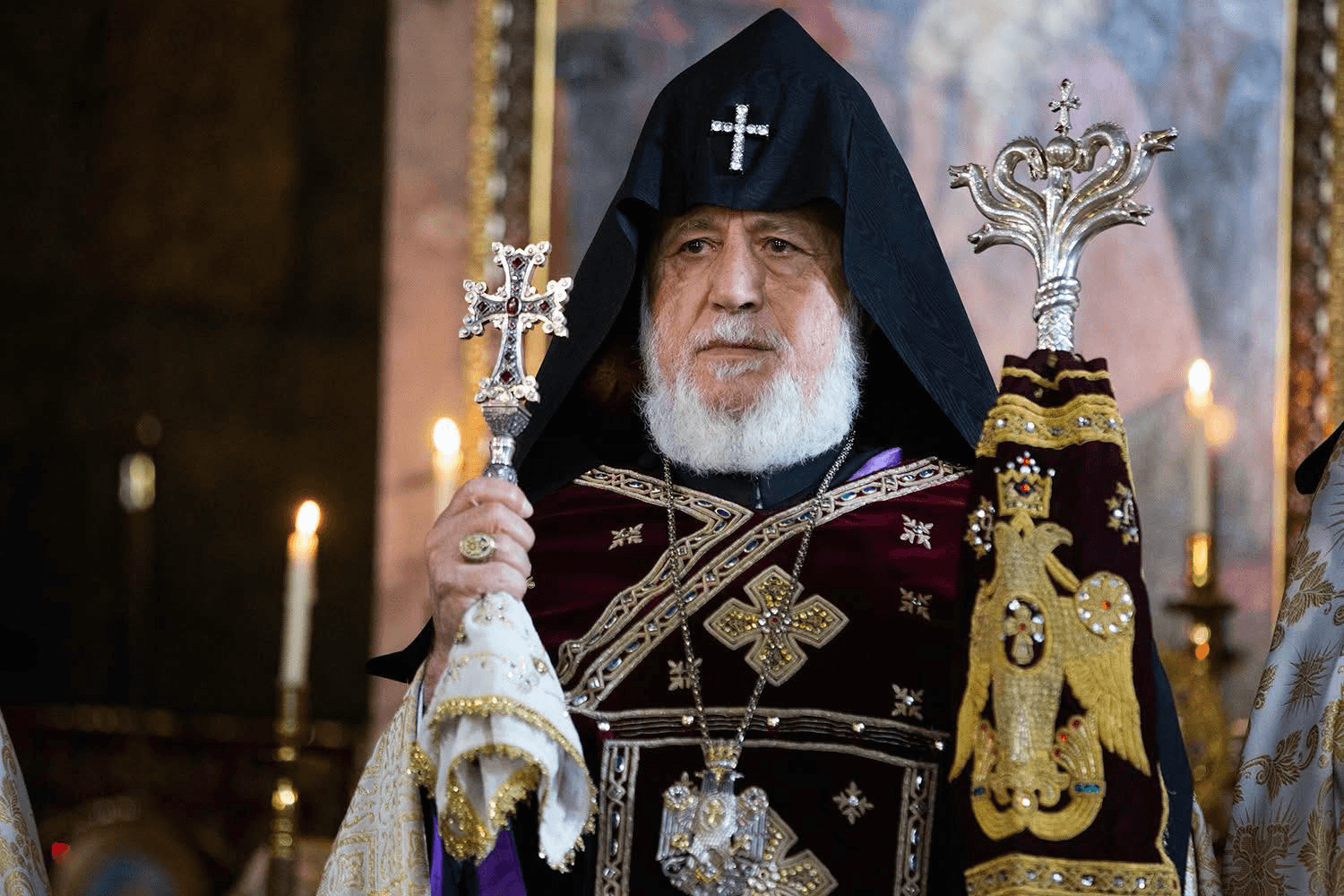
This rhetoric echoed the accusations directed at the Church and its leader Catholicos Karekin II by Pashinyan and his ruling Civil Contract party members.
In particular, they accused Karekin II and his brother Archbishop Yezras, the head of the Diocese of the Armenian Church of New Nakhchivan and Russia, of having ties to foreign intelligence services. Karekin II was further accused of using the Church ‘as a tool of hybrid warfare by foreign forces’ against Armenia.
Arshaluys Barseghyan
In his latest speech at an anti–Karekin II rally on 6 January, as Armenia was celebrating Christmas, Pashinyan used language reminiscent of the 2018 revolution, including calling for the direct involvement of citizens in advancing the Church reform agenda.
Pashinyan urged people to attend liturgies and urged priests to join his efforts to ‘reform’ the Church.
Are Karekin II’s decisions legitimate?
The reform agenda was officially launched in early January and was signed by Pashinyan and the 10 senior clergy members who had previously called for the resignation of the Catholicos.
Arshaluys Barseghyan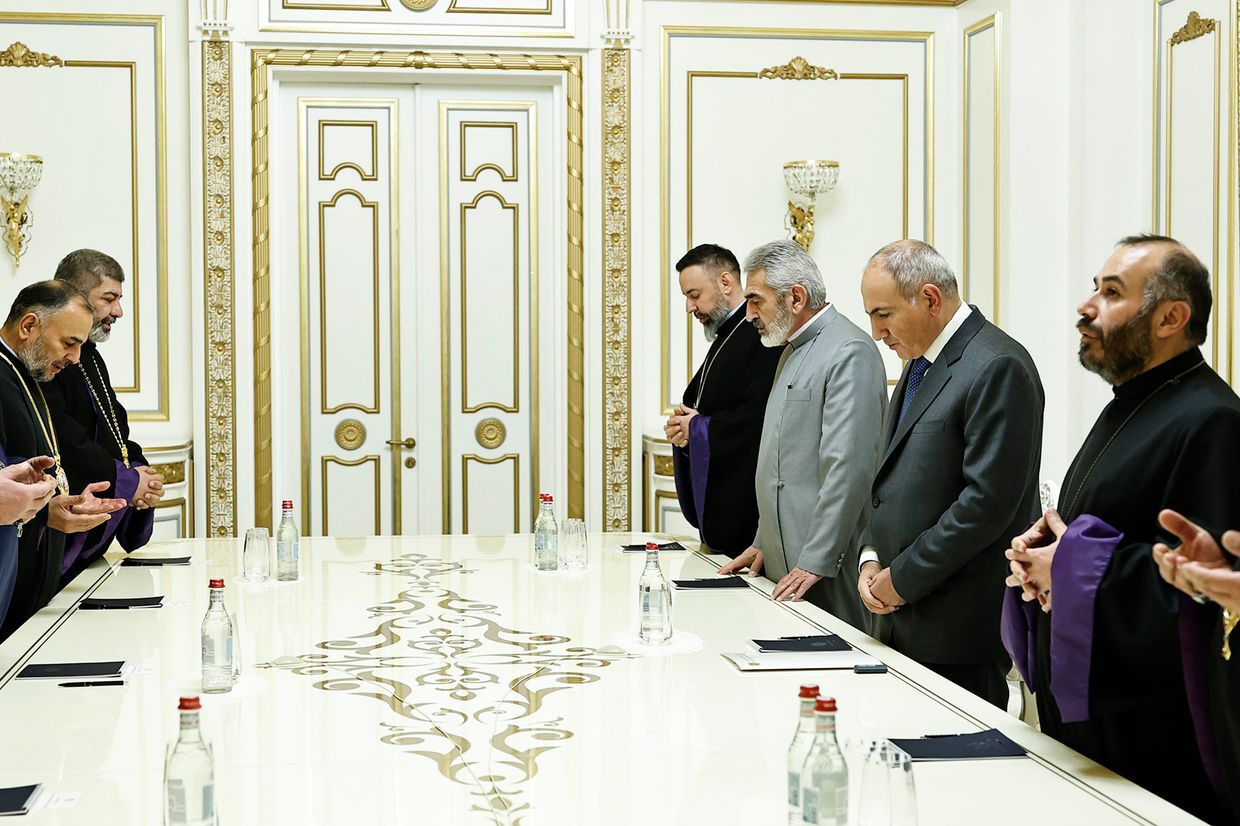
Following the publication of the statement, more than 20 clergy members reportedly joined the reform agenda, according to the ruling Civil Contract party. As the party was celebrating this success, the Mother See announced on Saturday that Karekin II had dismissed Bishop Gevorg Saroyan, one of the 10 senior clerics who had signed the reform statement, from his post as Primate of the Masyatsotn Diocese.
The decision cited Saroyan’s ‘abuse of office, failure to fulfil the duties incumbent upon the Primate, as well as instances of coercion and pressure exercised against the clergy of the diocese’.
Saroyan, the council of reform, and Pashinyan refused to accept Karekin II’s decision, with Pashinyan claiming that Karekin II was not a legitimate head of the Church and thereby his decisions were not legitimate either.
Following such statements, on Sunday, Pashinyan and Saroyan attended a liturgy at a church in the diocese until recently led by Saroyan.
Again on Sunday, Saroyan dismissed pressuring his subordinates during a press briefing, instead accusing Karekin II of possessing compromising information on all members of the clergy.
In a controversial statement, Saroyan further accused Karekin II of backing the leak of an intimate video allegedly depicting Archbishop Arshak Khachatryan in October 2025. Khachatryan has repeatedly expressed his support of Karekin II, and is one of four high-ranking priests to have been detained in recent months in Armenia.
Arshaluys Barseghyan
This article was translated into Russian and republished by our partner SOVA.