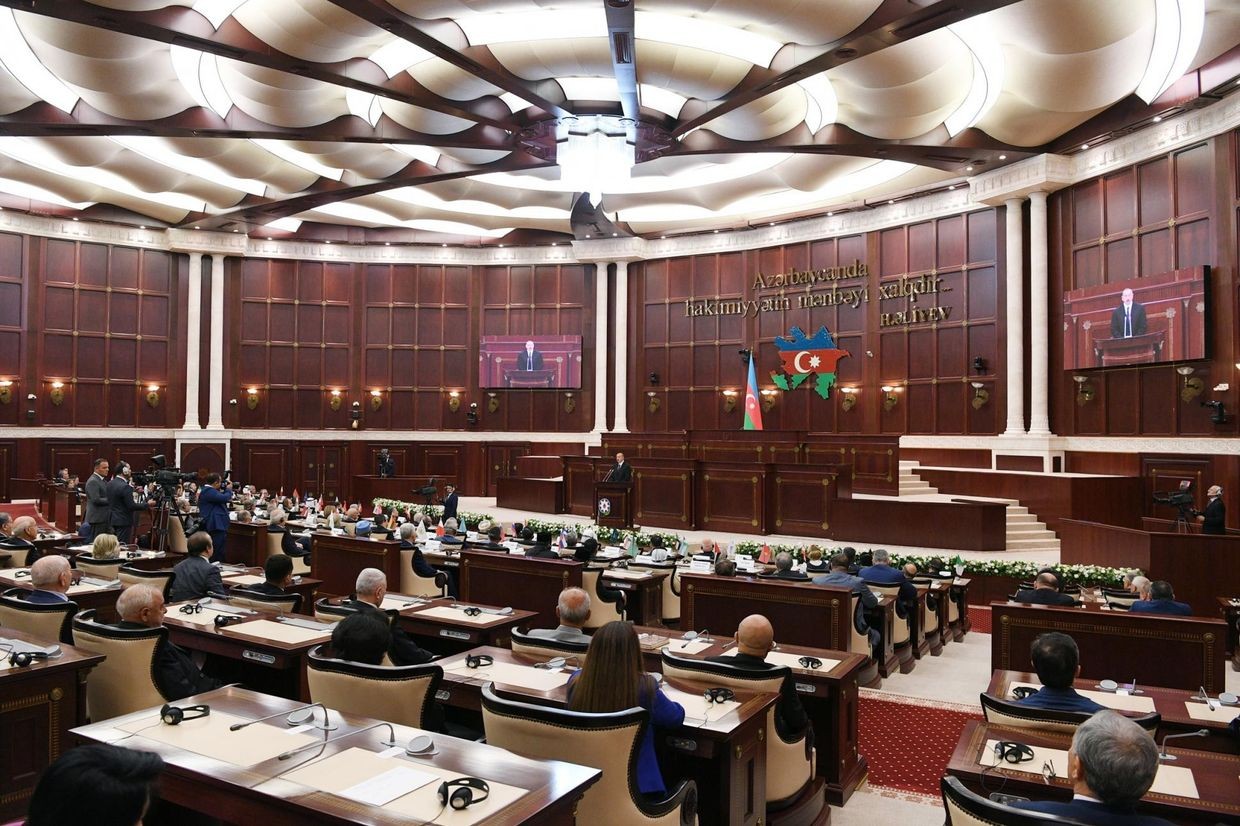
A new draft law has been submitted to the Azerbaijani Parliament seeking to criminalise the AI-generation of sexually explicit content without the consent of those featured in the content, making it punishable by up to seven years in prison. Another proposed law would require AI content to be labeled as such.
The parliament’s committees discussed the bills on Thursday.
According to APA, such content ‘must be clearly and conspicuously labeled’ to indicate that it was created using AI.
If the AI generated content is shared without labelling, it would be subject to a fine of ₼80–₼150 ($50–$90).
Information Communication Technologies expert Osman Gunduz stated on social media there is a growing problem with deepfakes in Azerbaijan.
‘In recent years, with the development of AI deepfake manipulation, reputational attacks, and especially sexual blackmail have become a serious problem worldwide. Strict approaches are being taken, particularly against pornography’.
Gunduz highlighted that many countries have already begun to develop legal mechanisms to combat these risks, and such steps are necessary ‘to protect privacy, public reputation, and information security’.
However, he mentioned that labeling AI-generated content in the media environment the implementation mechanism can be problematic, because this was not properly structured, and could create additional legal risks for news production and information sharing.
‘How will the authenticity of AI-generated images be proven, what level of labeling will be required when using them, and how will their effectiveness be assessed when using additional tools?’ Gunduz continued.
He hinted that without experience of implementing these changes, issues could arise from bureaucratic obstacles.
‘In other words, the key question is not only the severity of penalties, but also how the law will be enforced. As AI technologies spread rapidly, and in the coming years, a significant portion of the media, communications, and creative industries will increasingly use these tools, those who do not benefit from this will be unable to compete’, Gunduz added.
‘Additionally, the rights and reputations of citizens must be protected, but, on the other hand, innovation, creativity, the open production of information, and the work of news organisations must not be hindered’.
Human rights lawyer Yalchin Imanov told OC Media that Azerbaijani legislation does not currently regulate content created using AI.
‘This is the first attempt in the country’s legislation to regulate content created using AI. While this attempt is, on the one hand, welcomed, on the other, it is impossible to say how its potential applications will be implemented and the status of its use’.
Imanov emphasised Azerbaijan has a history of passing laws and then selectively applying them to protect official figures, adding that he was unsure if the new draft laws on AI would be fairly implemented in practice.
 Aytan Farhadova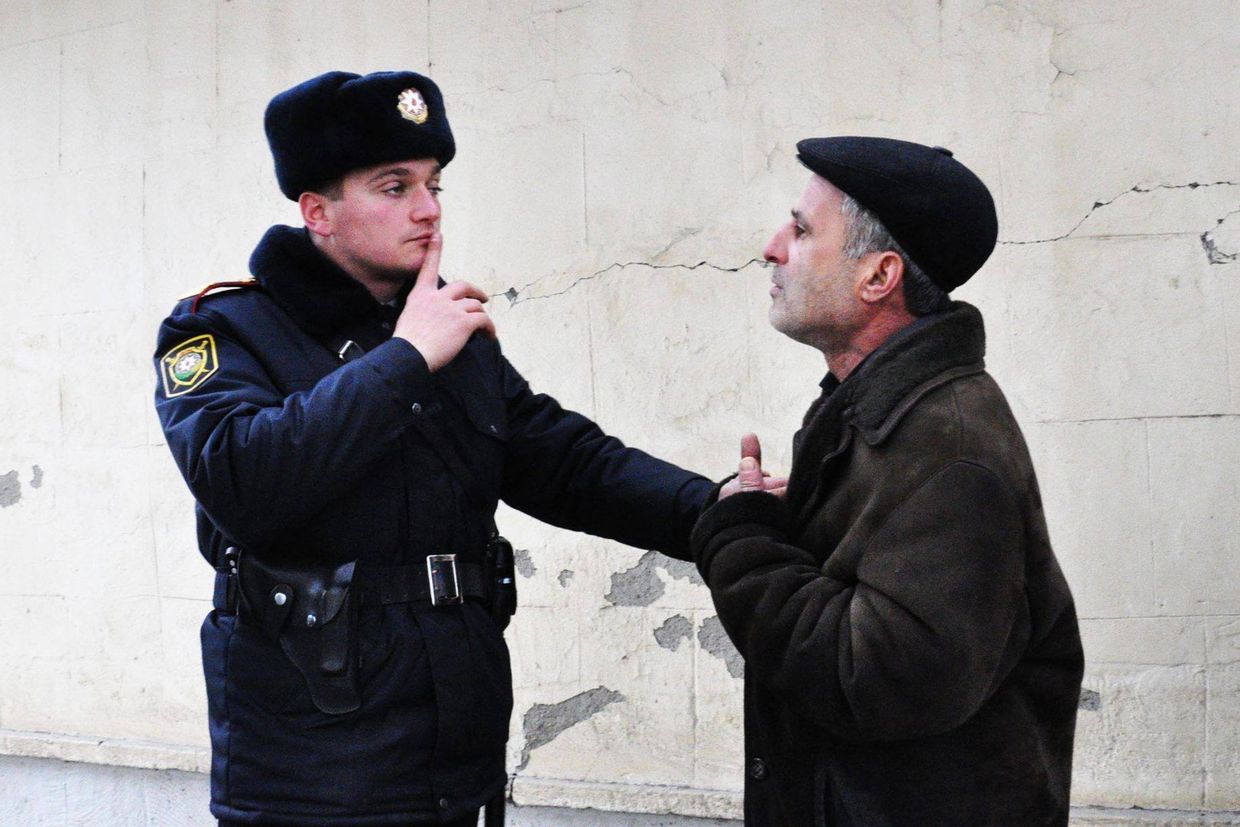
This article was translated into Russian and republished by our partner SOVA.