Former Daghestani Deputy Construction Minister sentenced in absentia over corruption scheme

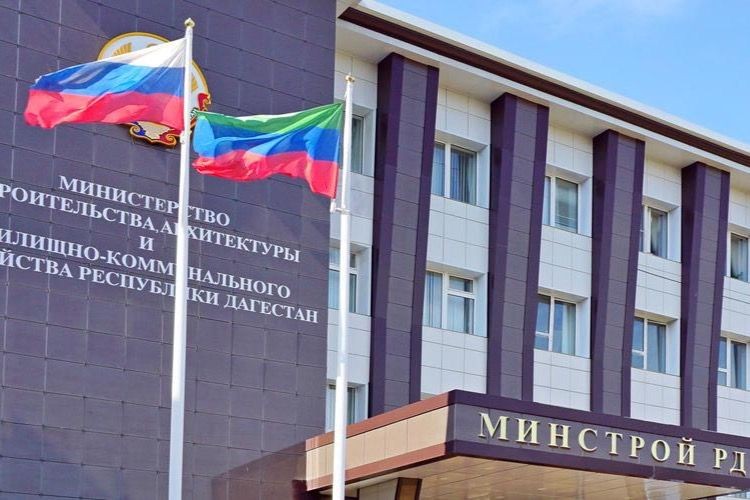
The Kaspiysky City Court in Daghestan has found former Deputy Minister of Construction and Housing and Communal Services Makhach Aliev guilty of embezzling public funds on a large scale and laundering criminal proceeds. Aliev has been on an international wanted list since 2018 — the trial and ultimate sentence was made in absentia.
Aliev was sentenced to 11 years in prison and ordered to pay a fine of ₽700,000 ($9,000) for his role in a scheme that saw around ₽300 million ($4 million) diverted from budgets intended for social infrastructure projects.
The court also barred him from holding senior managerial positions for three years after the completion of his sentence, and upheld a civil claim by the Daghestani government for full restitution of the financial loss to the regional budget.
On 15 March 2018, government sources said that Ibrahim Kazibekov, acting Minister of Construction, Architecture and Housing, and Utilities, had been declared wanted. The official’s home and office were searched. Security forces planned to arrest Kazibekov, but did not find him. By the end of April, the Interior Ministry discovered that Kazibekov had fled abroad.
According to court and prosecutorial materials, Aliev organised an illegal scheme to siphon funds that had been allocated for building and equipping schools, kindergartens, and water-treatment facilities in seismically hazardous districts of the republic. Over a period from September 2015 to November 2018, Aliev allegedly led an organised group that included heads of several contractor firms and the director of the state autonomous institution Republican Centre for Seismic Safety, which was itself responsible for critical infrastructure projects.
Prosecutors said that the network of companies affiliated with Aliev and his associates secured state contracts for construction and repairs, but then submitted inflated invoices and falsified acceptance certificates that exaggerated both the volume and cost of completed work. The excess funds — the difference between actual project costs and the inflated contract values — were diverted and shared among the conspirators.
Investigators further established that embezzled funds were laundered through purchases of real estate and luxury vehicles purchased in the Moscow area, which were formally registered to third parties. Prosecutors noted that in 2016, Aliev acquired two Mercedes vehicles and a Lexus with a combined approximate value of ₽21 million ($270,000).
The criminal case against Aliev has been under judicial consideration since May 2023. Documents on the court’s public docket show extensive inquiry into the construction sector and public procurement practices in Daghestan, as authorities sought to unravel the interlinked financial and administrative elements of the alleged fraud.
Before his appointment as deputy minister, Aliev had served as head of the Republican Centre for Seismic Safety. In 2017, after moving to the Ministry of Construction, he reportedly influenced the appointment of his associate Makhach Gadzhiev to lead the centre, a decision that later drew scrutiny after Gadzhiev also became a defendant in related criminal proceedings.
Gadzhiev’s case was heard by the Kaspiysky City Court in July 2021, when he was convicted of fraud involving more than ₽271 million ($3.5 million). According to reporting by Chernovik, Gadzhiev’s cooperation with investigators — including testimony about other participants in the unlawful scheme — was credited by the court, which ultimately imposed a suspended sentence comprising a fine and mandatory restitution rather than imprisonment.
Authorities have indicated that Gadzhiev’s testimony helped to expand the number of investigations into alleged corruption in construction contracts. Prosecutors noted that testimony from Gadzhiev and others led to at least seven additional criminal cases related to fraud in the procurement and execution of contracts for social infrastructure work.