A French court has ordered Georgia to pay $383 million in compensation to Turkish construction giant ENKA Renewables over the construction of the Namakhvani HPP. The court accepted Georgia’s request for suspension of the ruling’s enforcement, as Tbilisi said that immediate payment would damage the country’s economy. As interest accrues on the payment, the total compensation exceeds $450 million.
ENKA Renewables’ parent company, the Istanbul-based Enka Insaat, had notified the Georgian government in September 2021 of its decision to terminate the contract, citing breaches of terms and force majeure. The authorities and the investor held talks in an effort to reach a settlement and avoid arbitration. Government officials stated that the aim was to ensure that the company’s withdrawal would not harm either the Namakhvani project or the country.
This latest ruling was issued in mid-February by the Court of Appeals in Paris.
Georgia’s Economy Ministry was not available for comment, though the legal case is not over, experts warn that Turkey will refuse to negotiate on payments, unlike a similar case in which Georgia was embroiled in with Inter RAO, one of Russia’s largest public energy companies.
Inter RAO had won a similar case against Georgia, which agreed to make seven payments totalling $139 million, including interest, between December 2025 and July 2028.
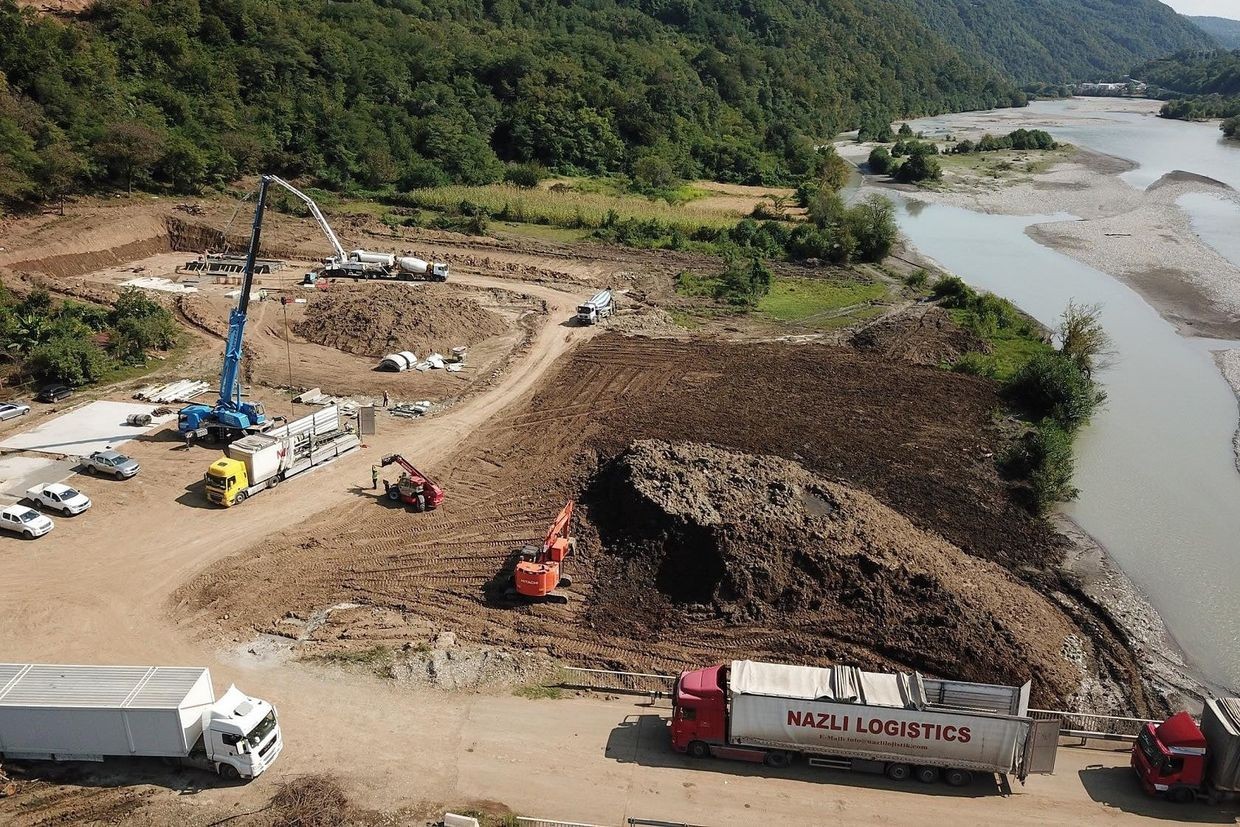
The case involves a contract between Tbilisi and Enka Renewables to build and operate the Namakhvani HPP in western Georgia, according to financial statements issued by Enka’s parent company, Enka Insaat. The document confirmed that, as of 31 December 2021, ENKA Renewables had written off capitalised $40.4 million in the property, the HPP, and its equipment. It was not immediately clear whether the Georgian government had purchased the disposed assets, although the contract allowed the investor to request the government to buy them.
The Turkish company had signed a deal to develop and operate the Namakhvani Cascade HPP project in April 2019. The project consists of two hydropower plants and was due to be commissioned in 2023 at an estimated cost of $750 million.
The government halted construction on the cascade for up to a year, while allowing Enka Insaat to continue work on the first phase. The authorities continued meetings with company representatives and dialogue with protesters against the project.
The protests were huge, involving environmental NGOs, religious groups, the general public, and media. Those opposed to the project cited environmental and safety concerns, turning the confrontation into a nationwide protest movement, with rallies held in Tbilisi.
 Shota Kincha
As emotions settled and the protesters of against giant projects have not taken to streets since, Merab Lominadze, a former official at Enka Insaat who left the company when the legal proceedings began, said that the three hydropower projects were crucial for Georgia’s future and could be absolutely life-changing. However, he believes the claimed amount was inflated and welcomed the decision to suspend the payment.
‘I doubt there will be any agreement between the government and the Turkish side’, he said. ‘The penalty is abnormal, but the Turks had all right to pursue their claim if the court satisfied their demands. What’s interesting is what the Georgian side presented in order to stop this abnormal fine’.
Lominadze also had to comment regarding the current silence of former project opponents.
‘It’s not interesting where those anti-hydro activists — religious groups or environmentalists — have gone. It’s more important to ask: where are those who were saying they would build this project themselves? Where are they now?’
‘In the region, there is simply nothing comparable. Armenia has nuclear power, and that’s not something we can rely on in terms of safety’, he said, emphasising growing global aversion to the use of nuclear energy.
He also expressed concern about the investment climate: ‘I doubt any investor would now step in to take over the project while inheriting the previous issues. I don’t see anyone paying $1.5 billion under these circumstances’.
Lominadze suggested that the government could mobilise domestic resources — for example, through the pension fund — to begin construction itself and later sell the completed project or transfer it to an operator.
‘The current events in the region — in Ukraine, Iran, and neighbouring Azerbaijan — will not allow international interest to easily shift toward us. These three stations must become the backbone of our energy future. It would be a crime not to use the resources we have. It’s a shame.’
Following the ruling, a spokesperson for Enka, who declined to be named, said that no further comments would be made. ‘
The Turkish representatives have now completely left the country, no one is here’, they said.
Meanwhile, the Georgian National Energy and Water Supply Regulatory Commission (GNERC) said in December 2025, that the country’s electricity generation increased by 19.1% year-on-year, reaching 1,171 GWh. However, total electricity generation in 2025 declined by 2.8% compared to 2024 and amounted to 13,838 GWh. During the same month, electricity consumption rose by 14.7% to 1,414 GWh, while total annual consumption increased by 3.5% year-on-year.
In December, the balancing electricity price stood at $0.0595 per kWh, and the weighted average annual price reached $0.0583 per kWh. Georgia imported 297 GWh of electricity in December 2025 and remained a net importer of electricity on an annual basis, according to GNERC.
The technical director of the Enguri HPP, Paata Tsintsadze, has said in an interview with Facebook page Promotion of Energy Sector of Georgia, that the international arbitration losses related to energy projects, including the Namakhvani case, were a result of poor strategic planning and ineffective management.
Tsintsadze added that the government often avoids implementing energy projects that face public opposition — including large hydropower projects such as Khudoni HPP, Nenskra HPP, and Namakhvani HPP — as well as smaller hydropower plants and transmission lines.
He additionally noted that reluctance to increase electricity tariffs makes it difficult to attract investment in new generation facilities, as both state and private investors require a reasonable return. Tsintsadze urged the authorities to use the NordLink cable project between Germany and Norway as a strong example of implementing major projects in the country.
There are many ongoing rumours regarding who would inherit this project and whether the government will use its connections to Arab, Russian, or even French investors..
The Executive Director of the Renewable Energy Development Association, Maia Melikidze, told OC Media that the Economy Minister supported the construction of major hydropower projects in the country.
Melikidze added building the Khudoni HPP was the government’s priority project at this time.
However, it remains unclear whether it will be developed by the state, by private investors, or through a partnership. The Economy Ministry’s backing and proposed changes to how property tax revenue from power plants is distributed are expected to help incentivise the development of these large-scale energy projects, which have investment volumes ranging from roughly $800 million to $1 billion.
In 2011 Georgia signed 42 agreements to develop hydropower projects as it seeks to attract $5 billion to reduce dependence on fossil fuels.
Helena Bedwell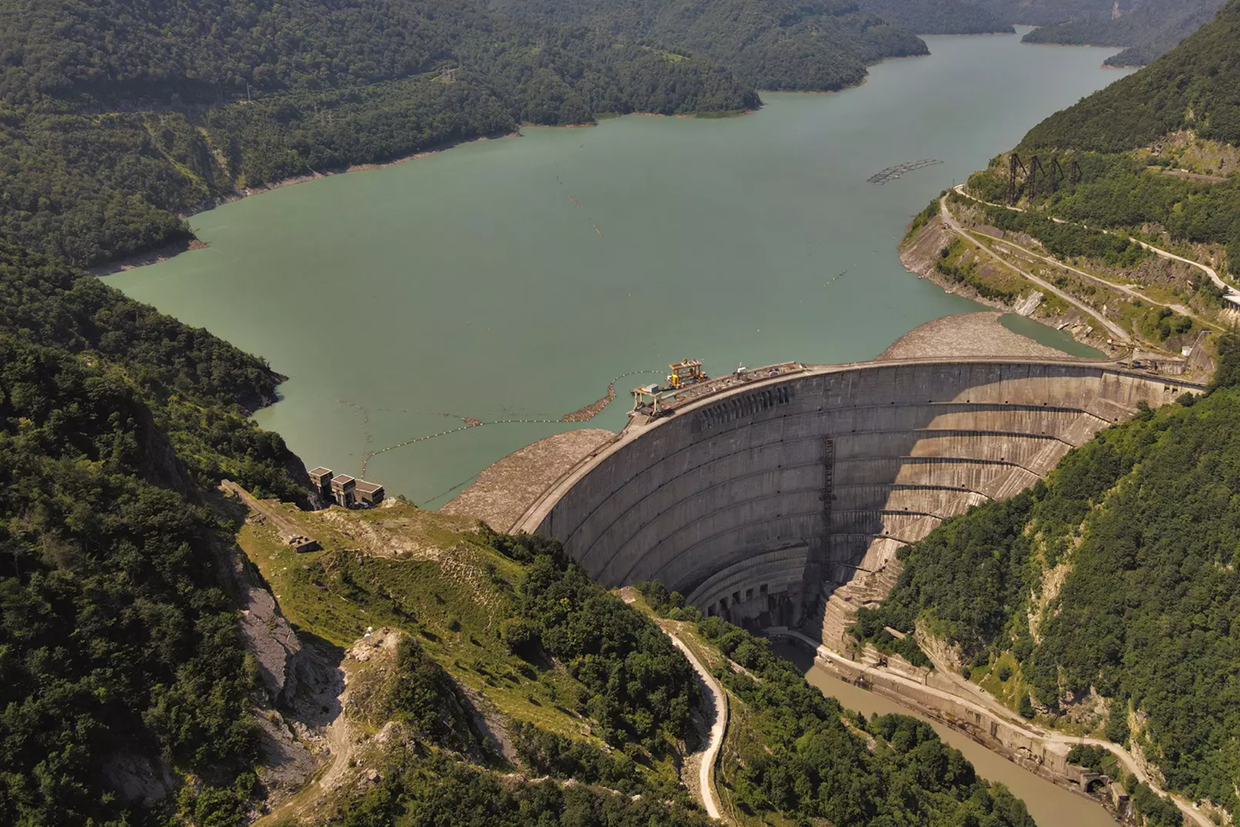
This article was translated into Russian and republished by our partner SOVA.