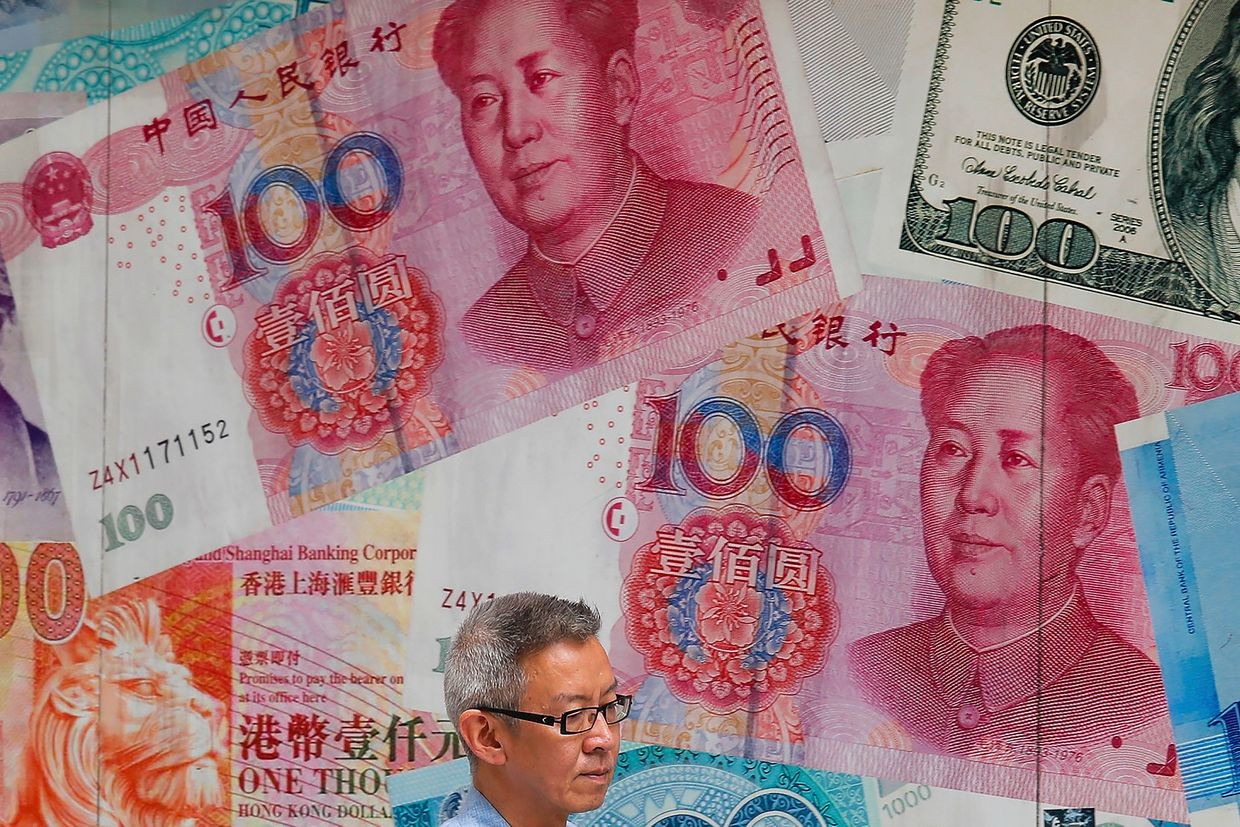
The National Bank of Georgia has announced it has gained access to one of the world’s largest and most important financial markets — China’s Interbank Bond Market (CIBM). Georgia joins a limited group of central banks permitted to operate in the market.
The agreement on access was reached during an official visit in 2025 by a Georgian delegation to China within the framework of a memorandum signed with the People’s Bank of China.
Under this arrangement, China’s central bank will provide the Georgian side with core services necessary to operate in that market, including trading, settlement, and bond custody support. In February 2026, accounts were opened for the National Bank of Georgia both at China’s central bank and within the CIBM depository infrastructure.
The National Bank of Georgia states that access to the interbank bond market — one of the main channels through which foreign institutional investors gain direct exposure to China’s bond market — is expected to improve investment opportunities, support diversification of international reserve portfolios, and increase the efficiency of risk management. The bank added that further steps will be implemented gradually, based on assessments of operational conditions, settlement mechanisms, legal frameworks, and associated risks.
While almost 2% of global reserves are held in yuan, critics are questioning the new agreement and how it relates to similar actions by Russia.
Former MP Roman Gotsiridze, who served as president of the National Bank of Georgia under the United National Movement party (UNM), told OC Media that after the full-scale invasion of Ukraine, a large share of Russia’s reserves held in Western currencies were frozen abroad, prompting Moscow to shift its holdings into gold and Chinese yuan.
‘All the steps taken by Georgian Dream in recent years directly copy Russian laws and actions. The desire to move reserves to China is part of a plan to further distance the country from the West’, he argued.
A central bank source, who asked to remain anonymous, downplayed the criticism, telling OC Media on Friday that the amounts involved in moving part of Georgia’s reserves to China will be relatively small and primarily aimed at diversification purposes. The majority of the National Bank of Georgia’s reserves will remain denominated in USD, JPY, CAD, and EUR.
The National Bank began its broader reserve diversification strategy in 2023 with the acquisition of 7.5 tonnes of monetary gold. Georgia’s international reserves today include not only dollar- and euro-denominated assets but also gold as part of a risk-management framework, according to the bank.
For Russia, as Western sanctions swept through, Moscow restructured its reserve management strategy, increasing the share of gold and yuan in its National Wealth Fund while Western currencies were largely excluded. An estimated $300 billion in Russian central bank reserves remain frozen abroad, significantly reducing Moscow’s reliance on dollar- and euro-denominated assets and accelerating its pivot toward alternative financial channels.
Countries like Israel recently added yuan to their reserves as part of a philosophy change, and Canadian, Australian, and Japanese currencies were also added to their reserve baskets. Germany also said it will add yuan to its currency reserves.
 Helena Bedwell
This article was translated into Russian and republished by our partner SOVA.