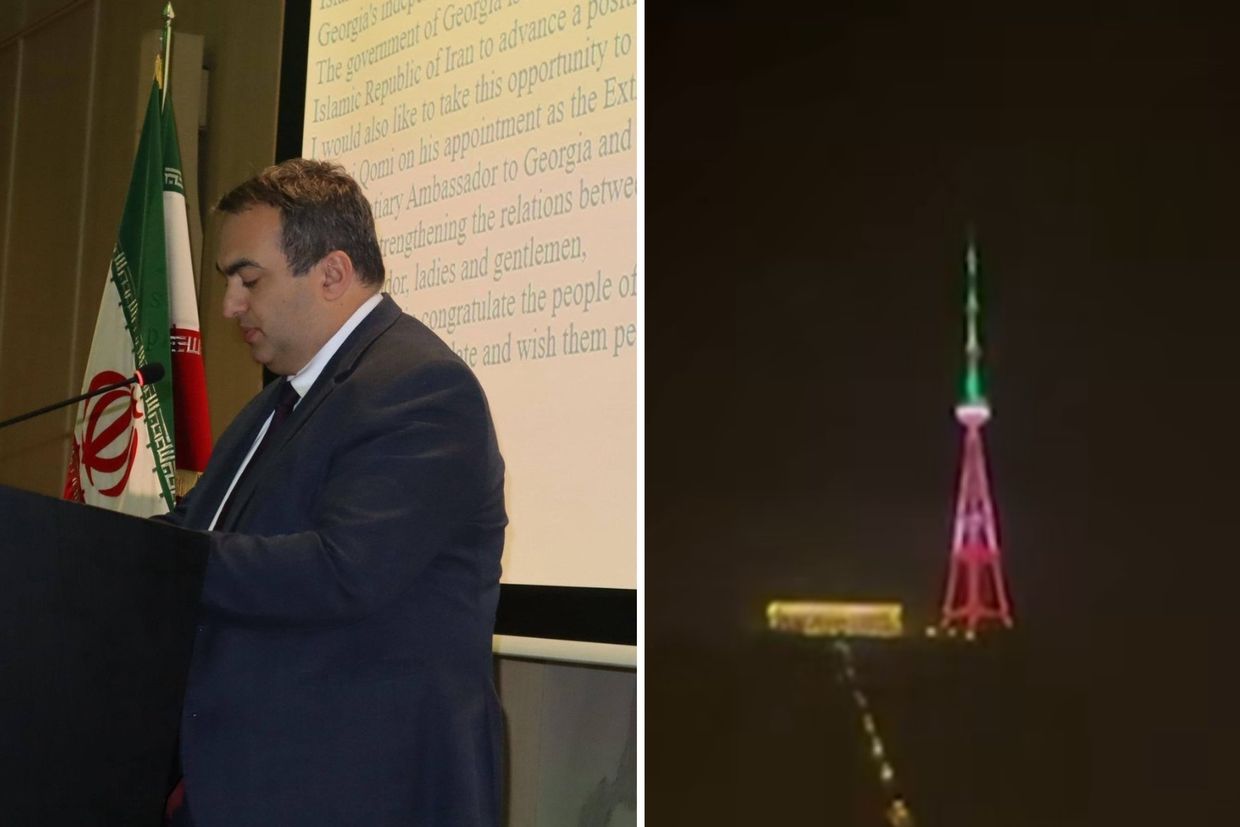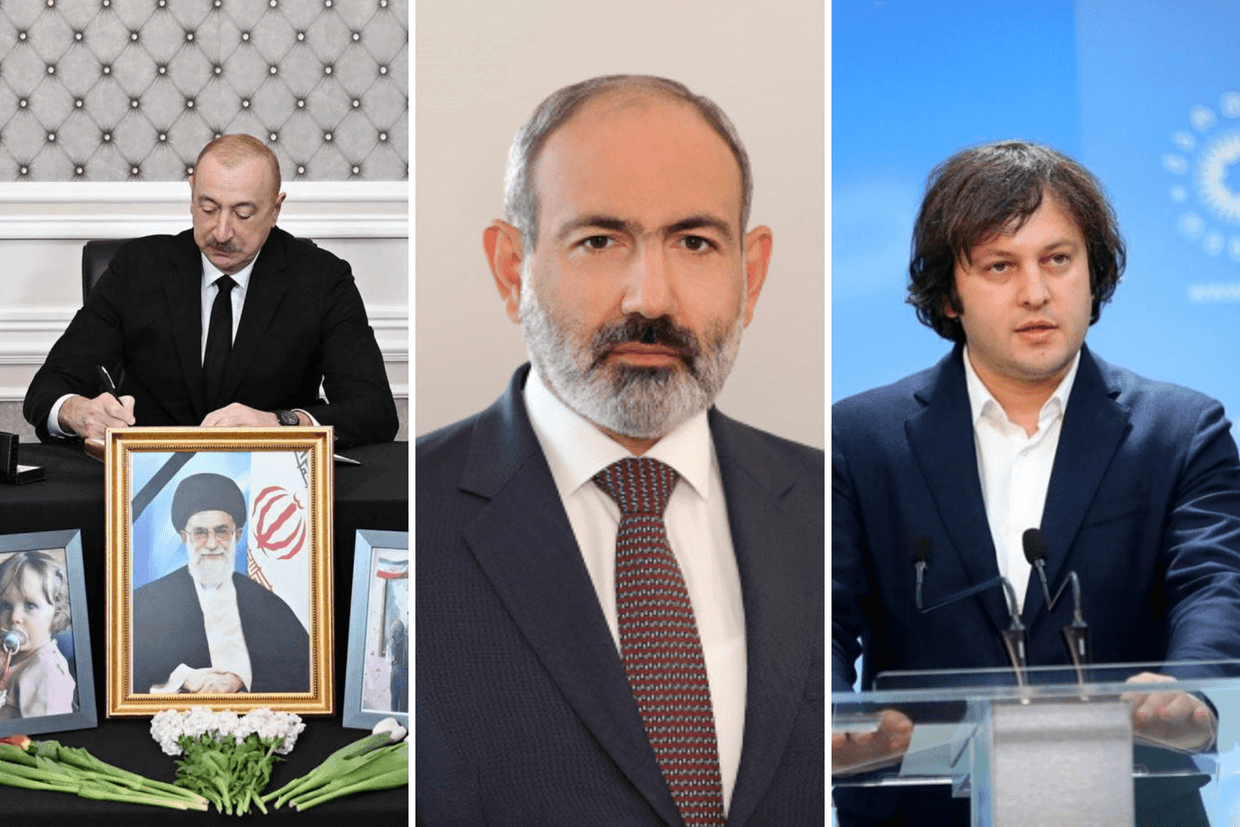
Georgia’s ruling party has reacted angrily to discussions about the presence of Iranian entities in the country and alleged attempts to use Georgia for bypassing Western sanctions. Tbilisi Mayor and the Secretary General of the ruling Georgian Dream party Kakha Kaladze accused those raising the claims of betraying the country and said the ‘relevant authorities’ should take an interest in the matter.
The sharp reactions followed pro-government media criticism of an op-ed published in the US outlet The Hill. The piece’s author, researcher, and analyst Keti Korkiya, argued Georgian Dream is pursuing ‘closer ties with Iran’ and ‘handing Tehran an avenue to circumvent US sanctions’.
The article discussed, among other things, the growth of annual trade between the two countries over the past 12 years, as well as the increasing number of Iranian companies in Georgia. It also cited the 2026 research by the Georgian think tank Civic Idea, which reported that 72 Georgia-registered companies imported Iranian oil and petroleum products between 2022 and 2025.
The 26 February article drew the attention of state-affiliated outlets on 5 March, with the major pro-government TV Imedi describing it as ‘another attack and baseless accusations against Georgia’, while emphasising that Iran’s share in Georgia’s overall trade was small.
Soon after, the article was condemned by Georgian Dream MPs, including Archil Gorduladze, who called the author Georgian ‘only by passport’. Meanwhile, the National Bank of Georgia stated that it ‘fully complies with the US and other international sanctions imposed on Iran’.
 Arshaluys Barseghyan
On the same day, an Imedi reporter asked Mayor Kaladze about the article, noting that it had also been shared on social media by Eka Gigauri, the head of Transparency International (TI) Georgia, a figure widely despised by the ruling party and its affiliates.
‘Georgia is under constant attack, but when Georgian citizens make such statements and speak about serious allegations that do not actually exist, it is simply a betrayal of the country’, Kaladze said, adding that ‘the relevant authorities should take an interest in the matter’.
The mayor did not explicitly specify which authorities he meant, but repeatedly stressed that ‘this is a direct betrayal of the country’.
‘Given the difficult situation in the region and what is happening in the Middle East [...], making such false statements is very dangerous for the country’s security and for our population, and it must be followed by a response’, he added.
Kaladze was also asked about comments from former Georgian Defence Minister and Civic Idea founder Tina Khidasheli regarding the Al-Mustafa International University branch in Georgia — an Iranian religious institution sanctioned by the US in 2020 for allegedly facilitating Islamic Revolutionary Guard Corps (IRGC) recruitment.
Khidasheli called the entity a ‘terrorists’ school’ during an interview with an opposition-leaning TV Pirveli, noting that although it is not accredited in Georgia and is not officially a university, it still operates in the country and enrolls students.
Kaladze once again responded sharply, saying: ‘The greatest terrorists in this country are those making such statements; a radical group representing a traitorous faction in Georgia’.
‘Everyone, be it Khidasheli or someone else, who is engaged in hostile activity against the country […] And of course making such statements indicate that it is an act of betrayal, a move against your country and homeland. They have neither homeland nor values; they are hired by another country and engaged in hostile activity, judging by their statements, and this must be met with a response’, he concluded.
In response, Khidasheli told local media that Kaladze’s words were ‘threatening’, noting that ‘he is calling on law enforcement to take an interest in me’. However, Khidasheli stressed that she was ‘not afraid’ of Kaladze.
‘What worries me is that our country may face problems because of the irresponsible decisions Georgian Dream has made over the years’, she said while describing the Georgian Dream government’s relations with Iran as being based on ‘mutual loyalty’.
Representatives of the ruling party often accuse critics from both the political opposition and civil society of acting against Georgia’s interests and serving the interests of other countries. Terms such as ‘foreign agents’ have become an integral part of both the government’s rhetoric and Georgian legislation, reinforced by restrictive laws passed in recent years.
In February 2025, against the backdrop of a series of restrictive laws adopted by Georgian Dream, the crime of treason was reintroduced into the criminal code. The legislation included several offences under this ‘new’ treason category — all of which were already punishable under other articles of the code.
Mikheil Gvadzabia