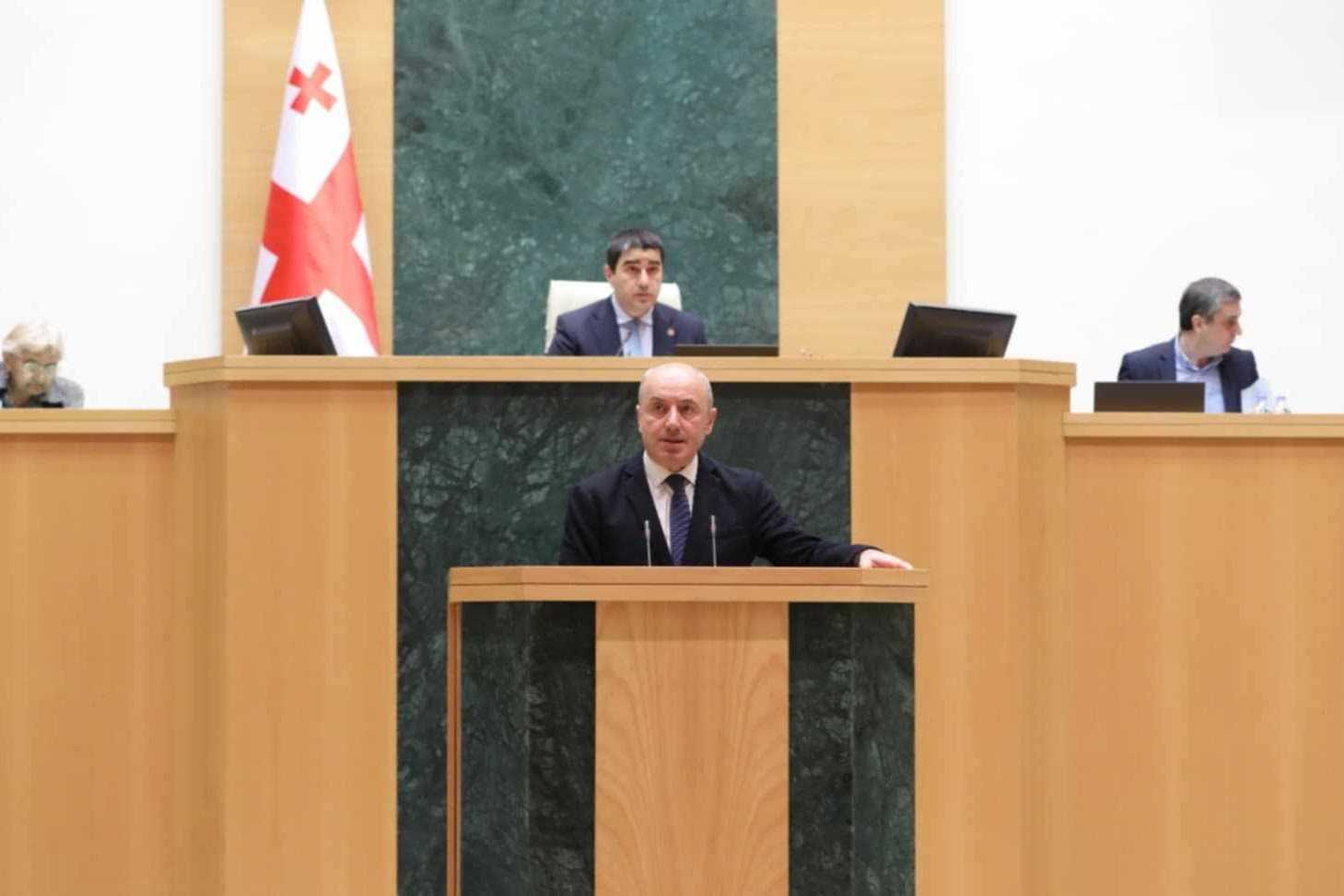
Georgia’s ruling party and its allies have welcomed the decision by the US to leave the Venice Commission, declaring it proof of the correctness of its antipathy towards the body, which had previously criticised laws adopted by the Georgian authorities.
The US announced its withdrawal from the Venice Commission, an advisory body of the Council of Europe, along with more than 60 other international organisations, on 7 January. In President Donald Trump’s view, the membership of those entities were ‘contrary to the interests’ of the country.
Among the other organisations and treaties being left by the US are the United Nations Population Fund and the UN treaty concerning climate change, as well as the Global Counterterrorism Forum and the Partnership for Atlantic Cooperation. The moves come as Trump’s administration has sought to enact ‘anti-woke’ policies and reverse actions taken by former President Joe Biden.
According to US Secretary of State Marco Rubio, the Trump administration has found these institutions to be ‘redundant in their scope, mismanaged, unnecessary, wasteful, poorly run, captured by the interests of actors advancing their own agendas contrary to our own, or a threat to our nation’s sovereignty, freedoms, and general prosperity’.
‘President Trump is clear: It is no longer acceptable to be sending these institutions the blood, sweat, and treasure of the American people, with little to nothing to show for it’, Rubio’s statement read.
In response to Trump’s decision, Venice Commission President Marta Cartabia expressed regret, highlighting the US’s role in the commission and the commission’s assistance in creating the legislation of several US states ‘aimed at upholding the values of democracy, human rights, and the rule of law’.
‘The Venice Commission remains open to resume working with the United States in support of shared values of democracy, human rights, and the rule of law’, she added.
The ruling Georgian Dream party seized on Washington’s decision to renew its criticism of the commission, which had previously raised concerns over restrictive legislations passed amid ongoing anti-government protests in the country.
According to Parliamentary Speaker Shalva Papuashvili, the commission has turned into a ‘political tool used against countries to impose various instruments or institutions driven by a political agenda’.
‘It issues opinions and conclusions based on political considerations. This is precisely what the United States confirmed today’, he added.
The decision was also welcomed by Levan Makhashvili, chair of the parliament’s European Integration Committee, who said the reasons cited by the US president for leaving the organisations were ‘relevant to Georgia as well’.
‘The so-called opinions of the Venice Commission in Georgia have often been used as a kind of lifeline for radicals’, he said, referring to the commission’s conclusions being cited by Georgian Dream’s opponents, whom the ruling party frequently labels as ‘radicals’.
‘We may not have plans to leave these organisations, but this reality exists and questions remain regarding them’, Makhashvili added.
The development was also commented on by allies of the ruling party, including members of Georgian Dream’s satellite party People’s Power. According to the party’s executive secretary Guram Macharashvili, the US decision is proof that the Venice Commission has become a ‘political tool in the hands of the deep state’.
The ‘deep state’, as well as ‘global war party’, is a nebulous term that regularly fits into Georgian Dream’s conspiracy theories, and refers to shadowy forces that are trying to overthrow the Georgian government and push it into war with Russia. The ruling party’s use of the term intensified amidst a sharp deterioration in relations with Western allies, following its adoption of several pieces of repressive legislation, as well as the widespread violations documented during the October 2024 parliamentary elections.
In one of its most recent assessments, the Venice Commission recommended that several restrictive laws adopted by the ruling party be repealed or substantially amended. These included the Foreign Agents Registration Act (FARA), a ban on foreign funding for broadcasters, and amendments prohibiting the receipt of foreign grants without government approval.
 Mikheil Gvadzabia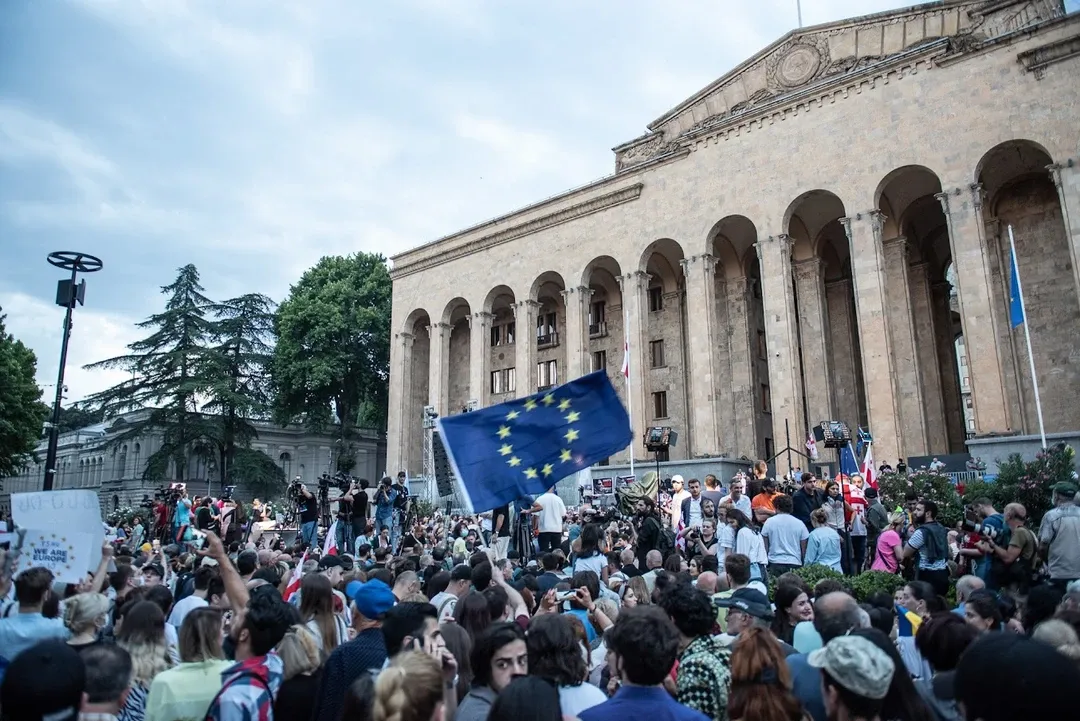
This article was translated into Russian and republished by our partner SOVA.