Georgian opposition parties announce alliance and ‘common strategy’ to end Georgian Dream rule

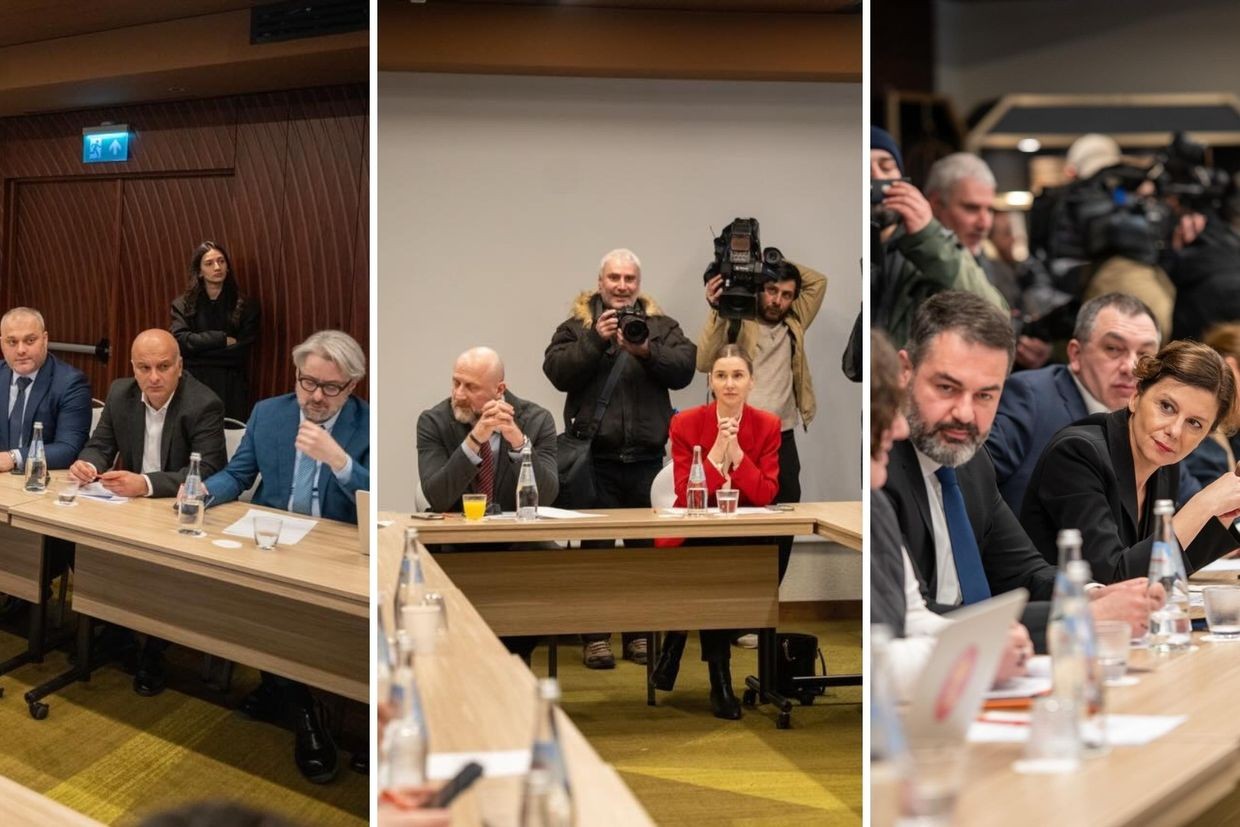
Nine Georgian opposition parties have come together to create an alliance, stating that they had agreed on a ‘common strategy and joint rules of action’ to remove the ruling Georgian Dream party from power. The alliance notably lacked Lelo and For Georgia, two of the major opposition parties.
The opposition groups announced the formation of the new alliance on Monday following a meeting held in Tbilisi, vowing to fight ‘until political prisoners are freed and victory is achieved in free and fair elections’, pledging to ‘restore the country’s Euro-Atlantic course’, and to ensure democratic governance.
So far, nine parties have joined the initiative, including major groups such as the Ahali and former ruling United National Movement (UNM), as well as relatively smaller parties like Girchi — More Freedom, Federalists, Droa and Strategy Aghmashenebeli. European Georgia and the National Democratic Party (NDP) have also joined the union.
In a joint statement, the parties branded the initiative as a ‘democratic alternative’ and ‘unity without uniformity’, emphasising that the member groups retain their ‘ideological identities’ while agreeing on ‘a unified protest action and communication strategy’.
‘We consider it essential that the alliance’s decision-making process be based on the principle of equality among participants and on the free expression of will, without external influence’, they stated.
The parties within the alliance have a history of disagreements and grievances, and some of them were founded by politicians who broke away from others following internal disputes. For example, Ahali was established in 2024 after a number of leaders left the UNM, while Federalists was founded the same year by politicians who split from European Georgia.
‘A unique agreement’
The alliance was formed amid intensified pressure on dissent by the ruling party, which has also targeted the political opposition. Criminal cases have been launched against opposition politicians, and a number of them have been imprisoned under various articles.
This has been accompanied by a constitutional lawsuit through which Georgian Dream has requested the banning of several opposition parties. This was the ruling party’s pledge ahead of the disputed 2024 parliamentary elections, which were marked by major violations and whose official results kept Georgian Dream in power.
 Mikheil Gvadzabia
‘These were not short or simple consultations; this has been going on for a long time. In the meantime, many of us ended up in prison — some have been released, others remain behind bars’, Ahali leader Nika Gvaramia said on Monday, pointing to the lengthy process leading up to the formation of the alliance.
According to Gvaramia, political unity ‘is important as a prerequisite for societal unity’.
Bakur Kvashilava, a member of the newly founded opposition party Freedom Square, described the alliance as ‘a unique agreement’, emphasising that ‘parties with diametrically different pasts, holding quite different views on certain issues, have come together and reached an agreement’.
‘This is an example of how, when a country faces adversity, compromise can be found to ensure a clear future for our nation’, he added.
UNM leader Tina Bokuchava also acknowledged the differences among the groups, but added that the party ‘was, is, and will always be a supporter of unity, because we believe that it is through unity that we must defeat [Georgian Dream founder] Bidzina Ivanishvili’.
For her part, Federalists leader Tamar Chergoleishvili emphasised that the parties have agreed on ‘a strategy for joint victory and the rules of cooperation along this path’, while their differences which ‘reflect the views of our society and our citizens’ will be ‘transformed to their ‘strength’.
‘This unity differs in that it is a bottom-up alliance; it is not an alliance decided from above. This unity is based on concrete substance’, she added.
Chergoleishvili later recorded a video regarding the alliance, telling the audience that Georgia could lose its ‘civilisational choice for decades’ — referring to Georgia’s Euro-Atlantic integration — ‘if we do not change the regime quickly’.
In a joint document provided to the media following Monday’s meeting, the parties outlined their goals, principles of action, and internal rules. They emphasised that they recognise one another as ‘equal actors’ and will refrain from discrediting each other. The parties also stressed that they will leave room for debate over their differences and for ‘fair competition’ among themselves.
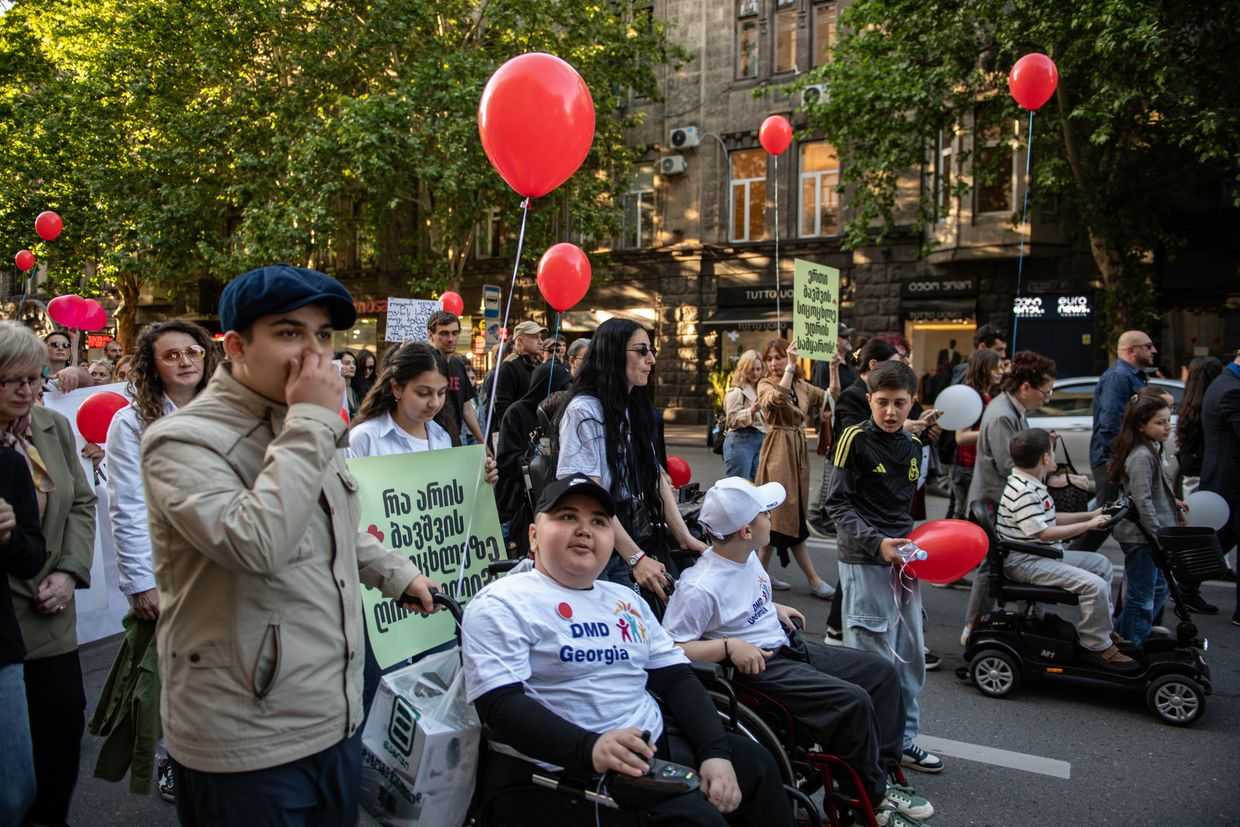
The signatories further emphasised that ‘peaceful popular protest has no alternative’ and underlined the parties’ obligation to cooperate with groups involved in the protest movement.
‘We will strive to maintain very close contact with the public so that they learn what our methods of activity will be and what we will do to achieve them’, noted Gigi Tsereteli, the leader of European Georgia.
Mikheil Gvadzabia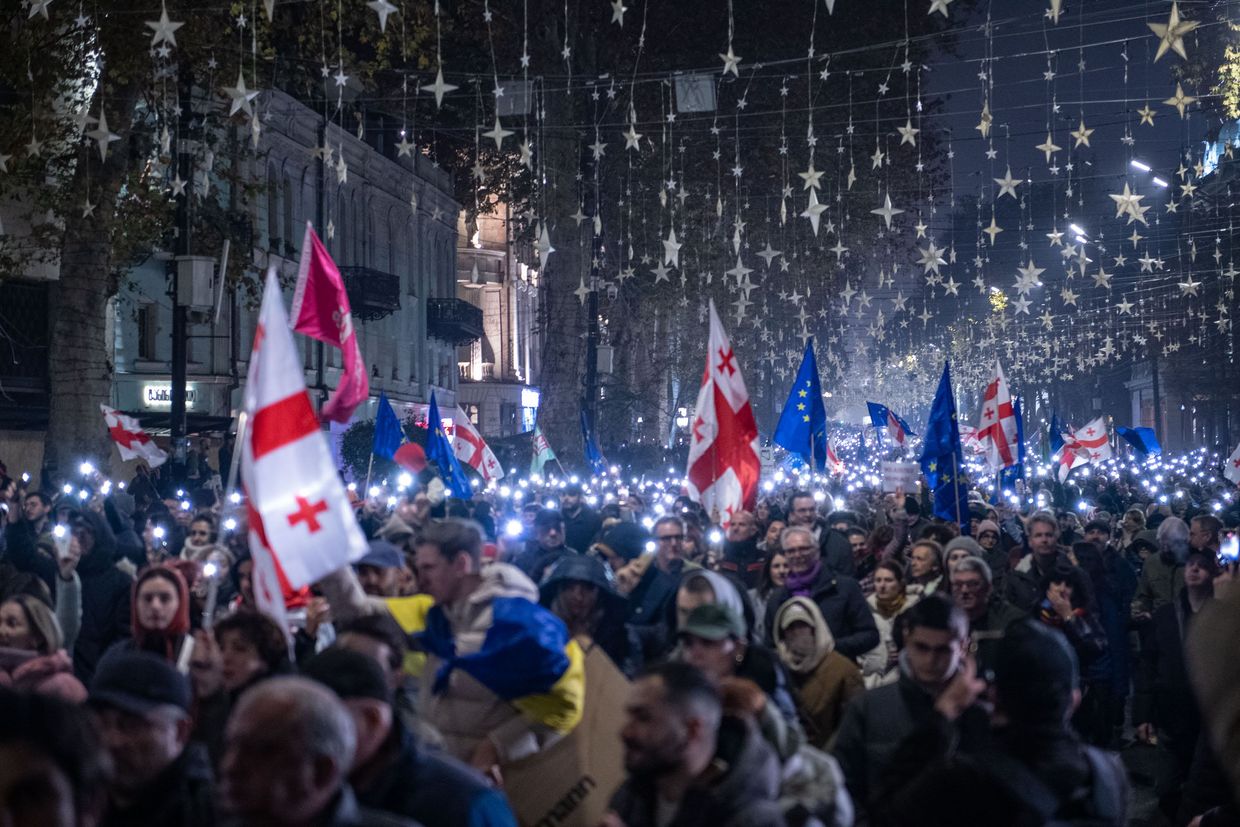
Notable absentees
The meeting of the parties was not attended by Lelo and For Georgia — two parties that, during the 2024 vote, were among the four opposition groups that overcame the electoral threshold, following Ahali and UNM.
For Georgia, founded by ex-Prime Minister Giorgi Gakharia (who previously served under Georgian Dream), publicly dismissed the initiative. The party positions itself as a fierce critic of both Georgian Dream and the former ruling UNM, and constantly rejects any kind of alliance with the latter.
‘We have no connection whatsoever with these parties’, said Giorgi Sharashidze, one of For Georgia’s leaders, accusing the parties in the alliance of ‘directly or indirectly strengthening’ Georgian Dream by boycotting the 2025 local government elections, in which For Georgia unsuccessfully ran.
‘Not even mentioning their past with the UNM and their radical past’, he added, referring to the old connections some of the alliance parties have with the UNM.
Even before the alliance was formed, on 19 February, Lelo announced that it intended to continue operating as an ‘independent political entity’. The party emphasised that previous attempts at unity ‘had stalled or collapsed’, damaging public trust in the opposition.
‘[Lelo] is ready for coordination and cooperation on specific issues related to shared national interests and in effective action formats’, the party added.
Several other smaller opposition parties also did not join the alliance, including Girchi — one of the two similarly named parties that emerged after the split of the larger Girchi party in 2020 — and For the People, headed by the politician Ana Dolidze.
Assessing the alliance, the ruling Georgian Dream party once again used its usual hostile rhetoric toward political opponents.
‘They are united around their patrons to take actions that harm our country’, said Georgian Dream MP Archil Gorduladze, referring to the parties in the alliance as a ‘collective UNM’. The term is often used by to portray most opposition groups as offshoots of the UNM and to exploit controversies linked to the former ruling party as a means to discredit Georgian Dream’s opponents.
Georgian Dream used this claim in its lawsuit, filed with the Constitutional Court in autumn 2025, in which it requested the banning of the UNM, Ahali, and Lelo.
Mikheil Gvadzabia