Georgian Parliament passes amendments on protest restrictions and sweeping changes to higher education

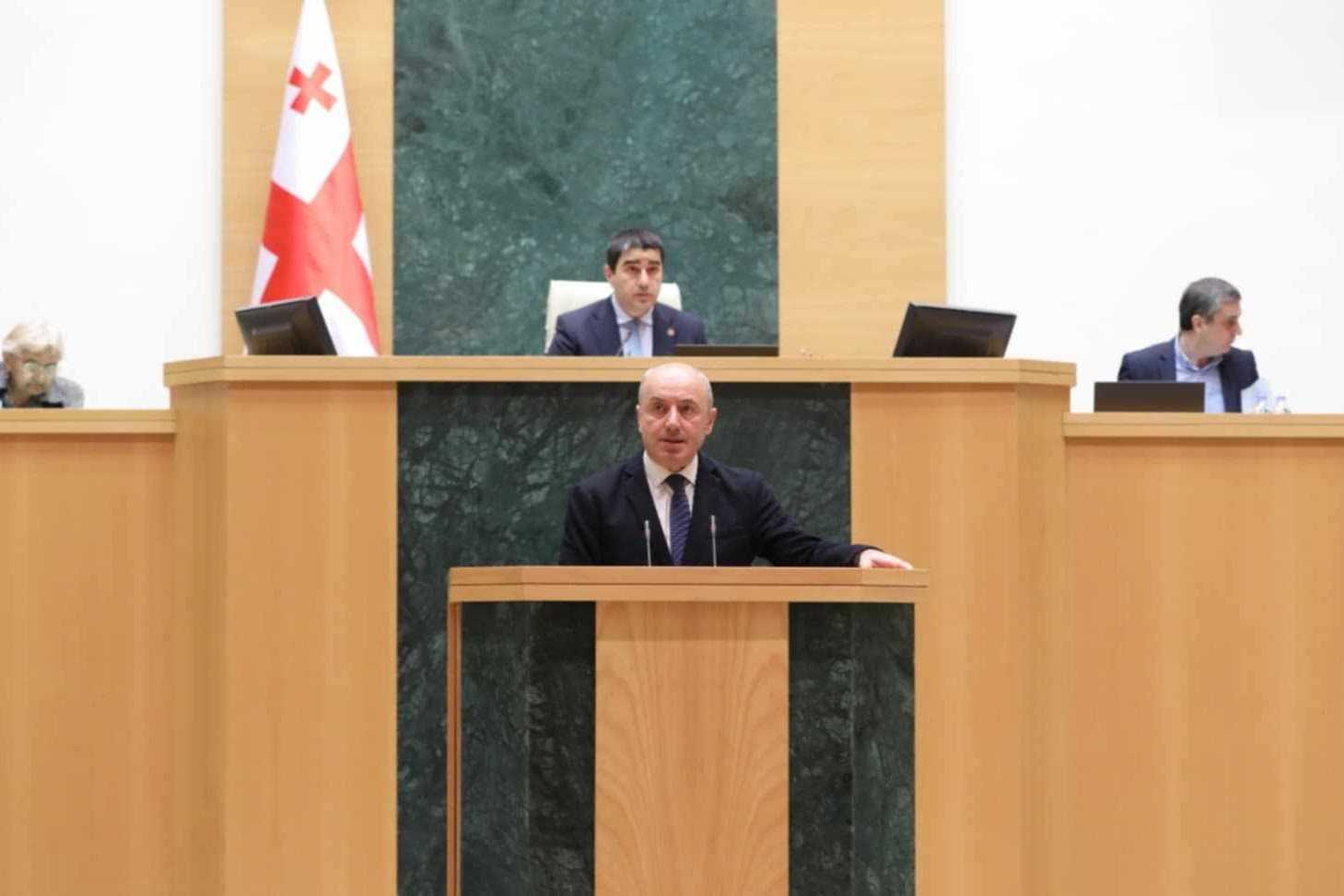
The ruling Georgian Dream party has adopted new protest-restricting amendments in their third and final reading, in addition to adopting amendments to the law on higher education on the same day.
Parliament, fully under the control of Georgian Dream, adopted the amendments on Wednesday. Both legislative packages were reviewed by parliament under an expedited procedure.
The amendments, which would further restrict street protests already under significant state pressure, were made to the law on assemblies and demonstrations and the administrative offences code. They oblige protesters to ‘notify’ the state in advance if a demonstration is held in areas designated for ‘people’s movement’ — not just on roadways, as was previously the case.
According to the amendments, authorities could then ‘offer’ changes to a protest’s location or timing, with penalties for non-compliance.
The new legislation would retain the concept of ‘spontaneous gatherings’, which are difficult to notify the authorities about in advance due to their nature. In such cases, the bill would allow the notification to be submitted to the police outside of the standard deadline, but it would still be required to be done as soon as possible.
Under the amendments, police powers to ‘restore movement’ — previously limited to vehicle traffic — now extend to pedestrian areas as well. It remains unclear how officers would determine when movement on pavements is obstructed, or where protesters could go if removed from both roads and pavements.
Non-compliance would carry jail time even for a first offence: up to 15 days for participants and 20 for ‘organisers’. Only pregnant people, parents of children under 12, minors, and those with severe disabilities would receive fines instead.
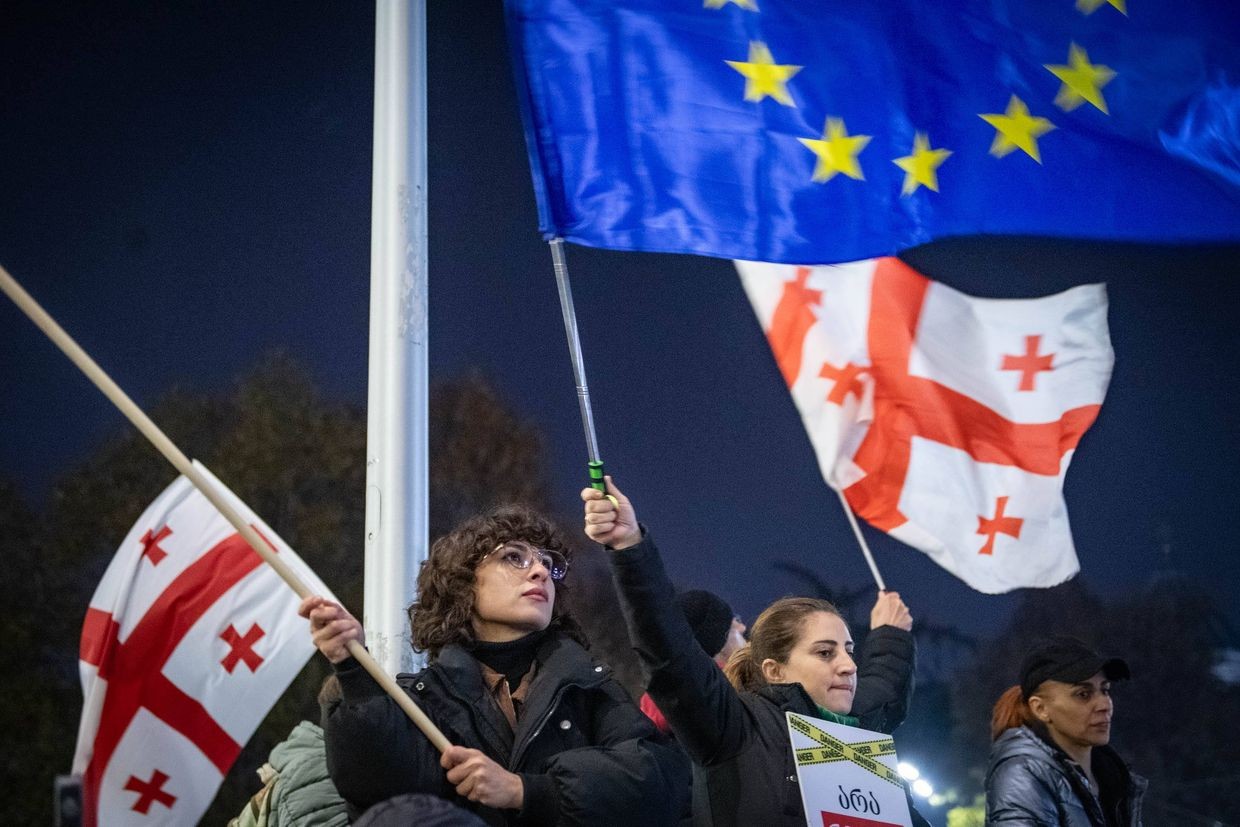
The parliament considered and then passed the amendments against the backdrop of daily anti-government protests that have been ongoing since the government’s EU U-turn in November 2024. Tbilisi’s central Rustaveli Avenue, more specifically the area surrounding the parliament, remains the main protest hotspot.
In recent months, several restrictive laws passed by the ruling Georgian Dream party have directly or indirectly targeted street protests — from harsher penalties for blocking roads to bans on face coverings and other actions. Despite the government recently preventing protesters from blocking roads, demonstrations have continued on the pavements outside parliament and along nearby narrow streets.
Government critics have repeatedly condemned the amendments as yet another attempt to restrict the right to protest, with Nona Kurdovanidze, head of the Georgian Young Lawyers’ Association (GYLA), saying Georgian Dream was ‘criminalising freedom of expression’.
The government dismissed the criticism but did not deny that the changes were linked to the ongoing anti-government protests.
‘If you again find a loophole in the law that allows a few dozen people to violate the rights of more than a million and a half citizens, I promise you I will personally initiate closing that loophole too’, Archil Gorduladze, a Georgian Dream MP and chair of parliament’s Legal Affairs Committee, said on Wednesday.
According to IPN, he added that if people block roads or pedestrian routes and hinder others from exercising their rights, they will face administrative liability for a first offence and criminal liability if the action is repeated.
The authorities frequently use this kind of terminology to portray daily anti-government protesters as a small group of ‘radicals’ who ‘impose’ themselves on the rest of the population by demonstrating on central streets.
Controversial higher education reforms
On Wednesday, parliament also adopted changes that significantly alter how the university system operates, particularly the distribution of academic programmes and the funding model of higher education institutions.
Under the amendments, the scholarship model used to cover tuition fees will be abolished, and all Georgian students admitted to bachelor and master’s programmes at public universities will have their studies fully funded by the state. However, the government will also set annual enrolment quotas for public universities — both overall and for each specific academic programme.
The amendments would also give the state the power to decide which academic programmes universities are allowed to offer. This is part of the government’s plan to introduce a ‘one city — one faculty’ model, meaning that faculties will be redistributed among public universities, leaving each university only with the disciplines in which the state considers it strong.
The government introduced these and other changes in October 2025, framing them as a major higher education reform and an effort to improve the system. However, the amendments faced criticism from opponents, who argued that the authorities aim to undermine university autonomy and restrict choices for students.
In addition to higher education, in December the Education Ministry introduced a school reform, featuring textbooks prepared by ministry-selected specialists, making year 12 optional, and introducing uniforms for primary school students.
 OC Media
This article was translated into Armenian and republished by our partner CivilNet.