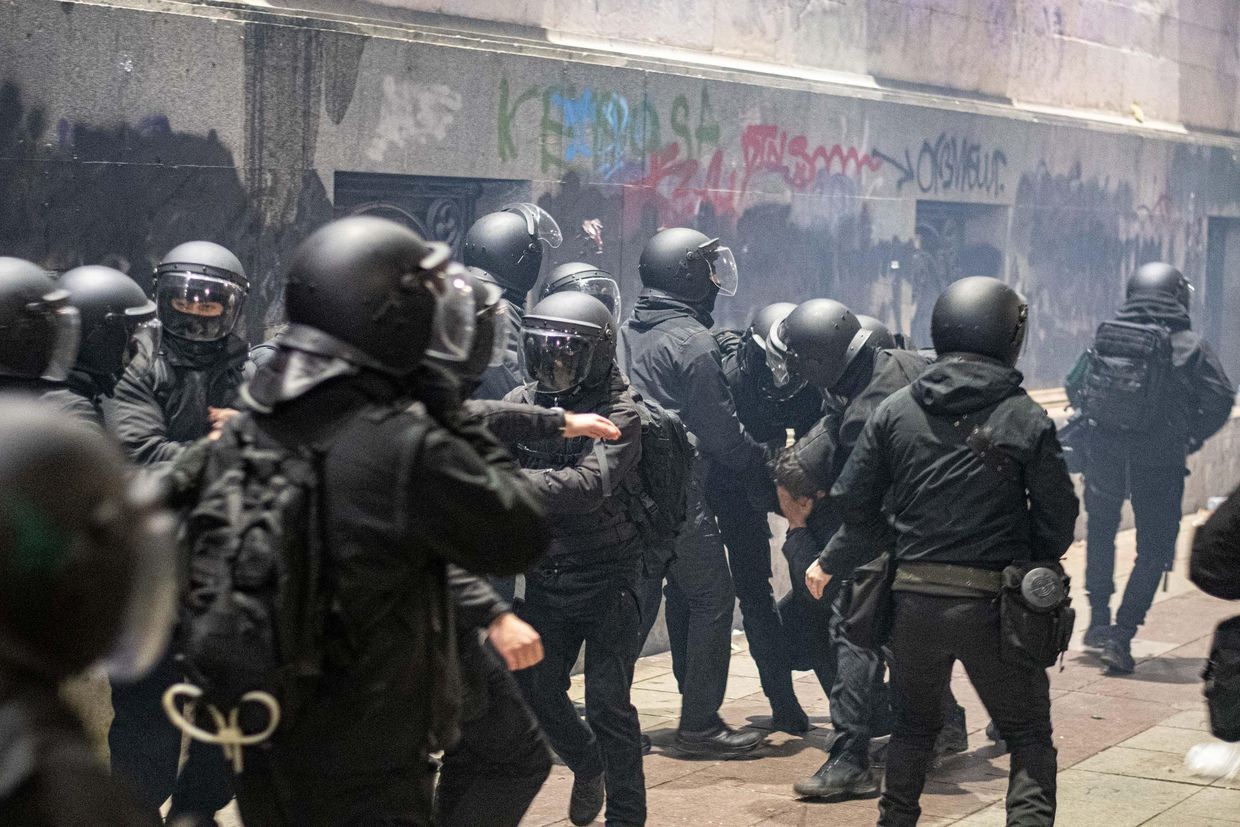
Georgia’s Public Defender’s Office has stated that no law enforcement officer faced criminal persecution for assaulting protesters during the anti-government protests of 2024.
In a lengthy report covering 2025, the Public Defender’s Office listed a number of issues, including the mistreatment of demonstrators, restrictive legislation adopted by the ruling Georgian Dream party, femicide, poverty, and social protection, labour, the rights of people affected by the Abkhazia and South Ossetia conflicts.
The report emphasised that police officers involved in the ill-treatment of protesters faced no charges, ‘even in the two episodes where the offending police officers’ faces were uncovered’.
‘Investigations into many other rights violations continue without results, failing to identify or hold accountable specific individuals, including in cases of alleged crimes committed against members of the media’, the report read.
The year of 2024 in Georgia was particularly turbulent. In spring, protesters demonstrated against the controversial foreign agents law, dubbed by the ‘Russian law’ to underscore its resemblance to Kremlin-style legislation. These protests were followed by post-election rallies in autumn, and protests in winter against the government’s decision to suspend Georgia’s EU bid ‘until the end of 2028’.
Many protesters and journalists, particularly during the winter 2024 demonstrations, reported disturbing episodes of violence by law enforcement, including beatings, humiliation, threats, and the confiscation of personal belongings.
 Mariam Bogveradze
The protests did not subside in the following period either, with daily anti-government demonstrations continuing into 2026 Tbilisi, as well as in several other cities, albeit on a smaller scale.
According to the report, during the 2025 demonstrations, the number of detentions and alleged cases of ill-treatment of protesters declined — a development closely linked to the reduced scale of the protests.
However, several detainees visited by representatives of the Public Defender’s Office continued to report experiences of mistreatment, including humiliation at the hands of police. The office noted that between 1 March 2025 and 20 February 2026, of the 131 individuals detained during protests and visited by its representatives, 35 (26.7%) reported ill-treatment, and 17 exhibited injuries.
‘The detainees reported instances of physical violence by police officers, humiliating and degrading treatment, verbal abuse, overly tight handcuffing, and being kept handcuffed behind their backs for several hours’.
The authors also cited detainees saying that, in the temporary detention facility, they were fully stripped, as well as forced ‘to do squats’ — a police tactic to see if people are carrying drugs inside their body cavities.
‘The regulations of penitentiary institutions do not provide for requests to perform squats’, the report read.
The authors further emphasised that in temporary detention facilities, both women and men are allowed to take a shower only once every three days, and ‘there is no differentiated approach to address the specific needs of women’.
Addressing rule of law issues and civil and political rights, the office emphasised that in 2025, the legislation regulating freedom of assembly was further tightened.
OC Media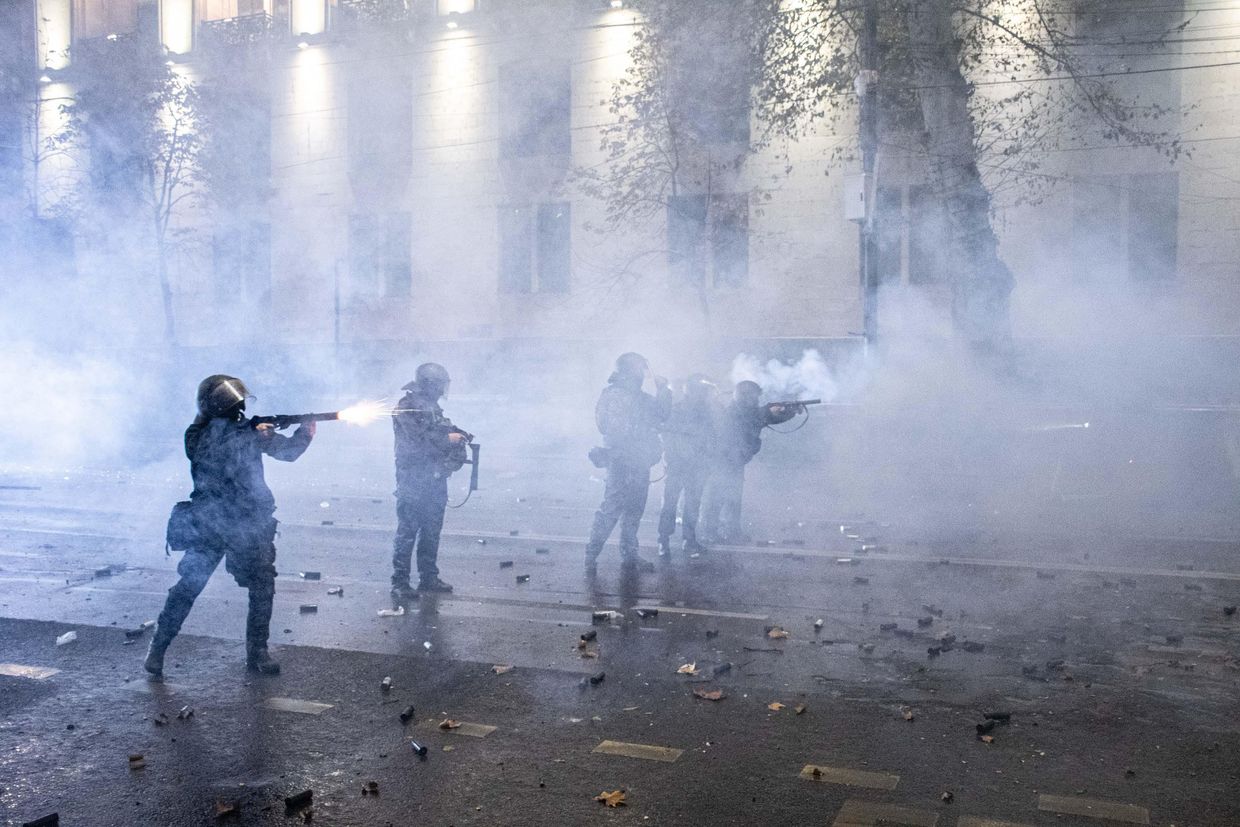
To illustrate how actively the restrictions were enforced, the authors cited data from the Interior Ministry, which showed that between 1 November 2024 and 31 October 2025, the police recorded 8,200 protest-related administrative offences — minor offences punishable by fines or brief imprisonment.
The authors highlighted legislative changes that made certain protest-related activities punishable by detention on the very first offence. This includes protests on pavements or other areas where the police have not been notified in advance.
‘The Public Defender notes that it is impossible to determine in advance under what circumstances expressing protest on a pavement could constitute a legitimate basis for interference with rights’, the report stated.
In January, the Public Defender’s Office announced that it challenged specific protest-restricting legislation and related penalties before the Constitutional Court.