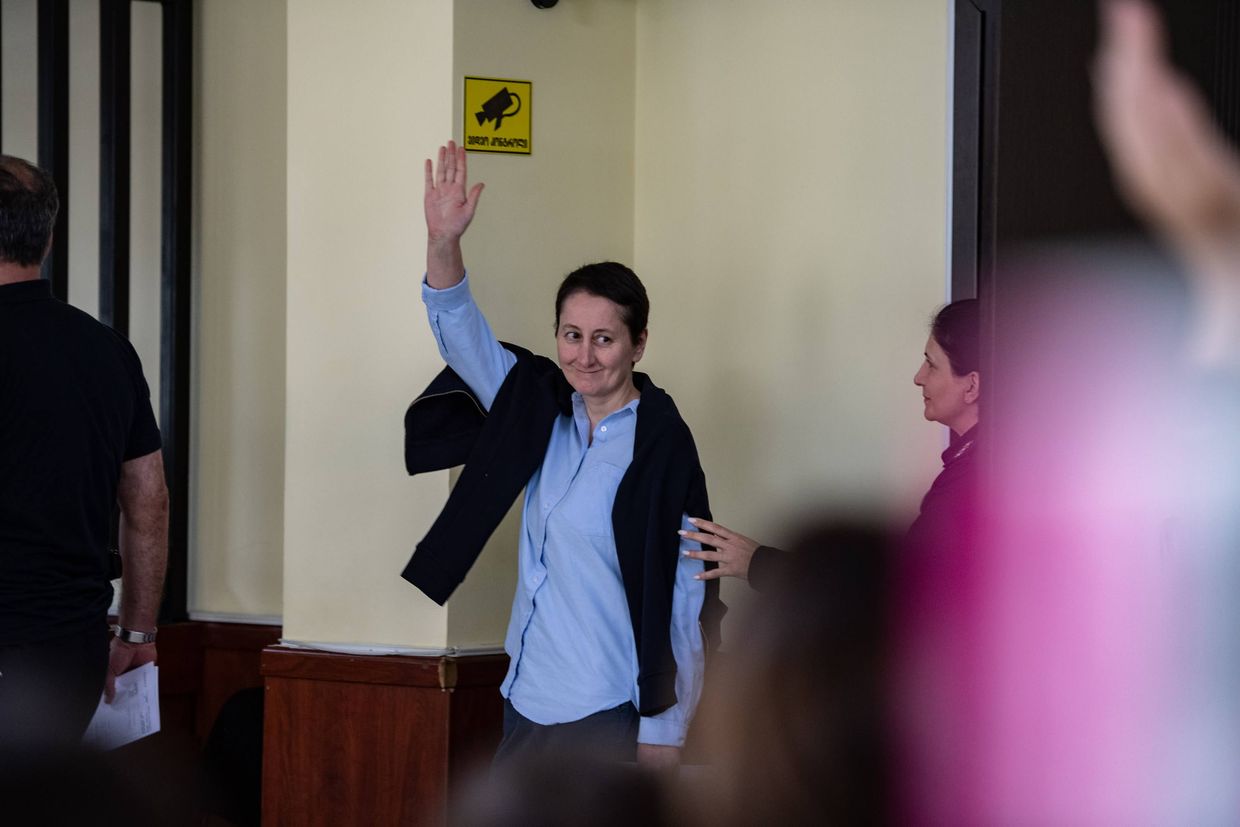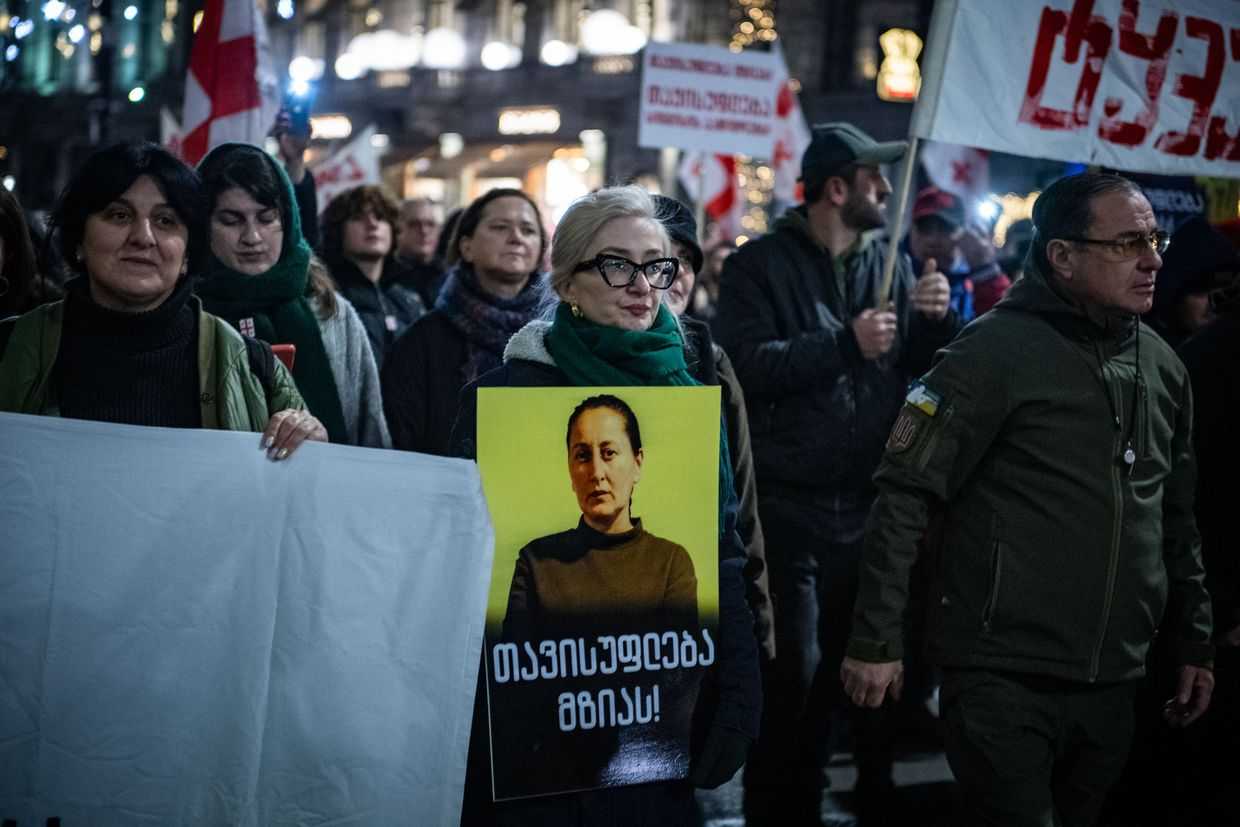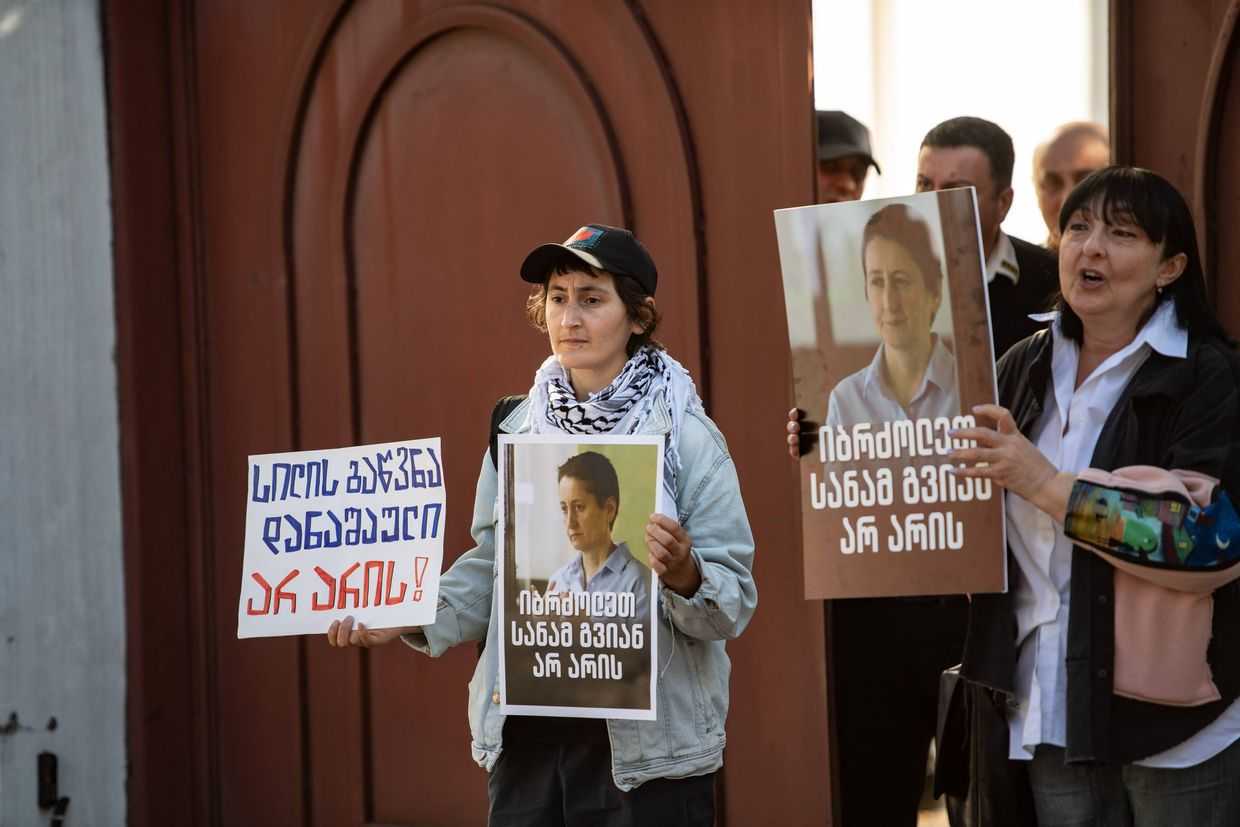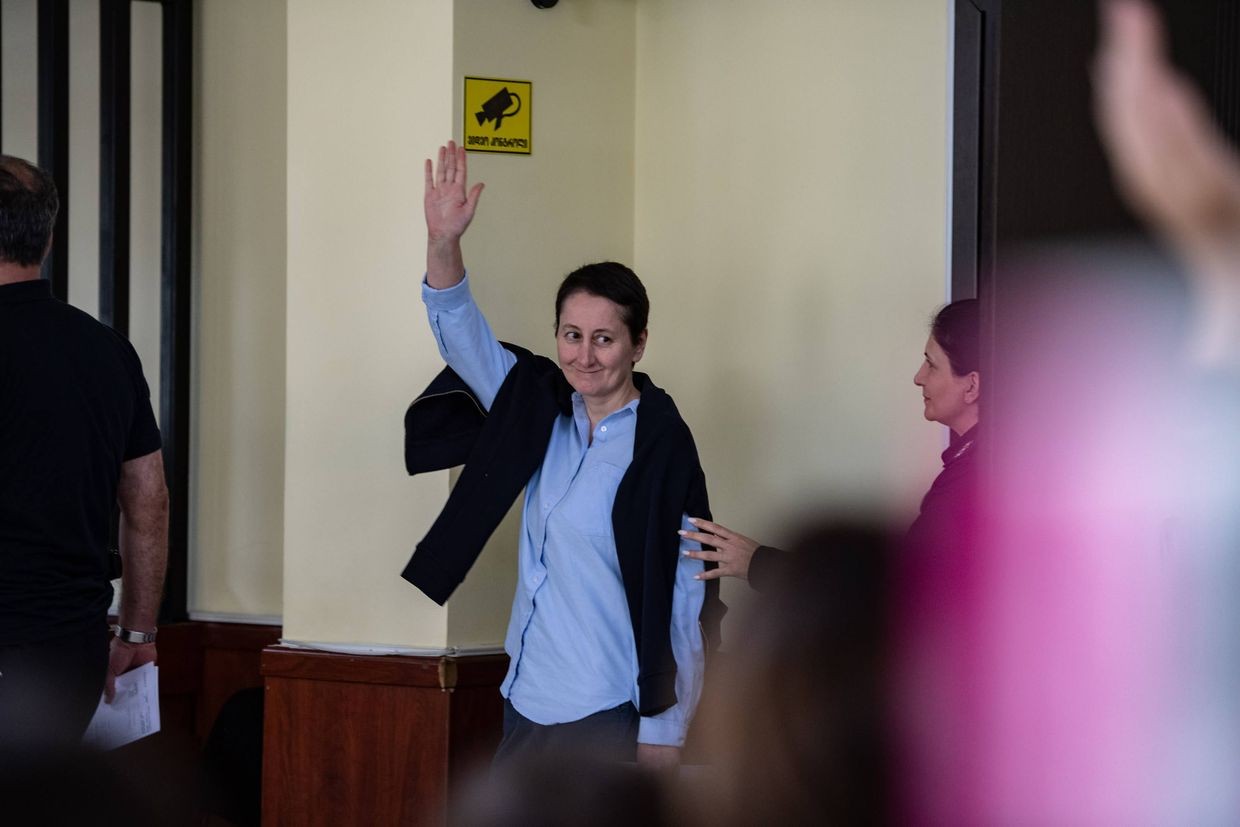
A state council has refused to grant early release to the founder of Batumelebi and Netgazeti, Mzia Amaghlobeli. The request was submitted by the prison in which she is serving her two-year sentence, citing her good conduct and lack of priors.
According to a Thursday report by Batumelebi, the Local Council for Reviewing Convict Cases, operating under the Special Penitentiary Service, rejected the appeal because Amaghlobeli had not ‘expressed remorse for her actions to this day’.
Batumelebi notes that the administration of Rustavi Prison approached the council in January 2026, stating that Amaghlobeli ‘acknowledges the fact that happened but does not consider it a criminal offence’.
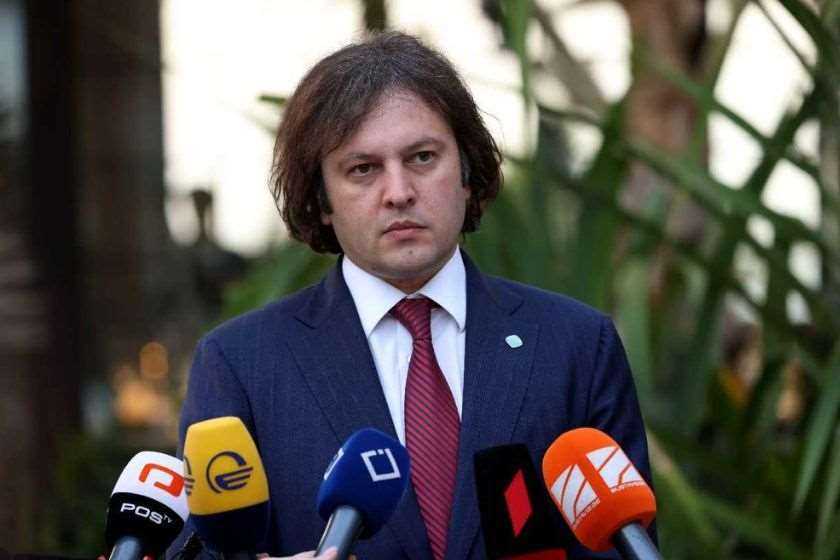
Amaghlobeli was sentenced to two years in prison in August 2025. She was initially detained in January the same year for slapping then-Batumi Police Chief Irakli Dgebuadze during a heated argument. During the course of her trial, the prosecution demanded that she be sentenced four to seven years on charges of assaulting a police officer.
The prison administration further stated in its request that Amaghlobeli has shown no tendency toward ‘emotional aggression’, has not been subjected to any disciplinary measures, has not violated the prison’s daily regime, maintains good relationships with fellow inmates, and is polite to the prison staff. The request also adds that she has no prior convictions.
 Mikheil Gvadzabia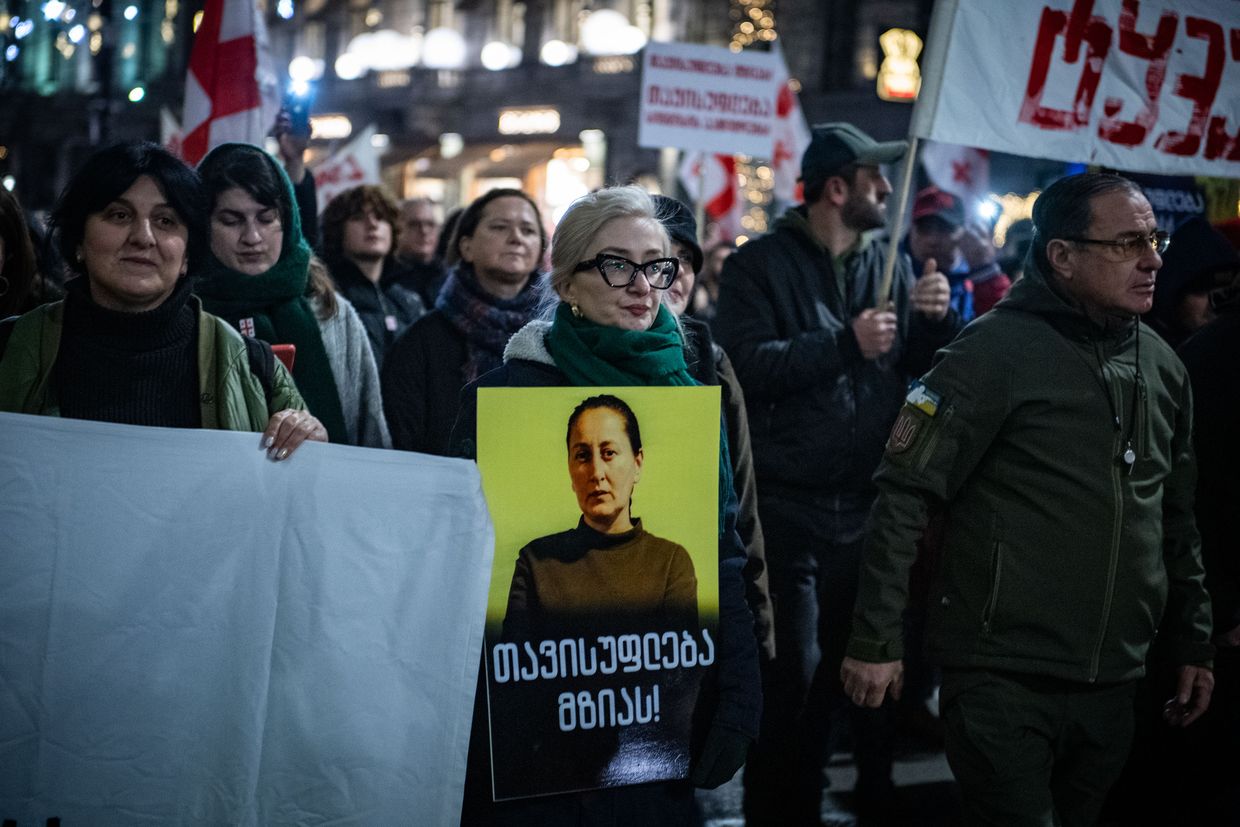
The council reviewed the request on 9 March and, despite the prison’s positive assessment, denied Amaghlobeli early release.
‘According to the materials provided by the penitentiary institution’s administration, Mzia Amaghlobeli has not expressed remorse for her actions to this day — she continues to demonstratively maintain that her actions do not constitute a crime’, it said.
The council determined that granting Amaghlobeli conditional early release ‘would be a sign of disrespect to the numerous law enforcement officers who uphold the country’s public order and respect for the law’.
It further stated that Amaghlobeli ‘does not participate in the social programmes offered by the administration, citing various reasons’. However, Rustavi Prison’s request did note that Amaghlobeli had indicated her willingness to take part in rehabilitation programmes once her court proceedings were concluded.
Throughout her court proceedings, Amaghlobeli repeatedly acknowledged having slapped Dgebuadze, but she disagreed with the classification of the case as an assault on a police officer.
‘I believe there is a provision in the law that appropriately corresponds to my action — a slap’, she once said.
Amaghlobeli has also regularly spoken about the circumstances leading up to the incident, including degrading treatment by the police, as well as the abuse she faced following her arrest after slapping the officer. This included being spat in the face by Dgebuadze, subjected to verbal abuse, and being denied access to a toilet.
Amaghlobeli’s case has drawn widespread criticism in Georgia and abroad as disproportionate and politically motivated.
Many were shocked by the harshness of the charges and the sentence sought for a single slap, especially since Dgebuadze himself faced no accountability, nor did the police officers who had brutalised anti-government demonstrators in Tbilisi in the months prior to Amaghlobeli’s arrest.
In protest, she spent the first 38 days of her imprisonment on hunger strike, and her vision, already been impaired before the arrest, deteriorated severely in prison.
As for Dgebuadze, he was transferred in September 2025 from the position of Batumi Police Chief to the Central Criminal Police Department in Tbilisi, and as of January 2026, he was serving in its organised crime division.
Dgebuadze rejected claims of abuse made by Amaghlobeli, although he has been accused by others of similar misconduct, including by protesters in Batumi who accused him of physically assaulting them and insulting them.
OC Media