Georgia’s cinema paradox — acclaimed abroad, yet struggling at home
Georgian films are failing to reach local audiences, largely due to weak infrastructure, monopolies, political pressure, and limited distribution.
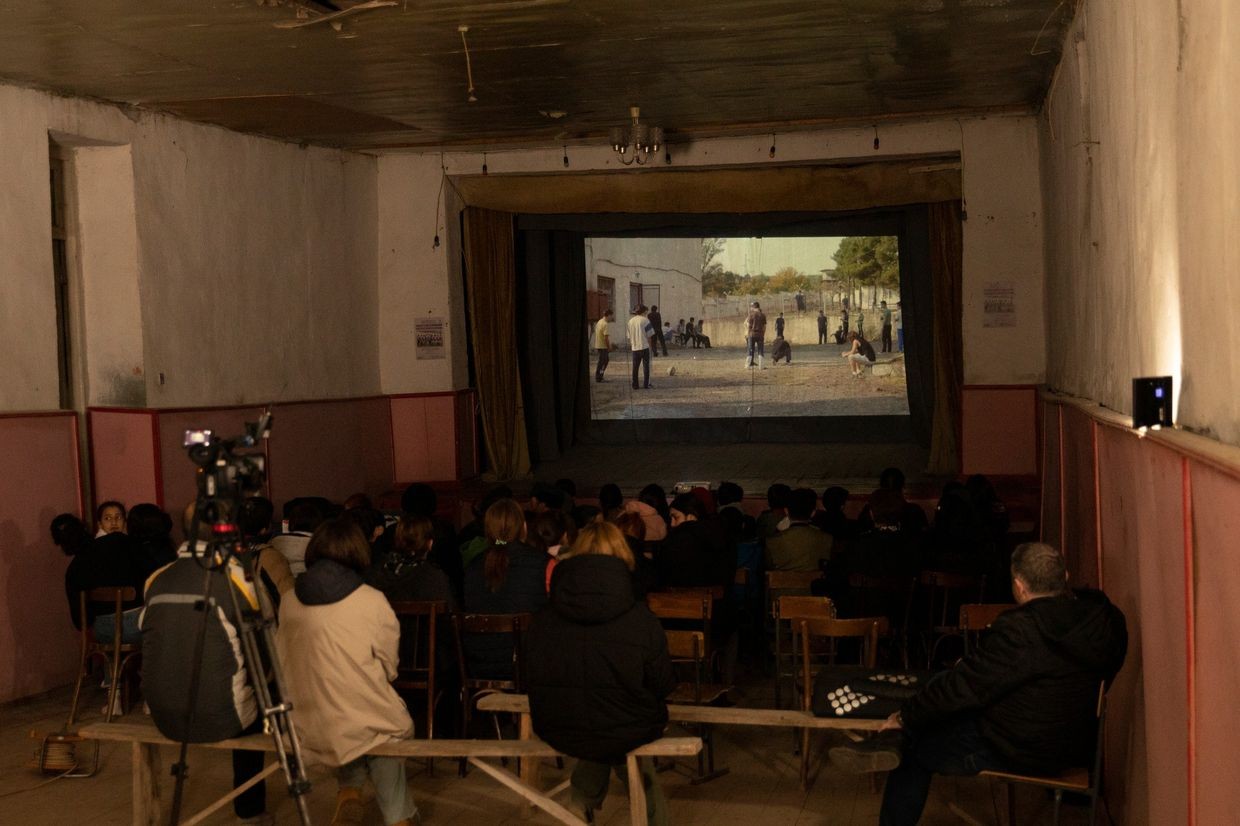
A woman births three babies for other women to buy a house; a family in a conflict-ridden region bets all hopes on a blueberry plantation; a tree, uprooted on an oligarch’s whim, sails across the waters of the Black Sea — these are not the fragments of a fever dream but real-life occurrences of Georgian life, masterfully captured by its contemporary filmmakers.
International success and over-packed festival screenings prove Georgian auteur cinema matches the country’s culturally dense and politically charged environment, yet there is a paradox: despite headlines and countless awards abroad, these films remain relatively unseen in their country of origin.
What stands today between Georgian films and their audience is a result of decades of neglectful cultural politics, co-production restrictions, and lately, political pressure and censorship.
Abandoned theatres and hostile politics
The notion of municipal theatre ended with the collapse of the Soviet Union — back then, bigger cities had separate cinema halls while villages held screenings in culture clubs. These buildings, now largely abandoned and decaying, once formed a part of a network that, while definitely serving to spread government propaganda, also brought cinema to local audiences — a 1956 edition of Komunisti mentions 273 rural theatres. Today, many filmmakers lament the lack of infrastructure by which they can distribute their work.
‘Both the country and the film industry needed to recover and get back on their feet after the 90s. The bridge between the audience and the authors have disappeared’, Tekla Machavariani, the producer of Tato Kotetishvili’s Holy Electricity, says.

She also speaks of the high ticket prices on a market effectively monopolised by Cavea, a private company that distributes films and owns most of Georgia’s cinemas. Outside of this mainstream network, there are few options for viewers interested in Georgia’s art-house scene.
Feature films, and especially documentaries, have, at best, a few festival screenings, most of them concentrated in the capital’s Amirani cinema, which has positioned itself as an auteur cinema hub. It has also welcomed Documentary Association Georgia — DOCA, an independent group of film professionals that aims to build a community for documentary filmmaking and introduce more of the genre to the audiences.
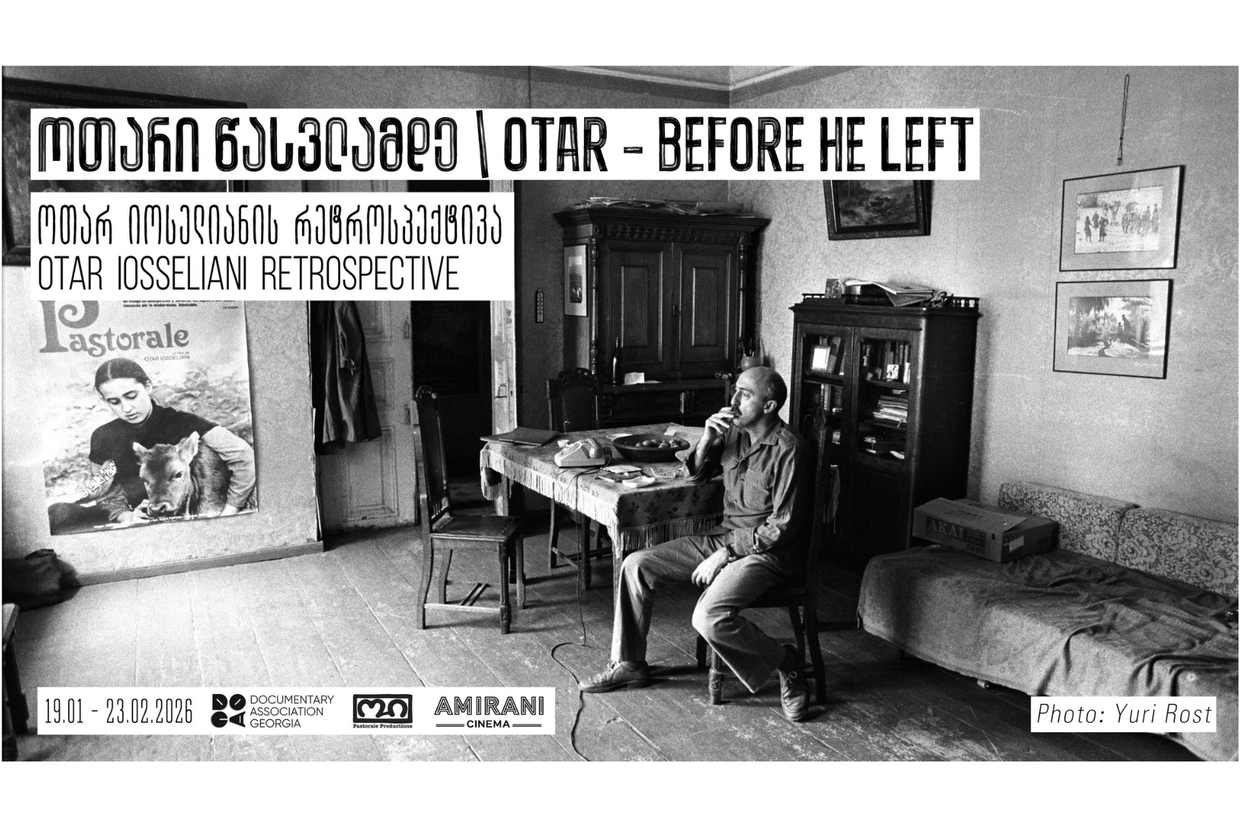
DOCA holds their film club screenings on Mondays with reduced prices in an attempt to make film more accessible, but film producer Ketevan Kipiani, the group’s executive, underlines the importance of theaters that don’t run solely on a commercial basis:
‘For a film theatre it’s very important to have a space where people will socialise, reflect, and create a community. Today, there are barely any spaces in Tbilisi where people can meet, outside of food establishments’.
Independent filmmakers today are left with two choices to showcase their art: private initiative and online streaming platforms.
Indeed, the domestic distribution problem, that, according to filmmakers and producers, was never fully addressed following the Soviet Union’s collapse, became especially problematic after reforms to the National Film Centre resulted in a painful stalemate between the state and the film community.
In 2023, then-Culture Minister Tea Tsulukiani fired key figures, tightened the grip on funding, and personally attacked films and their authors critical of the government. In response, many filmmakers went on to boycott the centre altogether.
 Luiza Mchedlishvili
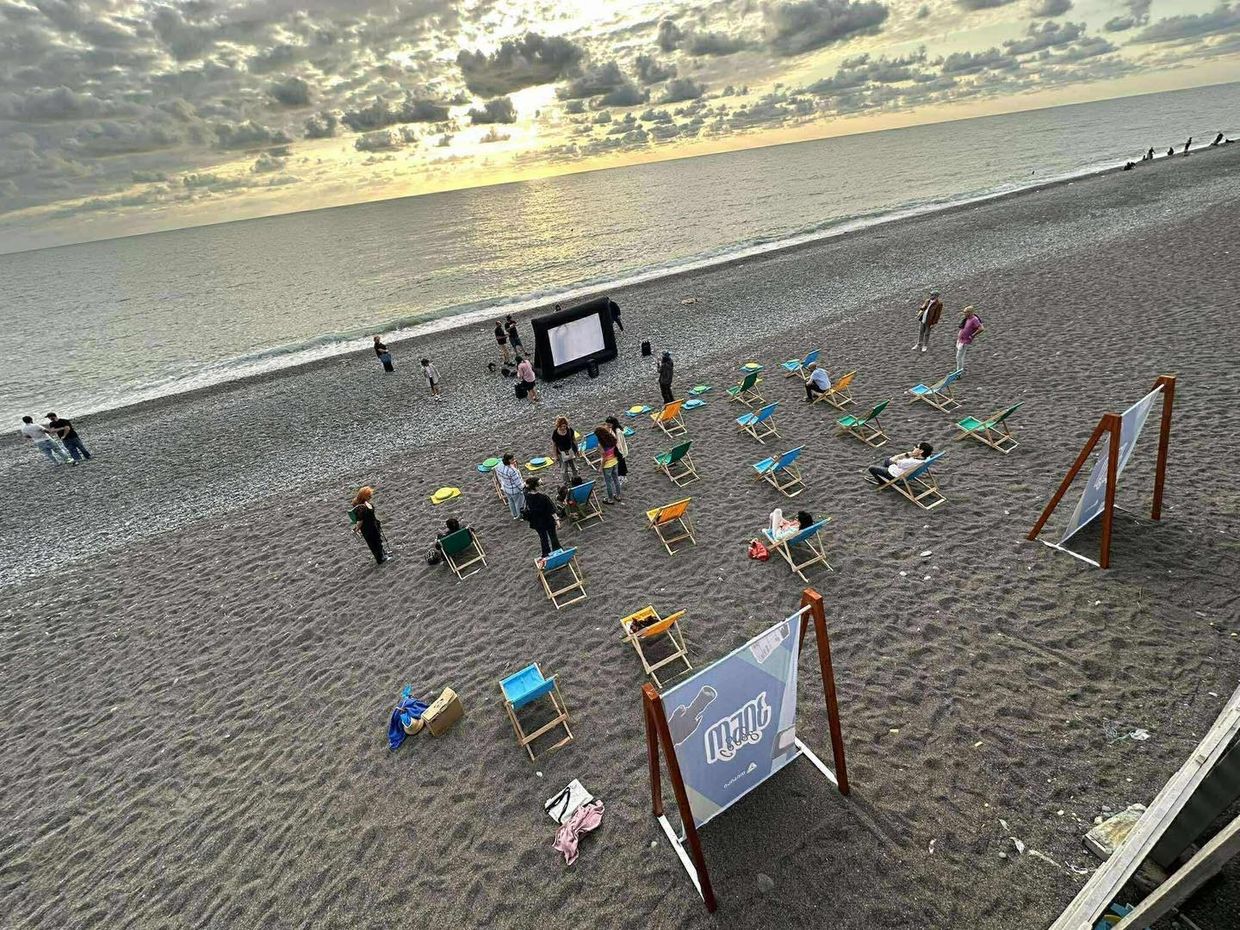
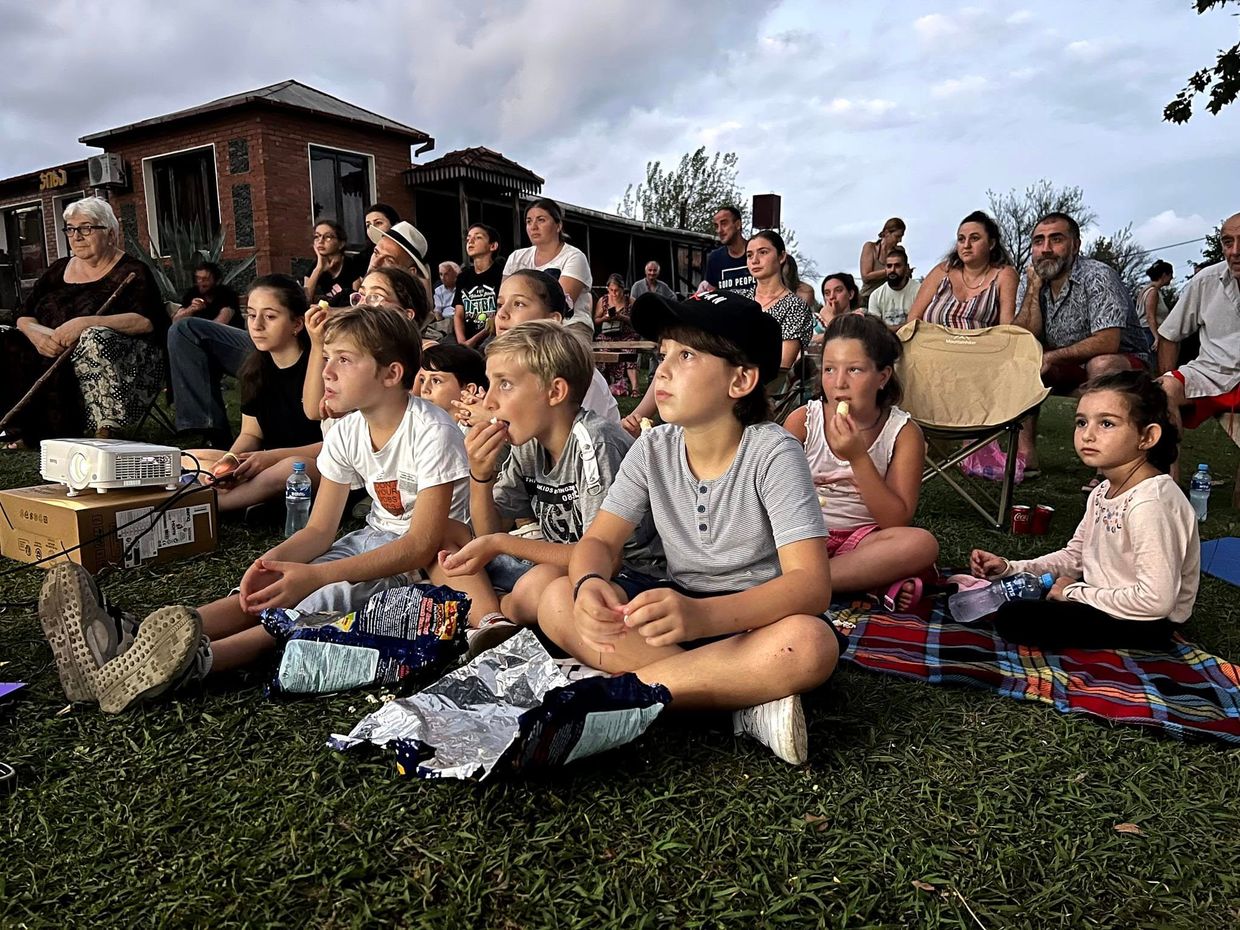
While this has made it harder to gain funding, the struggle has united over 450 industry workers under the movement Georgian Cinema is Under Threat. It also brought together a group that travels in rural Georgia with an inflatable screen, showing Georgian films and bringing directors for open discussions with the public.
‘In about a year and a half, we screened over 60 films, and we are planning to continue’ Irine Zhordania, a director and organiser of such screenings, tells OC Media. The group now works with a few private sponsors and friendly spaces.
Streaming limits and private apathy
If you want to watch a Georgian art house film or a documentary that came out in the last 10 years, you have few options: wait for a local festival or community screening, choose from a limited (paid) online catalog, or simply know a person with a link, which is how film critics, actors, and other film-related workers end up watching most of Georgia’s contemporary cinema.
When asked why the private sector does not show interest in supporting filmmaking and screenings, many professionals describe what seems to be a circular dilemma: businesses are not seeing the commercial potential because there are no strategies that would bring audiences to the theatres, and these strategies need funding. Some see the idea of collaborating with private entities as hopeless:
‘Focusing on commercial profit means rejecting those forms of cinema that are not marketable, but are very valuable. If we look at the dynamics of how we are losing cinema spaces, business also has its place here. For example, the sale of the Rustaveli Cinema despite the fact that the building itself is a monument of cultural heritage, Nini Shvelidze, a film writer and organiser of free screenings at Cinema House, says in reference to Cavea selling the historical Rustaveli cinema building to an Emirati construction company.
Others underscore the absence of required professionals to negotiate with businesses:
‘If you make a thing and then spend time on selling it, you exhaust yourself and have no time to work on a new project,’ director Mariam Chachia says.
In turn, community screenings are often tied to civil society organisations that increasingly find themselves under pressure from the government’s restrictive legislation, leading them to scale down their work or shut down completely.
‘It is hard to find an ally in the private sector’ producer Elene Margvelashvili tells OC Media.
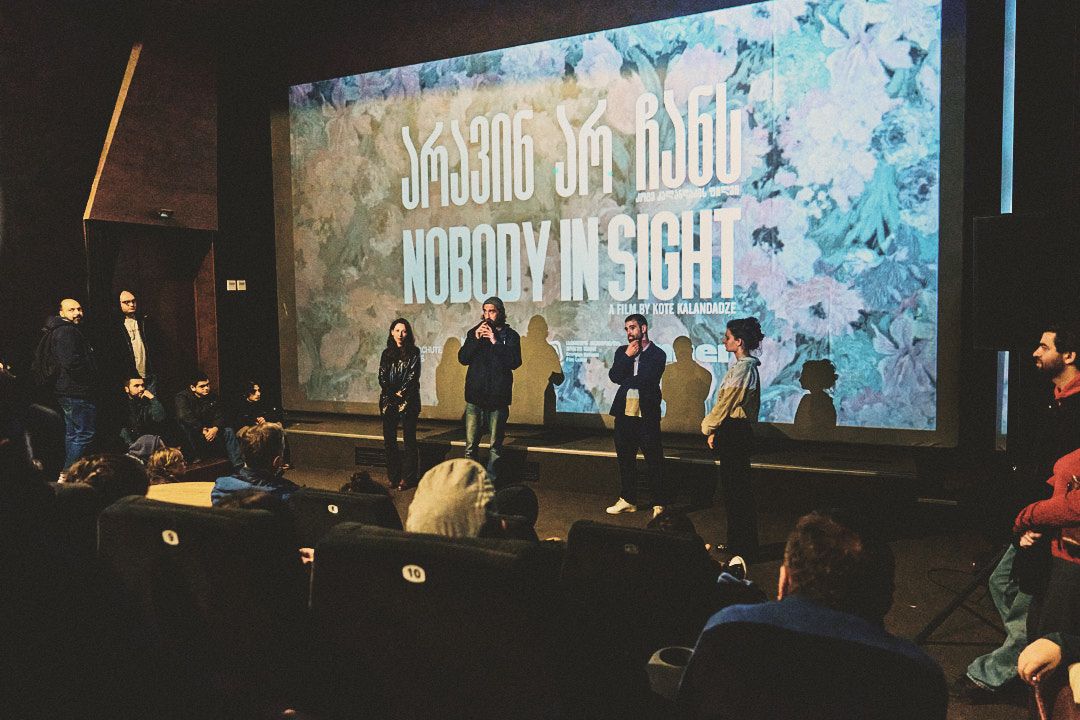
She managed to gain a small success promoting her last film, Kote Kalandadze’s Nobody in Sight via the social channels of the mental health hub Inner, in an example of value-aligned collaboration. The hub also paid for the printing of film posters. Even so, Margvelashvili notes that many friendly companies struggle themselves.
Online streaming is also tricky for a relatively new independent film: directors would prefer their film to be screened live and achieve its full festival potential before relegating it online.
In addition to providing international recognition, festivals allow filmmakers to broaden their networks and prepare the ground for future projects. Directors can meet future co-producers, which in turn opens routes to funding and distribution — for instance, in the case of Mariam Chachia’s Magic Mountain, the Polish co-production allowed the public broadcaster to showcase the film in Poland.
This international exposure, whether through co-production conditions or a separately hired distribution company, comes with a price, however: the contract prioritises in-person, festival screenings, and festivals value exclusivity, so wider access may sabotage the director’s future. Authors mostly retain the rights to sell and screen films within Georgia and can use the streaming platforms that are ‘country-locked’, or in other words, inaccessible from outside of the country.
In 2022, Cavea introduced a streaming platform that houses most contemporary Georgian films, but the selection is still limited. Directors either fear the film will be stolen or accessed outside the country using VPNs, potentially violating their distribution contracts, or don’t have high hopes regarding audience reach.
‘We are thinking to showcase The Kartli Kingdom in cinemas first, and then consider Cavea, but that needs to be agreed with our distributor. But I am not sure if viewers are interested in documentaries on Cavea and the amount they offer to filmmakers are minimal’, Keti Kipiani says about putting the film she produced on the Georgian streaming platform.
Xandie (Alexandra) Kuenning
Similarly, Margvelashvili wishes for the more ‘strategically agreed collaboration’ between filmmakers and the platform; she adds that without outreach strategies, it’s hard to compete with a Cannes festival winner on the same platform that has ‘all of the world’s marketing’ behind it.
As for Mariam Chachia, following personal persecution from Tsulukiani and some cancelled screenings, she is pessimistic the platform would even accept her film at all.
Censorship tightens
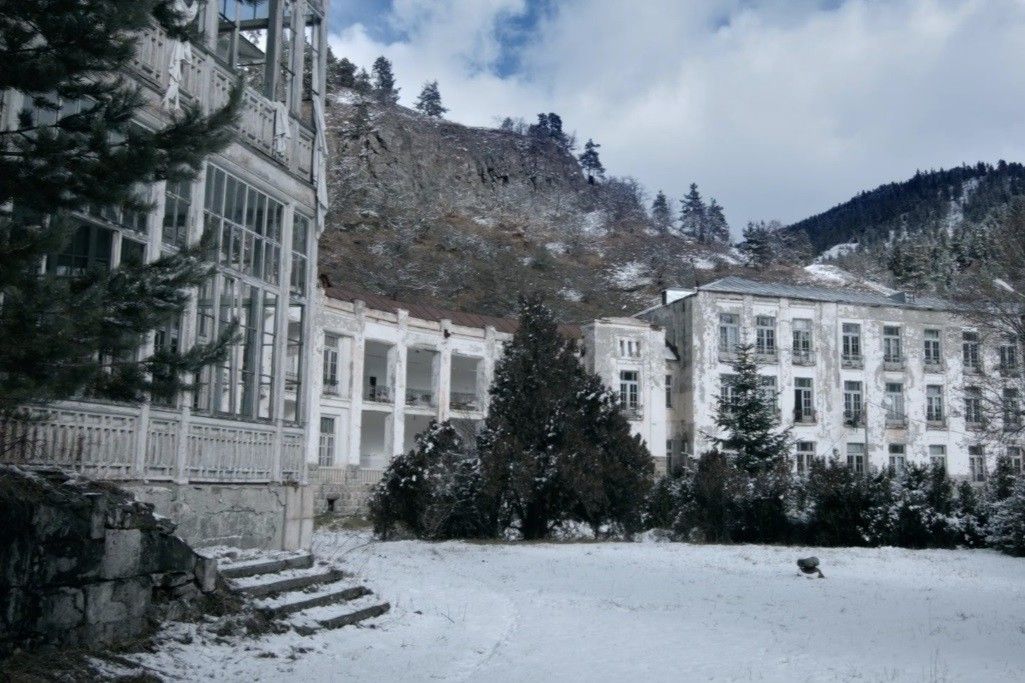
Magic Mountain hit a nerve with the ruling Georgian Dream party. The film itself focuses on a tuberculosis recovery facility housed in a 19th-century Romanov palace. The film notably depicts the historical building’s destruction in favour of oligarch and Georgian Dream founder Bidzina Ivanishvili’s personal residence.
The palace was demolished during the Orthodox Easter holidays and therefore largely missed by local media — ‘my camera was the only one there to capture it’, Chachia recalls.
Following the film’s Georgian premiere, Tsulukiani gave an interview on the pro-government TV channel Imedi, calling the documentary a ‘beautiful fraud’ and referring to Chachia as a ‘woman filmmaker trying to establish herself’. She then threatened Chachia for not following the approved screenplay.
Chachia says that her film, which is still travelling internationally, was screened in Georgia five times at most, with screenings delayed and cancelled after Tsulukiani’s interview. She believes this was a precedent for the National Film Centre to directly censor films they approve funding for.
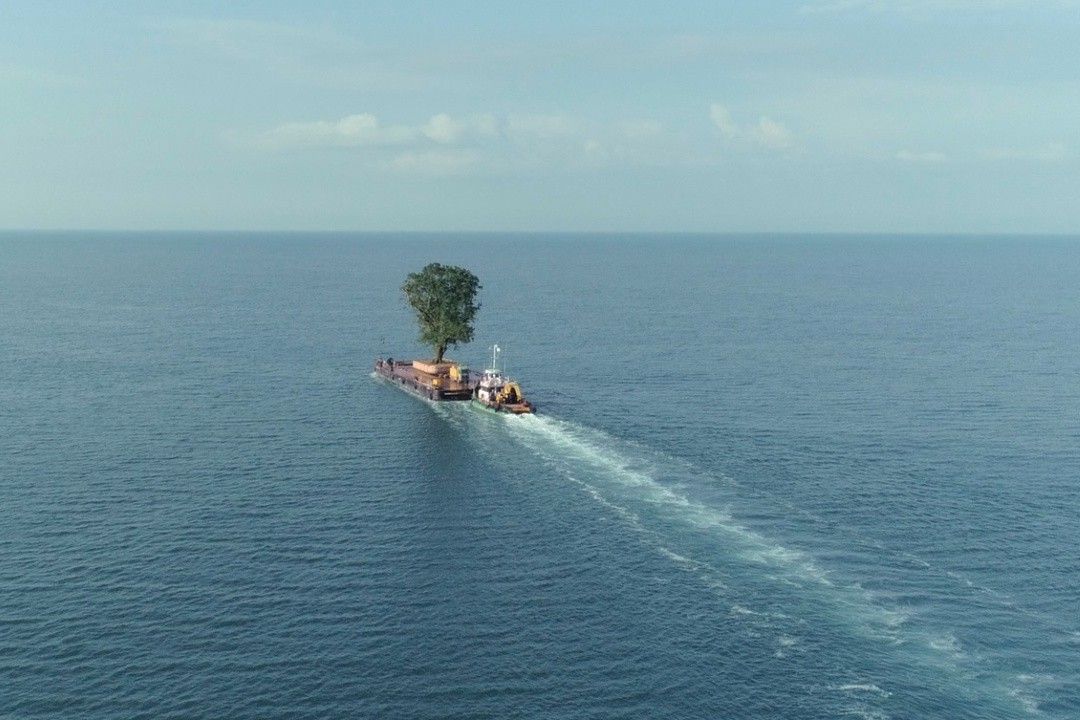
Salome Jashi’s 2021 documentary Taming the Garden — which depicted the uprooting of century-old trees for a public park financed by Ivanishvili — also faced similar persecution from the government. At the time, the Georgian Film Academy cancelled screenings and then-party chair Irakli Kobakhidze accused the film of having a ‘political purpose’.
But these cases of censorship worry the filmmaking community less than the recent legislative package announced by Georgian Dream that significantly expands the definition of already-restricted foreign funding.
According to the new package, any foreign money that is used for activities aimed at influencing the Georgian government, state institutions, or society or changing Georgia’s domestic or foreign policy, would require government approval.
‘Personally, I’m paused because I don’t know how wide the new law applications are’ Chachia says.
‘Our community screenings stand largely in collaboration with embassies, who provide us with licensed films’, Shvelidze says. She worries that this, too, will be considered a grant under the new law.
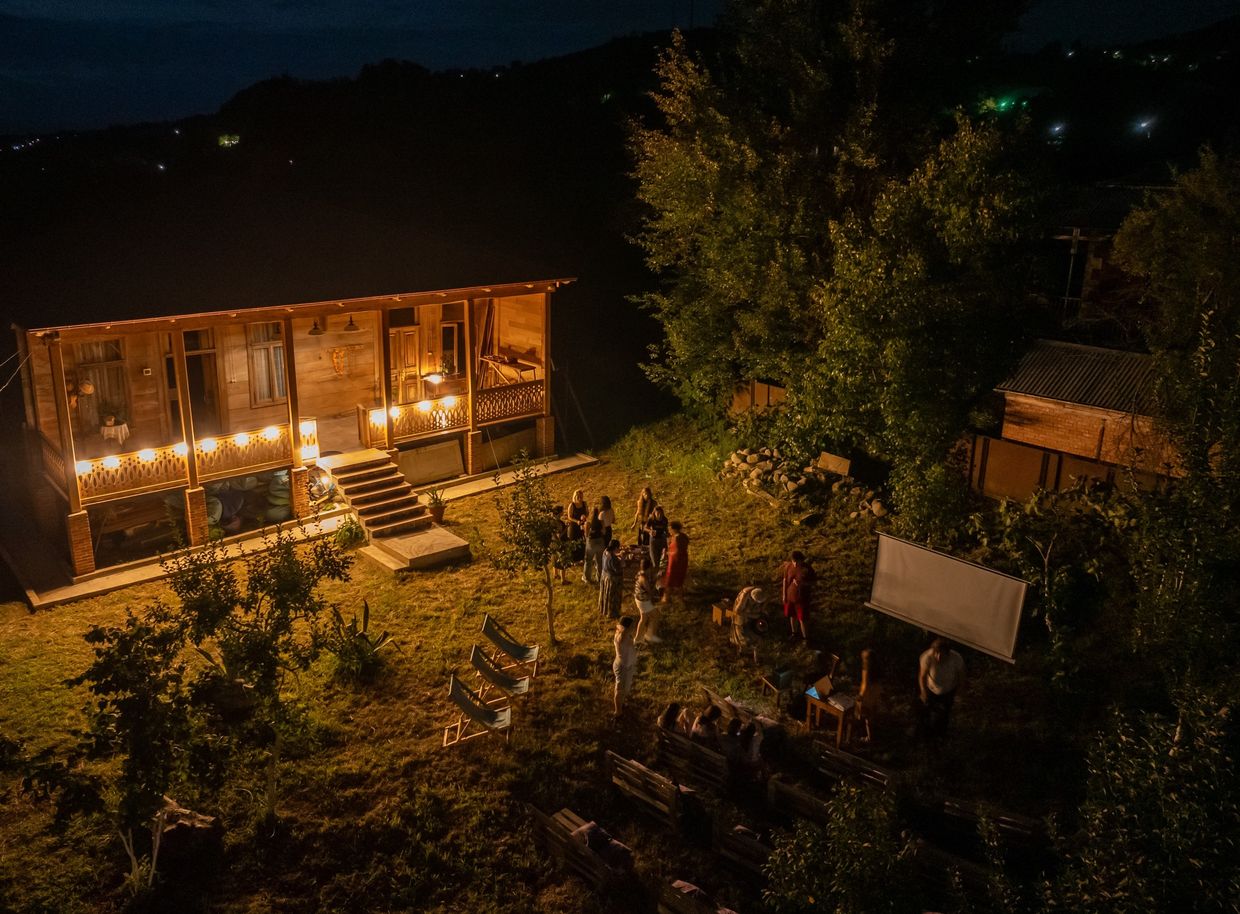
Margvelashvili believes that directors and producers might soon be forced underground, which will further restrict them from reaching an audience. At the same time, she underlines the unity of the community and the volunteer initiatives that keep screens illuminated:
‘The alternative I see is to find a way to create more or less sustainable institutions in this very difficult situation, again with mutual cooperation, solidarity, and the help of the private sector. If any of them want to talk, I have access to about 40 brilliant Georgian films that I can set up screenings for and organise a discussion around’.