Gohar’s second goodbye: forced to leave Armenia after losing Nagorno-Karabakh
Following Armenia’s cuts in aid for Nagorno-Karabakh Armenians, Gohar Aleksanyan, 45, realised she had to leave her home, again.


As the first explosion shook Stepanakert on 19 September 2023, Gohar Aleksanyan was just leaving the beauty salon, her lashes and nails freshly done. She was getting ready for her niece’s wedding the next day. In those frantic seconds, as she ran for shelter, her first thought was embarrassment — how could she explain, or justify, darting through the city with full makeup, fleeing for her life?
Aleksanyan, 45, is one of the 120,000 Armenians displaced from Nagorno-Karabakh by Azerbaijan’s large-scale assault, which followed a nearly ten month blockade of the region.
 Arshaluys Barseghyan
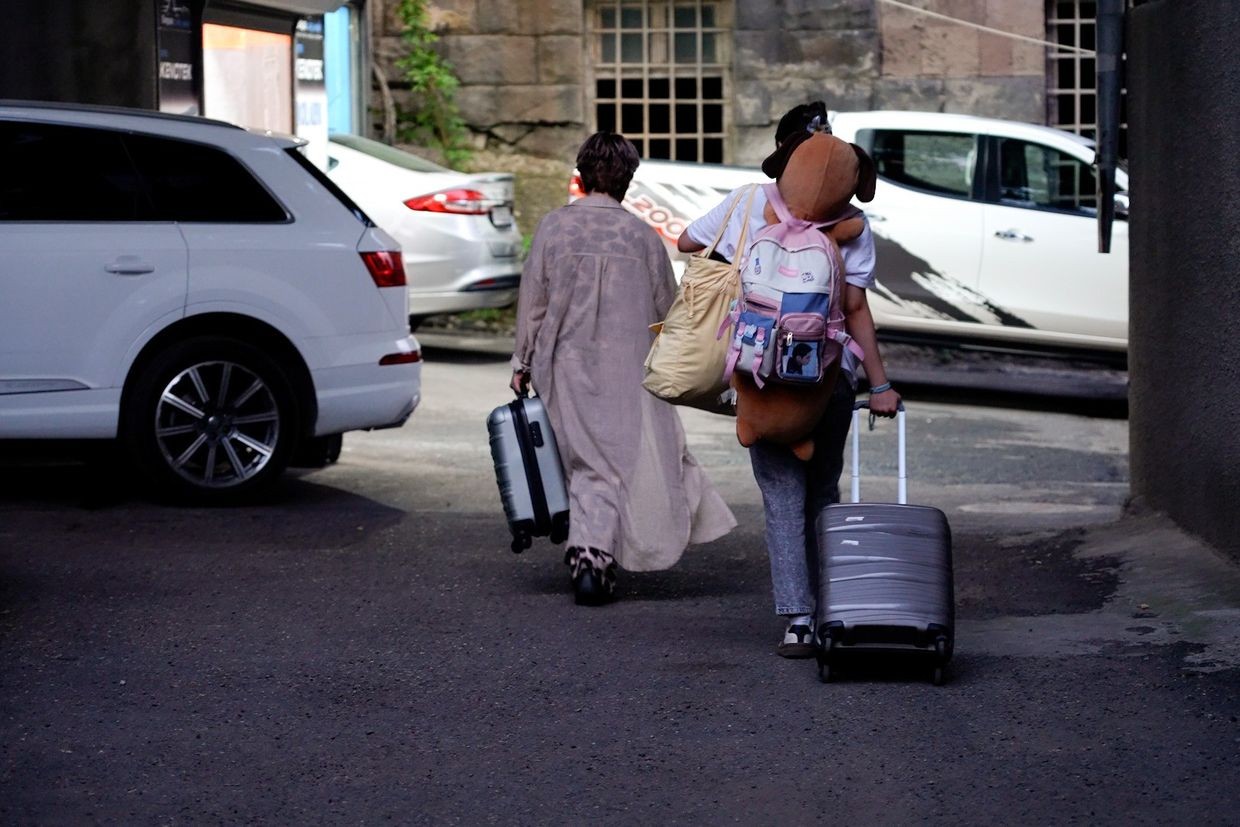
Two years later, Aleksanyan now lives as a single mother in Armenia’s capital Yerevan, residing in a rented apartment inhabited by four generations of her family: her 96-year-old grandmother, retired parents, and two daughters. Having lost their home and homeland, they are at least physically safe in Yerevan. But this sense of safety is fleeting. Unable to make ends meet, Aleksanyan is preparing to leave again, this time for Russia. There, she hopes to find work to support her family: ‘I have to go’, she says quietly.
After her displacement, returning to music was difficult. In Nagorno-Karabakh, Aleksanyan’s career had spanned for decades, a natural path given she grew up in a family of musicians — her father a clarinettist and her mother a pianist. Even her grandfather taught and performed on the tar, the region’s traditional string instrument. Aleksanyan and her two sisters sang together from childhood, and as an adult, she performed with the Komitas Music College ensemble.
Aleksanyan, like everyone in the region, witnessed multiple wars and grew up with earlier stories of violence. Yet music had always filled her life; years away from the stage only came after marriage and motherhood. But her new exile has changed everything.
‘When you lose your homeland and so many people, it’s almost cruel to expect an artist to keep creating’, she says. ‘A painter, maybe, could just paint in silence. But as a singer, you must perform, even while grieving. It was too much. Many singers simply stopped singing’.
But the demand for art can be irresistible. Slowly, duty drew her back. Invited to memorials for young soldiers killed in the last war, Aleksanyan could not refuse.
‘I knew what those families had lost’, she recalls. ‘How could I say no? Even if I doubted I could be strong enough to sing, I owed it to them to try’.
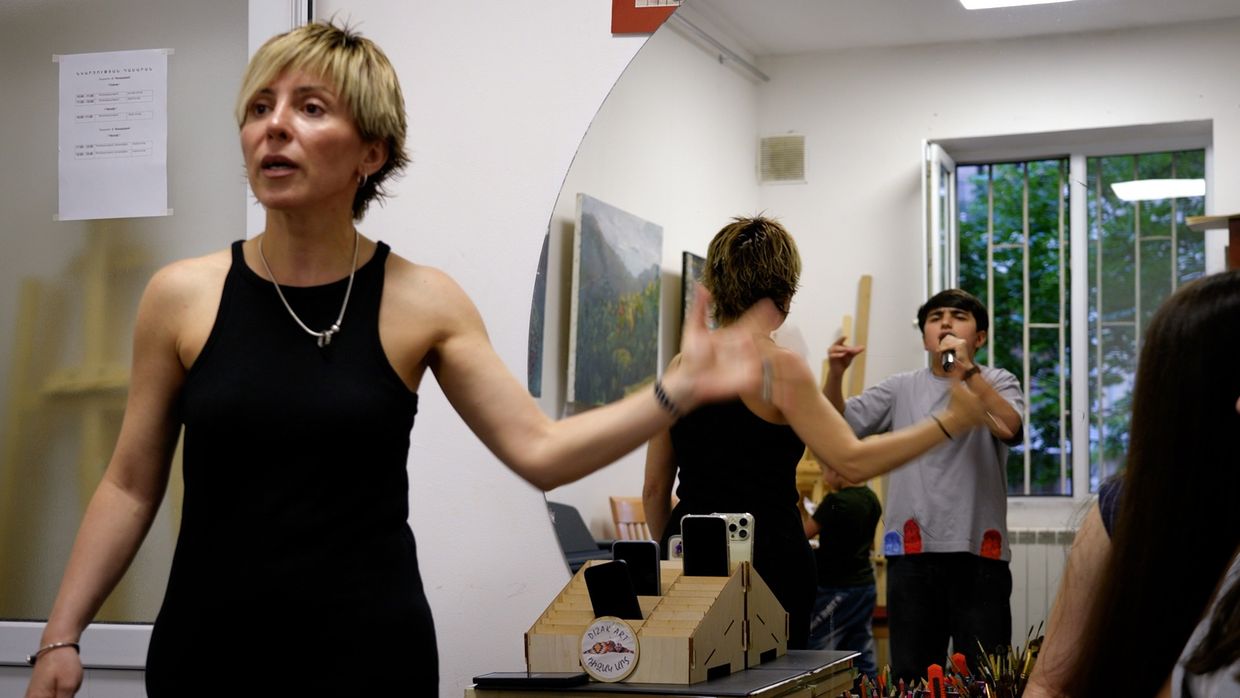
Aleksanyan’s institutional return to music began at Dizak Art, a cultural organisation in Yerevan created to preserve the rich heritage of Nagorno-Karabakh. Founded by Yerazik Avanesyan , the centre offers displaced children uprooted by war a place to reconnect with their identity through music, theatre, paintings, and dance. There, Aleksanyan began training young singers in pop performance.
‘Working with them felt like being back in Artsakh [Nagorno-Karabakh]’, she says. ‘They all spoke in dialect, It felt like a big family’.
At her final rehearsal with the children, Aleksanyan sang ‘Smile’, the classic written by Charlie Chaplin.
The years in Nagorno-Karabakh were marked by wars, with brief pauses in between. Wars, blockades, and displacement, and the hardships that accompanied them, made Aleksanyan sing about ‘Life and war’, but the time to sing her favorite music never came; it always seemed to be postponed.
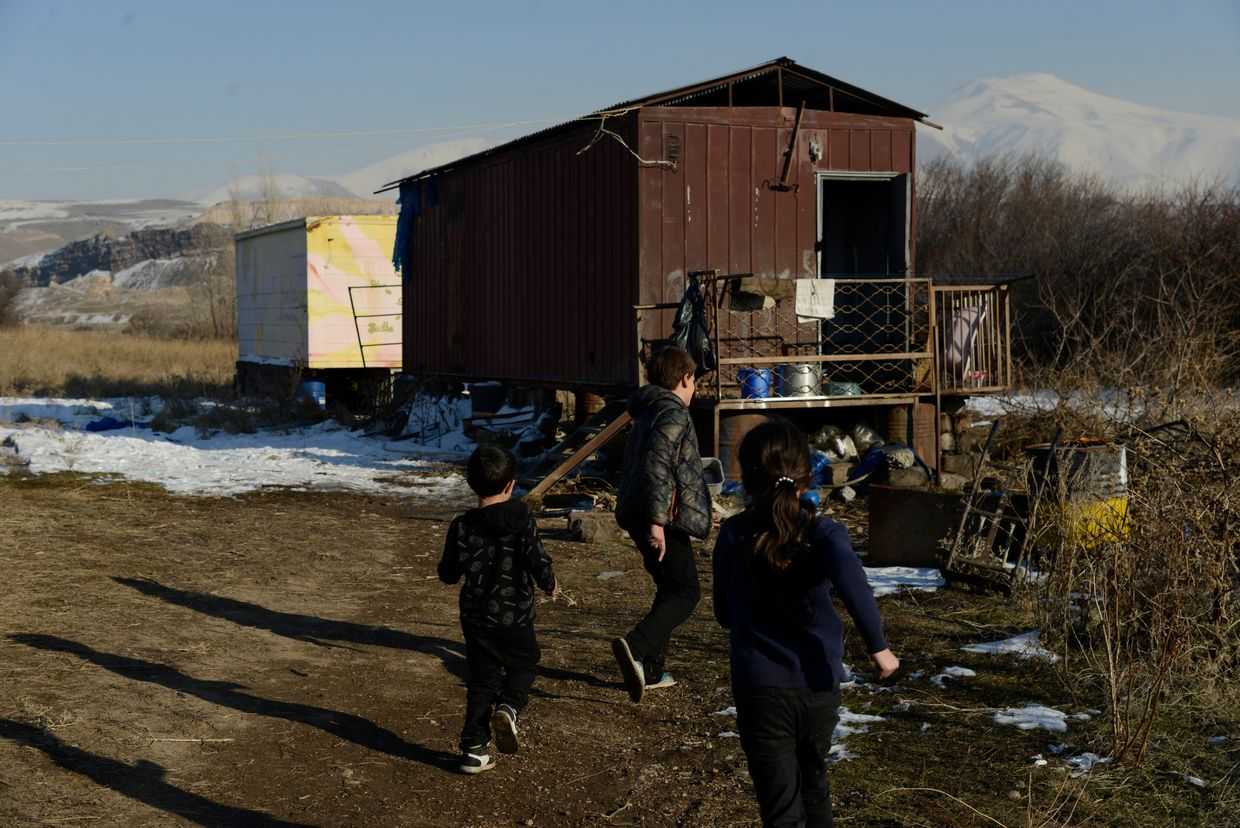
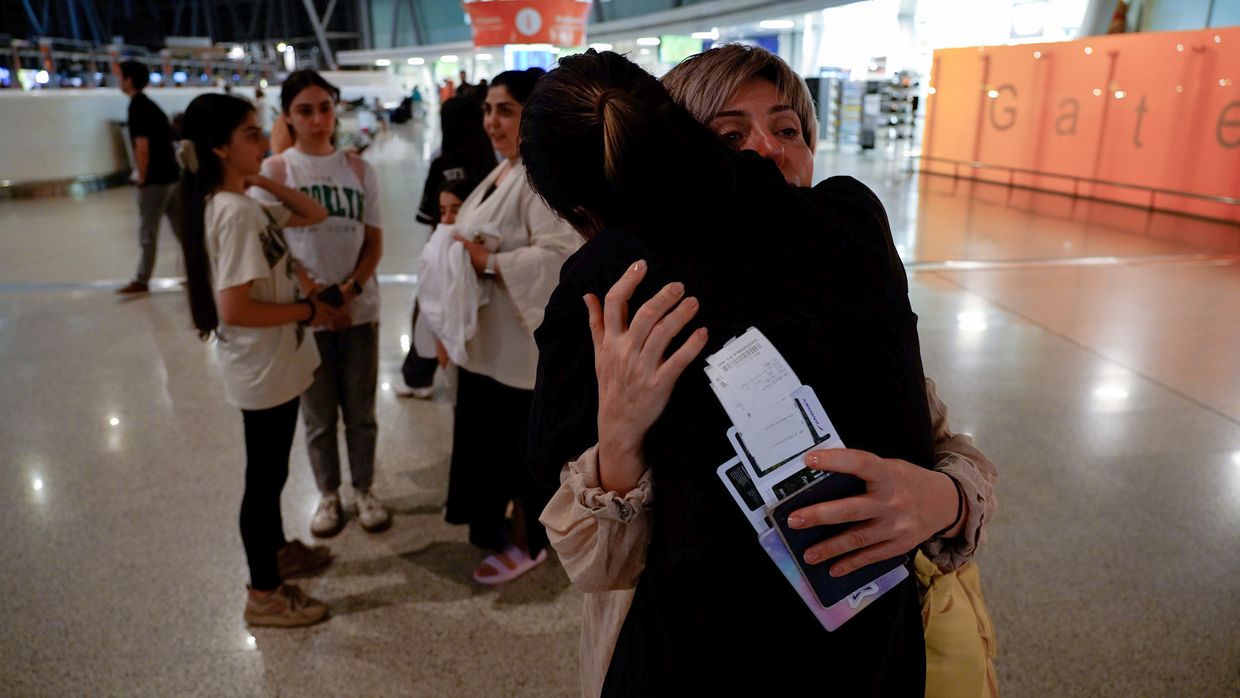
Now, preparing to leave Armenia, Aleksanyan struggles with the thought of parting from her students. The work, she explains, was almost voluntary, as funding for the centre never covered basic expenses. She took on extra jobs, including childcare, but as the only breadwinner for her multigenerational family, she could no longer make ends meet. When the Armenian government cut rent subsidies for displaced families in April, she realised she had run out of options and would have to leave — a forced choice that many other displaced families are also making.
As of 15 November, around 15,600 of the Armenians displaced from Nagorno-Karabakh have already left Armenia, forced to move again by rising hardship, shrinking resources, and the government’s cuts to housing support, the National Security Service confirmed in response to our inquiry.
After leaving Armenia, Aleksanyan plans to join her sister’s music studio in Kislovodsk, Russia, where she hopes to keep performing and teaching. She tries to comfort herself with the thought that the Armenian community there is strong and welcoming, and that among her future students will be both Armenian and Russian children.
‘I’ll teach them Armenian songs and traditions too’, she says with a faint smile, as if joking her way through the guilt of leaving the homeland once more.
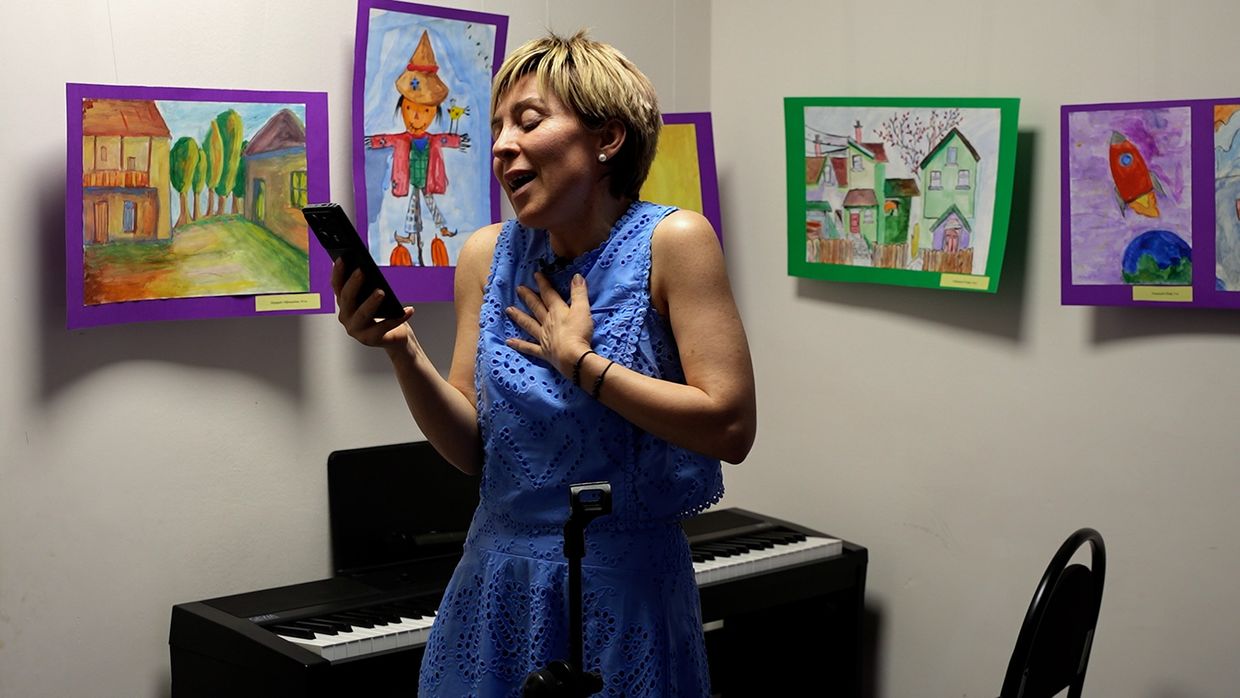
To prepare for a more stable future, Aleksanyan has not relied solely on music. Before leaving Yerevan, she trained in eyebrow art through charity programmes.
‘It’s work for hard days’, she laughs, describing it as another form of art she has come to love. But after losing so much, she admits, her sense of creativity is now bound up with survival.
‘Artists shouldn’t have to think so much about money’, she says. ‘But when you start from scratch again, it’s all you can think about’.
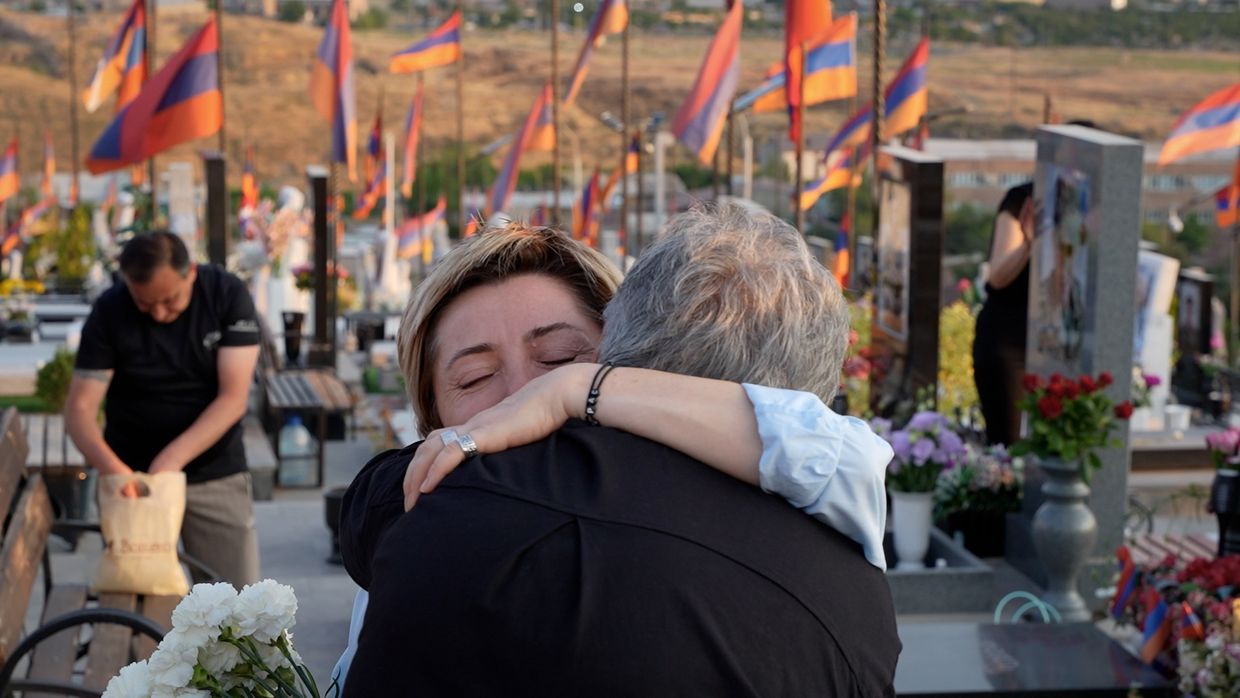
Before leaving, Aleksanyan said her goodbyes to loved ones and friends. One of the most meaningful farewells took place at Yerevan’s Yerablur Military Memorial Cemetery, where she met with her mentor and friend, Marine Mesropyan, the conductor of the Mrakats choir in Nagorno-Karabakh. For Aleksanyan, the choice of place is no coincidence. Yerablur (which translated as three hills), she says, is sacred to her and to many others who lost loved ones in the wars.
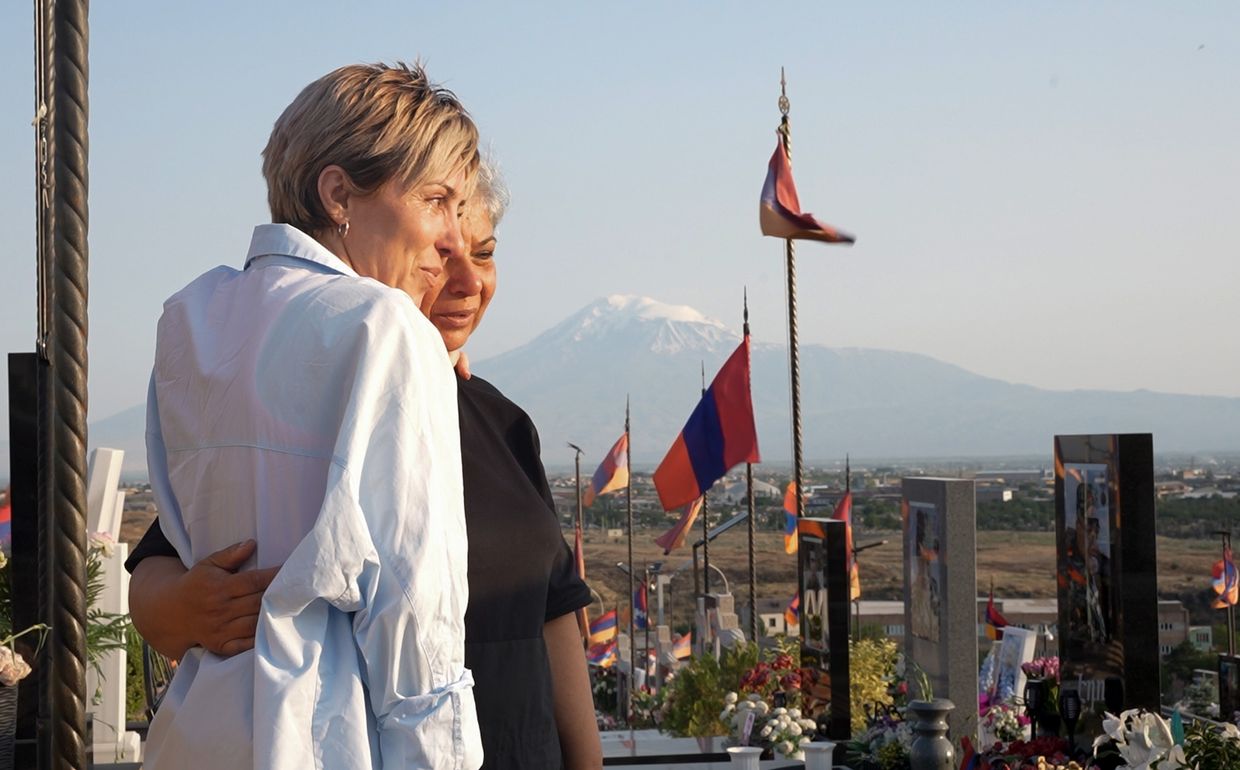
Mesropyan visits the hilltop cemetery every day, sitting in silence before the grave of her son, Narek Mesropyan, a doctor and musician killed in the Second Nagorno-Karabakh War in 2020.
‘It felt right to say goodbye here’, Aleksanyan says quietly. ‘To thank Narek for the life he fought to protect, for the three more years we were still able to live in Artsakh’.
‘We were the happiest family’, Mesropyan says. ‘And we became the saddest’.
It was she who, after years of pause, persuaded Aleksanyan to return to music.
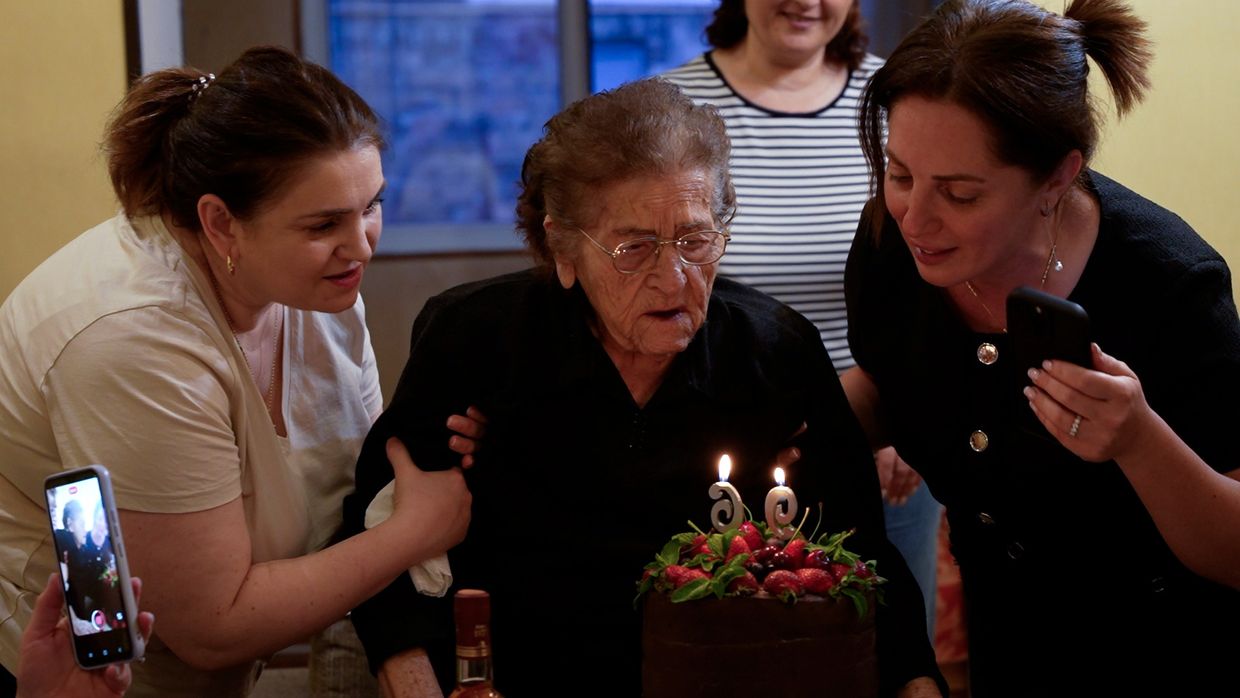
Before leaving once again, Aleksanyan gathers relatives and friends at her apartment in Yerevan — among them neighbours from Stepanakert and her ancestral village, Yemishjan. The occasion is her 96-year-old grandmother Raya’s birthday, but also a farewell. For many who have already lived through one exile, such moments are rare chances to feel a trace of the community they lost.
They recall the family gatherings of the past in Nagorno-Karabakh, when tables overflowed with homemade food and the night would end in song and dance. Now, in this rented apartment, they try to recreate the warmth of those evenings, imagining for a moment that they are home again.
Aleksanyan still longs for Nagorno-Karabakh, for the city of Stepanakert, where she previously lived.
‘I can’t find the scent of home anywhere’, she says. ‘When I say “Artsakh”, I have to hold my chest, as if my heart hurts’.
Nothing, she says, compares to what she left behind.
‘I never wanted to go anywhere else. Paris did not feel comparable with Stepanakert. The most beautiful sea was the River Karkar, and every summer, when the mulberries ripened, we’d all gather to shake the branches and catch the fruit together’, she says.
‘In Artsakh, everything was alive — the green, the hills, the stones. There’s nothing like it anywhere’.
Her hope of return is fainting, to a degree.
‘Maybe it’s impossible’, she says, ‘but I still want to believe. If that day ever comes, I’ll walk barefoot from the city’s edge all the way home. I’ll lie down, embrace the earth, and say — I’m back’.
When she closes her eyes, she says, Stepanakert appears in the distance, shining with lights just beyond her reach, a memory she wants to relive from within again, with or without freshly done nails. But for now she has to go.
While writing this story, Aleksanyan’s father, Serj Aleksanyan, passed away in exile at age 71.
This article was first published in Armenian by Hetq. It has been edited for conciseness and clarity.