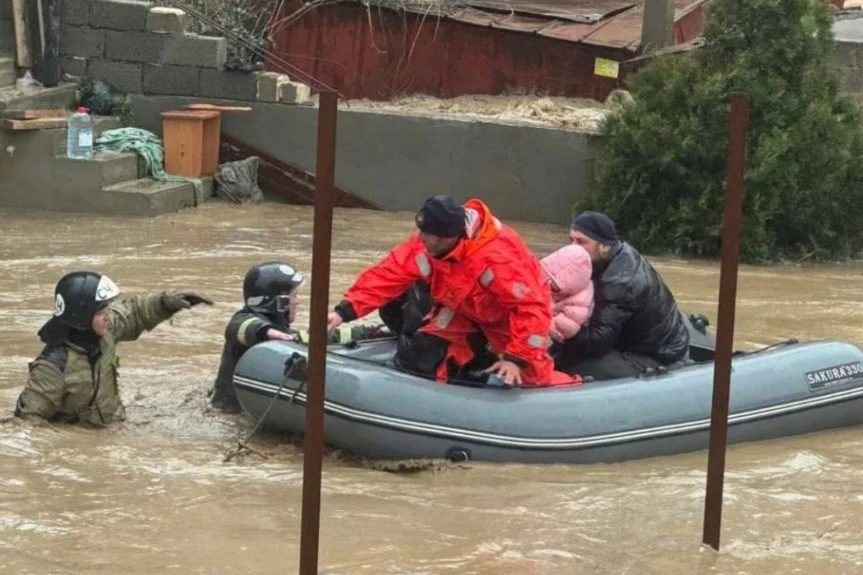
Heavy rains and continued flooding across Azerbaijan and the North Caucasian republic of Daghestan have led to further deaths and increased emergency levels.
On Tuesday, Russian President Vladimir Putin announced that the state of emergency declared in response to the flooding in Daghestan, which has now lasted for over a week, would be upgraded to a federal level, allowing the republic to access funds from the Russian Federation’s reserve fund.
A third wave of flooding is expected in Daghestan in the near future. This is the second natural disaster to take place within 10 days, described by meteorologists as a record-breaking event not seen in 107 years, and which has turned the republic into a major disaster zone. As of publication, eight deaths have been confirmed, and approximately 1.5 million people have been affected in some way.
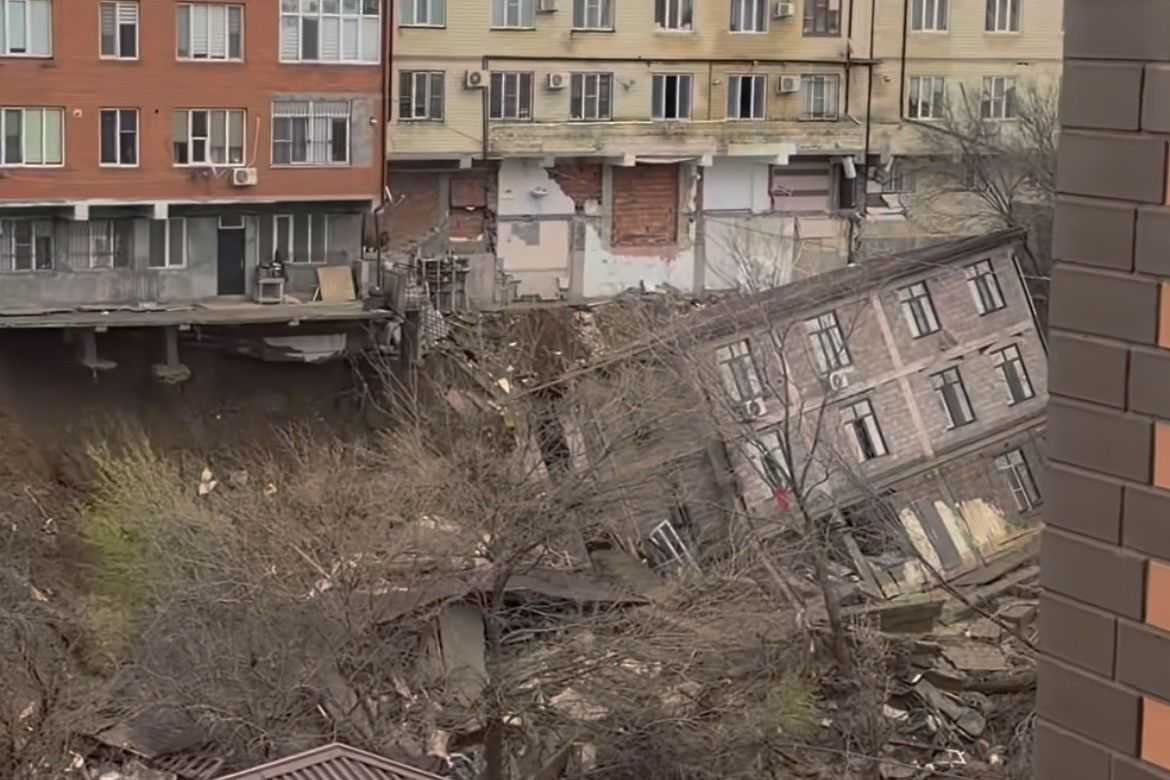
During Tuesday’s meeting with Putin, Daghestani Head Sergei Melikov reported that more than 6,000 houses had been damaged, many of which were multi-storey blocks of flats, with 3,755 of these located in the capital, Makhachkala. A total of 842 essential social facilities had also been affected, including schools and hospitals. Russian Health Minister, Mikhail Murashko, later clarified that over 40 healthcare facilities in Daghestan are currently flooded. Furthermore, 564 settlements remain without a stable power supply.
According to Melikov, more than 6,200 people have been evacuated from flooded zones, including 1,300 children. He added that the region's agricultural sector has suffered significant losses, with approximately 700 cattle, 2,200 sheep and goats, and over 60,000 poultry confirmed dead.
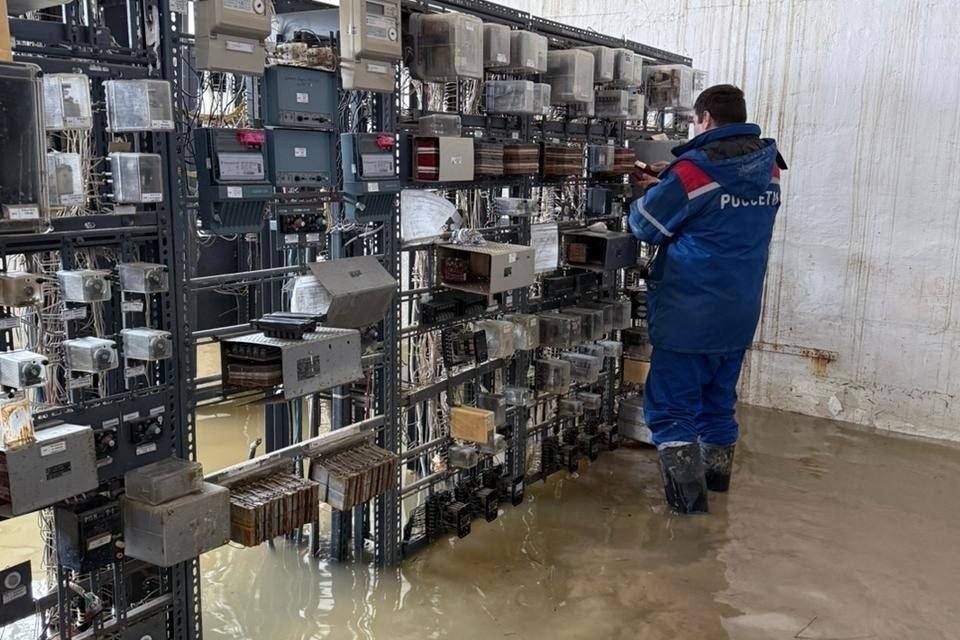
In addition, transport links to more than 80 settlements in Daghestan have been severed. Traffic is hindered or restricted on 27 road sections, including a stretch of the Kavkaz (‘Caucasus’) federal motorway. Several railway bridges have partially collapsed, and two sections of track have been washed away. In total, approximately 2,100 residential houses, over 2,000 private plots, and 188 sections of road remain submerged.
The damage caused by the floods in Daghestan and Chechnya has already exceeded ₽1 billion ($13 million), according to Yuri Chaika, the President’s Special Representative in the North Caucasus Federal District.
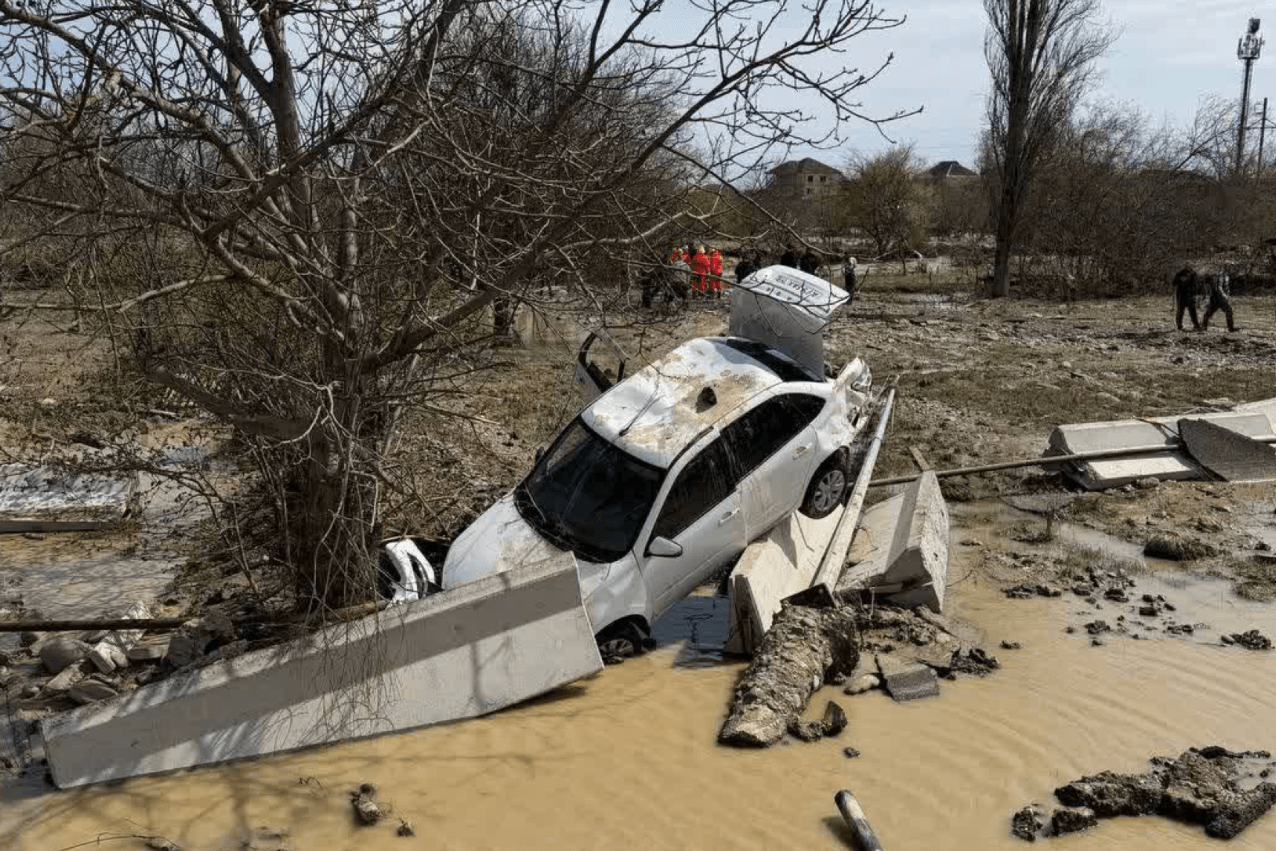
In Derbent, widespread damage was triggered by the breach of the Gedzhukh Dam, leading to torrents of water surging through the village of Mamedkala. The most recent victim found was a 70-year-old woman in Mamedkala, who had been missing under layers of silt for three days. Another incident involved the deaths of six people — four children and two women, including one who was pregnant — whose car was swept away following the collapse of a bridge on the Kavkaz federal motorway.
 Gunef Yedic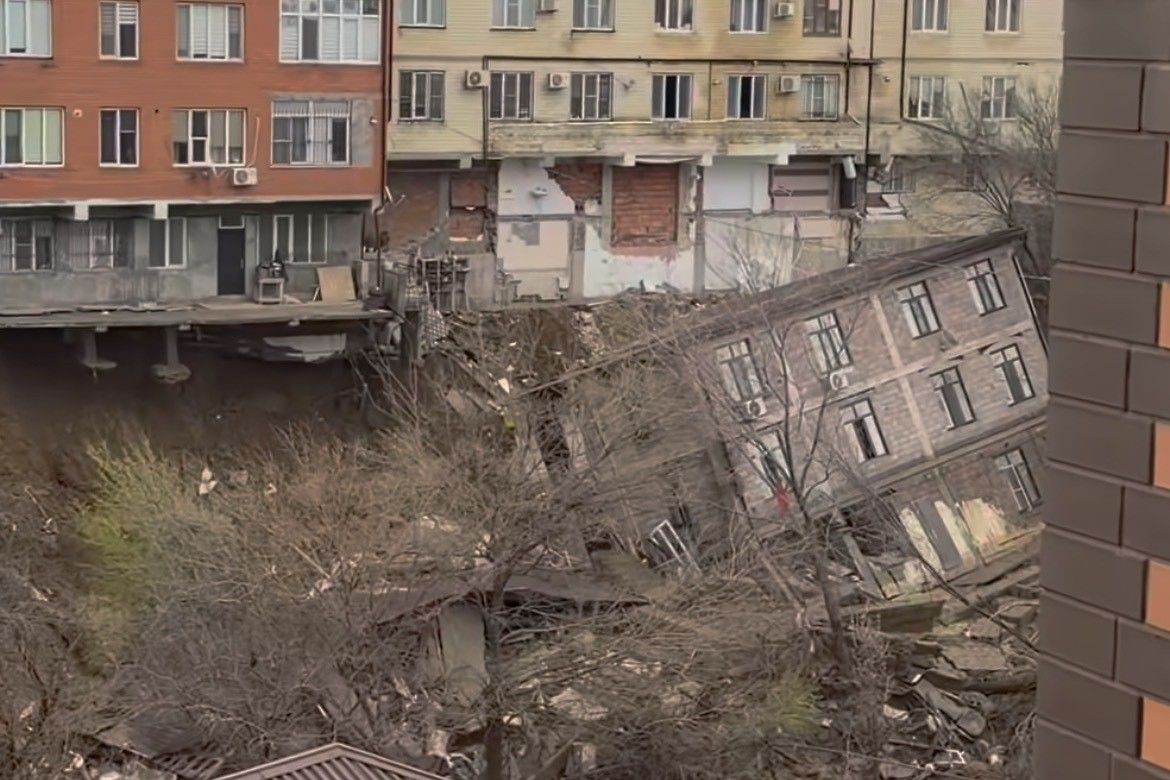
Water supply infrastructure in numerous cities has also been effectively destroyed or contaminated. A shortage of bottled water is being observed in shops in Makhachkala and Kaspiysk, despite humanitarian supplies arriving from neighbouring regions.
Beyond the rainfall, snow in the high-altitude areas of Daghestan has led to several villages in the Agul and Kulinsky districts being cut off from the rest of the region.
More destruction in Azerbaijan
Heavy rains on 4–5 April, following previous flooding, have led to widespread destruction across Azerbaijan too.
On that evening, 27-year-old Farik Rasulov, a resident of the village Gunduzgla, died after being swept away in the floodwaters.
‘Farik stood on the riverbank in Guruchay and watched the flood. The first time he slipped, we pulled him out, but the second time, the spot where he was standing was washed away along with a layer of land, and we couldn’t pull him out’, local residents recalled.
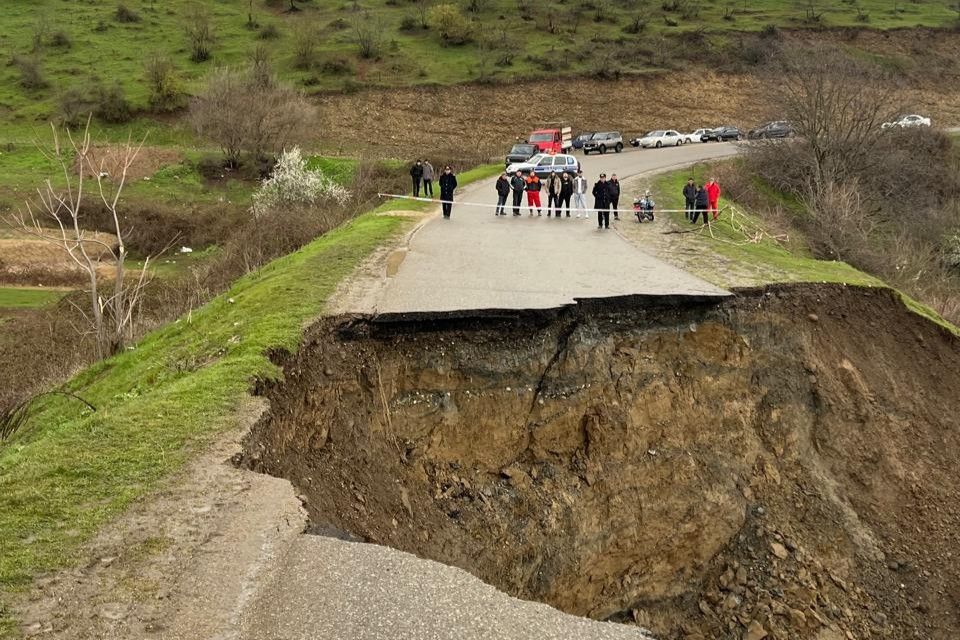
Within the Gusar district, landslides occurred in a number of villages, leading to bridge collapses, while many roads were washed away.
In Baku, following even more heavy rain on the night of 7 April, a house in the capital’s Sabunchu district collapsed, leaving 30-year-old Gunel Huseynova trapped under the rubble. Her current condition following rescue is unknown.
Flooding also occurred in Baku’s Keshla settlement, leading to 97 residents being evacuated. Later, city authorities stated that the flooding was caused by a two-story house built on the unstable ground of a sewage drainage system. The house was subsequently demolished by the government after the flooding.
Sabuhi Mammadov, the owner of the house, told local media that he has lived here with the family for around 13 years and that no one had informed him that the house was built on unstable ground.
The number of houses affected by the floods in Keshla was not revealed.
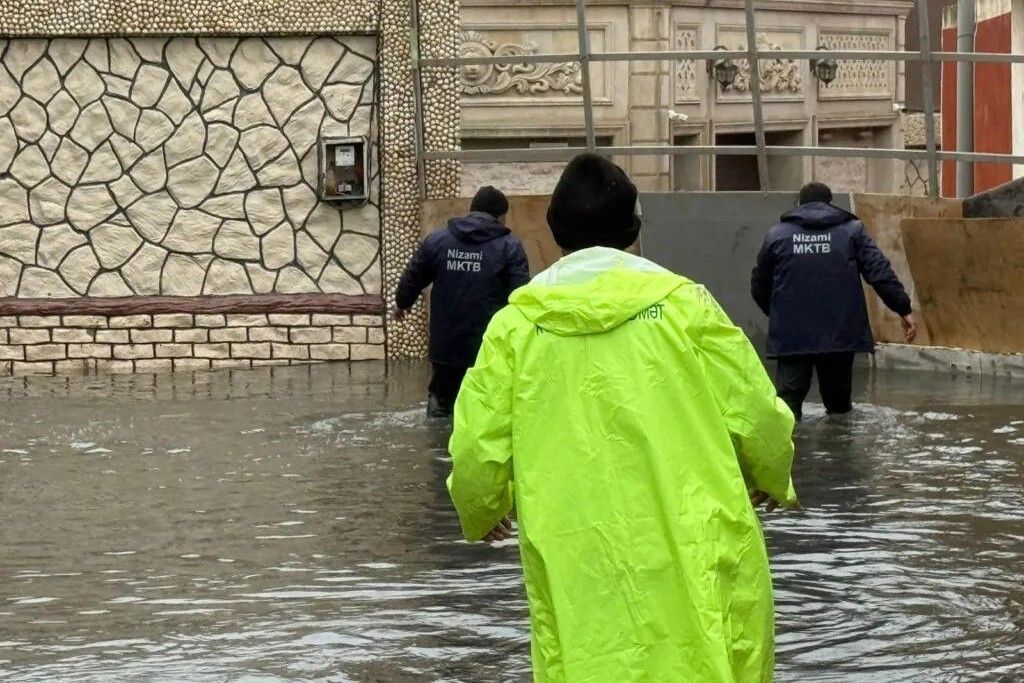
More details were also revealed about an earlier flood-related emergency that occurred in the village of Yeni-Ramana in Baku on 27–28 March. A local resident told the pro-government television channel ATV that a power cable had been damaged, killing two people near a transformer.
‘Their bodies were retrieved the next day after being in the water’.
However, government authorities have refrained from commenting on these deaths.
Yesterday, residents of the Yeni-Ramana village held a protest, blocking the road leading to the village due to sewerage problems arising from the downpour.
In the Khachmaz district, over 10 schools have experienced flooding, leading to mass cancellations of classes.
‘The grounds where some of the schools are located are flooded, and basements and classrooms are also inundated. At many schools, classes are being postponed because roads are impassable for students due to the flooding’, Azertac reported.
Elizaveta Chukharova