How a German-backed university in Georgia launched a Nazi-influenced research centre
The centre’s establishment at Kutaisi University raises questions about oversight at an institution marketed as a German-backed project.


When Kutaisi International University (KIU) began offering courses in ‘astrosciences’ and ‘astroarchaeology’ in early February 2026 — disciplines widely recognised as pseudoscientific — the backlash was swift. The programmes were quickly removed from Georgia’s National Curriculum, however, the controversy left several questions unanswered.
The centre behind the programmes, the university’s Iberian Cultural Heritage Research Centre, continues to operate. It was founded just months earlier by Iberian gematria specialist Aleko (Aliko) Tsintsadze. According to the centre itself, it operates as part of KIU and is funded by the Georgian government.
According to an article on Ganatleba, a Substack focused on Georgia’s education sector, gematria is a numerological system that assigns numerical value to letters and words to uncover hidden or esoteric knowledge in sacred texts.
 Yousef Bardouka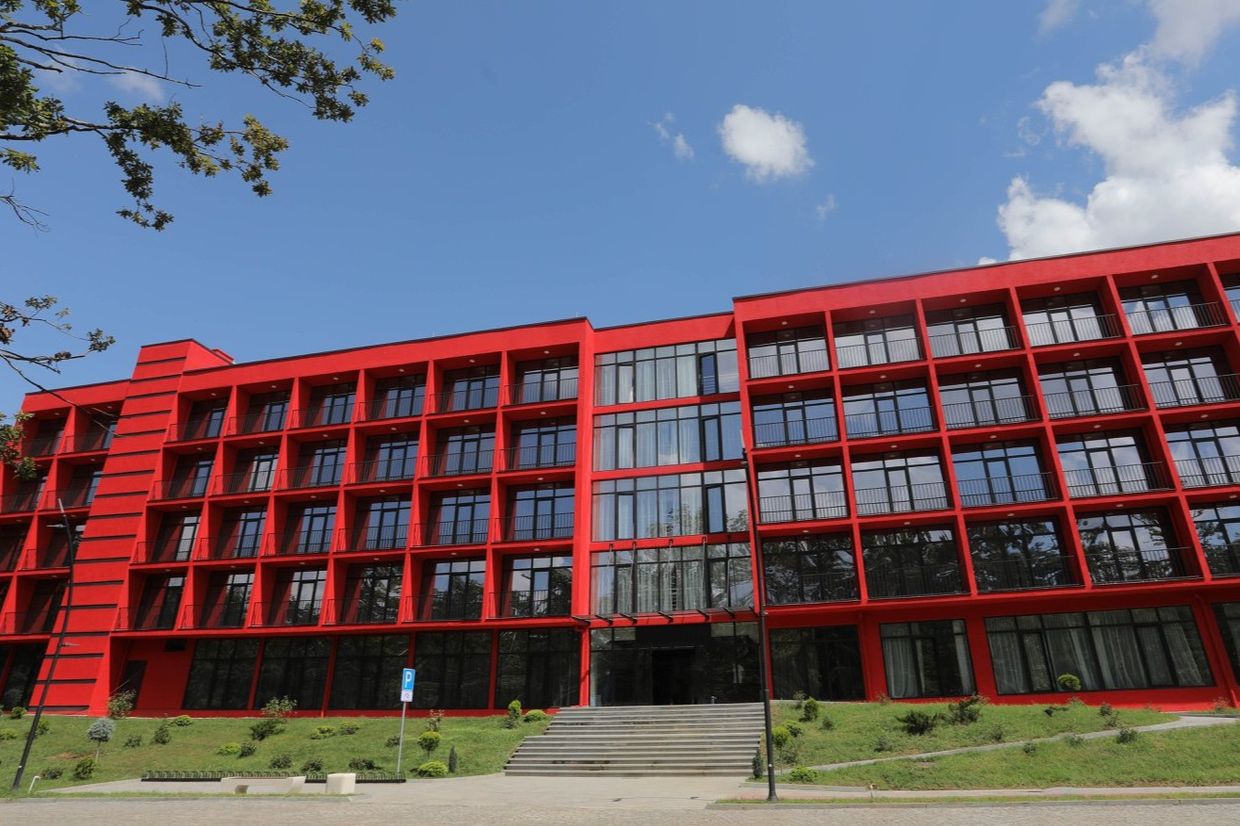
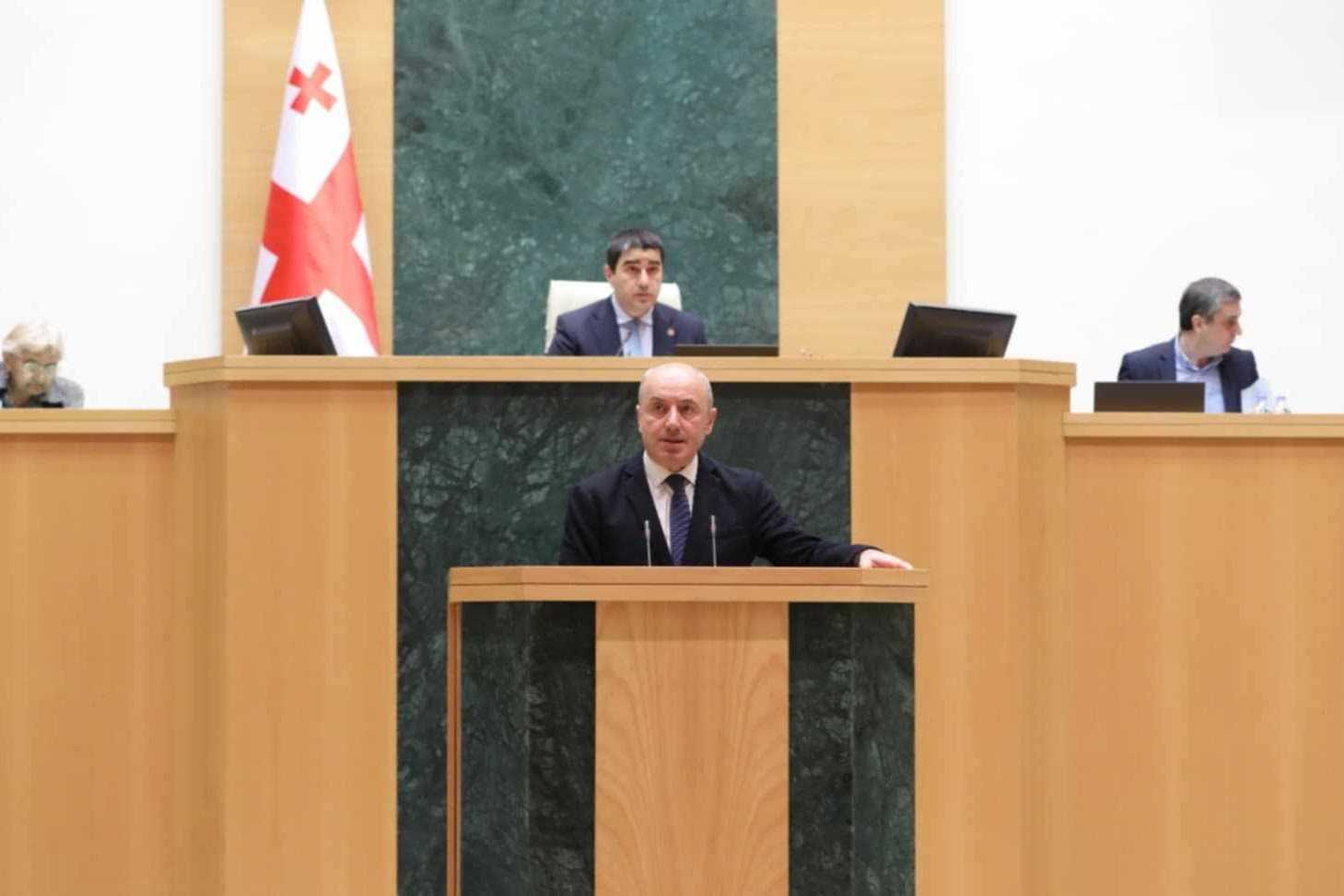
The centre’s inauguration in September 2025 was widely covered by pro-government media outlets. At the event, Paata Turava, the university’s acting rector at the time, described the centre as important for introducing ‘interdisciplinary approaches in the humanities’. Turava concluded the speech by saying that ‘we should only be proud that we are contemporaries of this great scientist, Professor Aliko Tsintsadze’.
Tsintsadze has stated in interviews that his research draws sources from German academia during the Third Reich. In a podcast interview, he referred to using work produced by the ‘Ahnenerbe’ unit of Heinrich Himmler’s SS — considered central to the racial ideology of Nazi Germany.
‘And I am now using this [work by Ahnenerbe] very conveniently: if we need to correct something important, I look for it in the works of German scientists, because the Germans truly surpass the Georgians [in this research], because they have studied this during the Hitler period by order, and it later continued by inertia. So all of this has very serious significance’.
He has also admitted that some of the research came to him while he was half asleep, while also identifying himself with David the Builder, an 11th century Georgian monarch.

‘[It generated] a trust issue with possible very negative consequences both for international cooperation and local student recruitment’, Lika Glonti, the former head of the Georgian Erasmus+ National Office, told OC Media about the programmes.
She added that KIU only managed to enrol half of the possible capacity of the university, and that the ‘latest developments will not motivate local prospective students’.
A German connection
KIU was founded in 2020 by Georgian Dream founder Bidzina Ivanishvili and his Cartu Group, following several years of preparatory work during which specialists from Germany’s Technical University of Munich (TUM) were involved from at least 2017 onward.
The strategic partnership, where TUM holds several key positions in executive bodies, is still ongoing despite other European universities, including from Germany, having expressed concern at sweeping changes to higher education being pushed through by the Georgian government, reforms widely seen as an attack on academic freedom.
A specific piece of legislation was adopted by Georgia in 2019, before the setup of KIU, exempting it from regular oversight mechanisms and instead regulating its governance through a dedicated legal framework.
‘Kutaisi International University is the only higher educational institution in Georgia, which is not undergoing the process of institutional authorisation and whose study programmes are also not the subject of programme accreditation’, Glonti explained.
According to Glonti, the explanation to the special status can be found in the university being part of Ivanishvili’s personal projects.
‘[Ivanishvili] feels free to do whatever he wants to in his “own” university without even consulting its executive bodies and, or, international partners’.

She explained that a consequence of this is that information about the foundation of a new research centre can bypass international partners. Indeed, when OC Media reached out to TUM, they declined to comment on the nature of the current collaboration with KIU, saying it had no information about the newly founded centre.
They did not comment on Tsintsadze openly advocating for the use of theory from the Nazi Germany — a highly sensitive topic in Germany, which has some of the world’s strictest legal controls regarding affiliation with Nazi ideology.
The introduction of the programme has also appeared to have gone unnoticed by KIU’s International Advisory Board, the executive body responsible for recommending the university’s curriculum.
Wolfgang Herrmann, the long-serving former president of TUM and honorary chair of KIU, chairs the board, which also includes two other TUM representatives and other German scientists. Herrmann has told OC Media that neither the establishment of the Iberian Centre nor the introduction of the astroscience-related programmes had been presented to the International Advisory Board.
‘A research centre is not a matter of the advisory board, nevertheless it was installed independent of us. We are now going to have a closer look at the content of this so-called institute’, Herrmann said, adding that he had never heard of Tsintsadze.
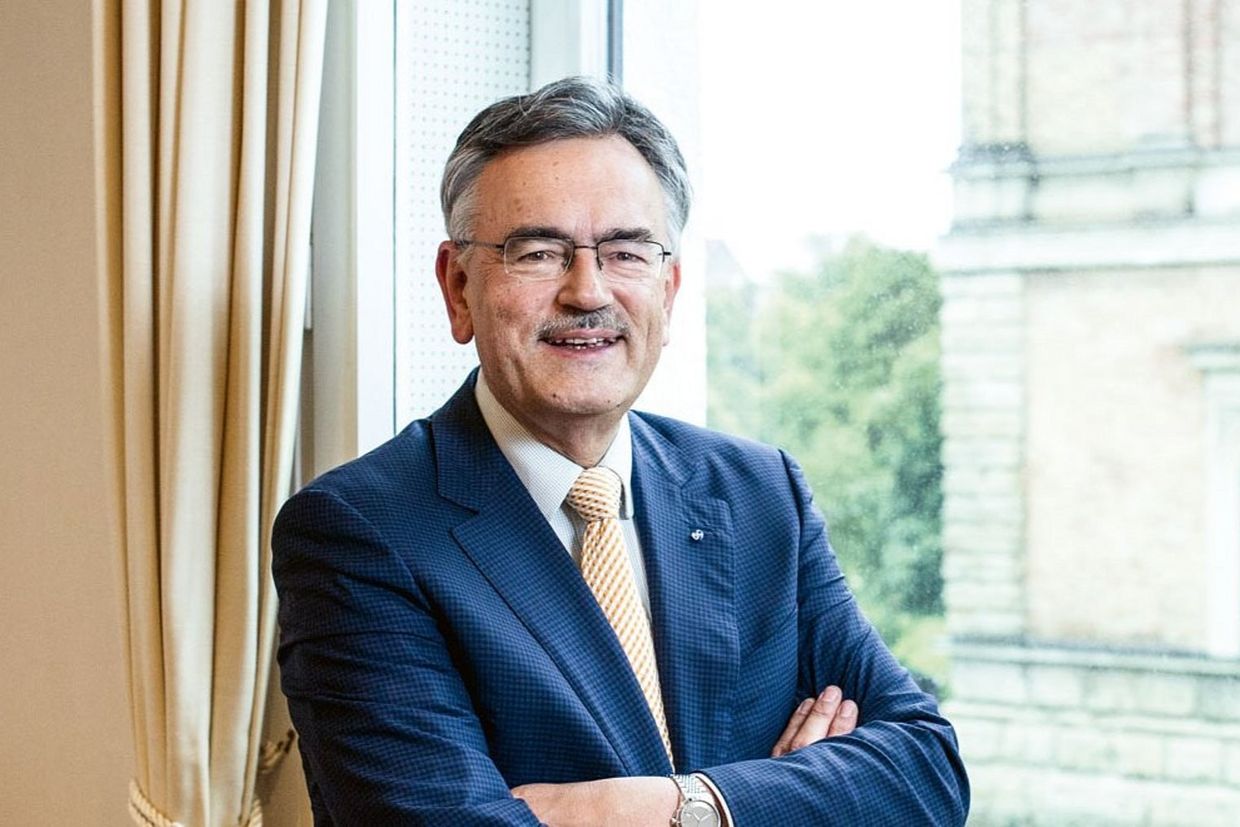
‘[The centre] was started without my knowledge’, Herrmann admitted. ‘To be frank, I need to learn more about astrolinguistics, because I have never heard about it before in my life. We are going to have a closer look into this theory very soon now, but I don’t think there’s an inspiration from the Hitler regime. But let us have a look on the entire issue [before making up our minds]’.
These comments were made despite the fact that the proposed Bachelor Programme of the Iberian Centre was announced a day after a visit by Herrmann and other representatives of TUM in October 2025.
‘More generally, we believe it is important to maintain contact with regions facing significant challenges, such as Georgia — particularly with the younger generation. Providing them with a democratic European perspective is essential for fostering positive future development’, a press person at TUM told OC Media.
Although the astroscience and astroarchaeology programmes were removed from the updated national curriculum on 26 February, the Iberian Cultural Heritage Research Centre continues to operate within KIU.
The management team of KIU did not respond to a request for comment.