Kobakhidze confirms substance in water cannons following BBC investigation but rules out ‘camite’

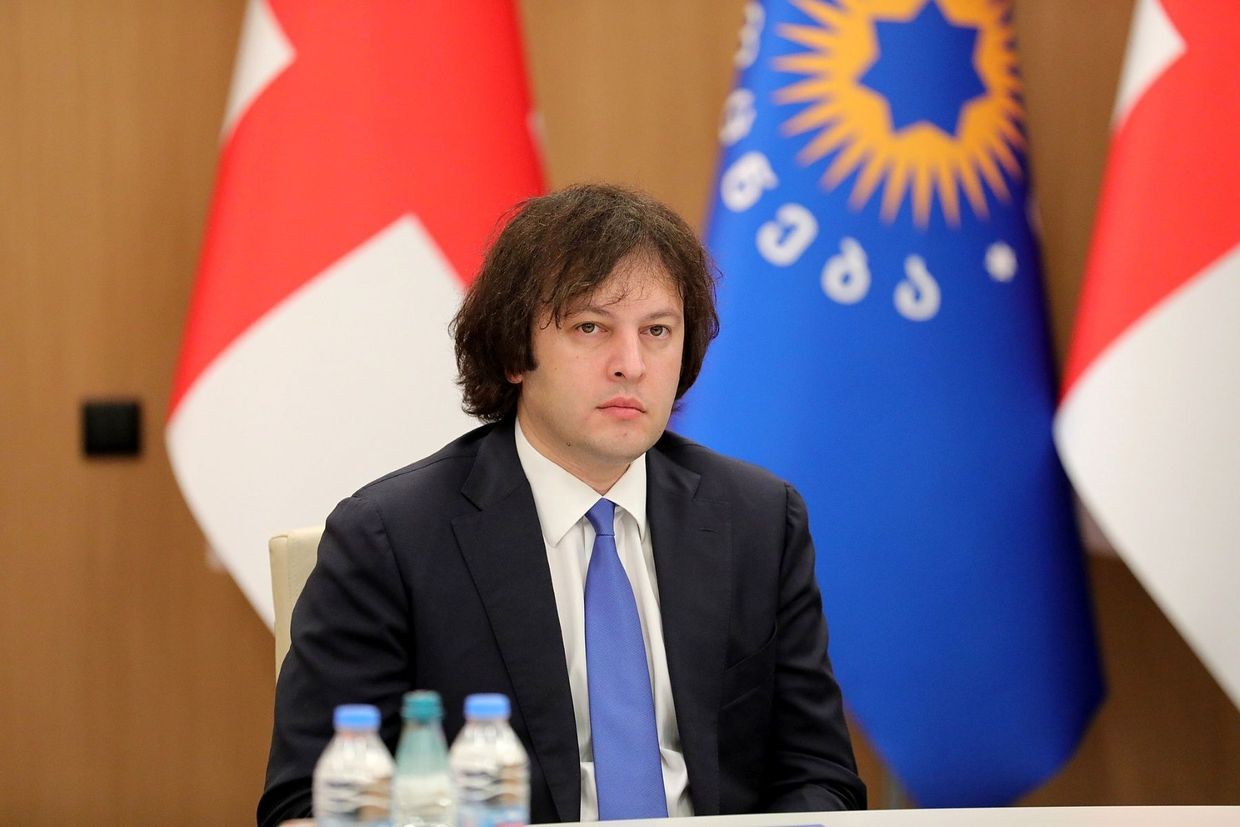
In another response to the BBC investigation, Georgia’s Prime Minister Irakli Kobakhidze confirmed that during the dispersal of anti-government protests in Tbilisi in winter 2024, water cannons did contain a substance — but it was not the WWI-era chemical ‘camite’. He added that an investigation should determine exactly what it was.
At a press-conference held at the Government Administration on Wednesday, Kobakhidze again accused the BBC of spreading false information, noting that Georgian authorities will challenge the BBC through the UK’s Communications Authority and, ‘if necessary’, in international courts.
Kobakhidze further claimed that the BBC documentary was a ‘provocation planned in the signature style of the foreign intelligence services’ to stir up anti-government protests in Georgia and a form of ‘blackmail’ against the Georgian government and its people.
According to their investigation, the BBC found evidence pointing to the use of an agent the French military referred to as ‘camite’ in Tbilisi during the November–December 2024 protests against the government’s EU U-turn. The substance has been out of use since the 1930s, amidst concerns about its long-lasting effects.
The BBC alleged that the chemical may have been mixed in the water cannons the riot police actively used against protesters.
‘As for the mixing of the substance, it was mixed; the main question is whether it was a banned substance’, Kobakhidze stated on Wednesday. He also repeatedly denied the use of ‘camite’ and reiterated the claim of Interior Minister Gela Geladze that the ministry ‘has never, including during the [ex-ruling] United National Movement (UNM) government, acquired this chemical’.
Journalists asked several clarifying questions during the press conference, to which Kobakhidze responded by saying that further questions would be answered by the State Security Service (SSG) investigation, which was launched following the release of the BBC report.
When asked whether the police used any other substance in 2024 classified under the same code as ‘camite’, Kobakhidze said, ‘Probably’, adding that ‘the code doesn’t tell you anything, as it includes dozens of substances, most of which were not prohibited’.
In response to another question on whether it was possible to rule out that the police had used ‘another banned substance’ classified under the same code as ‘camite’, Kobakhidze said:
‘I think so, because presumably the Interior Ministry would have checked what type of powder [former Interior Minister] Vano Merabishvili acquired back then, though this is just my assumption’.
Kobakhidze alluded to the Interior Minister during the UNM government, which ruled the country from 2003–2012. According to a former riot police officer featured in the BBC film, the substance he believes was used during the winter 2024 protests is the same one he was asked to test in 2009, when Merabishvili was minister.
‘Technically, the Interior Ministry should have checked what substance Vano Merabishvili acquired in 2009’, Kobakhidze added, but he reiterated that ‘it’s better to wait for the official investigation and its results’ and that ‘it wouldn’t be serious for me to preempt the investigation and tell you which banned or permitted substances were used’.
‘Theoretically, if anyone could be held responsible in such a case, it would be Vano Merabishvili, because if something like this is established, it would mean he deliberately acquired a specific powder’, he added.
According to the SSG, the investigation will examine claims of harm to citizens’ health under the charge of abuse of official powers, while also making a probe under the charge of aiding a foreign organisation in hostile activities — an indication that the BBC’s interviewees would also be targeted.
Since Monday, several interviewees from the film, as well as other individuals connected in various ways to the events depicted, have been summoned for questioning.
 Mikheil Gvadzabia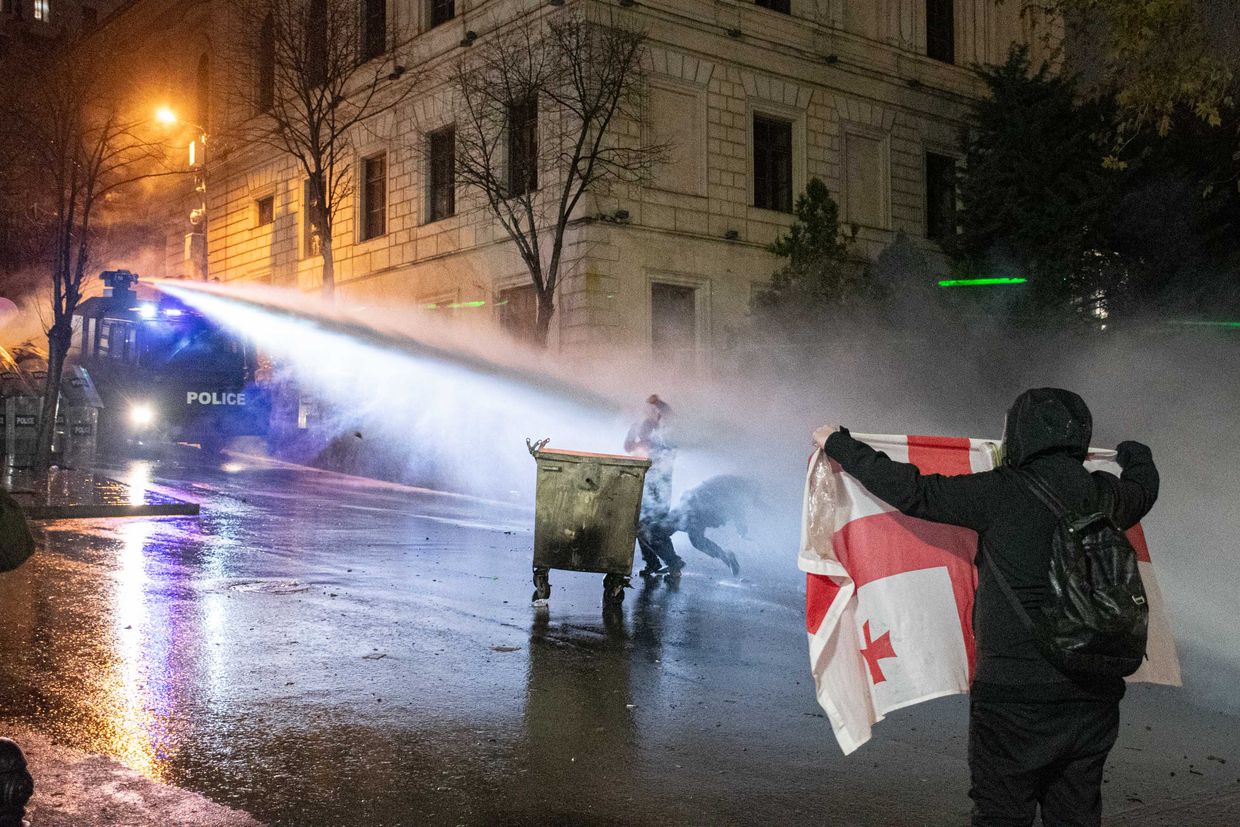
How the BBC identified the chemical
According to the BBC, ‘several high-level whistleblowers’ from Georgia’s riot police helped them to identify the likely chemical used in the water cannons.
Former weaponry chief Lasha Shergelashvili, who resigned from the agency in 2022 and now lives in Ukraine, suggested that it was the same compound he was asked to test for use in water cannons in 2009, describing effects as far stronger and longer-lasting than tear gas.
He said the chemical continued to be loaded into water cannons until at least 2022, and colleagues still in the force told him it was used during the 2024 protests as well.
According to the BBC, Shergelashvili didn’t know the name of the chemical, but the channel obtained a 2019 riot police inventory listing two unidentified substances — ‘Chemical liquid UN1710’ and ‘Chemical powder UN3439’. The channel said that a former senior riot police officer confirmed the document’s authenticity and said these were likely to have been added into the water cannon.
According to the BBC, UN1710 turned out to be a solvent. As for the second code, it was was ‘much harder to identify because it is an umbrella code for a whole range of industrial chemicals, all of which are hazardous’. But the ‘only’ chemical BBC found ‘to have ever been used as a riot-control agent is bromobenzyl cyanide, also known as camite, developed by the Allies for use in World War One’.
The weapons experts the BBC consulted concluded that ‘given there are safer and more conventional riot-control agents available to police, an obsolete and more potent agent could be classed as a chemical weapon’.
The BBC documentary quickly became one of the most discussed topics in Georgian media and on social media. It sparked a wave of outrage among the government critics, while the ruling party and its allies harshly criticised BBC and those who contributed to the film.
Mikheil Gvadzabia