Moscow accuses Yerevan of ‘destroying traditions’ in its confrontation with Armenian Church

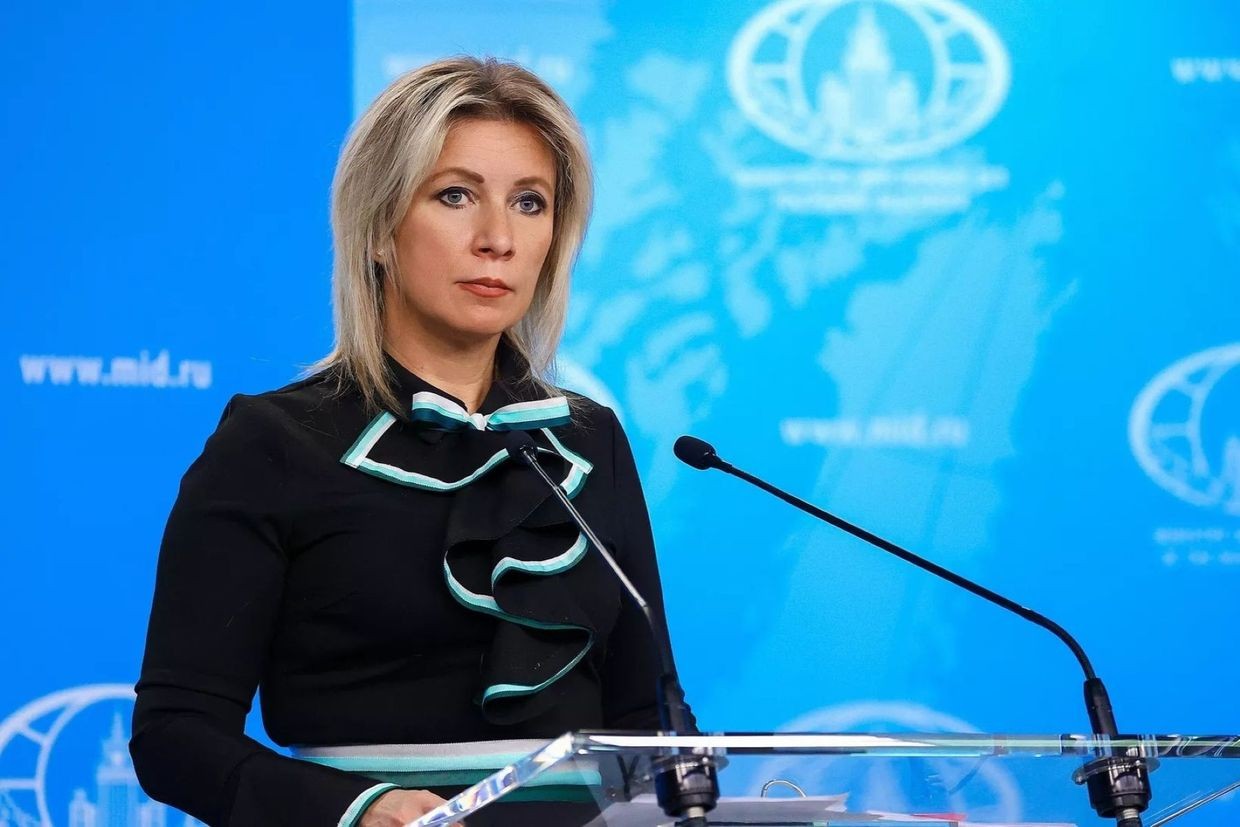
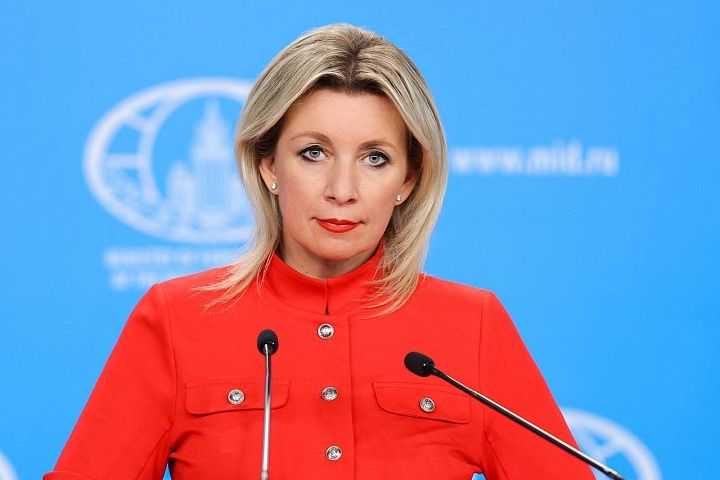
Russian Foreign Ministry spokesperson Maria Zakharova has criticised the ongoing confrontation between the Armenian government and the Armenian Apostolic Church, calling it ‘extremely destructive’ and warning that it risks ‘politicising and marginalising issues of faith’.
Zakharova’s statement came in response to a question regarding Prime Minister Nikol Pashinyan’s recent remarks at the EU Parliament in March, in which he addressed the ongoing confrontation between his government and the Church, which has been ongoing since May 2025.
At the time, he suggested that some Armenian clergy ‘were agents of the USSR KGB’, which he said ‘is proven by documents’.
In late December 2025, Civic.am, also affiliated with Pashinyan’s ruling Civil Contract party, published what it claimed were declassified documents from the Armenian National Security Service (NSS), allegedly showing that Archbishop Yezras Nersisyan, Catholicos Karekin II’s brother, had cooperated with the KGB in 1986–1988.
He further accused the Church leadership of ‘assum[ing] the leadership of the war party in Armenia, consolidating around them the former leaders of Armenia, some forces associated with them, some pro-Russian and pro-Belarusian oligarchs, and are trying to sacrifice Armenia’s independence to the interests of third countries’.
 Arshaluys Barseghyan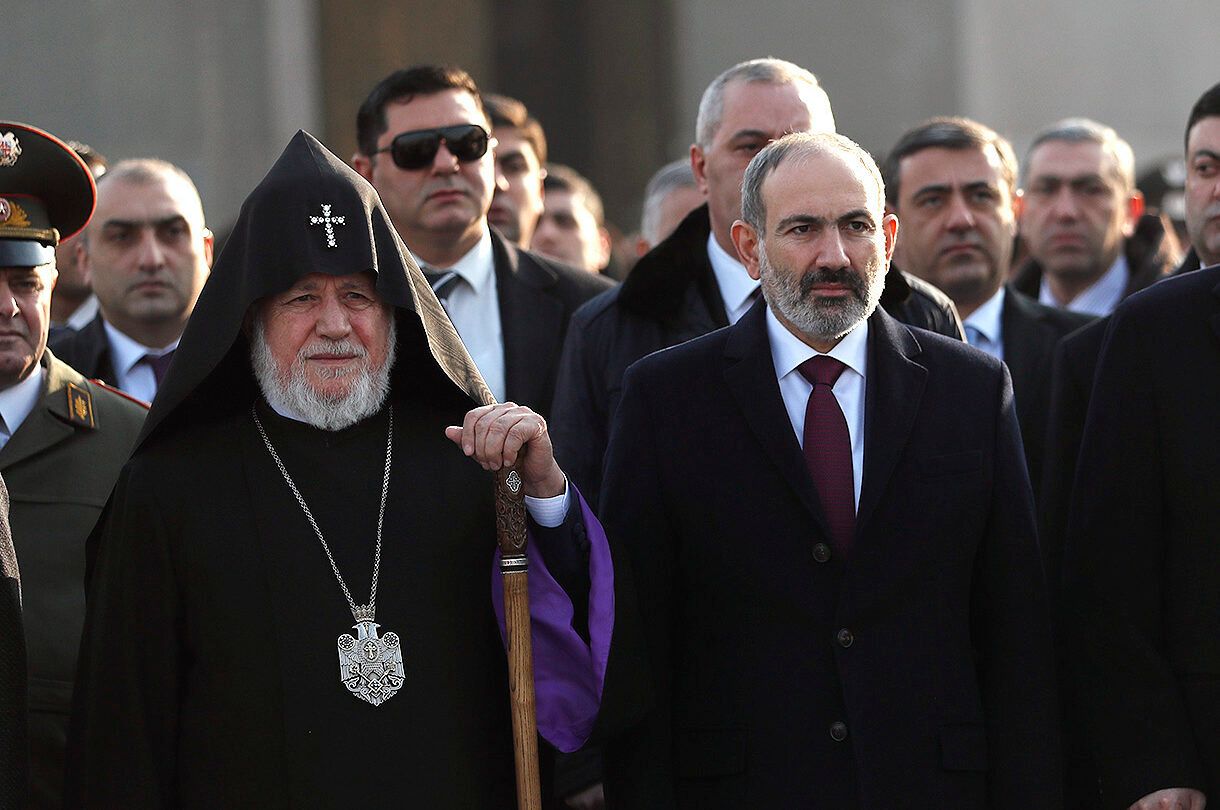
In her Wednesday response, Zakharova criticised Pashinyan for referring to the clergy as ‘KGB agents’ in his speech and accused him of using the rhetoric ‘to gain popularity among pro-Western circles’.
She further assessed the possible outcome of ‘politicising and marginalising issues of faith, religious belief, the church’, suggesting it could result in ‘a dangerous rift in society’.
‘In fact, to a greater extent, [politicising issues related to the Church] destroys not just the reputations or political, social, or religious careers of specific individuals, but the very foundations of society in which a particular religious doctrine prevails. They destroy traditions and sow disbelief’, Zakharova said.
Arshaluys Barseghyan
Zakharova clarified that she does not mean society should not be exposed to the ‘truth’ and ‘facts’.
‘There are ways, examples of how sensitive issues are resolved tactfully’, she said, without elaborating on the examples she meant.
‘Instead of focusing on the truly pressing issues of Armenian society, these politicised religious issues become a “bogeyman”, a diversionary tactic to prevent real problems from being addressed, directing attention instead toward endless quarrels, squabbles, and debates of the most destructive kind’, Zakharova said.
Armenian authorities have not responded to the accusation as of publication.
Previously, in June 2025, Armenian Foreign Minister Ararat Mirzoyan responded to a statement from his Russian counterpart Sergei Lavrov, urging him ‘to refrain from interfering in Armenia’s domestic affairs and internal politics’.
This followed Lavrov calling ‘attacks on the canonical thousand-year-old Armenian Apostolic Church are a matter of grave concern’.
Arshaluys Barseghyan
East vs West
Aside from the Armenian Church–government conflict, Zakharova was asked about Pashinyan’s remarks at the EU Parliament, in which he reaffirmed Armenia’s commitment to EU integration.
‘If the EU accepts Armenia as a full member, it is very good. If it does not, we will still benefit, because we will be a country that complies with EU standards’, Pashinyan said then.
Zakharova characterised Pashinyan’s comments as illustrative of Armenia ‘putting itself in checkmate’, while also highlighting Armenia’s benefits from its membership in the Russia-led Eurasian Economic Union (EAEU).
‘In this sense, it is noteworthy that abstract “EU standards” and Armenia’s European development vector are presented as an unconditional good [...] The picture is certainly beautiful, but it is unclear what it is actually based on, given the deep crisis the EU has gotten itself into’, Zakharova said.
She reiterated Moscow’s official stance that simultaneous membership in the two economic blocs was impossible.
‘Planning to implement EU standards while expecting to avoid conflicts with EAEU norms and regulations is simply unrealistic’, Zakharova said.