Opinion | Repression and the myth of instability fuels Russia’s colonial rule in the North Caucasus
While Russia is a federation on paper, in reality, the state is perpetuating its colonisation of the North Caucasus.

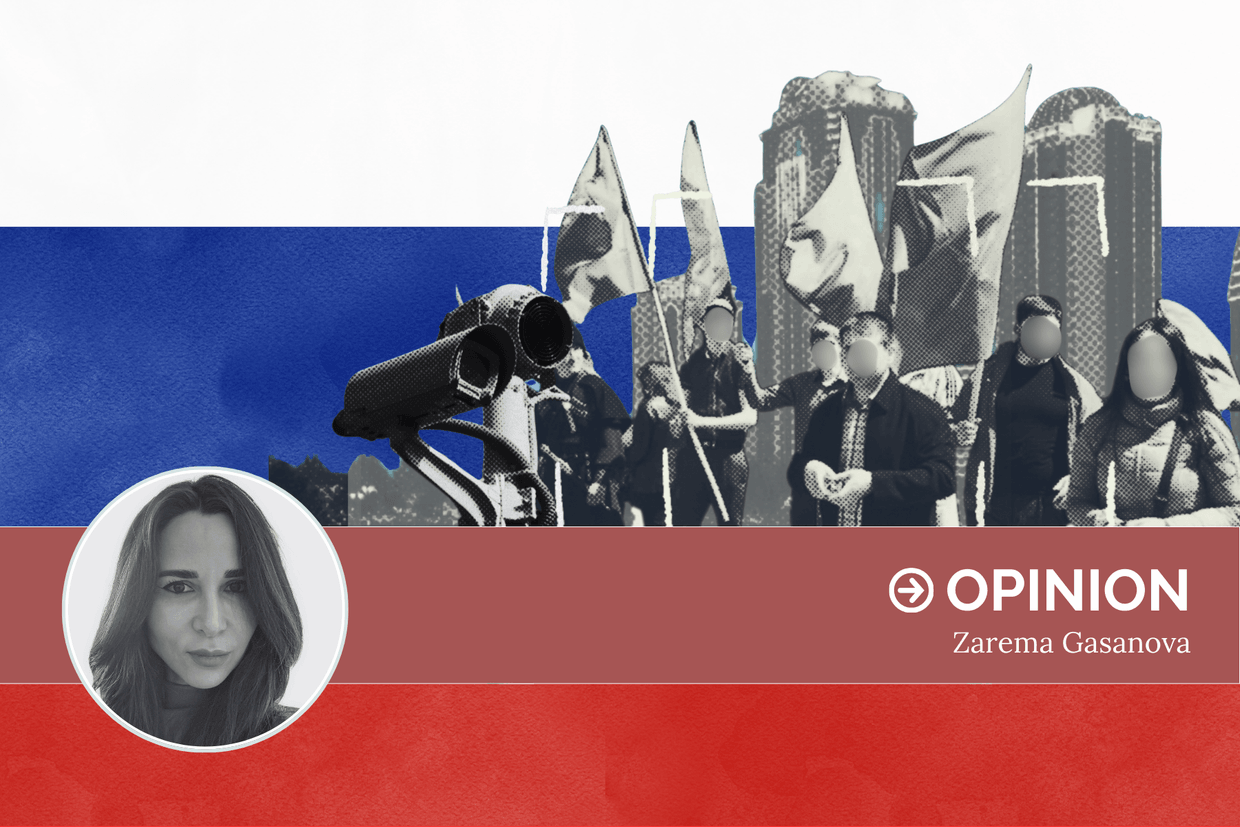
In the international political arena, the Russian Federation is presented as a federal state composed of regions that formally possess autonomous status. This model is enshrined in the constitution and creates the impression of a decentralised system of governance. Yet in practice, as the case of the North Caucasus shows, the Russian state governs its regions through a highly centralised system of control, a structure that is more commonly associated with colonial systems than federal autonomy.
The North Caucasus within the Russian state is shaped by its administrative structure. In 2004, direct elections of regional heads were abolished and replaced with a system of appointment through the federal centre. Although formal elections were partially reintroduced in 2012, federal legislation preserved mechanisms allowing regional heads to be appointed through regional parliaments from candidates proposed by the President of Russia. In several republics of the North Caucasus, this model remains in place, effectively excluding meaningful public participation in the selection of regional leadership.
Regional leaders and key administrative figures also operate within the federal system and depend on political loyalty to the centre. As a result, the administrative system does not function as a mechanism of regional self-governance but as an instrument for implementing federal policy. This structure leaves Indigenous Peoples without meaningful institutional protection and reinforces the region’s structural dependence.
Within this centralised system, one of Russia’s key instruments is the construction of the North Caucasus as an inherently unstable and dangerous region. This image is not an objective description but a political tool used to justify repression and preserve federal dominance.
Security and religious institutions play an important role in constructing this image. Russian authorities rely on security structures to carry out detentions, extrajudicial prosecutions, and the fabrication of criminal cases under extremism and terrorism legislation. Counter-terrorism operations are routinely used to justify violence against civilians. Within this framework, any criticism of the state is framed as a threat to federal security. The judicial system is likewise used to suppress dissent and maintain control over the region.
 Elizaveta Chukharova
Activists, human rights defenders, journalists, religious figures, and public actors who question the legality or fairness of state policies frequently become targets of repression. Charges often lack substantial legal basis and serve primarily to discredit critics. Court proceedings are marked by procedural violations, and verdicts are frequently based on fabricated evidence or testimony obtained under pressure.
These practices foster a climate of impunity among security forces and contribute to systemic human rights violations. At the same time, they reinforce the constructed image of the region as a source of instability, shaping how the North Caucasus and its people are perceived both within Russia and abroad.
When an Indigenous Person from the North Caucasus leaves Russia, they do not escape this system of control. The state-constructed narrative continues to operate beyond national borders. By framing the region and its inhabitants as inherently threatening, the Russian state has embedded this perception in international administrative and legal spaces. As a result, origin from the North Caucasus can influence how individuals are treated abroad. Activists and others who leave the country due to pressure from security forces often face refusals of asylum despite credible risks of persecution, imprisonment, or torture. In this way, the constructed image of the region continues to function as a mechanism of control even outside Russia.
An additional factor further limiting political agency is the absence, within Russia’s legal and political language, of clear recognition of Indigenous Peoples as subjects of collective rights. The state does not formally recognise the Indigenous Peoples of the North Caucasus as holders of collective political subjectivity. This deprives them of an institutionally recognised language of self-determination and restricts ability to articulate claims within international legal frameworks. The state thereby retains a monopoly over defining identity and political status, limiting the capacity of Indigenous Peoples to exercise political subjectivity and defend their rights institutionally.
Elizaveta Chukharova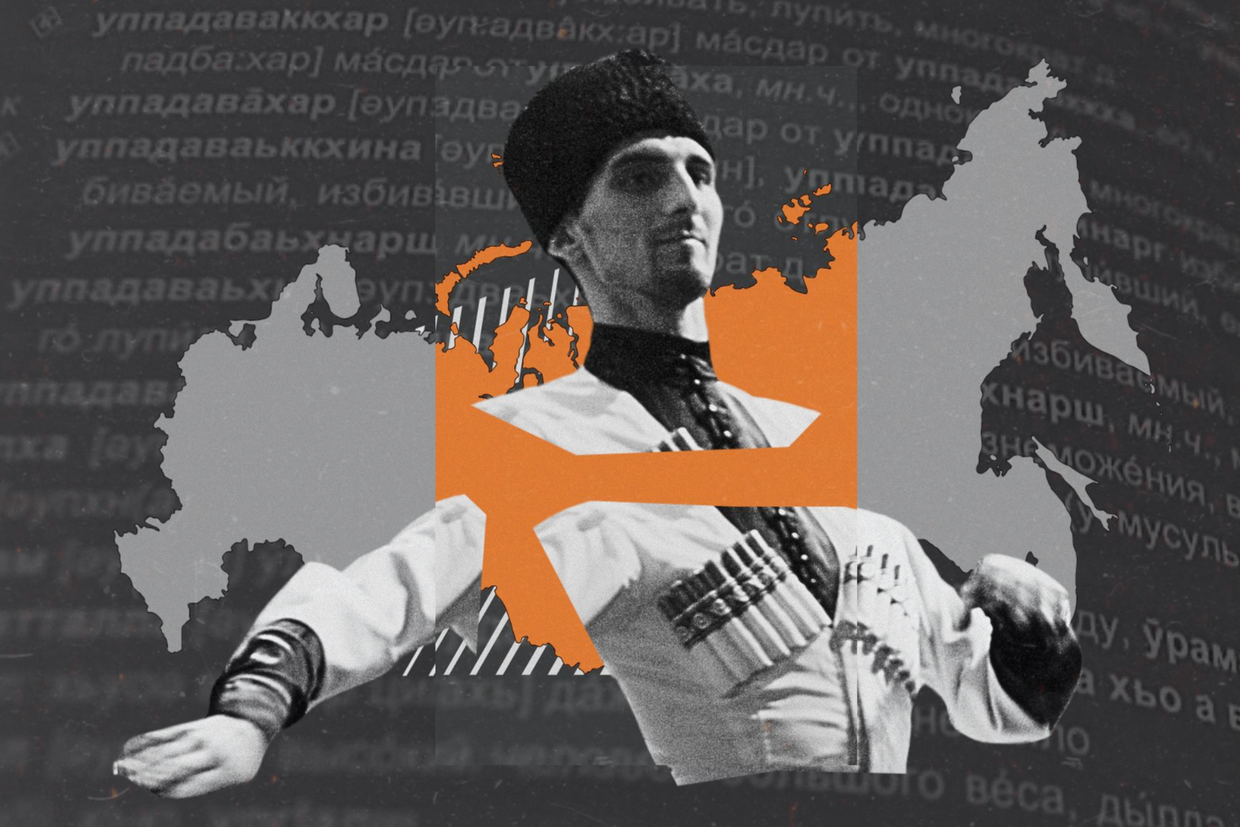
Thus, the Russian state maintains control not only over the region’s territory but also over the very possibility of Indigenous Peoples determining their political, cultural, and social identity. It defines the boundaries of permissible political participation and cultural existence.
Religion as a tool of institutional control
Given the region’s cultural and religious specificity, state control also extends to religious institutions. Independent forms of religious organisation are treated as potential threats to state authority and are therefore restricted or suppressed. These practices are particularly visible in republics such as Chechnya, Daghestan, and Ingushetia, where religious life is subject to heightened institutional regulation and surveillance. Religious institutions cease to function as autonomous social structures and instead become instruments of governance and control.
One example of such institutional control is the Muftiate of Daghestan, which operates within a state-regulated framework and plays a role in aligning religious authority with federal governance structures through state propaganda and official religious messaging. Forms of religious practice, appearance, and social affiliation can serve as grounds for persecution. Individuals may face criminal or administrative pressure for attending certain mosques, participating in informal religious communities, having beards, wearing hijabs or niqabs, or expressing private religious views. Extremism-related charges are widely used and often do not require evidence of actual violent conduct.
In that case, labels such as ‘religious extremist’ function as flexible instruments of repression. These forms of repression are particularly effective because they are legitimised through the discourse of state security and are therefore not widely recognised as political or human rights violations, either domestically or internationally.
State control over religious institutions is also used to normalise military mobilisation and participation in Russia’s full-scale invasion of Ukraine.
Elizaveta Chukharova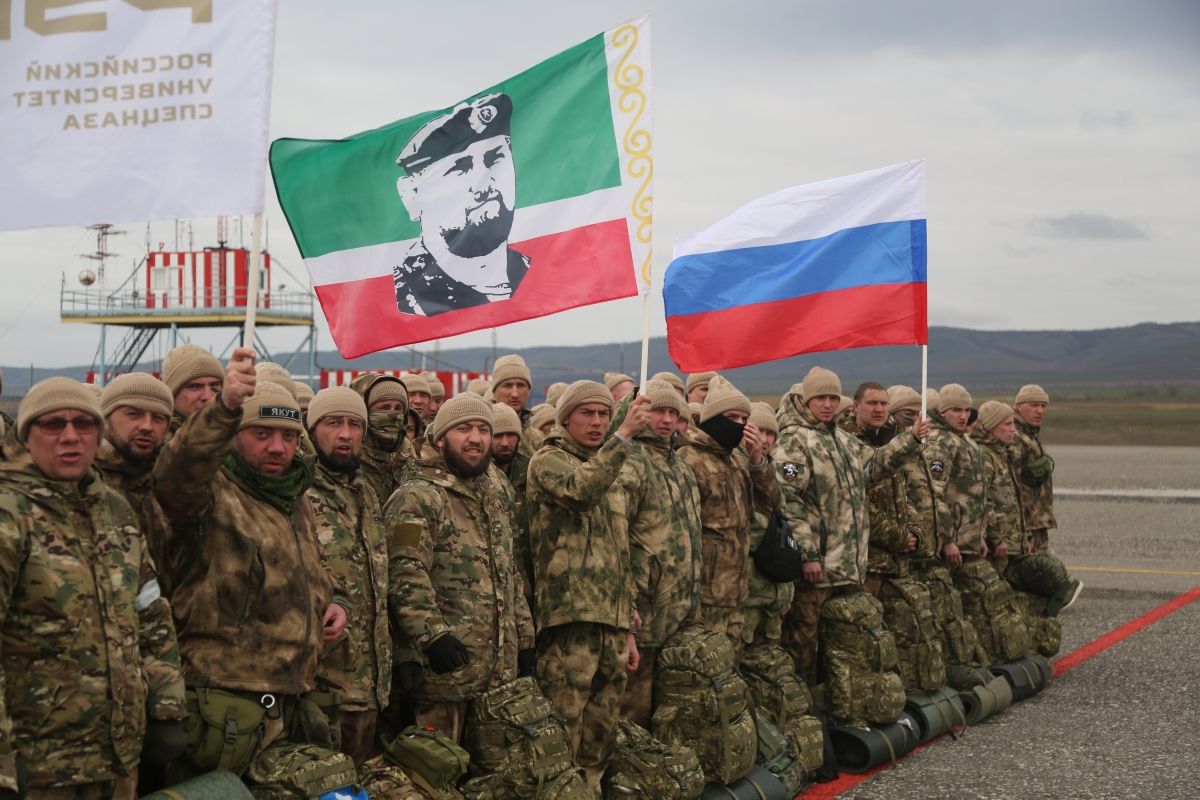
In the context of regional marginalisation, economic vulnerability, and limited employment opportunities, military service is framed as a socially acceptable and economically viable path. Institutions such as the Muftiate of Daghestan play a key role in the republic by promoting state-aligned religious narratives that frame participation in the war in Ukraine as morally and religiously justified. Official religious messaging frequently emphasises the idea that defending the country is a Muslim’s duty, reinforcing the perception of military service as both a religious and civic obligation. In this way, religious authority is used to normalise military participation and reduce resistance to mobilisation.
In this context, religious institutions function not as independent spiritual entities but as components of the state control system. Their role extends beyond religious practice and becomes part of political governance. This allows the Russian state to use religion as an additional instrument of state propaganda and political control, reinforcing dependency and limiting autonomy.
Taken together, these instruments of centralised control form a closed system of governance in the region. The image of the North Caucasus as a dangerous territory functions not as an objective assessment but as a political instrument. It is used to justify violence, expand security control, and limit the political subjectivity of Indigenous Peoples, while also supporting assimilation policies.
Russian governance of the North Caucasus remains colonial in structure. It relies not only on direct administrative and security presence but also on the continuous production of an image that reinforces this presence as strategically necessary. Two interconnected forms of control emerge from this system. The first is the justification of repression and intensified security enforcement under the pretext of protecting national security. The second is the systematic undermining of Indigenous political subjectivity, rendering the region governable primarily through instruments of control characteristic of a colonial model.