Opinion | Why Azerbaijan quietly needs Iran’s mullahs it publicly despises
Azerbaijan’s entire strategic architecture depends on Iran remaining a pariah state.
Azerbaijan’s relationship with Iran is built on a central paradox: Baku’s strategic relevance to the West, Israel, and the global transit economy depends almost entirely on Tehran remaining isolated, theocratic, and weak.
A secular, Western-oriented Iran would flood European energy markets, eliminate Azerbaijan’s monopoly as a Caucasus transit corridor, and strip Baku of the intelligence-hub role that anchors its alliance with Israel. A democratic Southern Azerbaijan would also challenge Azerbaijan’s authoritarian governance model, inviting change in the current status quo.
A volatile relationship that always snaps back to equilibrium
Azerbaijan–Iran relations from 2022 to 2025 trace a dramatic arc of escalation followed by calculated de-escalation. A pattern that itself reveals both sides’ preference for managed tension over rupture.
The crisis peaked in 2023 when, in January, a man armed with a Kalashnikov attacked Azerbaijan’s embassy in Tehran, killing head of security Orkhan Asgarov and wounding two guards. Initially, Iran called it a personal grudge; but Azerbaijani President Ilham Aliyev called it state terrorism.
Azerbaijan evacuated 53 embassy staff and suspended operations. In April, Baku expelled four Iranian diplomats and arrested six of its own nationals accused of working for Iranian intelligence; Tehran expelled four Azerbaijani diplomats in retaliation. That May, Aliyev publicly declared relations ‘at the lowest level ever’.
 Ismi Aghayev
The escalation was preceded by Iran’s ‘Mighty Iran’ military exercises in October 2022, during which IRGC forces practiced crossing the Aras River on pontoon bridges — the border river with Azerbaijan — for the first time. Then-Iranian Foreign Minister Hossein Amir-Abdollahian warned that ‘Iran will not permit the blockage of its connection route with Armenia’. Azerbaijan responded with counter-exercises alongside Turkey. In March 2023, an Iranian warplane flew along the Azerbaijani border for approximately 40 minutes, prompting a formal protest from Baku.
Yet normalisation came swiftly once strategic calculations demanded it. After Azerbaijan’s lightning takeover of Nagorno-Karabakh in September 2023, Iran publicly welcomed the result. By October, Iran’s roads minister was in Baku attending a groundbreaking for a new bridge on the Aras River. In May 2024, then-Iranian President Ebrahim Raisi and Aliyev jointly inaugurated the Giz Galasi hydroelectric dam on the shared border — Raisi called the bond ‘unbreakable’.
After Raisi’s death in a helicopter crash hours later, the diplomatic momentum continued. Azerbaijan’s embassy in Tehran reopened in July 2024, at a new location. Joint naval exercises (AZIREX-2024) and ground drills (Araz-2024, Araz-2025) followed, with the latter notably held on Azerbaijani soil in Nagorno-Karabakh.
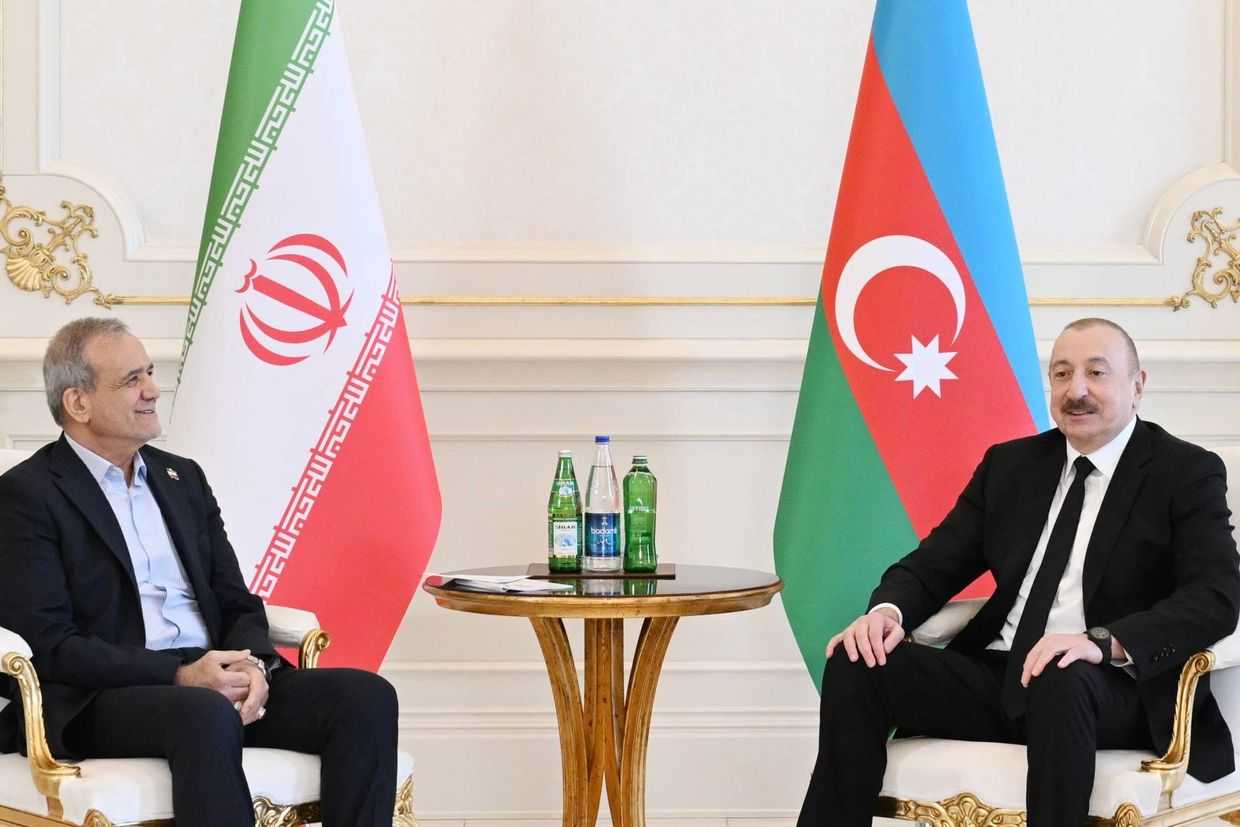
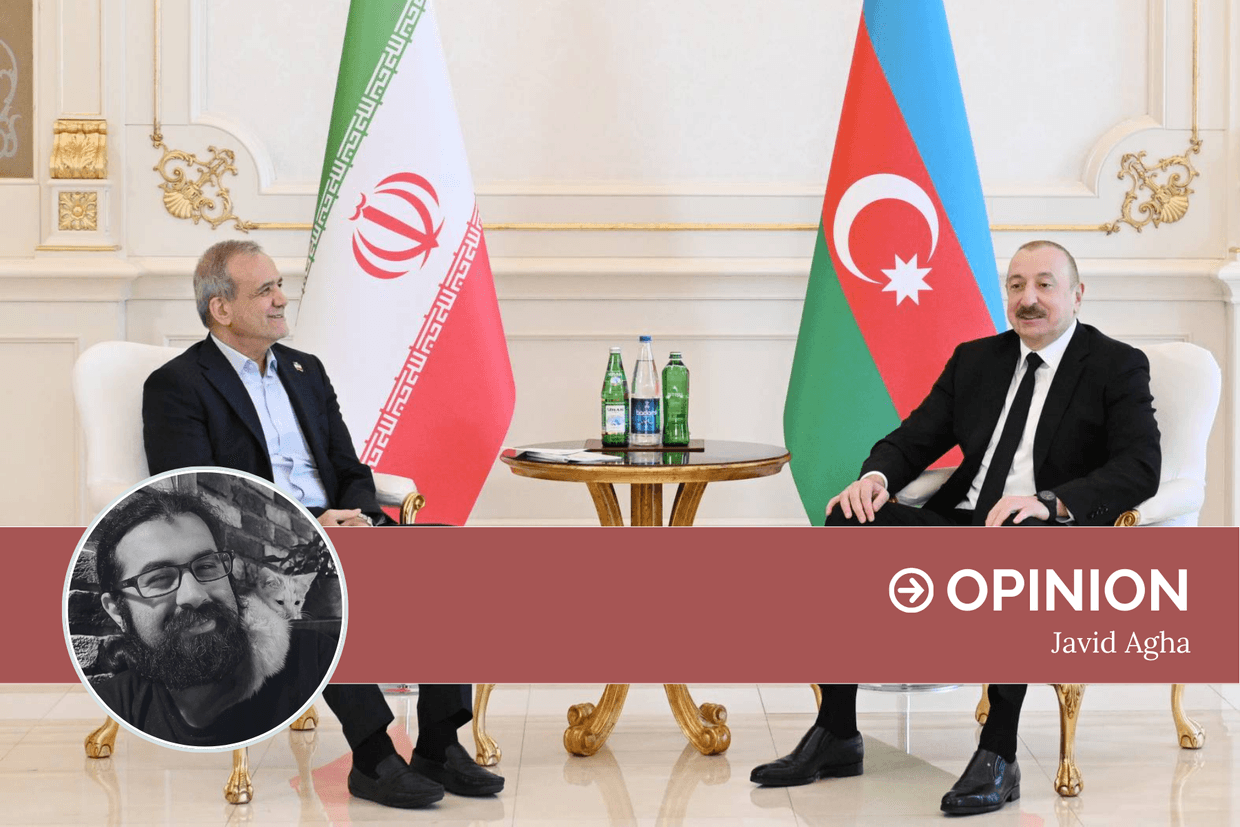
The election of Masoud Pezeshkian, himself ethnically Azerbaijani, as Iran’s president in July 2024 accelerated the thaw. Immediately after the election, Aliyev called Pezeshkian, praising their ‘common religious and cultural roots’. Pezeshkian’s April 2025 visit to Baku, the first by an Iranian president in six years, produced seven cooperation agreements spanning transport, culture, and media. Pezeshkian called Nagorno-Karabakh ‘an inseparable part of Azerbaijan’ and conveyed Supreme Leader Ayatollah Khamenei’s personal greetings to Aliyev.
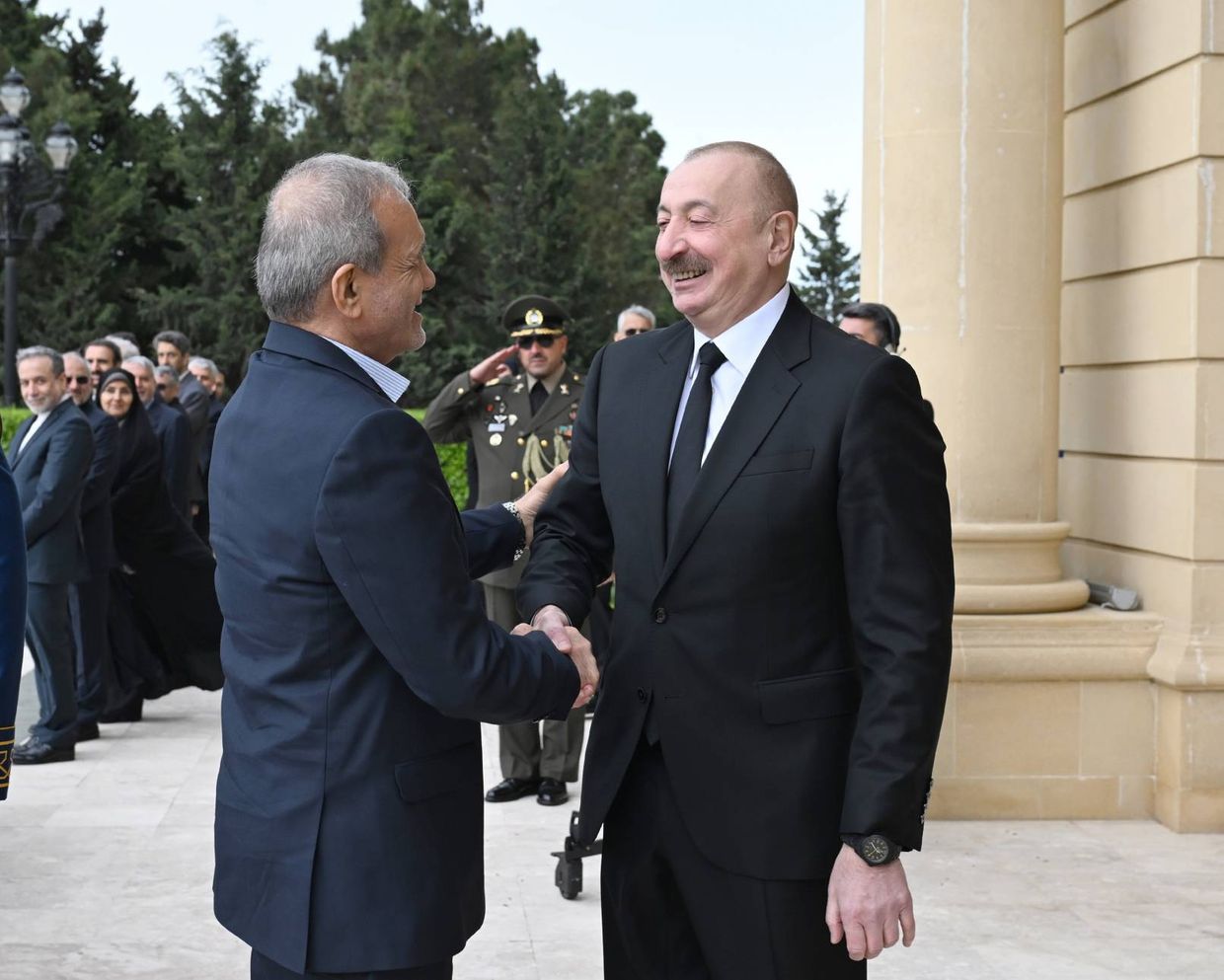
Indeed, the Azerbaijani government has framed the relationship positively, with state media emphasising Pezeshkian’s Azerbaijani heritage because a president who is both ethnically Azerbaijani and committed to working within the Islamic Republic system serves Baku’s interests perfectly. He soothes tensions without threatening the theocratic framework that keeps Iran internationally isolated. Pezeshkian is also probably the most positively regarded Iranian president by Azerbaijani citizens so far.
So far, the cycle of provocation, near-rupture, pragmatic repair suggests that neither side wants genuine confrontation.
Iran supplies cheap goods; Azerbaijan supplies strategic geography
The economic relationship is strikingly asymmetric but functionally important. Bilateral trade totaled $644 million in 2025, virtually all of it Iranian exports to Azerbaijan. Azerbaijan’s exports to Iran amounted to just $20 million, which is 3% of the total. Iran accounts for only 1.3% of Azerbaijan’s total foreign trade and 2.6% of its annual imports, but the composition matters.
Azerbaijan imports from Iran a mix of industrial inputs and agricultural products. Iranian goods are ‘comparatively low-priced’, as Azerbaijani MP Vugar Bayramov noted, making them significant for consumer prices even if small in macro terms.
The energy dimension is structurally more consequential. Since 2006, Azerbaijan has maintained a gas swap arrangement: SOCAR sends gas to Iran via the Baku-Astara pipeline, and Iran delivers equivalent volumes to Azerbaijan’s Nakhchivan exclave — completely landlocked and reachable overland only via Iran or Turkey (until TRIPP is completed) — taking a 15% transit commission. The new Ighdir-Nakhchivan pipeline from Turkey, commissioned in March 2025, aims to reduce this Iranian dependency.
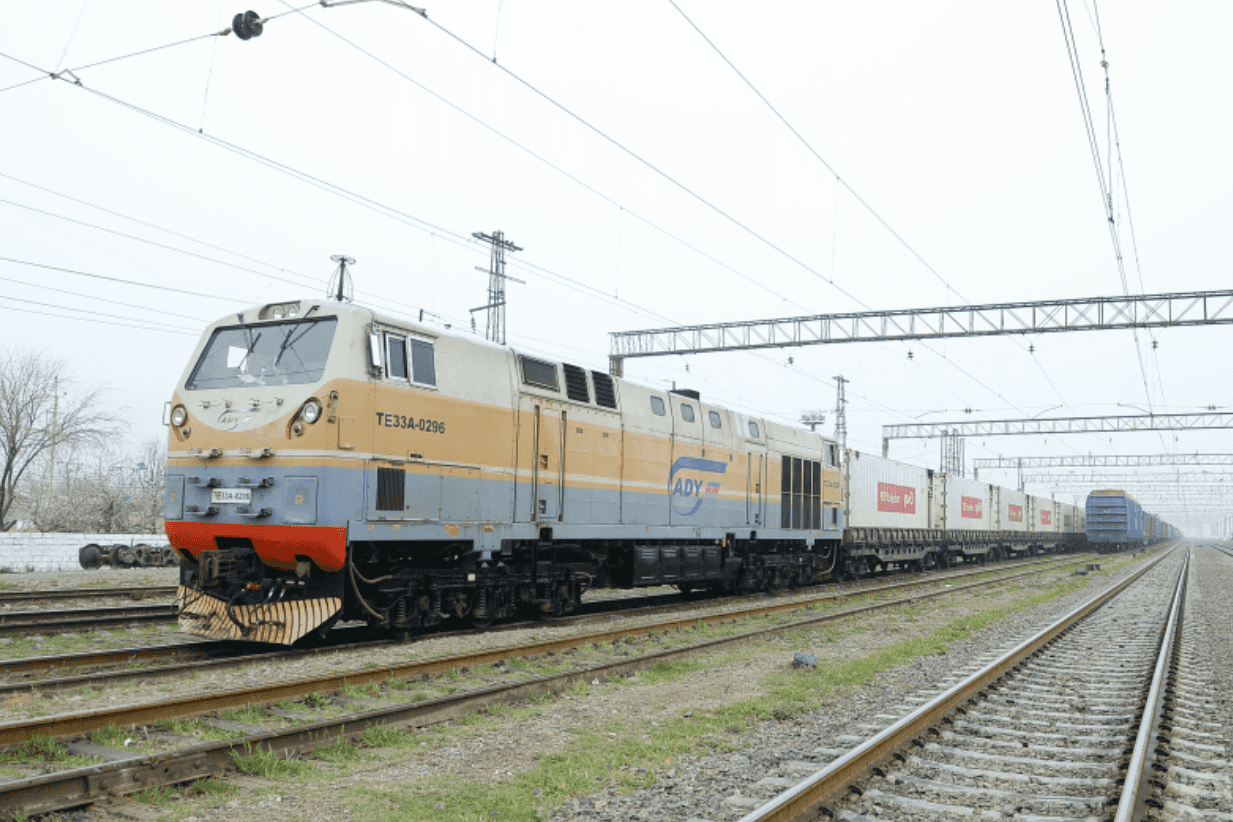
The more fundamental economic reality is Azerbaijan’s irreplaceable transit value to the West — value that exists precisely because Iran and Russia are sanctioned. The Middle Corridor saw cargo volumes reach 4.1 million tonnes in the first 11 months of 2024, a 63% year-on-year increase, driven by Western firms avoiding sanctioned Russian routes. The Southern Gas Corridor delivered 12.9 bcm to Europe in 2024, up 44% from 2021. Aliyev himself once boasted that Europe has no choice between Russia and Iran.
Nate Ostiller
If Iran were open to Western investment and pipeline construction, European buyers would have a vastly larger, cheaper gas and oil supplier at their disposal and Azerbaijan’s negotiating leverage would evaporate.
The Israel alliance that Baku cannot publicly celebrate
The Azerbaijan–Israel military relationship is the most consequential of Baku’s bilateral ties and the most dangerous for its Iranian balancing act. Israel accounted for 69% of Azerbaijan’s arms imports from 2016 to 2020. In 2016, Aliyev revealed cumulative contracts worth $5 billion in defensive equipment. Azerbaijani cargo carrier Silk Way Airlines has operated over 100 documented flights from Israel’s Ovda military airbase, with shipments spiking before the September 2023 Nagorno-Karabakh offensive.
The relationship runs in both directions. Azerbaijan supplies 40–65% of Israel’s crude oil (figures vary by year), exported via the BTC pipeline through intermediary trading companies that provide plausible deniability. Oil exports to Israel increased 28% in the first four months of 2024 compared to 2023. Aliyev himself once embraced a leaked US diplomatic cable’s description of the partnership as ‘like an iceberg, nine-tenths of it below the surface’.
Nate Ostiller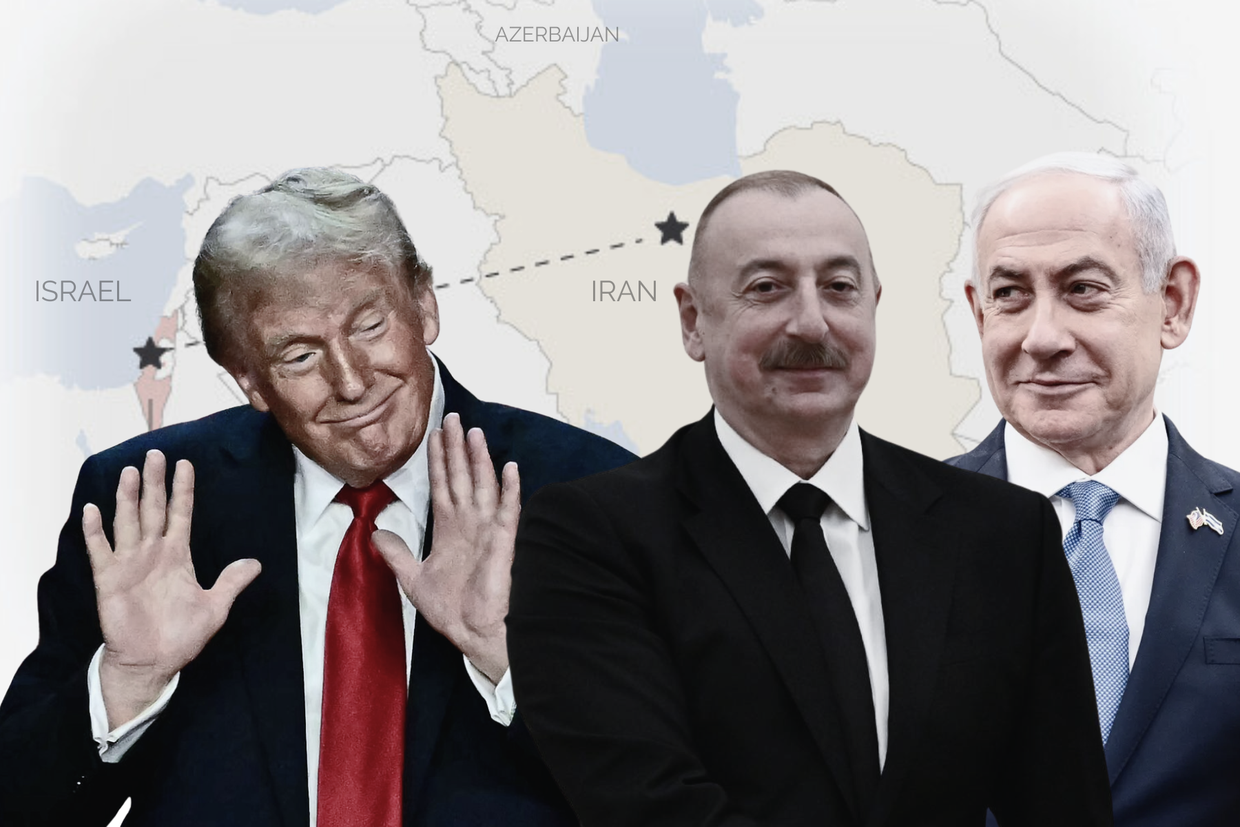
Azerbaijan opened its first embassy in Tel Aviv in March 2023, at the peak of its crisis with Iran, a move that elicited a pointed warning from Iran’s Foreign Ministry: ‘None of the regional moves of the Zionist regime remain hidden from the penetrating eyes of the Islamic Republic’.
Baku manages the contradiction through systematic denial. The Foreign Ministry maintained that they ‘do not accept any claim about the presence of a third party in the proximity of the border between Azerbaijan and Iran’. Ambassador Mukhtar Mammadov stated Azerbaijan ‘would not let Israel’s military use Azerbaijan as a base for a possible attack against Iran’.
After 7 October 2023, Azerbaijan neither condemned Israel nor declared Hamas a terrorist organisation, suppressed domestic pro-Palestinian protests, and quietly continued oil exports. This didn’t last long, however. An Israeli diplomat in 2024 told me that ‘the government tells us we are on your side, but the media was given a green light to cover events from Palestinian vantage point’.
This elaborate two-track public denial, private deepening only works so long as Iran remains too weak or too isolated to force a genuine reckoning.
South Azerbaijan is a card Baku plays but never wants to cash in
The ‘South Azerbaijan’ question over whether Iran’s roughly 15–25 million ethnic Azerbaijanis in the northwestern provinces could or should seek autonomy or unification is the sharpest illustration of Baku’s paradox.
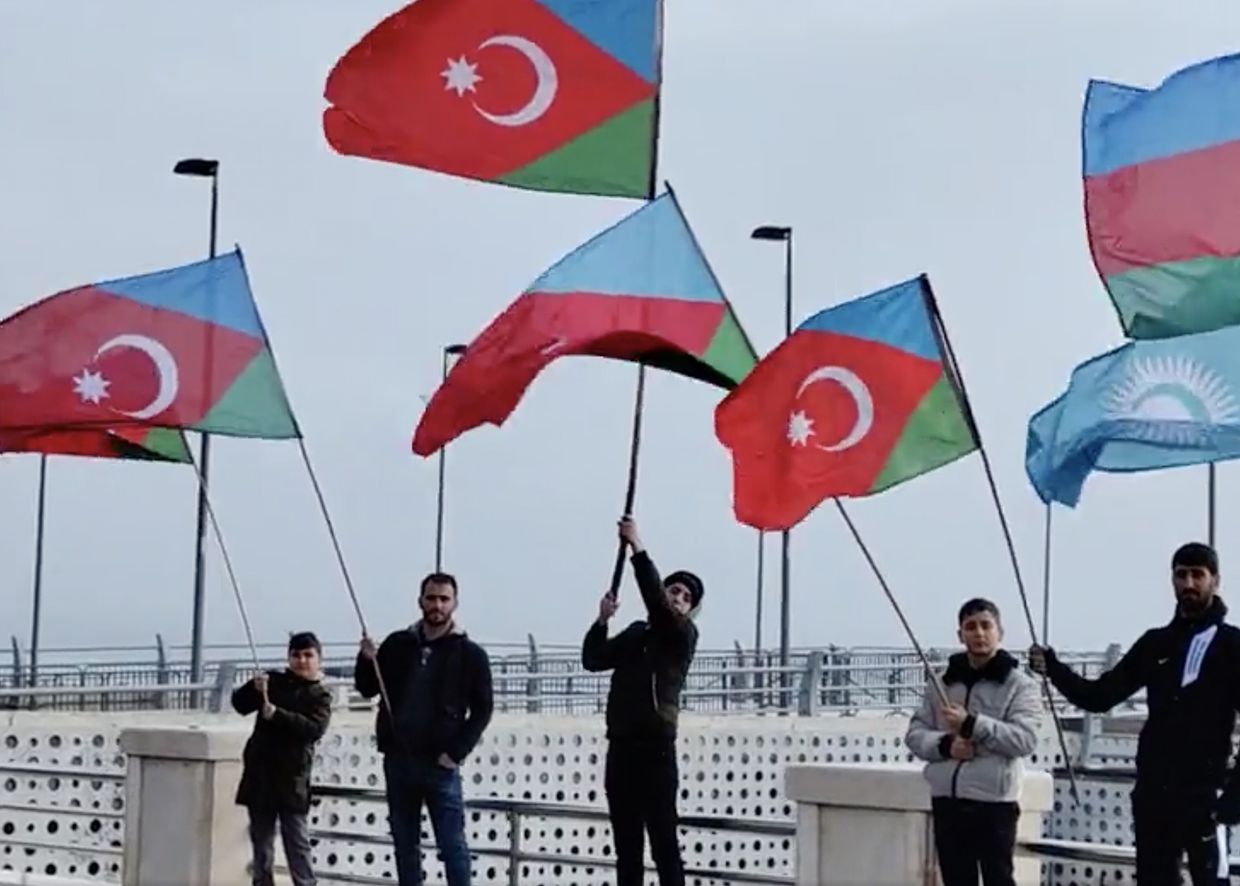
Baku deploys the South Azerbaijan card instrumentally. When relations with Tehran hit rock bottom in late 2022, a systematic escalation occurred. The state-connected outlet Caliber.az published an article announcing, ‘The time has come: Southern Azerbaijan should secede from Iran’; Haqqin.az declared the Azerbaijani state had ‘enough mobilising force to defend the rights of its compatriots’; Southern Azerbaijan National Awakening Movement (SANAM) leader Mahmudali Chehregani, barred from Azerbaijani media since 2006, was suddenly granted interviews on all four major Azerbaijani TV channels in a single week. The government allowed rare protests outside Iran’s Embassy under the slogan ‘Let Azerbaijan be united’. Aliyev himself stated: ‘We will do everything possible to defend the secular direction of the development of Azerbaijanis, including Azerbaijanis living in Iran. They are part of our nation’.
But actual separatism terrifies Baku.
Carnegie Endowment’s Bashir Kitachaev concluded in late January that ‘there is no evidence of serious separatist sentiment among the parts of Iran populated by ethnic Azeris’. The reasons are structural: Azerbaijanis are well integrated into Iran’s political elite, share the state’s Shia faith, are ‘famously active in commerce’ throughout the country, and have extensive intermarriage patterns. More critically for Baku, a democratic breakaway South Azerbaijan would be a nightmare competitor, not a prize to absorb.
Consider the arithmetic. Iran’s ethnic Azerbaijani population at upper estimates is more than double the Republic of Azerbaijan’s 10 million citizens. A democratic South Azerbaijani entity could claim to be the ‘real’ Azerbaijan, challenge Baku’s authoritarian governance model, and most dangerously, inspire democratic demands among Azerbaijan’s own citizens. A free and democratic Tabriz would be an inviting political exile destination for Azerbaijanis, a position that Tbilisi once served as before the Georgian Dream takeover. Kitachaev was explicit: ‘If Azerbaijanis are protesting en masse against arbitrary rule on the southern side of the border, why shouldn’t they do the same to the north?’
The regime Baku cannot afford to lose
The cumulative logic points in one direction: Azerbaijan’s entire strategic architecture depends on Iran remaining a pariah state.
First, Azerbaijan’s value as a Western energy partner is a direct function of Iranian isolation. The EU’s 2022 memorandum to double Azerbaijani gas imports was explicitly framed as replacement for Russian supplies, but the deeper structural fact is that Iran with the world’s second-largest gas reserves remains locked out of European pipelines by sanctions. A secular, Western-friendly Iran would open a vastly larger supply source, rendering the Southern Gas Corridor a secondary route.
Nicholas Castillo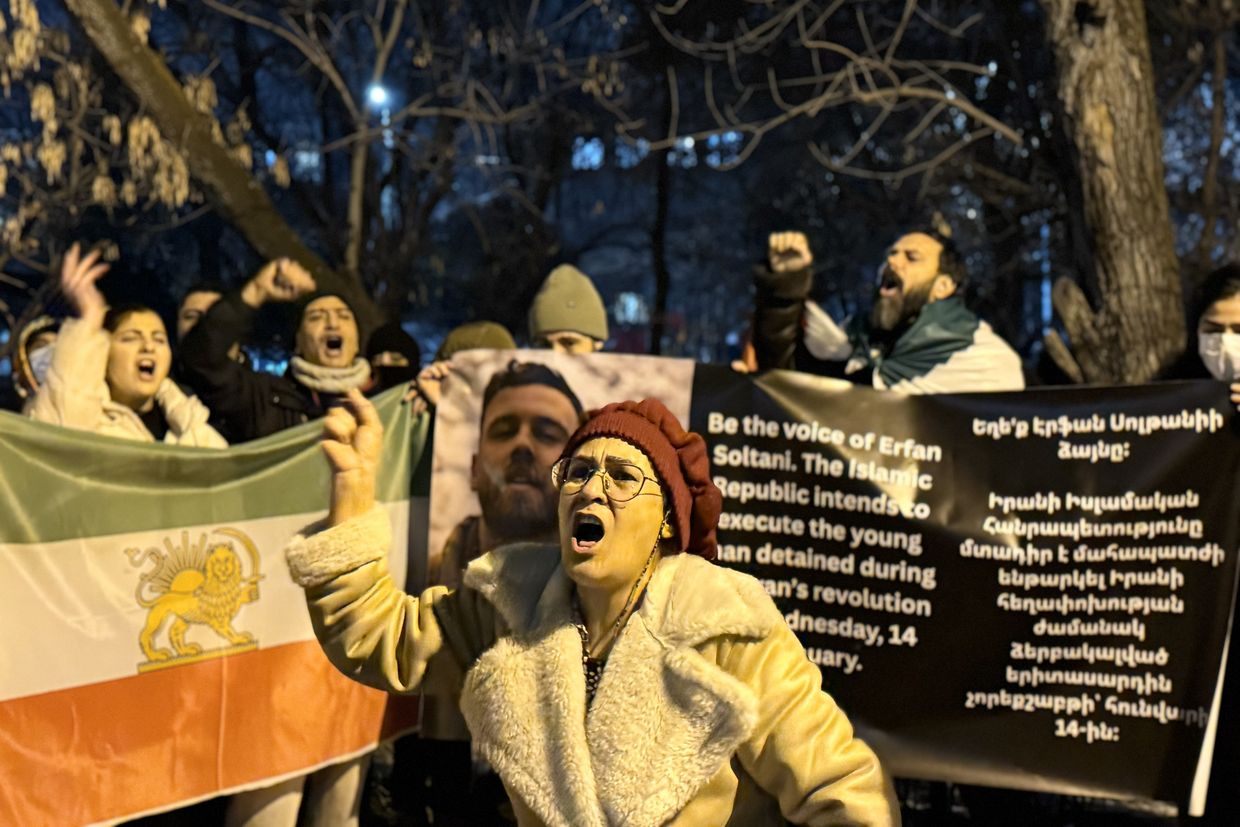
Second, the Israel relationship dissolves. Israeli foreign policy has often proved to be strictly realist. Israel’s interest in Azerbaijan is almost entirely derivative of its Iran threat with intelligence proximity, oil supply diversification, and a Muslim-majority ally for diplomatic cover. Remove the Iran threat, and Azerbaijan becomes strategically peripheral.
Third, the democratic contagion risk. A secular Iran would be a society of 90 million people (provided the US doesn’t commit more massacres) building democratic institutions next door to a 10 million-person authoritarian state.
The behavioural evidence aligns. The Aliyev administration has never shown any sympathy for the Iranian opposition. When Iran’s broader protest movements gain momentum, Baku’s pro-government commentators focus on the South Azerbaijan ethnic frame while ignoring the democratic one.
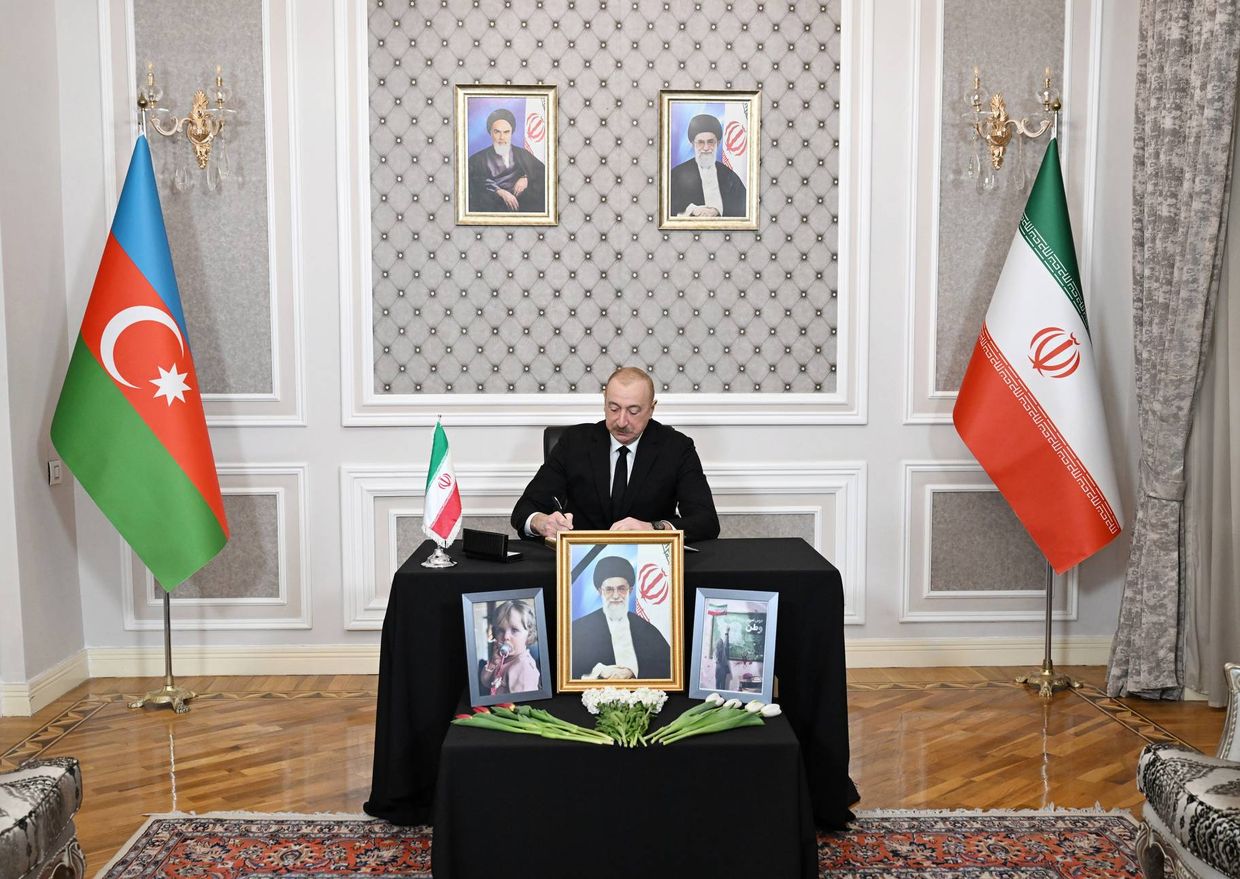
Notably, after the death of Khamenei in February 2026, Aliyev sent a letter of condolence calling the Supreme Leader someone who ‘held a special place in the political and religious life of his country’, deeming his death ‘a great loss for Iran’, a remarkable formulation for the leader of a nominally secular republic about a theocratic ruler. Aliyev was later photographed in the Iranian Embassy, signing the book of condolences, standing next to photos of Khamenei and his granddaughter Zahra Mohammadi Golpayegani.
Baku does not ‘support’ the mullahs — but its strategic model is structurally parasitic on Iranian isolation. Remove the isolation, and the transit corridors lose premium value, the energy diversification narrative collapses, the Israel alliance loses purpose, and a democratic neighbour of 90 million becomes an existential governance challenge to a regime that Freedom House ranks near the bottom of global press freedom indices. The gentleman’s agreement between Heydar Aliyev and Tehran was and remains, Baku’s survival logic.