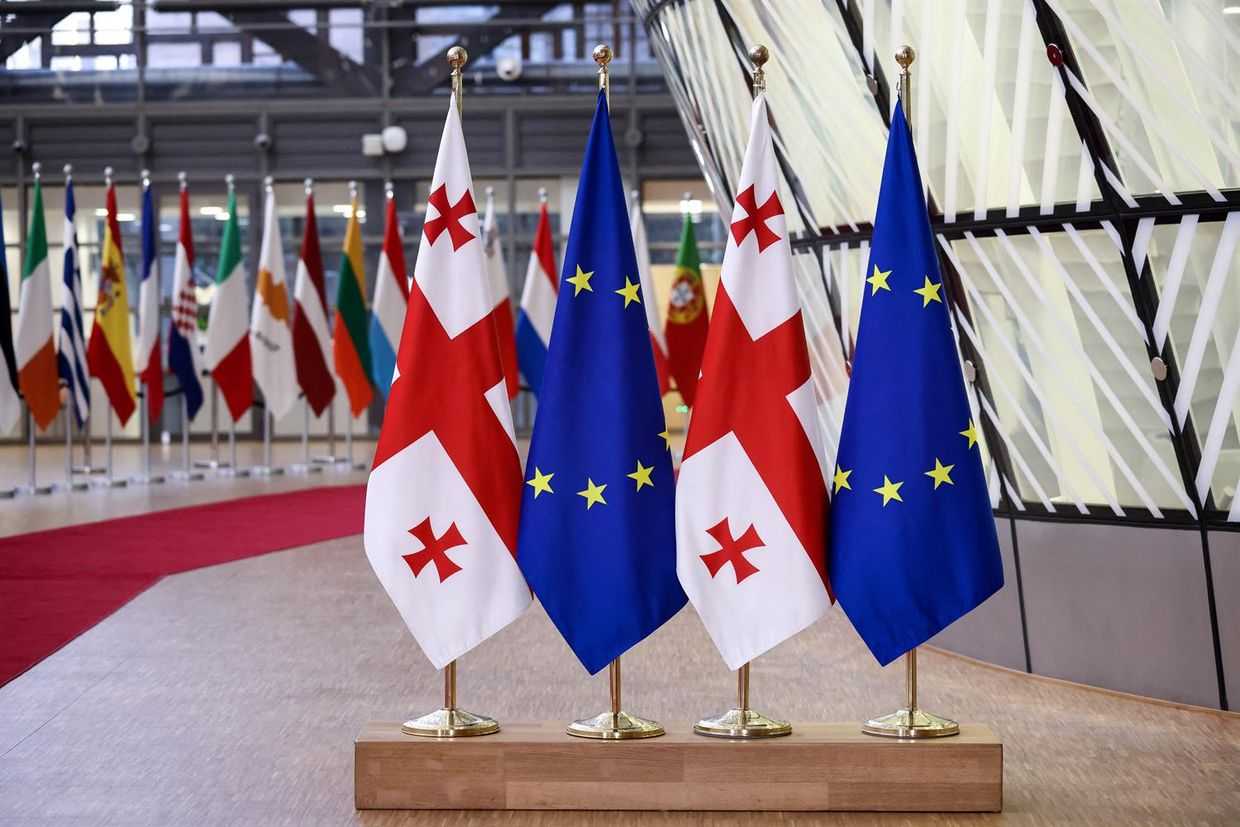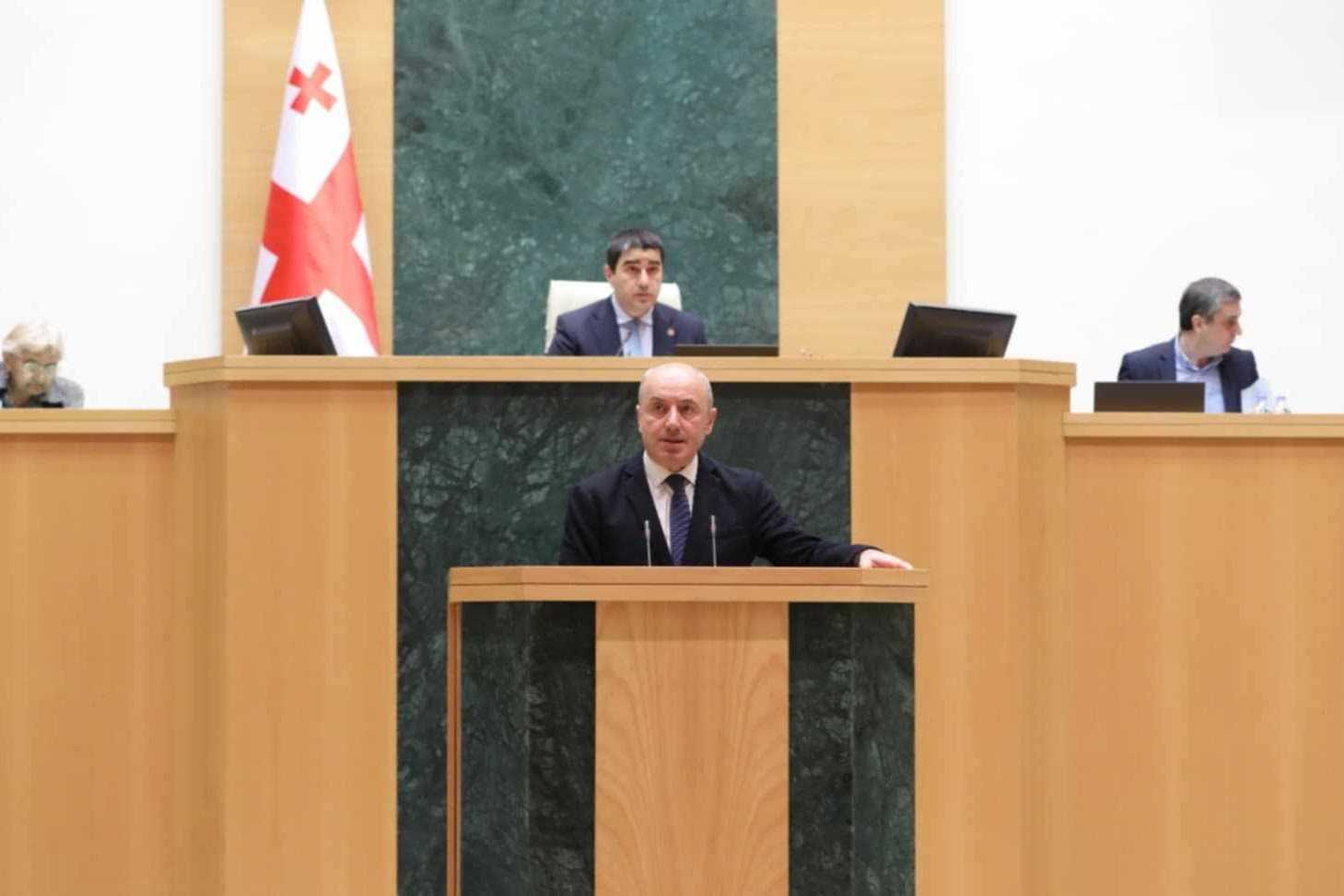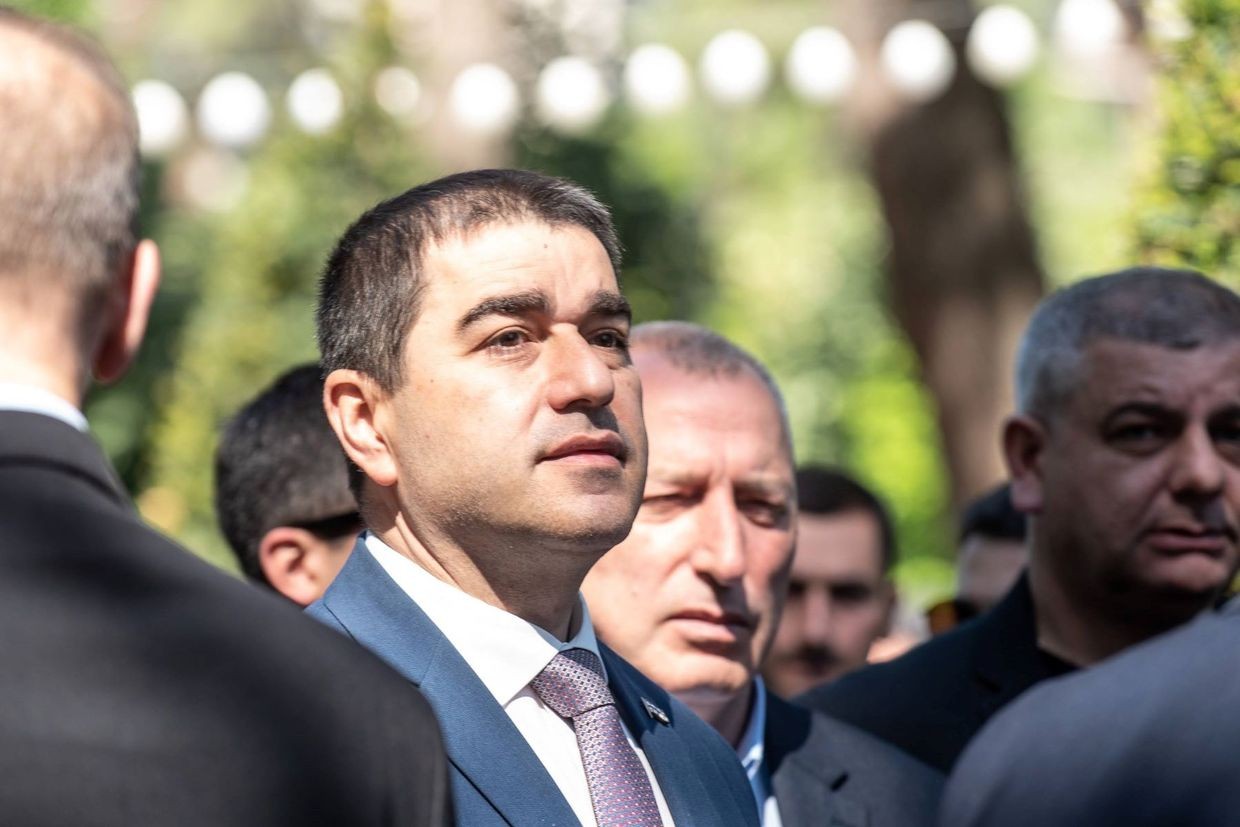
Persisting in his criticism of EU leadership, Georgian Parliamentary Speaker Shalva Papuashvili urged the public to listen to the Georgian Orthodox Church rather than Brussels. He made the remarks in reference to Patriarch Ilia II’s comments on the ‘abuse’ of freedom of speech.
In his traditional Christmas message on 7 January, the head of the Church said that ‘the abuse of freedom of speech is one of the most difficult trials of our time’.
‘Only those who are able to walk worthily toward God along the path of truth, through patience and forgiveness, will overcome this trial,’ the text read.
Commenting on the epistle, Papuashvili mentioned the importance of ‘balance and harmony’, before going on to speak about what he described as a ‘distorted idea of liberalism’, which he said had been imposed on various countries.
‘Today, we see that the world is beginning to awaken’, he continued. Papuashvili praised the Donald Trump administration in the US, which he said had ‘cut funding for pseudo-ideologies’ and gave everyone the opportunity to say that ‘nothing should be fetishised — including speech’.
Turning to his claims about European actors, Papuashvili claimed that Georgians had been ‘virtually treated as test subjects’, as ‘hatred, resentment, and verbal attacks were not only tolerated here, but even encouraged — and continue to be encouraged to this day — by some European ambassadors and European donor organisations’.
‘This is exactly what the patriarch points out: everyone should understand that in the name of freedom of speech, the most evil and deadly weapon has been imposed on us — a weapon that kills not only physically, but also the human soul, including the soul of those who wield it’, Papuashvili said, adding:
‘That is why it is important to listen not to those who spread pseudo-ideologies, to Brussels, or to its funded NGOs, but to what has been guiding us for 1,700 years — our Church and its teachings’.
Over the past two years, following the passage of a slew of restrictive laws by the ruling Georgian Dream party, violence against anti-government protesters, and the disputed 2024 parliamentary elections, relations between Georgia and its traditional international partners — including the EU — have sharply deteriorated.
Against this backdrop, in November 2024, the Georgian Dream government announced the ‘postponement’ of negotiations on the country’s EU membership until 2028, which sparked large-scale protests in Tbilisi and other cities.
The authorities responded to the protests with both police violence and a new series of restrictive laws targeting street protests, the media, civil society, and the political opposition. At the same time, dozens of protesters, as well as opposition politicians and a media founder, were jailed on various charges.
These developments further strained relations with the EU, which, in its damning 2025 report, described Georgia as a ‘candidate country in name only’, highlighting the tarnishing of the candidate status it had been granted in 2023.
The developments have also put Georgia’s visa-free travel with the EU, in effect since 2017, at risk, raising the prospect of its suspension.
In response to the EU’s criticism, the ruling party has repeatedly accused Brussels of blackmail, lying, funding ‘radicalism and disinformation’, and deviating from European values.
Nevertheless, Georgian Dream continues to claim that it is striving for EU membership. However, as Papuashvili said in November 2025, the party does not aspire to ‘the Europe that Brussels’ current bureaucracy is emptying of European substance and leaving a mere union, but for the Europe that aims to restore European values’.
 Mikheil Gvadzabia
This article was translated into Armenian and republished by our partner CivilNet.