‘Pray for Zahesi, fear Dighomi’: women’s stories from Georgia’s protest detention centres
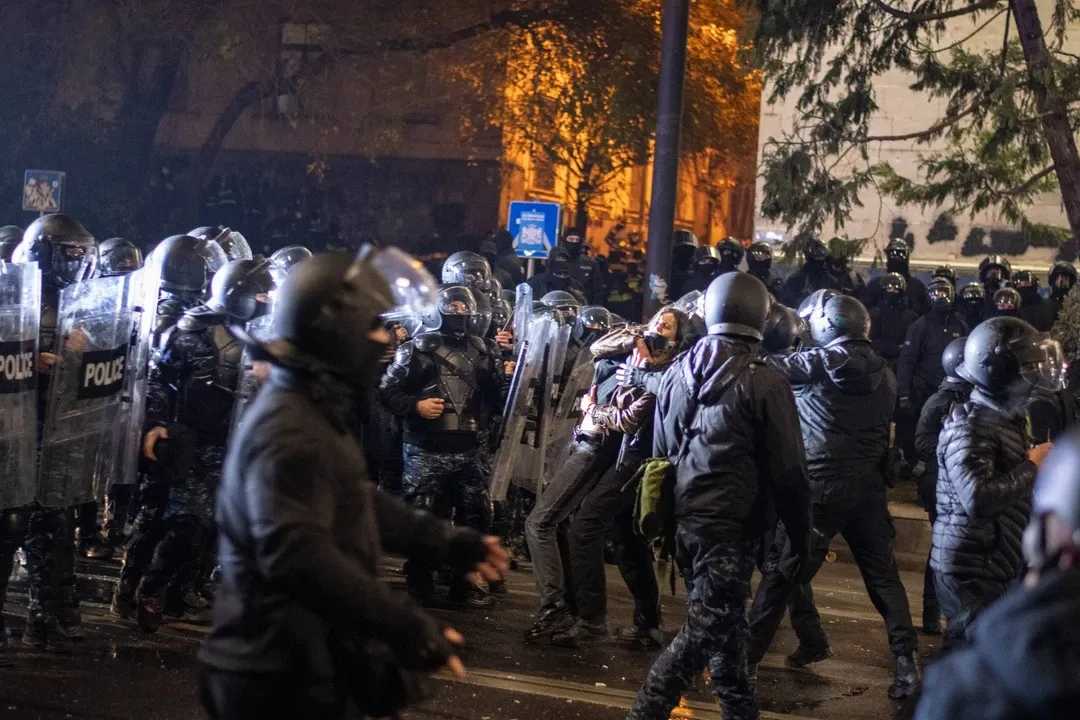
The women detained during Georgia’s ongoing anti-government protests have reported systematic practices designed to degrade human dignity.


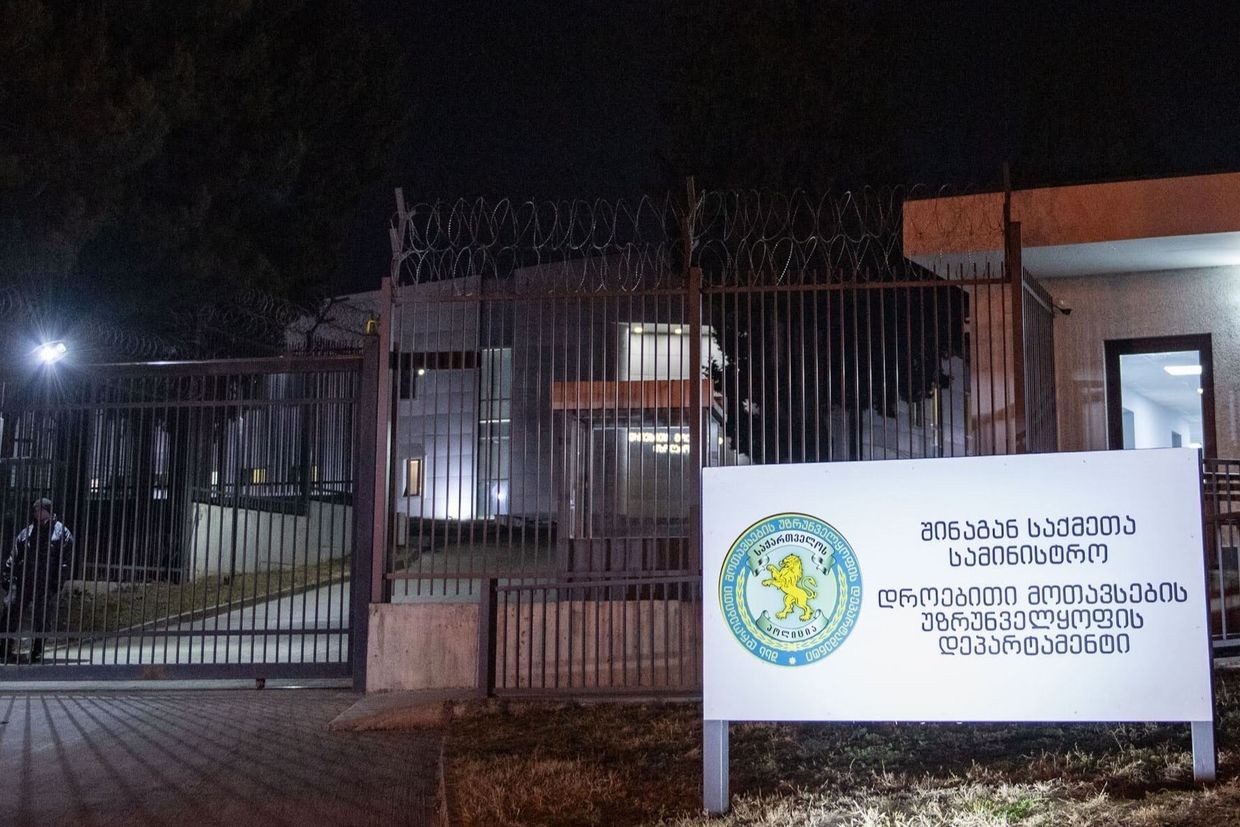
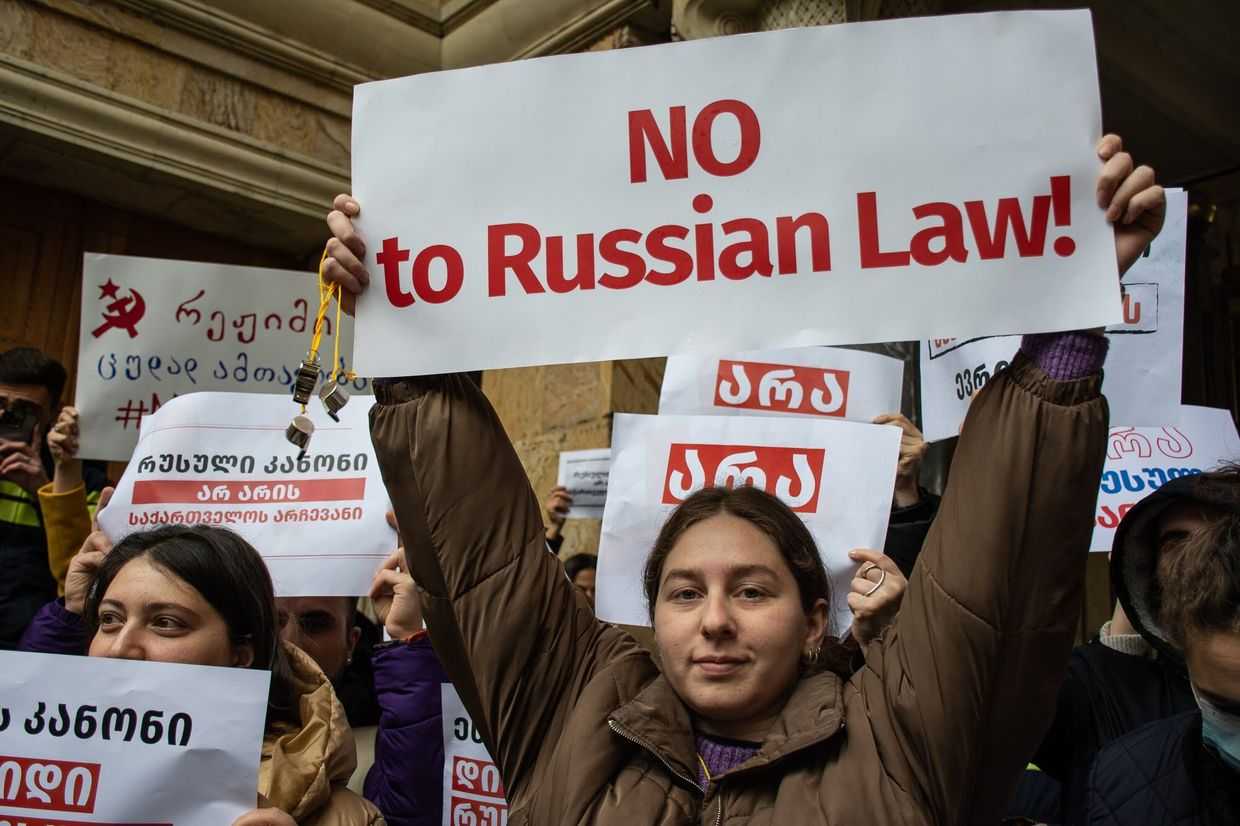
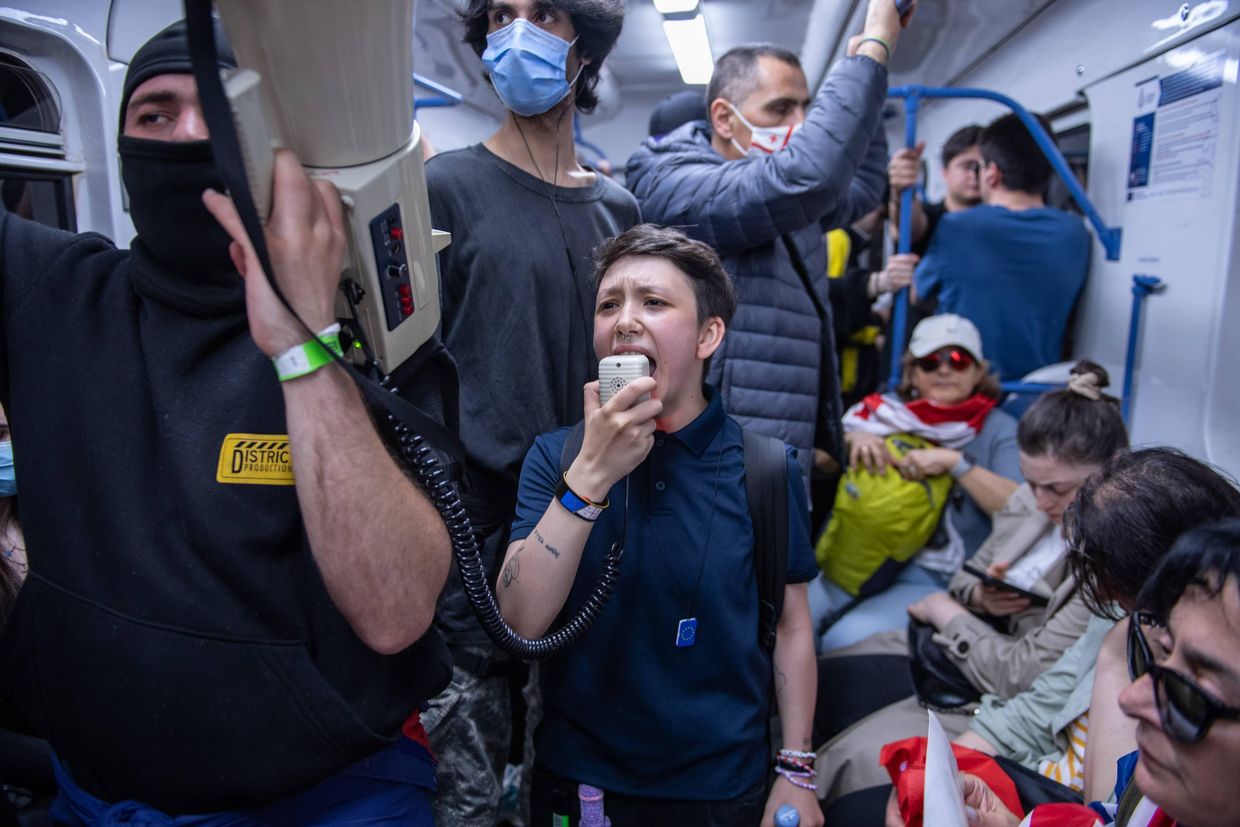
Over the past two years, Georgia’s laws and policing practices toward protesters have hardened dramatically. Administrative offences that once carried fines or warnings — from blocking the road, disobeying a police order, or even holding objects interpreted as ‘obstructing police operations’—now result in 15-day sentences or at least 48-hour stints in pre-trial detention.
According to standards from the Council of Europe on detention facilities, anyone held overnight must be given a clean mattress and bedding; have access to a sanitary, dignified toilet; be able to meet basic physiological needs in hygienic conditions; and, wherever possible, be kept in cells with natural light and proper rest conditions. For stays of 24 hours or longer, detainees should have access to a clean shower, fresh air, and daily exercise. Every part of this baseline is broken in the cells used to house women detained during Georgia’s protests.
There, repression has developed its own folklore. Protesters joke that there are only two destinations on the map: Zahesi or Dighomi — two detention centres used to house most of the women sentenced on administrative charges. Zahesi, they say, means a window, a door on the toilet, a trickle of air; Dighomi means no sky, no clocks, no privacy, and no way to tell if morning has arrived or if the light has been switched off forever.
 OC Media
Yet inside both, a surreal politeness prevails. Officers apologise as they fasten handcuffs, guards whisper that they know the detainees ‘aren’t real criminals’ and then calmly enforce rules that read like a manual of small humiliations: a strip-search performed ‘politely’, a toothbrush passed like contraband, a single menstrual pad issued only after a signature, a shower so dysfunctional you leave dirtier than you entered. One woman waited in a court basement filled with paint fumes so strong even patrol officers held their heads.
What emerges from testimony gathered by OC Media is a system that punishes without ever claiming moral ground, a bureaucratic theatre where the state arrests people it privately reassures, and where the architecture of detention, from the windowless cells to the endless nights, does the real work of trying to break the prisoners.
Every guard knows the truth: these detainees are not criminals. They have been arrested for resisting a political order that has turned procedural punishment into a tool of control — a system where activists are processed like offenders but treated, paradoxically, more gently than real criminals.
‘I heard the officers beating him while he screamed for help’
Student activist Tatia Apriamashvili stepped into public life in 2016 and never really left it. A steady presence in protests, she has now been detained three times: first for placing plastic chairs outside parliament, secondly after MP Mariam Lashkhi filed a complaint, and most recently, on the day MP Tea Tsulukiani unveiled the government’s anti-opposition commission’s report, when 23 activists were detained and scattered across regional isolation cells before the courts heard their cases.
Apriamashvili spent 48 hours in one of them — a stretch she calls the most punishing of all, ‘two days where daylight, information, and even the right to wash simply disappeared’.

The two days spent in a regional isolation centre in Akhaltsikhe felt like entering ‘its own strange world’, Apriamishvili tells OC Media. The facility had just five communal cells — one holding men arrested for domestic violence, and four packed with women detained for blocking the road. Hygiene barely existed. To use the toilet, detainees had to call a guard and be escorted to the same staff bathroom. Water and cigarettes arrived sporadically through favours, and basic hygiene items were withheld because the women had not yet been ‘formally sentenced’.
‘How do you imagine someone spending 48 hours without brushing their teeth or changing clothes?’, Apriamashvili asks.
Her longer, 12-day detention in Dighomi was even worse. Like other detainees, Apriamashvili had heard the grim joke: hope for Zahesi, fear Dighomi. As she puts it, ‘you pray not to be taken [to Dighomi]’, because even within a broken system, it stands out as deliberately degrading.
For nearly two weeks she never saw the sky. The cell had no sunlight, no airflow, no sense of time — even the so-called ‘walk yard’ was just a concrete corridor with a single window. The cell’s toilet was half-exposed, positioned so cameras still captured detainees’ heads. Showers happened twice a week for 10 rushed minutes, depending on when the water was turned on. Hygiene products required pleading; menstrual pads were handed out one at a time, only after a guard escorted the detainee to a doctor to sign for each item. The food and utensils were so unhygienic she couldn’t bring herself to eat anything served inside.
The tenth night was the worst.
‘Around 03:00, they brought in a man, clearly intoxicated, and I heard the officers beating him while he screamed for help’, Apriamashvili recalls.
The blows continued for three hours. She and fellow detainee Albi Kordzaia shouted through the door, demanding the officers stop. When the police left, the guards continued the beating.
Inside this timeless, airless place, days warped: Apriamashvili would ask the time, convinced hours had passed, only to be told it had been 30 minutes. Books and improvised games — like tossing a wet tissue into a paper cup — became survival tools.
Yet Apriamashvili says the staff themselves were not personally hostile toward protesters. Several quietly admitted they knew the activists ‘weren’t here for any real offence’, a recognition that made them more cautious and more humane in their treatment. The brutality, Apriamashvili insists, is structural — a system built to exhaust, humiliate, and erase people, while the individuals inside it simply perform their parts in a machine that has forgotten what justice looks like.
Punishment disguised as ‘education’
Rusiko Kobakhidze has been protesting on Tbilisi’s central Rustaveli Avenue since the day the current government first came to power in 2012. As a researcher of Soviet repression, she recognised the pattern early: repression starts small, targeting those society won’t defend, and then widens until ‘the net catches every critic’. For her, today’s protests are not rebellion but self-defence — ‘they attack, and we try to save the country’, she says.
Her arrest came after the government criminalised crossing a blocked road — a law she describes as punishment disguised as ‘education’. She crossed deliberately.
‘If they say they’ll arrest us for stepping onto the street, then we must step onto the street’, Kobakhidze tells OC Media.
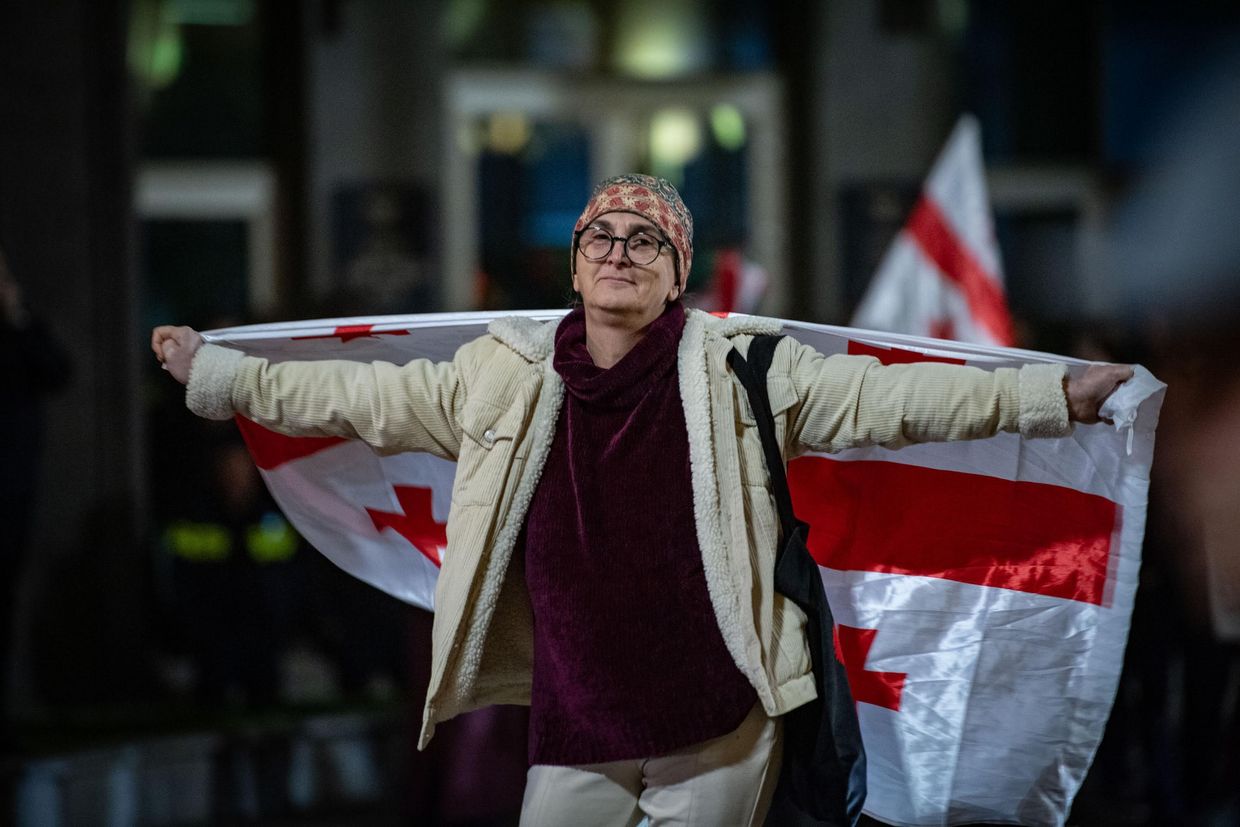
The arrest itself was surreal, she adds: officers were apologetic, warming the car, asking if she was cold, behaving with a courtesy that made the political nature of the arrest painfully obvious.
‘They have never dealt with people like us in isolation — ordinary citizens, balanced, not criminals’.
Everything shifted once she reached Dighomi. The cell, in an old Soviet block, was dark, stale, and built to shrink a person. The toilet in the room had no door, only a half-height divider; the bedding looked like train linens boiled a thousand times. Privacy didn’t exist. Time dissolved. There were no clocks, and guards gave random answers when asked the hour, stretching minutes into what felt like days.
‘You sit in a room, and the toilet is right there, open — it’s extremely degrading’, she says.
What stays with Kobakhidze is not personal cruelty but structural brutality. The officers, she says, are polite because they know the arrests are political; the degrading facilities exist because the purpose is to wear people down. And yet, she says, it is the state that ultimately loses.
‘They take more damage from these arrests than we do. Everyone in our communities knows who we are. They’re the ones who lose face when they drag ordinary citizens into cells’.
Tamar Agatha Kapanadze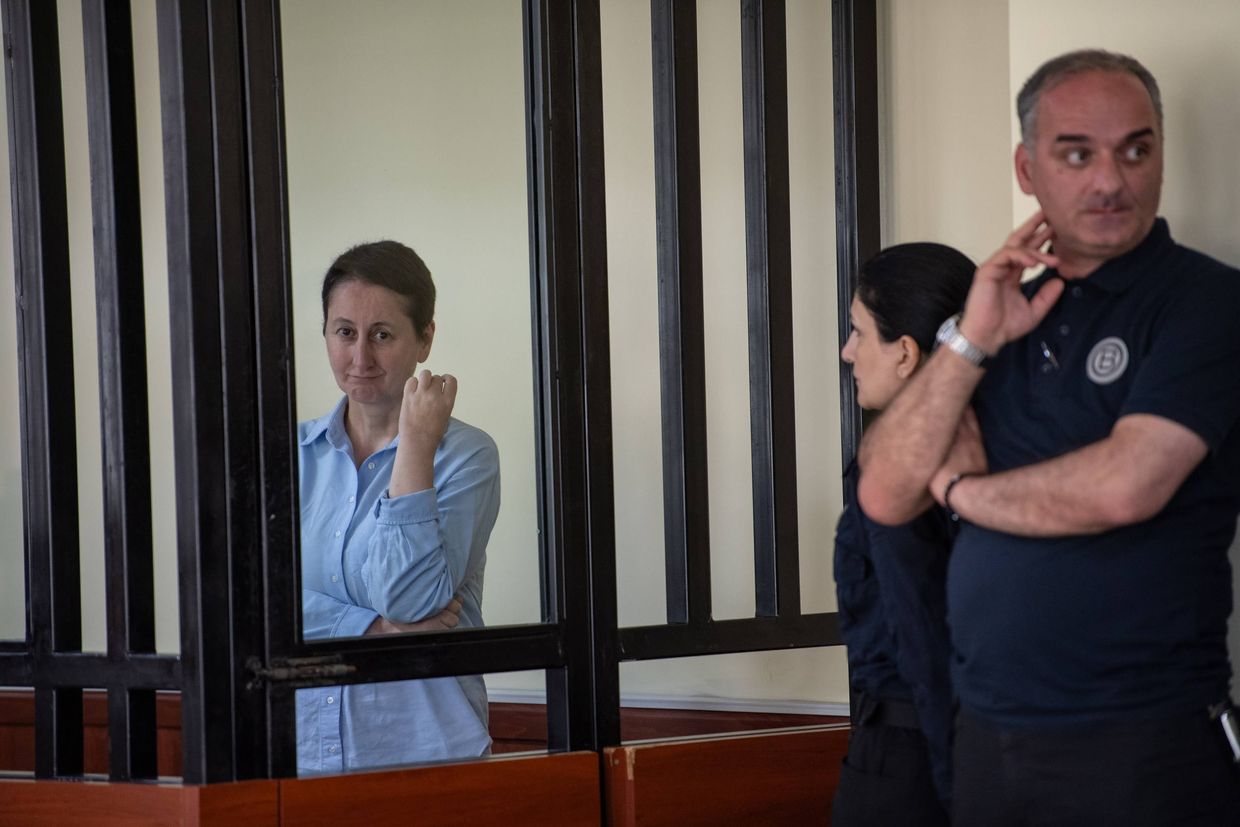
‘Polite, but still degrading’
Elene Berikashvili tells OC Media she has been protesting ‘for as long as she can remember’, joking that she was practically raised on Rustaveli Avenue.
On 19 November, she joined a march held in support of imprisoned activist Mate Devidze — it became one of the most aggressive police crackdowns she has ever seen. Trapped between police lines, a narrow ledge, and metal fencing, she was ordered to ‘move to the pavement’, a pavement that didn’t exist. Berikashvili recalls how after this, a high-ranking police officer hit her.
‘It was a targeted strike; he came in really aggressively even before that’, Berikashvili recounts. ‘He had hit others before me, then punched me too — but at that moment, he didn’t look at my face’.
She emphasises that it was no simple push, but a direct fist to her back.
Seconds later, an officer she had previously recited the police oath to, ordered her arrest.
‘He told the other officer: “Keep an eye on her, she knows the oath by heart”. That’s why he arrested me — because I reminded him what his job actually is’.
The police oath sees officers swear to ‘serve society’ and to ‘defend human rights and freedoms, political neutrality, principles of legality and proportionality, and to prevent any form of discrimination’.

Inside the patrol unit’s freezing ‘aquarium’ holding room, the tone hardened the moment senior officers arrived. Supervisors barked orders, mocked detainees, and pushed junior police into harsher behavior. In the patrol van, Berikashvili watched what she calls ‘mocking, low-level humiliation’: crude jokes, sneering, propaganda lectures. She pushed back calmly — ‘Your strongest skill is definitely not irony, so maybe don’t try it’ — and noticed something telling: the most aggressive officers were also the least competent.
‘They can’t even fill out their own paperwork. Someone else stands behind them telling them what to write’, Berikashvili recalls.
Her transfer to Dighomi brought the psychological collapse that all detainees describe. After the standard strip-search — ‘polite but still degrading’ — she spent two nights in a cell with no fresh air, no daylight, and no sense of time. The toilet sat essentially inside the room, shielded only by a low wall that offered no privacy from cellmates or guards. There was no running water, no shower, and almost no hygiene items.
‘We brushed our teeth with a brush the guard gave us’, Berikashvili says.
Nino Apakidze
Time froze; with no book, phone, or clock, she asked the guards for the hour ‘every 30 minutes just to stay sane’. The room technically had four beds but was so small that even the table couldn’t hold the food and items supporters sent.
The worst moments came underneath Tbilisi City Court, in the basement cells she describes as ‘filthy, airless, and reeking’. The toilet was broken, the sink useless. Detainees waited for hours in unventilated rooms while staff painted the walls, filling the corridor with chemical fumes.
‘It was so strong even the patrol officers had headaches’, Berikashvili says.
She urged officers to demand better conditions: ‘I told them I’d call their supervisor myself. You have the right to protest your working conditions. They were practically being poisoned’.
After sentencing, Zahesi felt almost humane, though only by comparison. The building was newer, with larger windows, actual airflow, and, crucially, a separate toilet with a door.
‘This is what an isolation cell should look like. Not luxurious, just humane’, Berikashvili emphasises.
The same strict menstrual-pad protocol applied: one pad at a time, retrieved from a doctor under the escort of a male guard. Showers were barely functional, with a spray head shooting in different directions, no shampoo, 10 minutes total.
What never changed, in Dighomi or Zahesi, was the unspoken acknowledgement shared by the police themselves: that the activists were not criminals. During outdoor time, a patrol officer gestured toward another detainee and told Berikashvili, ‘That man is a real criminal, unlike you’. She laughed later at the absurdity of it: ‘Sometimes I’d forget they even arrest real criminals anymore. Our isolation cells are filled with us instead’.
Nastasia Arabuli
‘Detention cannot become a licence to strip people of dignity’
One common practice within Georgian detention centres is forcing detainees to squat. This procedure is often used during inspections or control checks and is highly humiliating for those subjected to it, as it involves prolonged physical strain and exposure that can degrade human dignity. Many detainees have reported that such treatment feels like a form of psychological and physical pressure meant to subdue or intimidate them.
Speaking with OC Media, Berikashvili recalls that during her detention, for inspection purposes, she was stripped naked in stages — first from the waist up, then from the waist down — and was forced to squat several times.
This practice has drawn criticism from human rights organisations, which argue that it constitutes cruel, inhuman, or degrading treatment. Similar practices have been reported in neighbouring countries like Russia and Belarus, where detainees and political prisoners are also subjected to degrading treatment. It is also emblematic of broader patterns of abuse documented in Georgian detention facilities, especially toward protesters and politically motivated detainees.
Lawyer Ilona Diasamidze tells OC Media that the principle is simple: detention cannot become a license to strip people of dignity. Whether someone is held for 48 hours or 15 days, whether fairly or unfairly, ‘human rights don’t leave the room when a person enters an isolation cell’. Yet the system, she says, routinely puts women in conditions that cross that line the moment they step inside. Women describe being fully stripped during searches, something the law expressly forbids, and forced squats, which she calls a degrading, quasi-sexual act disguised as security protocol.
‘If the state believes there’s a security risk, then install proper scanners. You don’t fight contraband by humiliating people’, Diasamidze says.

According to Georgia’s Public Defender, as of June, the practice of fully stripping detainees for searches has been formally banned in penitentiary facilities after being assessed as ‘degrading and humiliating treatment’ in a prior February report. The text emphasised that forcing a detainee to remove all clothing is incompatible with human dignity and violates fundamental rights.
Even so, Diasamidze stresses that the isolation cells were never built for 15-day administrative detentions — they were designed for brief, pre-hearing situations, and the system collapses the moment women are kept longer.
Basic hygiene becomes torture: toilets placed inside cells, visible to guards through door windows, amount to constant surveillance of the most intimate activities. For Diasamidze, this isn’t a technical flaw but a profound rights violation: ‘There is no universe in which using the bathroom while someone can look in at any moment is not degrading’.
She warns that the system is not just ill-prepared — it is being used. The state knows the isolation cells lack equipment, lack training, lack legal clarity, and lack female staff, which makes it impossible to comply with legal requirements for same-sex searches during inspections of women detainees.
‘Men end up assuming this role because there’s no proper replacement available’, Diasamidze explains, stressing that certain intimate topics remain taboo for women to discuss with male officers, turning such procedures into direct invasions of privacy and dignity
The result is predictable: fear, demoralisation, and deterrence.
‘Administrative detention has become a tool to break people’, Diasamidze says. And because women have become the face of the current protest wave, the harm hits them hardest.
‘These conditions won’t change unless women speak about them. Silence only makes tomorrow harder. Someone might endure it, someone else might break — so we speak, for the ones who could break’, Diasamidze concludes.
This article was translated into Georgian and republished by our partner On.ge.