★★★★★
Otar Iosseliani’s 1970 film is a poetic wander through the absurdity of life.
Whenever someone asks me for a film recommendation — which is to say, whenever I start giving unsolicited advice — Otar Iosseliani’s 1970 feature Once Upon a Time There Was a Singing Blackbird is always at the very top of my list.
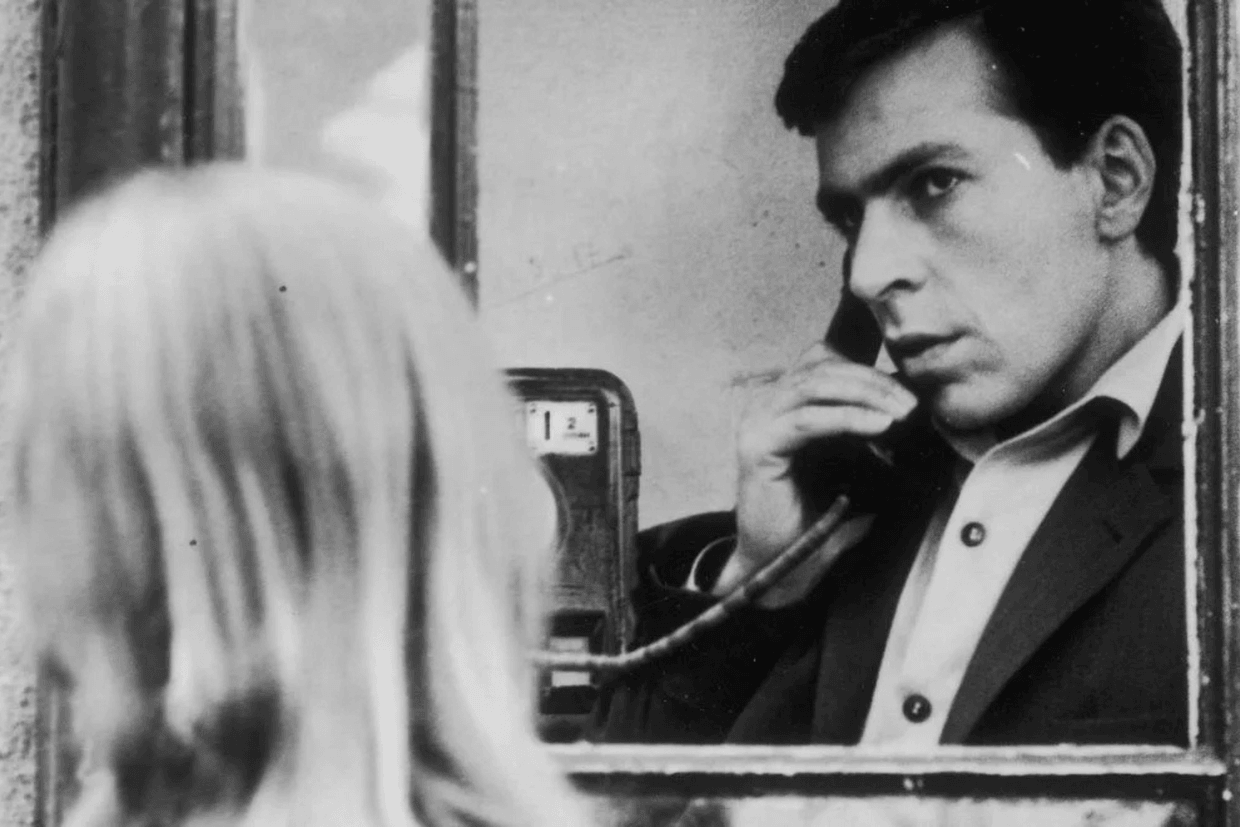
Shot in luminous black and white, Iosseliani’s film is not plot-driven cinema but a seemingly aimless drift through the life of Gia Agladze (Gela Kandelaki), a charming percussionist in a Tbilisi orchestra, whose ‘day in the life’ unfolds over a lean 85 minutes.
Gia is affable, flirty, kind, poetic, and also perpetually late, perpetually in motion, and perpetually apologising. He apologises to the many girls he has made plans with and forgotten, to friends he has unintentionally stood up, and to the orchestra conductor, who fumes at Gia’s habit of arriving just in time for rehearsals but understands that he won't change his habits. He is always distracted, always rushing, and never seems to have enough time.
In my early and mid-twenties, Gia’s constant struggle with time, his charming indolence, which is both his gift and his curse, resonated with me deeply. I, too, felt stuck in the meandering tempo of life, searching for a way to escape it. After Iosseliani’s death in 2023, I rewatched the film with more ‘adult’ eyes and a little more life experience. To my surprise, it felt just as fascinating. Gia’s quiet rebellion, his impulsive (often irresponsible) decisions, his thirst for life, and his fundamental kindness still resonated with me.

Subscribe to the Culture Dispatch
A bi-weekly newsletter featuring film, book, and music recommendations from the Caucasus, handpicked by our team.
In interviews, Iosseliani often said that Singing Blackbird is about a young man who wastes his life and energy on trifles. And yet, it is impossible not to feel the director’s deep affection for Gia. Iosseliani gives him space to wander, to explore, to be his seemingly carefree self. Several times, Gia narrowly avoids death, as if fate itself is trailing just behind him. Meanwhile, the camera observes not only Gia’s life but also the bustling streets of 1970s Tbilisi: the habits of its people, fleeting encounters, and small, tender human moments.
Music runs through the film, orchestral rehearsals, vinyl records, piano romances. Gia’s life itself feels like a musical composition: chaotic and improvisational yet beautiful. This makes the film’s sudden, stark ending all the more devastating, culminating in a symbolic close-up of a clock — a reminder that time never pauses to let us finish what we have started and sometimes one nail in the wall is all we leave behind. But is it so bad not to leave the legacy? Is it so bad to waste your talent and potential? Is Ioseliani’s movie a cautionary tale? Maybe it’s just what it seems like, deeply artistic and deeply unSoviet semi-documentary.
Iosseliani’s films, too non-conforming for the Soviet regime, were awarded and screened in London, Berlin, Cannes, Venice, and Paris, where he lived and worked from 1984, far away from Soviet censorship. But according to him, his movies, even made in France and in French, were ‘all Georgian films’. Indeed, watching them, especially Once Upon a Time There Was a Singing Blackbird, you can see and feel their deeply Georgian character.
Film details: Once Upon a Time There Was a Singing Blackbird (1970), directed by Otar Iosseliani. It is available to watch on Klassiki.