★★★★☆
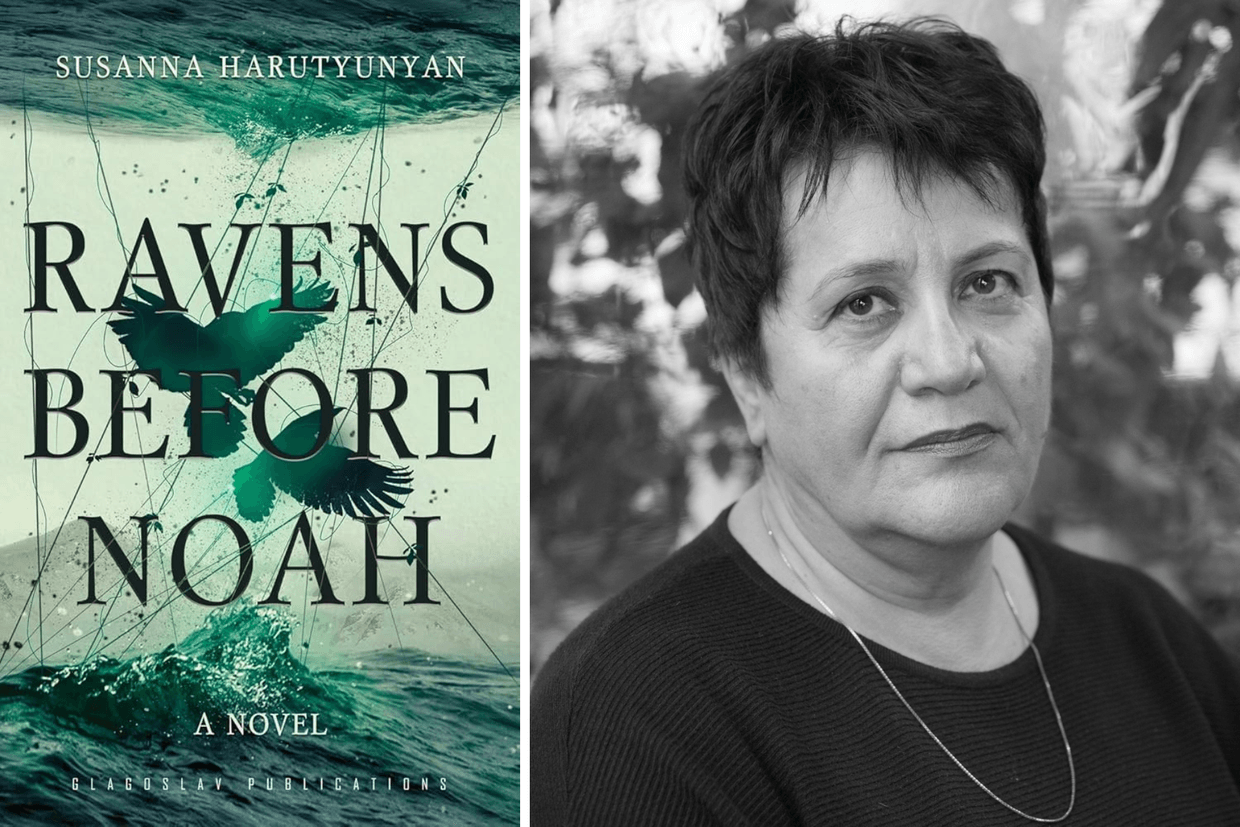
Susanna Harutyunyan’s 2015 novel eloquently captures the traumas remaining amongst survivors of the Armenian Genocide.
‘She had promised to kill the child as soon as it was born’.
The opening line of Harutyunyan’s novel is sharp, a tenter hook that grabs the reader — an intensity keeps them engaged throughout the next 130 pages.
Ravens Before Noah tells the story of a hidden village somewhere in rural Armenia, a place where the refugees of multiple Turkish massacres, culminating in the Armenian Genocide, have found shelter and sanctuary, all under the watchful eyes of Harout, himself an escapee of the Hamidian massacres in 1894.
The novel opens upon a rupture in this oasis, the appearance of the beautiful Nakhshun, a young woman who is pregnant after being raped and tortured by Turkish soldiers. While they accept her presence at first, there is a condition; the child she births must be killed.
The novel follows the ensuing 25 years or so after Nakhshun’s arrival, as she gives birth to two twin girls who survive, yet are shunned by the rest of the village society as Turks.
In meandering prose via a fractured narrative, Harutyunyan explores the village at large: Sato, the midwife who had originally been tasked with killing the newborns; Varso, the elderly woman who tells all the village boys a never-ending fairytale; Harout, the village’s protector and the only one to visit the real world to sell or barter products.

Subscribe to the Culture Dispatch
A bi-weekly newsletter featuring film, book, and music recommendations from the Caucasus, handpicked by our team.
The text is poetic, full of visual imagery and hints of magical realism derived from traditional Armenian myths and parables:
‘There were three of them on the lakeshore — the crow, the cat, and Harout. The wind, too. But the wind’s legs were tied and it was rolling about miserably in the sand somewhere, exploding from time to time and casting sand on the waves, simply to remind them of its existence’.
A theme that is wound throughout the novel, tying all of the characters together and to their sanctuary, is that of trauma. While all have suffered, Harutyunyan pays specific attention to the fate of women — the young women whose father-in-laws had roaming hands; the mothers forced to pay one gold coin per child, just to see them cleanly shot dead as opposed to raped or tortured; the women passed from one soldier to the next, with any resultant pregnancies aborted.
‘What they had seen was etched in their memory, they had polished their pain and crystallised it within themselves to the extent that they placed their lost homeland and their deceased family members in their teardrops’, the omniscient narrator articulates.
In the last third of the text, however, the plot shifts focus from village tales to the outside world, where German POWs are sent to clear the area of boulders and other rockfall. Their presence eventually leads to the unveiling of the hidden refuge to the rest of the world, which leads to a crackdown by Soviet authorities. By the end, Nakhshun’s story, as well as that of her children, is complete, a full circle of suffering and new beginnings while Harout in turn becomes yet another myth in a local landscape full of fables.
Though at times somewhat chronologically confusing — many similarities can be drawn to the works of the famed master of magical realism, Gabriel García Márquez — Ravens Before Noah makes for an engaging exploration of the lasting effects of the Armenian Genocide on all segments of society.
Book details: Ravens Before Noah (2015), translated into English by Nazareth Seferian for Gagoslav Publications in 2019, with support from Armenia’s Culture Ministry. Buy it from the publisher here.