★★★★☆
Some Interviews on Personal Matters is a pioneering work of feminist filmmaking and an intricate, intimate portrait of womanhood.
Lana Ghoghoberidze’s 1978 feature Some Interviews on Personal Matters has everything required for a great film: a screenplay written by two major Georgian writers, Zaira Arsenishvili and Erlom Akhvlediani; a score by Ghoghoberidze’s longtime collaborator, the ‘maestro of silence’ Giya Kancheli; Nugzar Erkomaishvili’s observant and deeply humane cinematography; and a stellar ensemble cast led by Sophiko Chiaureli, the true star of Georgian cinema, known to many cinephiles from Sergei Parajanov’s The Colour of the Pomegranate.
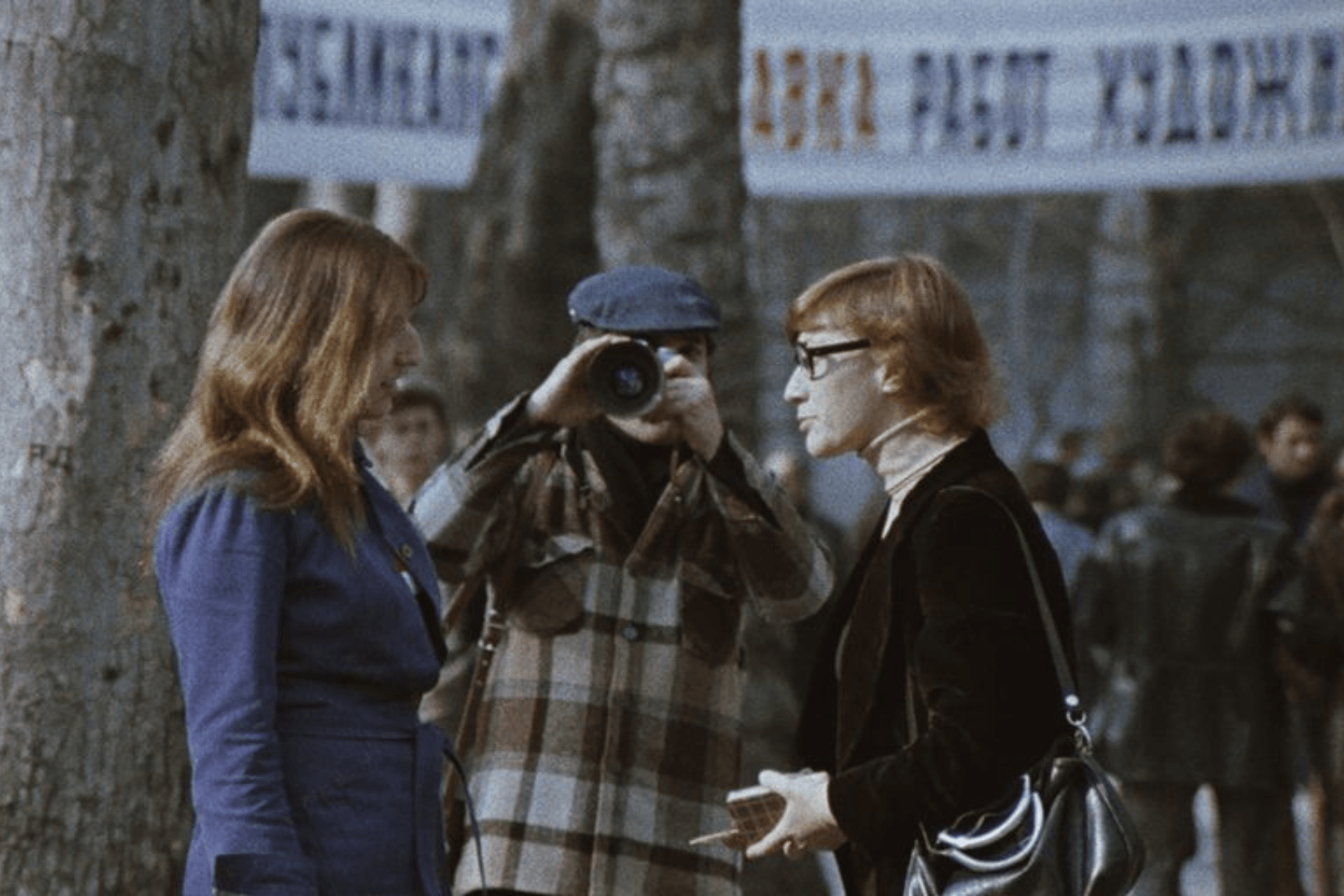
Chiaureli plays Sophiko: daughter, wife, mother, niece, journalist — a woman in constant motion. She travels across Georgia interviewing women whose lives rarely make headlines: factory workers, librarians, pensioners, housewives. Some brim with quiet contentment, others carry private grief, and others still speak in the language of postponed dreams. Sophiko listens, really listens, with attention and empathy.
At home, her own life is a choreography of care: two children; a husband who needs a button sewn onto his favorite shirt; an elderly mother; two aunts; a dog; guests who appear unannounced and expect to be fed. From dawn to midnight, Sophiko tends to everyone. She laughs, dances, comforts, remembers, writes.
Sophiko is the kind of woman everyone loves: efficient, warm, endlessly capable — and therefore the kind of woman everyone takes for granted. She reminds me of my mother and the mothers of my friends, of many women in Georgia: adored (only) at first glance, bright and smiling despite hard work and unpaid domestic labour. When Sophiko refuses a comfortable office job that would let her ‘take better care of her kids and husband’, her ostensibly progressive husband sulks, wounded in his benevolence. His support, it turns out, had conditions.

Subscribe to the Culture Dispatch
A bi-weekly newsletter featuring film, book, and music recommendations from the Caucasus, handpicked by our team.
The film is surprisingly feminist for its time. The interviewed women speak of love, disappointment, ambition, fatigue, men, children, and work. Their voices contradict one another. No thesis is imposed. Ghoghoberidze offers instead a space of rare cinematic intimacy, where women are allowed the dignity of complexity.
Meanwhile, Sophiko’s own life begins to fray. She discovers her husband’s infidelity. She learns that her younger colleague is in love with her. Her children struggle. Her mother dies. Yet the film resists melodrama. It is quiet, gentle, emotional, and profoundly human.
Running through the film is another, deeper current: the story of Sophiko’s mother, Ana. In fragments and memories, we glimpse a past marked by Stalinist terror: arrests in the night, a child taken away, orphanage windows framing small faces like sparrows in the snow, the return of the estranged mother. These sequences echo Ghoghoberidze’s own biography. Her father was executed during the purges; her mother, Nutsa Ghoghoberidze, a pioneering Georgian filmmaker, was exiled to the Gulag for a decade, her career effectively erased.
It was risky to include these episodes in Some Interviews on Personal Matters, but this looming presence of the Soviet regime in Sophiko’s life (and in Lana Ghoghoberidze’s life) makes the film deeper and more personal. Interestingly, Ana is portrayed by Ketevan Orakhelashvili, a real-life exiled woman and the wife of the ‘people’s enemy’, the talented conductor Evgeni Mikeladze. The Mikeladze family were yet another victim of the 1937 Stalinist repressions, and their story is among the inspirations for Tengiz Abuladze’s Repentance.
More than four decades on, the film’s observations about emotional labour, professional ambition, and the quiet negotiations inside marriage feel remarkably relevant. Ghoghoberidze watches, listens, and allows meaning to surface in glances, pauses, and everyday gestures. The result is a film of rare subtlety. A portrait of a woman, and of a society, caught between expectation and selfhood.
Film details: Some Interviews on Personal Matters (1978), directed by Lana Ghoghoberidze. It is available to watch on Klassiki.