Russia’s Foreign Ministry has accused the German authorities of creating threats to national security over a meeting between MP Roderich Kiesewetter and ‘head of the Ichkerian government-in-exile’ Akhmed Zakaev in Kyiv. The ministry said that Zakaev was ‘wanted internationally’.
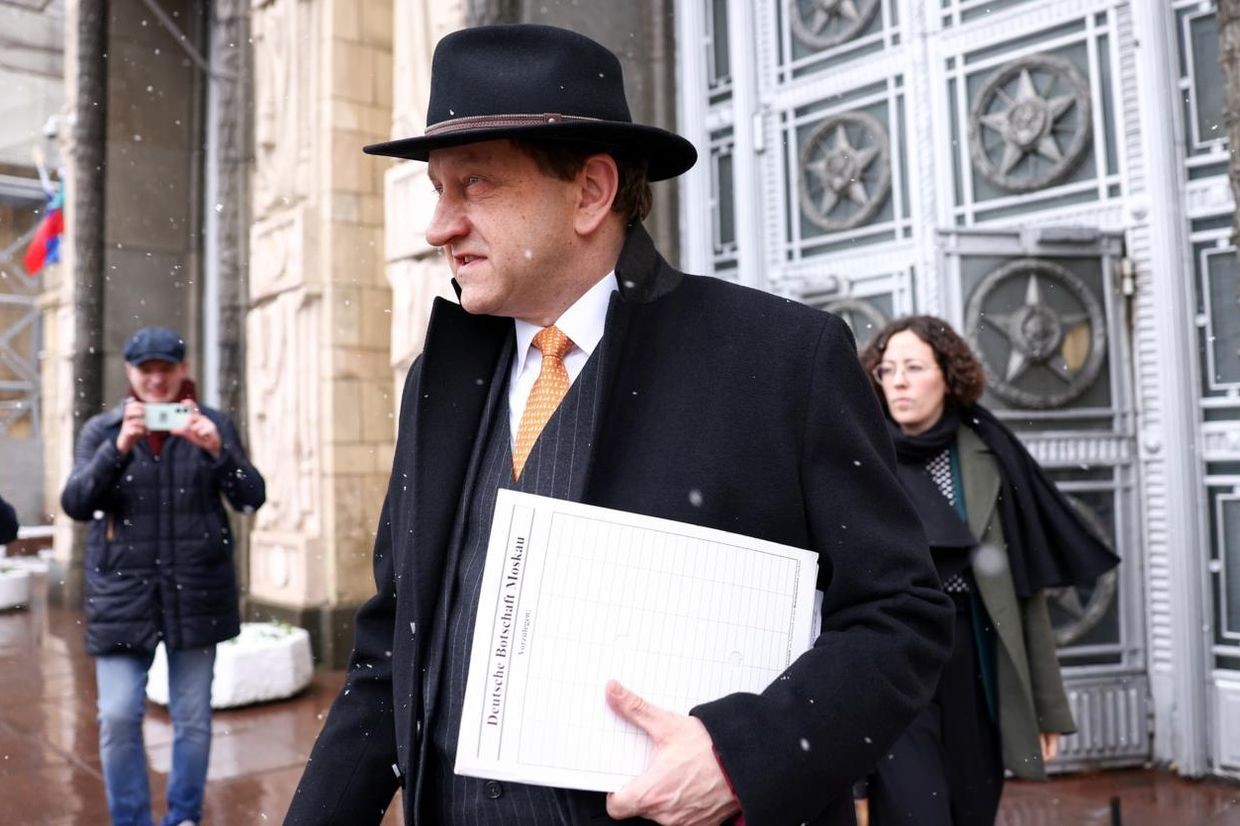
The accusation came via a note of protest delivered to Germany’s Ambassador to Russia, Alexander Graf Lambsdorff, on Monday.
According to the ministry, it referred to a ‘recent meeting in Kyiv’, allegedly organised ‘with the assistance of the Zelenskyi regime’. Moscow claims that Keisewetter discussed co-operation with representatives of Ichkeria — a government-in-exile claiming to be the successor to the short-lived independent Chechen state that was crushed by Russia in the 1990s.
The ministry alleged that Russian émigrés residing in Germany were being recruited for actions aimed at destabilising the situation in Russia.
‘A German MP welcomed the anti-Russian activities of terrorists from this organisation, who had been actively involved in sabotage operations in the Belgorod and Kursk regions, and called on them to cooperate actively with Germany’, the ministry wrote.
The Russian Foreign Ministry also stated that it regarded the very fact of contacts between Kiesewetter and Zakaev, whom it referred to as a ‘notorious criminal’, as evidence of the German authorities’ intention to interfere in Russia’s internal affairs. The ministry warned Berlin that ‘hostile steps’ would receive a response.
The Russian side did not specify when the meeting took place. Kiesewetter wrote in mid-April on X about an ongoing trip to Ukraine, but did not provide any details about talks with Zakaev.
Before visiting the Russian Foreign Ministry, Lambsdorff said he considered it unlikely that the Russian side would have evidence to support its accusations. A spokesperson for the German Foreign Ministry described the Russian statements as ‘entirely baseless and unfounded’, the newspaper Tagesspiegel reported.
Earlier in April, a court in Grozny banned the activities of both the ‘organisation Chechen Republic of Ichkeria’ itself and 29 structures which the Russian authorities associate with it in European countries. The organisation was later added to the list of terrorist organisations maintained by the Russian Financial Monitoring (Rosfinmonitoring) organisation.
Zakaev has lived in exile for more than two decades. He was one of the representatives of the Chechen separatist movement during the wars of the 1990s and early 2000s. Russia has sought his extradition on various charges, but has always faced denials. In 2024, Russian investigators announced a new criminal case against Zakaev linked to the formation of a volunteer unit within the Armed Forces of Ukraine. He was accused of creating a terrorist organisation and publicly justifying terrorism.
The Chechen Republic of Ichkeria was the name used for Chechnya during its period of de facto independence after the collapse of the USSR. After two wars, control of the region passed to the federal authorities of Russia. Since 2007, Zakaev has declared himself the political leader of Ichkerian structures abroad.
Following Russia's full-scale invasion of Ukraine, a number of Chechen volunteer units declared support for Kyiv. These included a separate special purpose battalion within Ukraine’s Foreign Legion, as well as formations named after Sheikh Mansur, Dzhokhar Dudaev, and Khamzat Gelaev. The Russian authorities regard some of these structures as terrorist or extremist.
Chechen Head Ramzan Kadyrov has repeatedly sharply criticised supporters of Ichkeria. In August 2022, he declared a blood feud against them, and later called on natives of the republic fighting against Ukraine to kill Zakaev.