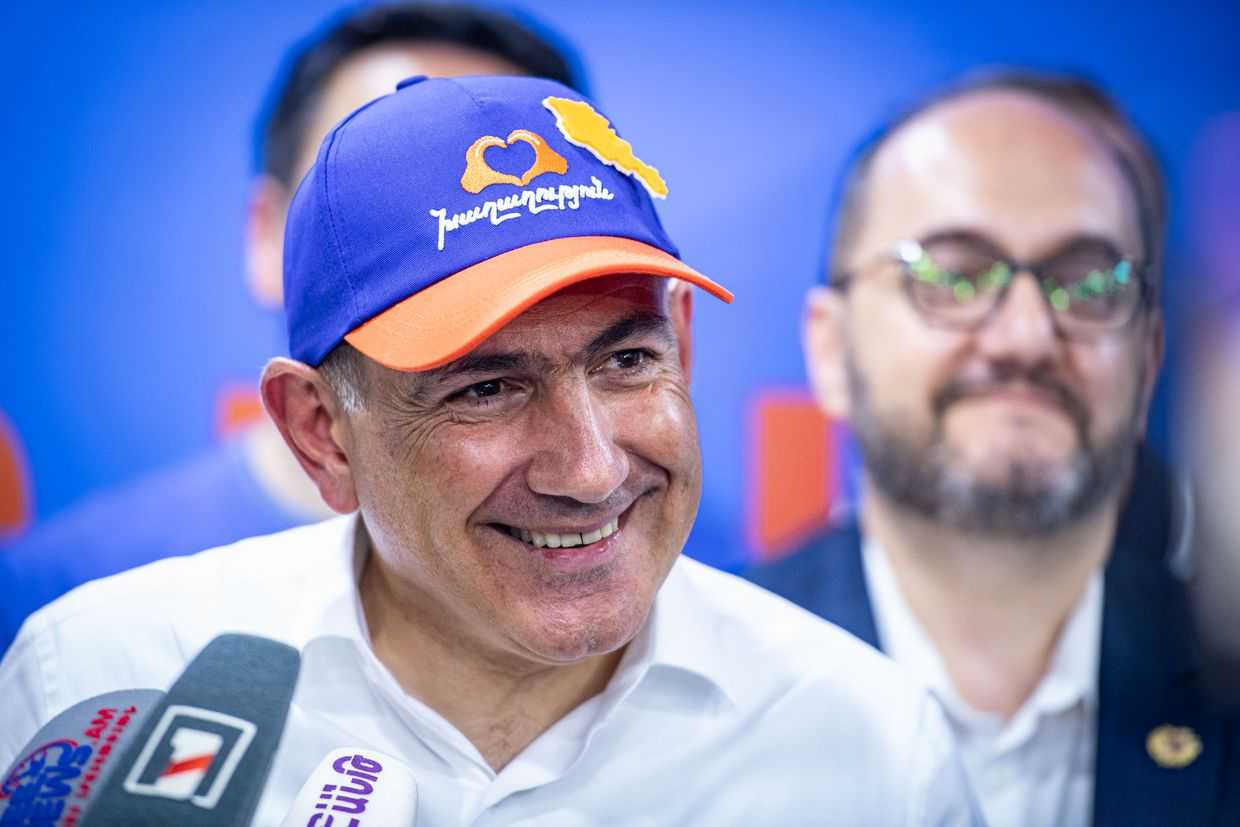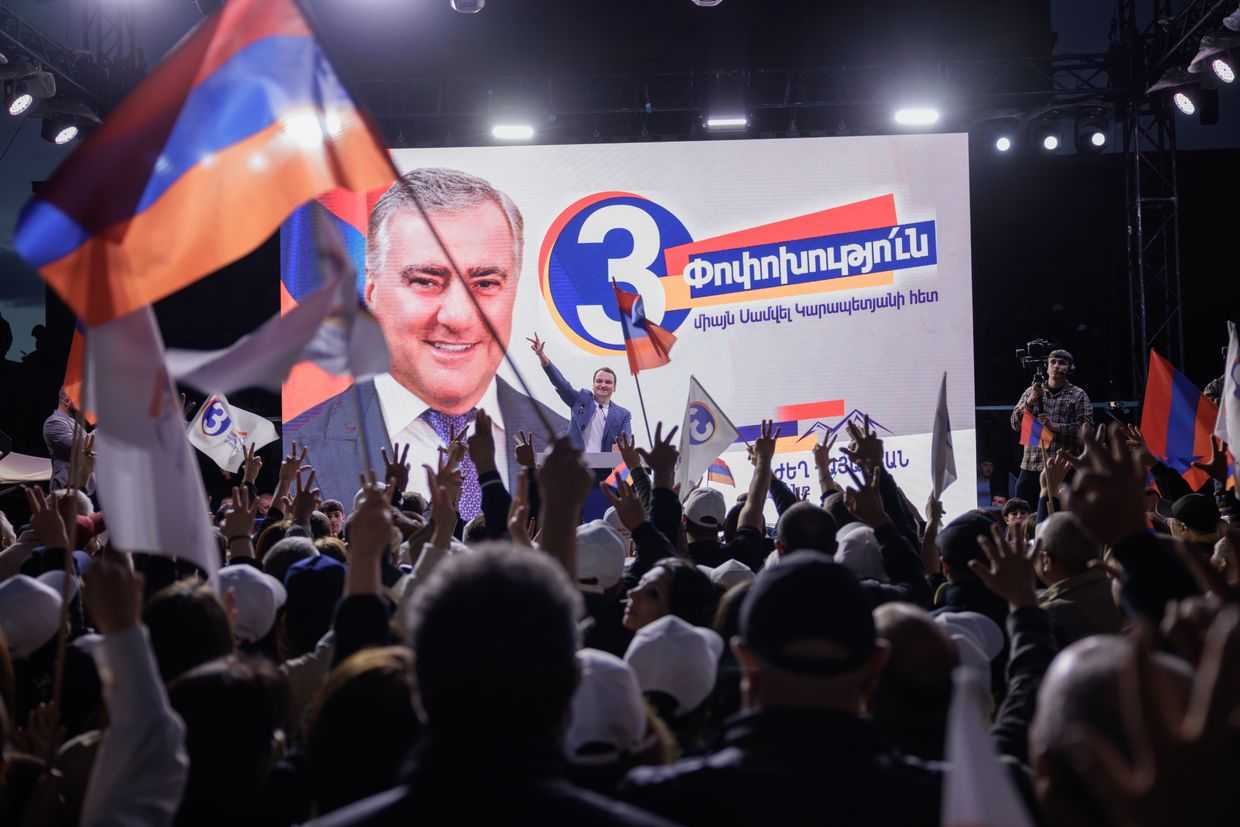
Armenian Prime Minister Nikol Pashinyan’s Civil contract party has won a third term in power according to initial results, triumphing over the Russian-Armenian billionaire Samvel Karapetyan.
With 94% of votes counted, Civil Contract is leading with 50% of the vote. Karapetyan’s Strong Armenia Alliance is currently trailing in second with 23%. The Armenia Alliance, fronted by former President Robert Kocharyan, so far has 10%.
It is not yet clear if Gagik Tsarukyan’s Prosperous Armenia party will cross the 4% threshold for parties to enter parliament, as it currently has 3.98% of the vote, putting it just 0.02 percentage points under. No other party crossed the threshold to enter parliament.
The results would give Civil Contract a comfortable majority of 64 of 105 seats.
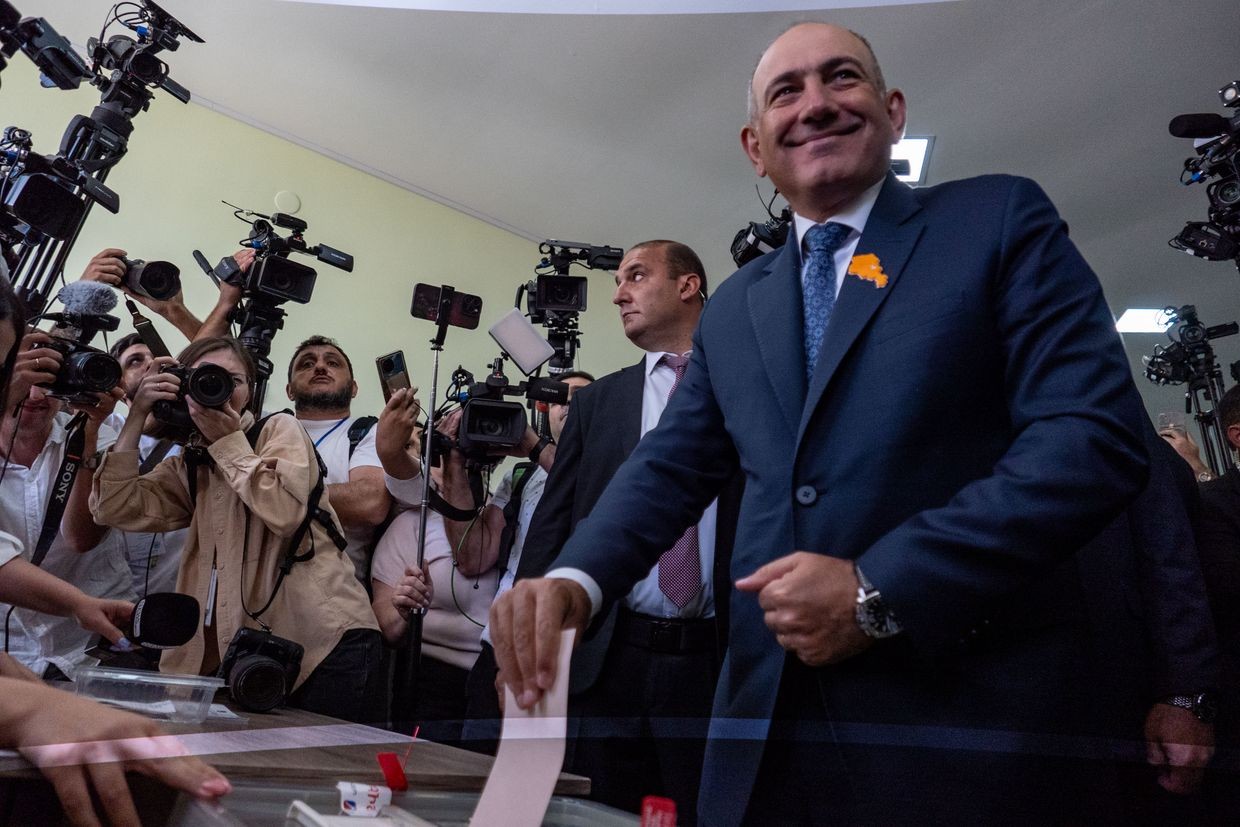
Sunday’s vote was mired by continued allegations of vote-buying by the opposition, mostly Karapetyan’s affiliates, with authorities arresting dozens in the weeks leading up to the election as well as on the day of the vote.
The vote was also seen by many as a battle between Russia — who threw their weight behind Karapetyan — and the West. Pashinyan has vowed to continue to seek closer ties with the West, even seeking EU membership for the country. All three opposition parties who entered parliament had called for Armenia to repair ties with Russia.
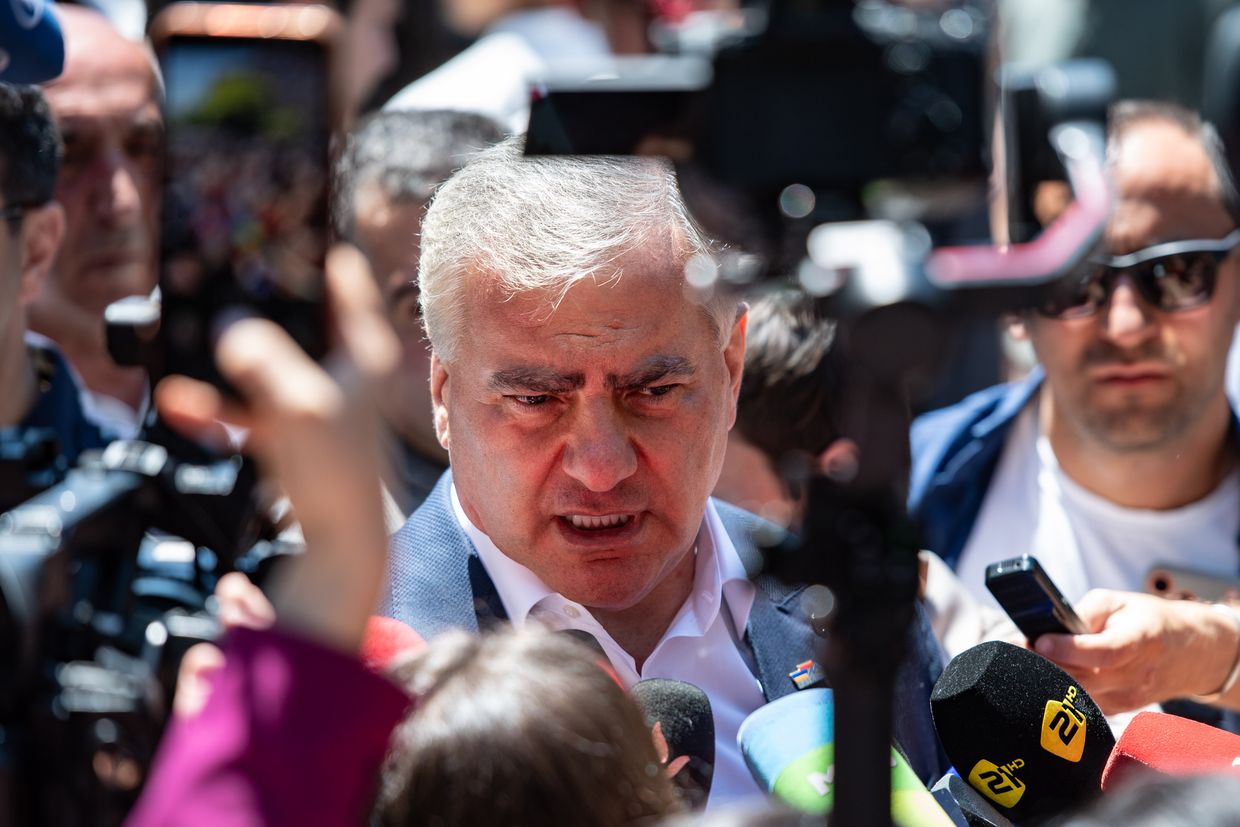
Pashinyan claimed victory early in the night, after only around 10% of votes had been counted, leading to indignation from opposition leaders.
In a press briefing, he vowed to continue to deepen ties with the West while also maintaining ties with Russia. He also said Armenians had ‘voted for peace’ and that he hoped this would be met with ‘positive reactions from Türkiye and Azerbaijan’.
Pashinyan also said his party’s priority for the next term would be the full removal of what he described as the ‘criminal-oligharchic system’, vowing to prosecute the main opposition leaders, referring to them as the ‘three-headed war party.
In a late night address, Karapetyan described the elections as ‘disgraceful’ due to what he called ‘persecutions’.
An election marred by violations and arrests over vote buying
Throughout Sunday, a number of individuals affiliated with Strong Armenia were arrested on a variety of election-related violations and criminal offences.
Gohar Meloyan, a member of Strong Armenia, told Russian state media outlet Sputnik that over 200 of the alliance’s affiliates and members had been detained since Saturday.
On the day of the elections, the Investigative Committee announced the arrest of nine people as 59 criminal proceedings were launched under charges of electoral violations. Also on Sunday, the Anti-Corruption Committee and the Interior Ministry claimed to have foiled a scheme by seven people affiliated with Strong Armenia seeking to bribe 45 voters with a total of ֏7.5 million ($20,000) in the the Kotayk Province.
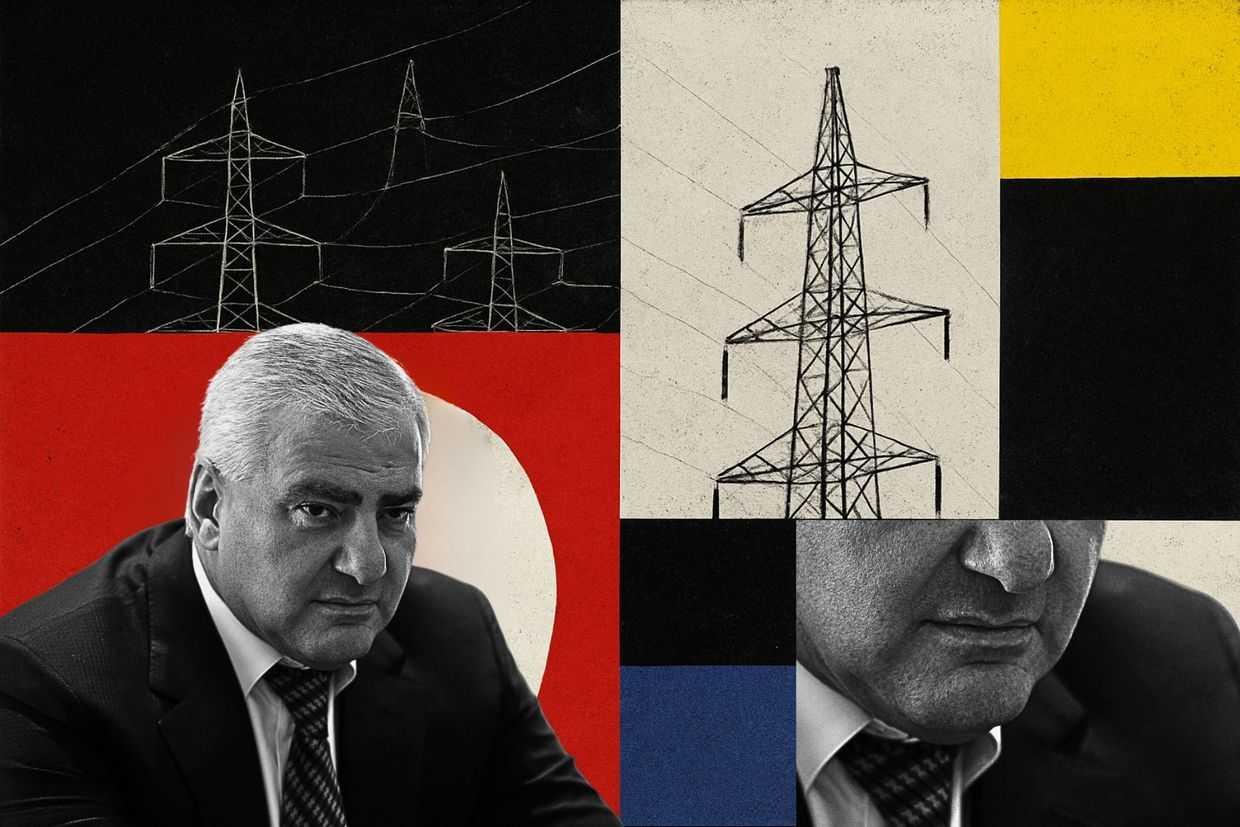
Arrest warrants were also issued on Saturday for six parliamentary candidates from the Strong Armenia bloc: Hayk Avagyan, Sasun Badoyan, Arthur Abrahamyan, Vahe Tavakalyan, Vahe Yeghiazaryan, and Ashot Sahakyan. The Prosecutor General’s Office also submitted a separate motion to the CEC to issue a similar arrest warrant for Strong Armenia candidate David Ghazinyan, the former head of the Electric Networks of Armenia, on similar charges.
The opposition Armenia Alliance referred to these reports as ‘informational terror’.
A Civil Contract representative, Vahagn Aleksanyan, claimed the authorities had uncovered $80 million in electoral bribes.
Strong Armenia’s Meloyan also claimed that Civil Contract was interfering with votes, citing footage showing soldiers at precincts during the voting process, and claiming that voting continued in precincts after polls had closed.
Russia accused of attempting to sway the vote
Throughout Armenia’s pre-election period, Moscow has been accused of trying to manipulate the vote through economic pressure, a disinformation campaign, and even flying in Armenians from Russia to cast their ballots. In the weeks before the vote, Russia banned imports of Armenian fruits and vegetables, brandy, Jermuk mineral water, fish, and flowers.
Russian officials, including President Vladimir Putin, also repeatedly called on Armenia to make a decision on whether to stay in the Eurasian Economic Union (EAEU) or to join the EU.
On the day of the elections, Russian Deputy Prime Minister Alexei Overchuk stated that Moscow ‘constantly tells Yerevan that the EU has effectively transformed from an economic union into a military-political alliance’.
He also suggested that the outcome of the election would affect the future of Armenia’s relations with the EU, noting that some opposition groups have opposed further deepening ties with the bloc, instead seeking deeper ties with Russia.
Speaking with journalists after casting his vote, Pashinyan claimed he did not see tension in Armenia–Russia relations.
‘I don’t see tension, it’s artificial tension. Our relations with Russia are institutional and based on mutual respect’, Pashinyan said, adding that these tensions were being created by ‘some forces operating in Armenia’.
Foreign Minister Ararat Mirzoyan also commented on Russia’s restrictions on Armenian exports, calling them ‘economic sanctions’. He said there was a need to improve bilateral relations with Russia ‘in a healthy, constructive atmosphere’.
Mirzoyan also did not rule out future amendments to the electoral code to bar citizens who have lived abroad for extended periods from voting. He said such discussions stemmed from concerns that people who had not visited Armenia for years could return solely to vote and influence the fate of those living in the country.
‘Those who are thinking about a coup, have their heads against the wall’, Mirzoyan said.