Russian–Armenian tycoon Karapetyan placed under house arrest following six month pre-trial detention

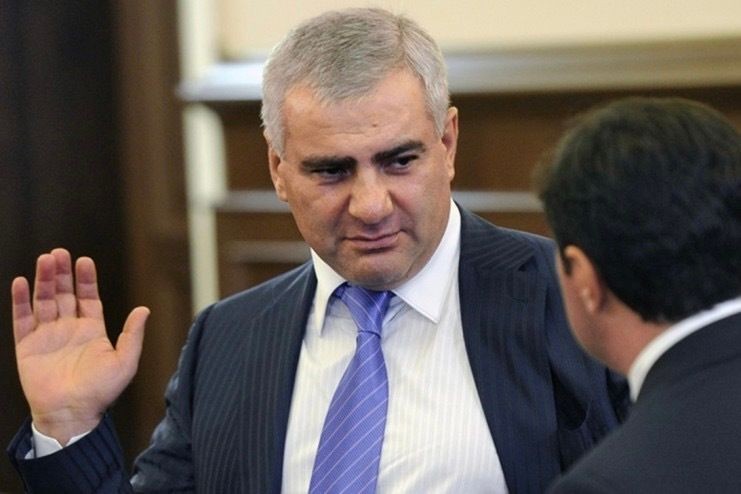
Russian–Armenian tycoon Samvel Karapetyan has been released on bail and placed under house arrest after spending more than six months in pre-trial detention. He was charged in June 2025 with making calls to usurp power, following a pro-Church statement made amidst tensions between the Armenian government and the Armenian Apostolic Church.
The bail amount has not yet been disclosed.
The Yerevan City Court decision to apply alternative preventive measures was announced by Karapetyan’s lawyer, Aram Vardevanyan, in a Facebook post on Tuesday evening.
Vardevanyan said that their legal team had recently submitted a motion to change Karapetyan’s preventive detention.
In a press briefing following the court ruling, Vardevanyan described the house arrest as ‘a heavy preventive measure’, adding that ‘communication restrictions have been applied in an intensive manner’, excluding only close relatives.
According to Vardevanyan, restrictions on ‘freedom of speech’ were also imposed, though he said they had not yet received the court ruling and therefore had limited information as to what this would mean in practice.
Since June, Karapetyan's pre-detention has been extended several times. Through it all, he was kept in the Yerevan-Kentron Penitentiary Institution, commonly known as the National Security Service (NSS) detention centre.
 Arshaluys Barseghyan
How did it all start?
Since his detention, Karapetyan has faced charges of incitement to seize power, with additional financial crime charges added later, all of which he denies.
Karapetyan, the owner of Tashir Group and one of the wealthiest Armenians globally, has an estimated fortune of $4.4 billion — roughly half of Armenia’s annual public budget.
The charges followed his pro-Church statement made in an interview with News.am on 17 June wherein he said: ‘if the politicians fail, then we will participate in our own way in all of this’.
Tensions between the government and the Church have reached a peak since late May, with Prime Minister Nikol Pashinyan accusing Catholicos Karekin II and other senior clergy of breaking their celibacy vows, rendering them ineligible for office. As of December, four high-ranking priests have been detained on various charges. The most serious allegation, however, remains Pashinyan’s claim that Karekin II and his brother, Archbishop Yezras of the Diocese of New Nakhchivan and Russia, maintain ties with foreign intelligence services.
Armenian authorities viewed Karapetyan’s remark in June as a threat, and hours later raided and searched Karapetyan’s mansion in Yerevan, remanding him to pre-trial detention.
Since Karapetyan’s arrest, the authorities have raided, inspected, or threatened to nationalise several of Karapetyan’s businesses, though they have denied that these actions were politically motivated or connected to his arrest.
Arshaluys Barseghyan
For decades, Karapetyan has remained largely outside politics, instead gaining recognition for his business empire and as a benefactor who, among other things, sponsored the renovation of the Etchmiadzin Cathedral, Armenia’s oldest and most important church.
Weeks after his detention, Karapetyan announced plans to create a ‘fundamentally new political force’ through which he could cooperate with ‘like-minded people’.
Yousef Bardouka
Although he submitted a political bid while in detention, his dual citizenship effectively prevents him from running for prime minister under Armenian law.
Karapetyan’s nephew Narek Karapetyan is now leading the political campaign called Our Way, echoing Karapetyan’s pro-Church remarks.