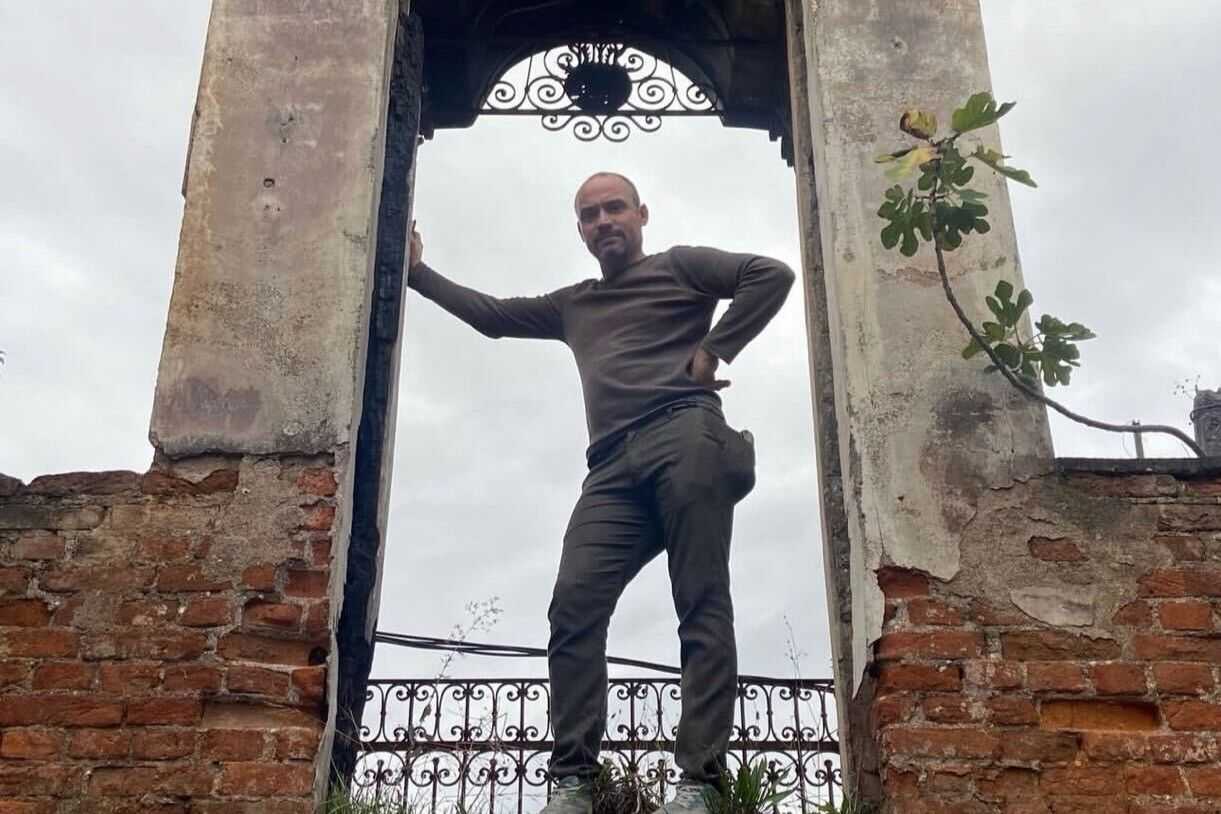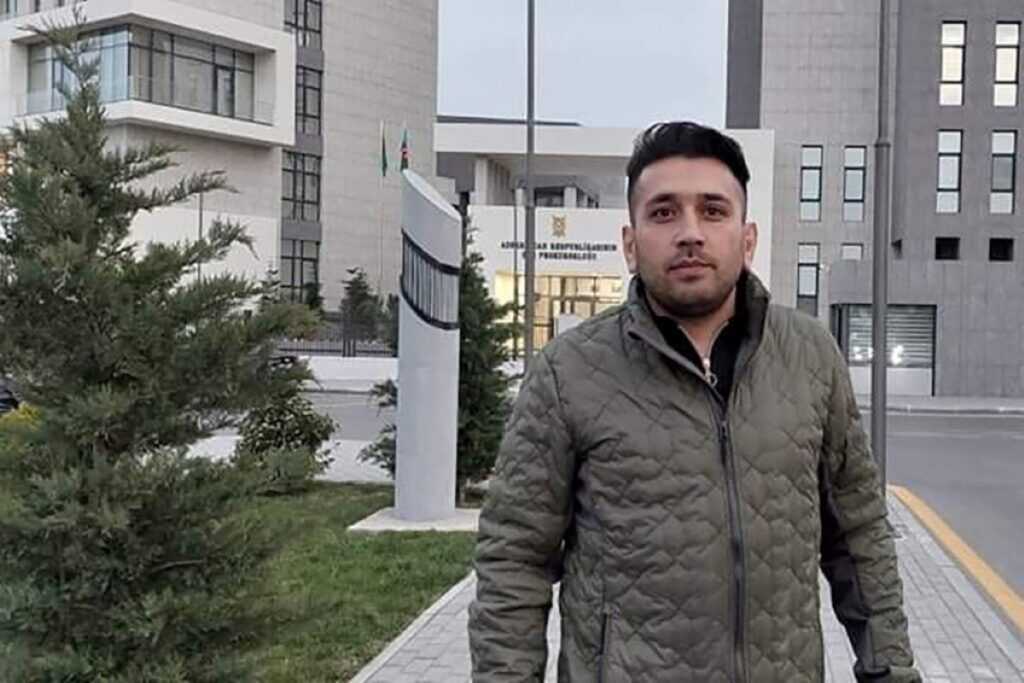
A Russian court has sentenced Abkhazian Timur Agrba to five and a half years in prison for sharing posts on Telegram praising Chechen rebel commander Shamil Basaev.
Agrba was sentenced by the Southern District Military Court in Rostov-on-Don on charges of justifying terrorism on Tuesday.
According to the case materials, the charges relate to 10 posts which Agrba published between September–December 2024. During that period, he was in the village of Gudaakhuch (Meore Gudava) in the Gudauta district of Abkhazia. The investigation claims that the content of these posts falls under the article on public justification of terrorism.
The man’s detention in March 2025 was reported by the Federal Security Service (FSB). At the time, the agency stated that a Russian and Abkhaz citizen had been detained in Sochi, without revealing his identity. Later, local media identified the detainee as Agrba. According to the media outlet Zhivaya Kuban, he administered the Telegram channel Apsny Akhintkara / Abkhazia, which published posts critical of Russia’s policies.
The outlet wrote that Agrba ‘promoted closer ties between Abkhazia, Turkey, and Georgia’ and ‘wrote extremely negatively about Russia’.
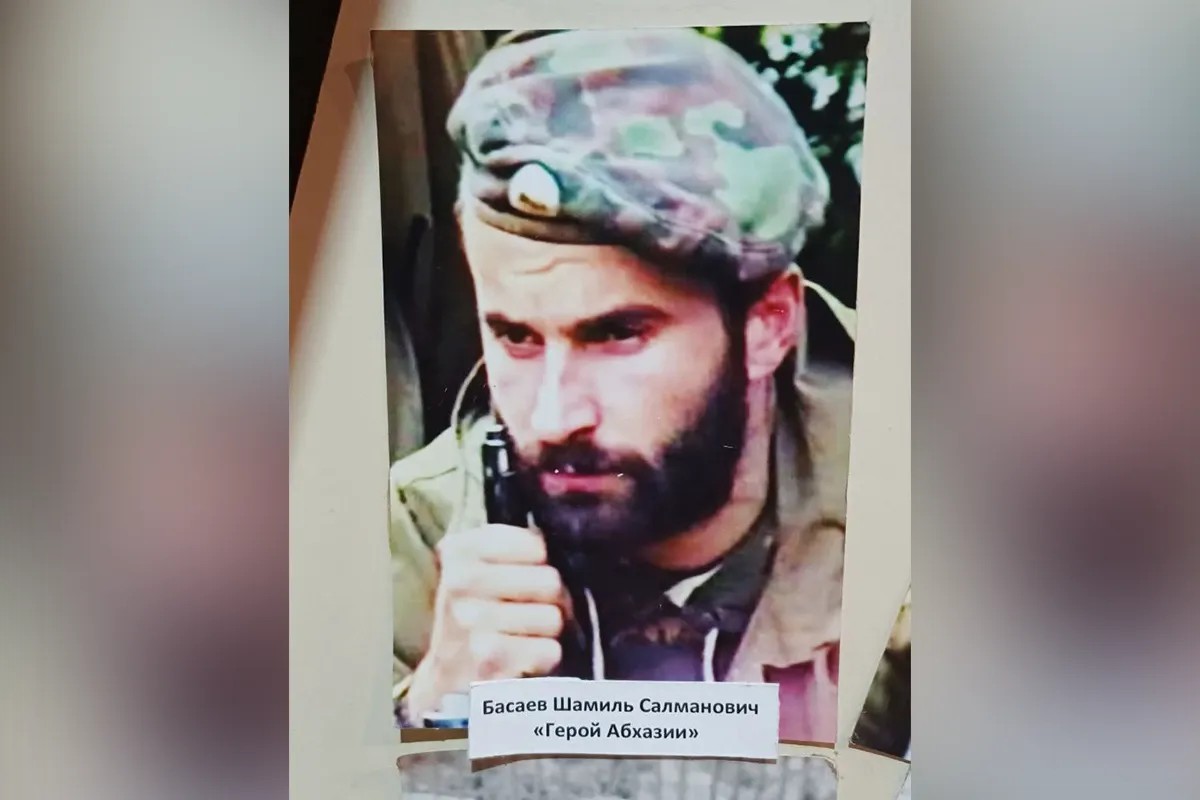
The posts that led to the case appeared amid a dispute over an exhibition at a museum in Sukhumi. In 2024, the museum presented an exhibition titled Heroes of Abkhazia, which included a portrait of Basaev. This prompted criticism from the Russian authorities, with the Russian Embassy in Sukhumi (Sukhum) stating that it considered the display of the portrait unacceptable.
 OC Media
Basaev’s photograph had been part of the museum since 2012, a museum employee told OC Media at the time. The museum was reopened that year after reconstruction was carried out with Russian financial assistance. Then Russian Ambassador to Abkhazia Semyon Grigoryev attended the reopening ceremony.
The embassy’s complaint was filed after several North Caucasus Telegram channels shared posts about the photograph, focusing in particular on Basaev’s terrorist activity. They called on the Russian Embassy to intervene and demand the removal of the image.
Abkhazian Defence Minister Vladimir Anua also demanded that the exhibition be removed, after which the section featuring Basaev’s portrait was transferred to the museum’s archives.
Basaev was one of the participants in the armed conflict in Chechnya in the 1990s and early 2000s. During the First Chechen War (1994–1996), he held the post of First Deputy Prime Minister of the Chechen Republic of Ichkeria, a short-lived Chechen state crushed by the Russian Federation over the course of the First and Second Chechen Wars in the 1990s and early 2000s. During the second war, he served as vice president of Ichkheria.
He claimed responsibility for organising a number of terrorist attacks, including the hostage incident at a hospital in Budyonnovsk in 1995, the attack on the Dubrovka theatre centre in 2002, and the Beslan school siege in 2004, in which 334 people were killed, 186 of them children.
In the early 2000s, he was included on terrorist lists by Russia, the US, the EU, and in the consolidated list of the UN Security Council. He was killed in 2006 in an explosion in Ingushetia.
Before the First Chechen War, Basaev was involved in armed conflicts outside Chechnya. In 1991–1992, he fought on the side of Azerbaijan in Nagorno-Karabakh. In 1992, he arrived in Abkhazia, where he fought against Georgia as part of the Confederation of Mountain Peoples of the Caucasus. In Abkhazia, he held command positions, including commander of the Gagra front and later deputy defence minister. He was also awarded the title ‘Hero of Abkhazia’.
Human rights defender Aleksandr Cherkasov stated that fighters of the Confederation of Mountain Peoples of the Caucasus were trained by officers of Russia’s Main Intelligence Directorate.
At the time of publication, the sentence against Agrba has not entered into legal force and may be appealed.
For ease of reading, we choose not to use qualifiers such as ‘de facto’, ‘unrecognised’, or ‘partially recognised’ when discussing institutions or political positions within Abkhazia, Nagorno-Karabakh, and South Ossetia. This does not imply a position on their status.