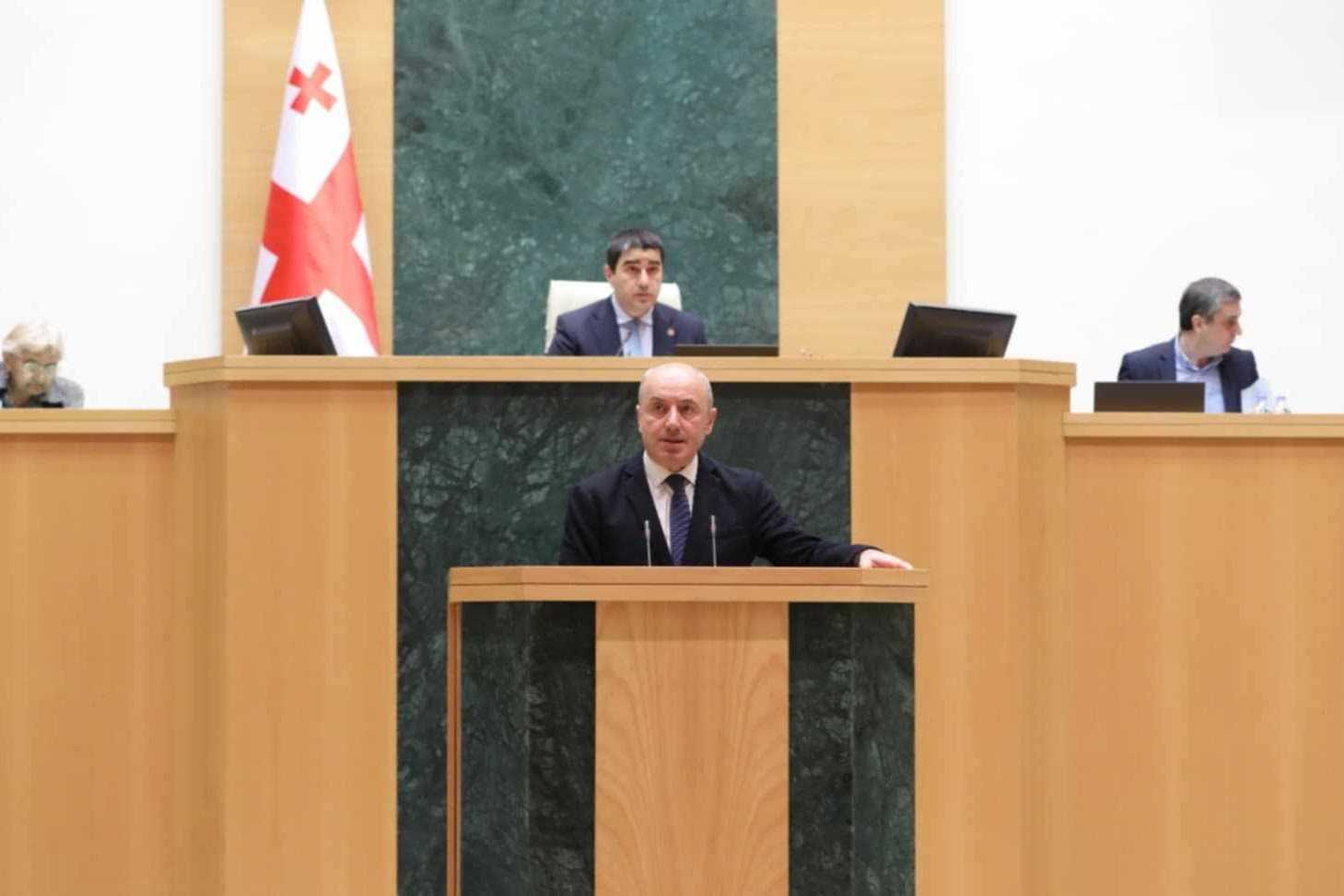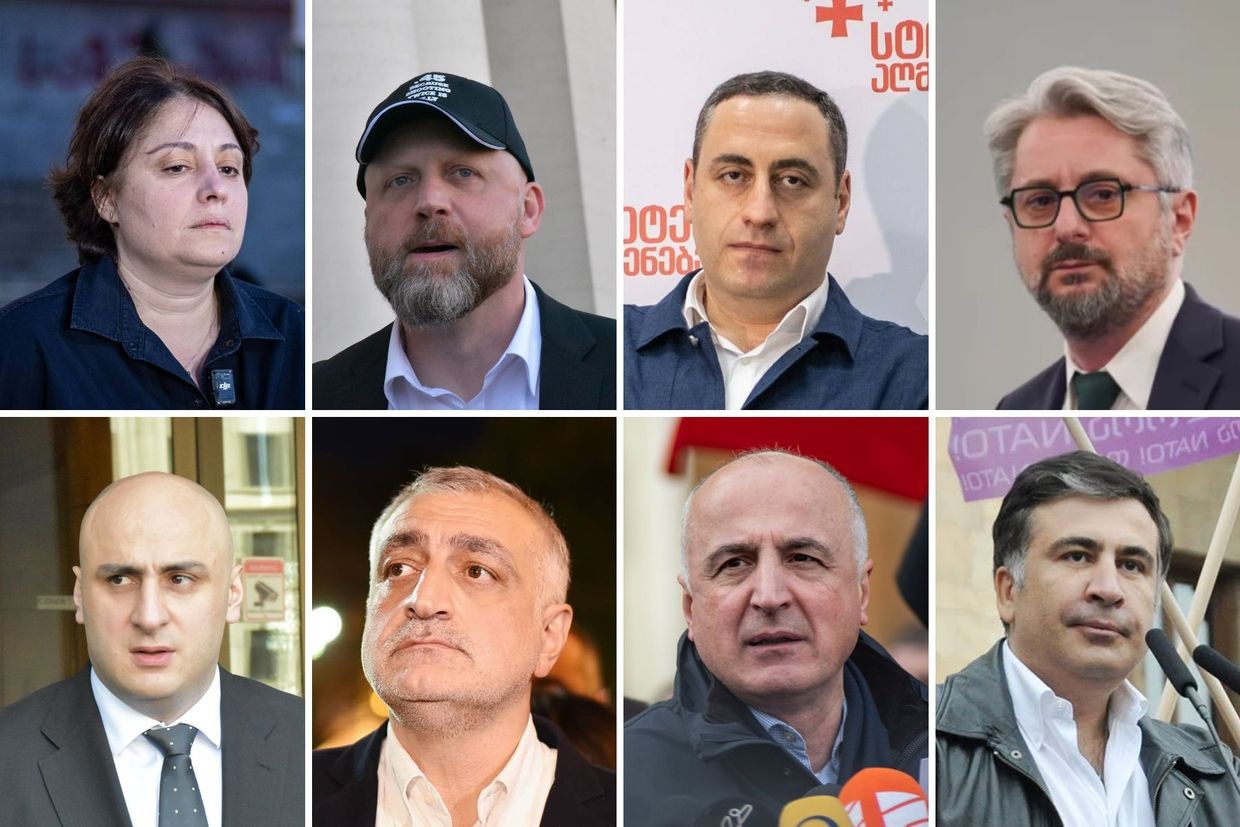
Tbilisi City Court Judge Valerian Bugianishvili has sent the so-called sabotage case against eight Georgian opposition politicians forward for substantive consideration. Some of them have already been convicted and are serving sentences in other cases.
The pre-trial court hearing took place on Tuesday, with five of the charged politicians in attendance. According to RFE/RL, Bugianishvili decided the evidence presented in the case provided a basis for the likelihood of a guilty verdict, and therefore, that the case must proceed to substantive review.
The defence, for its part, requested that the case be dismissed, arguing that the evidence is unsubstantiated; however, their request was denied. The substantive review of the case will begin on 23 February.
The case, announced in November, was launched jointly by Georgia’s Prosecutor General’s Office, the State Security Service (SSG), and the Interior Ministry.
The charges announced were as follows:
- Elene Khoshtaria, leader of Droa!: Sabotage (2-4 years in prison); assistance to a foreign country, foreign organisation or an organisation controlled by a foreign state in hostile activities (7–15 years); and financing of activities directed against the constitutional order and national security principles of Georgia or provision of other material support to such activities (6–10 years).
- Zurab Japaradize, leader of Girchi — More Freedom: Sabotage (2-4 years); assistance to a foreign country, foreign organisation or an organisation controlled by a foreign state in hostile activities (7–15 years).
- Giorgi Vashadze, leader of Strategy Agmashenebeli: Sabotage (2-4 years); assistance to a foreign country, foreign organisation or an organisation controlled by a foreign state in hostile activities (7–15 years).
- Nika Gvaramia, co-leader of Ahali: Sabotage (2-4 years).
- Nika Melia, co-leader of Ahali: Sabotage (2-4 years).
- Mamuka Khazaradze, co-leader of Lelo: Sabotage (2-4 years).
- Badri Japaridze, co-leader of Lelo: Sabotage (2-4 years).
- Mikheil Saakashvili, the former president of Georgia (2004-2013) and leader of the UNM: Incitement to change the constitutional order of Georgia through violence, or to overthrow state power (up to three years in prison).
The Prosecutor General’s Office presented the charges in two parts, describing them as a multi-faceted criminal scheme.
In the first part, the agency claimed that after Russia’s full-scale invasion of Ukraine in 2022, some of the charged politicians intended to give the West ‘false premises’ to sanction Georgia.
According to the agency, they shared information with foreign representatives about Georgian-Russian business ties, as well as claims about Russia’s use of Georgian airspace for Iranian drones. They also allegedly provided names of Georgian businesspeople, officials, and public figures to the West, contributing to sanctions against around 300 individuals.
The second part is linked to the Tbilisi protests, which began after the disputed October 2024 parliamentary elections and intensified in November 2024 following the Georgian government’s EU U-turn. The agency claimed that the opposition figures helped ‘radicalise’ the protests, as well as provide and facilitate financial support for ‘violent groups’ of demonstrators.
Gvaramia’s lawyer, Dimitri Sadzaglishvili, stated ‘there is nothing in the case that could be considered a crime’, though he does not have high expectations, noting that ‘in recent years it has become a tradition to use the prosecution and courts for political purposes’.
For his part, Zurab Japaridze described the case as ‘nonsense’.
‘I believe the aim of all this is to ensure that, when the war in Ukraine ends and Russia turns its attention to us, the country is left without defence and without friends’, he added.
As of Tuesday's hearing, some of the politicians charged in the case were already serving prison sentences for other cases, while others had recently been released.
Saakashvili has been sentenced to prison for years in cases related to his rule, including alleged abuse of power and embezzlement of state funds.
In June 2025, Melia was sentenced to eight months in prison for boycotting the disputed parliamentary commission, and later received an additional 1.5 years for insulting a judge. Gvaramia has also been in prison since June for boycotting the same commission, while Khoshtaria has been in prison since September for damaging a ruling party’s pre-election banner. Although she was sentenced to pay a fine, she refuses to do so as a form of protest and remains in custody.
As for Khazaradze and Badri Japaridze, who were also imprisoned for the commission boycott in June, both were released in September through a pardon. Vashadze and Zurab Japaridze, meanwhile, served their full sentences for the same boycott and were released from prison in December 2025 and January 2026, respectively.
The trial of the opposition politicians has been accompanied by a complaint filed by the ruling Georgian Dream party with the Constitutional Court in the fall of 2025, seeking to ban the three largest opposition parties of the country.
 Mikheil Gvadzabia