Tbilisi’s Soviet massacre anniversary marked by protest, incidents, and criminal investigation

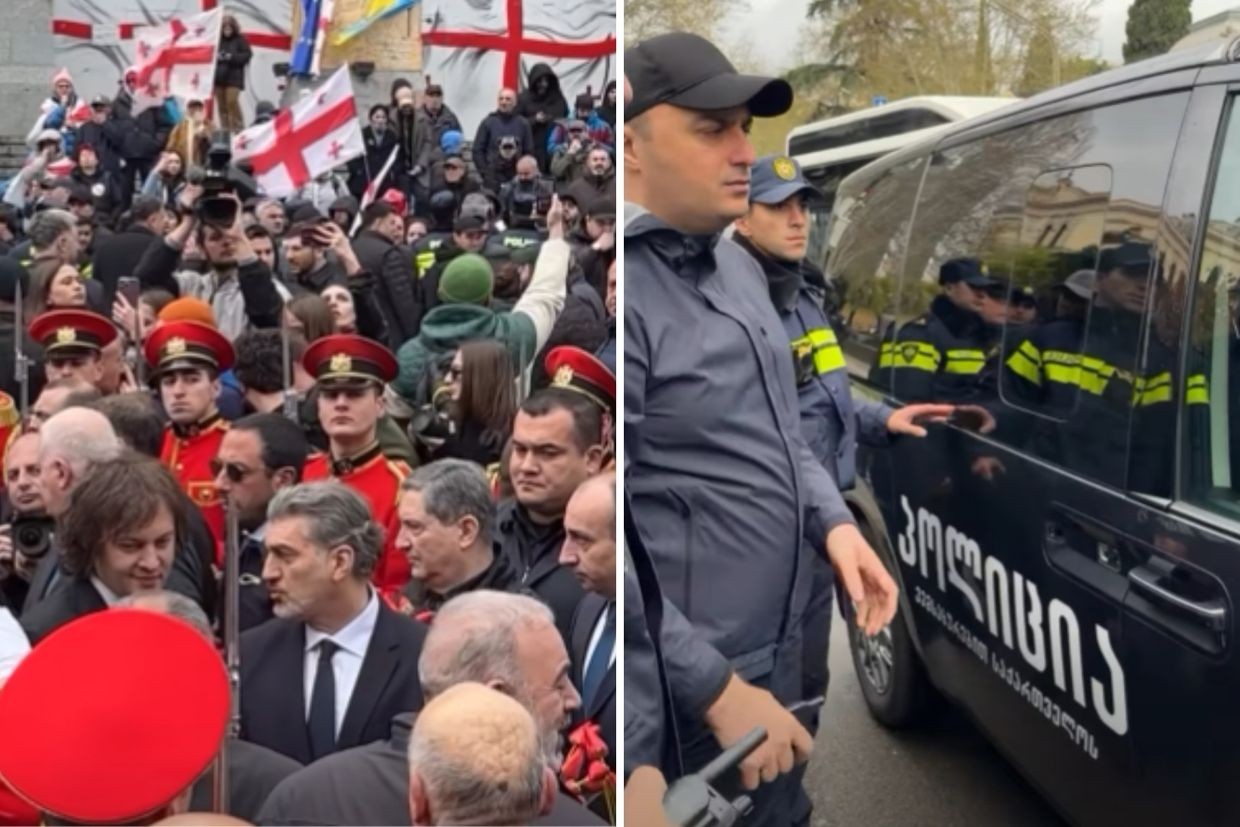
On the 37th anniversary of the 9 April 1989 Soviet massacre in Tbilisi, Georgian anti-government demonstrators held a 24 hour-long gathering at the city’s 9 April memorial. Several incidents were reported throughout the day, one of which is now under criminal investigation on charges of violence.
At the memorial, located outside parliament — the site of daily anti-government protests for almost 500 days now — activist groups had planned a special gathering titled ‘The Struggle for Freedom Continues’ several days in advance.
Referring to the 1989 events as a ‘day of shared grief and victory’, the organisers emphasised that ‘the struggle for freedom is not over’.
‘The Russian regime crushed and killed the Georgian people then; the Russian regime is still using violence and poisoning us today!’ they wrote in the description of the social media event, drawing a parallel between the Soviet army’s suppression of pro-independence demonstrators 37 years ago and the current government’s crackdown against critics, dubbing the ruling Georgian Dream party the ‘Russian regime’.
The rally began on the evening of Wednesday, 8 April, with a group of protesters, including family members of several jailed anti-government demonstrators, remaining at the site throughout the night.
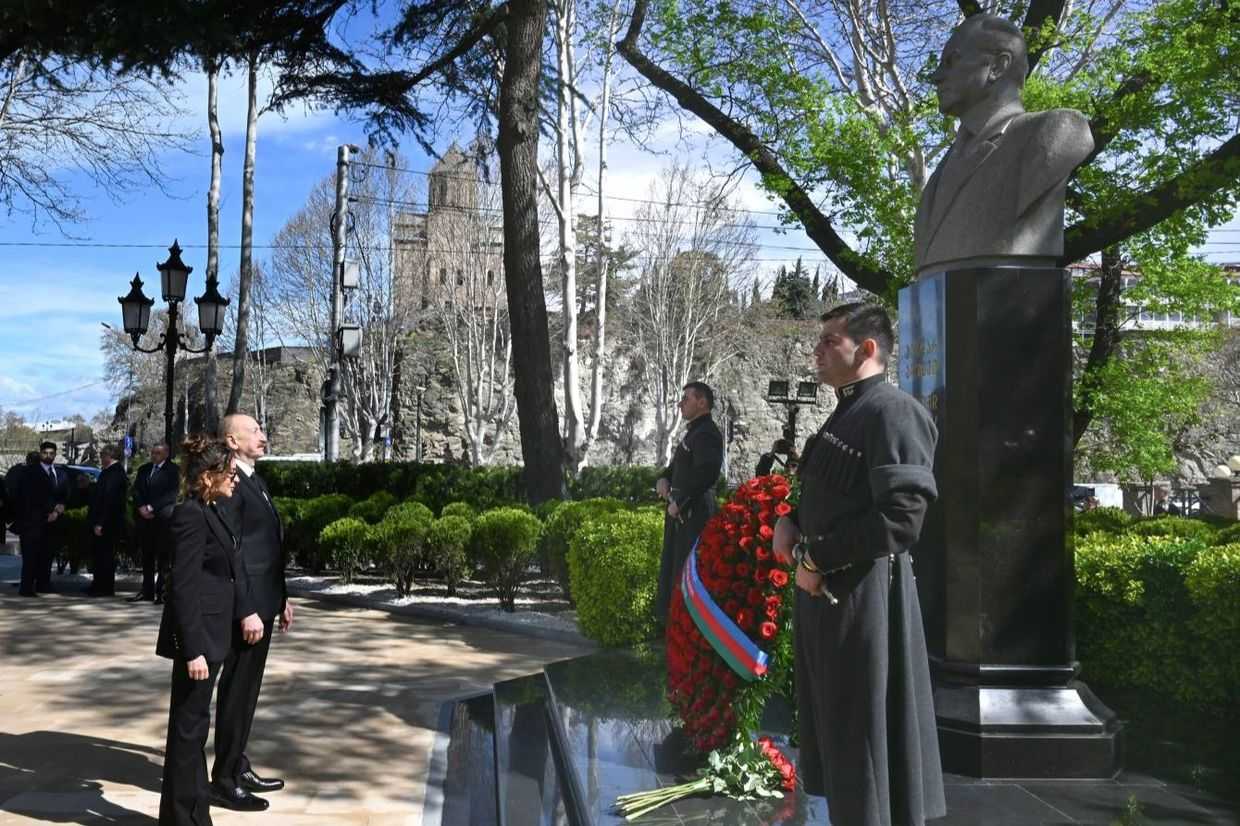
On Thursday morning, when officials — including Prime Minister Irakli Kobakhidze and President Mikheil Kavelashvili — appeared at the site, protesters greeted them with chants, including ‘Russians!’ and ‘slaves!’.
Ahead of the officials’ arrival, an honour guard corridor was arranged for them to pass through, while police were deployed to keep demonstrators at a distance from the politicians.
Opposition politicians were also present at the memorial.
Georgian Dream MPs and high-ranking officials appeared at the April 9 Memorial, where they were met with protest chants.#GeorgiaProtests https://t.co/Kmwnez8mbI pic.twitter.com/DYQRB6N9k9
— PUBLIKA (@Publika_ge) April 9, 2026
Criminal case initiated
Several tense episodes took place at the site throughout the day.
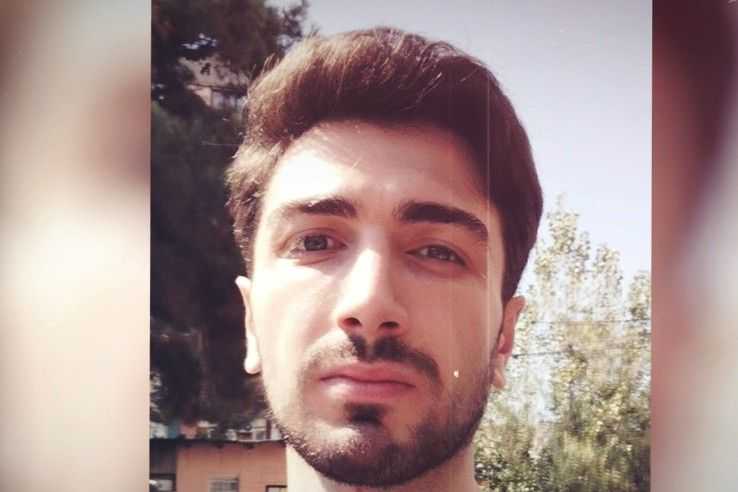
In the morning, a verbal and physical confrontation broke out between protesters and two unknown individuals who had arrived at the scene. The Interior Ministry later confirmed that an investigation had been launched under violence charges.
Following the incident, police took anti-government activist Shalva Baghdoshvili from the scene. Footage showed him bleeding from the nose after the confrontation. He left the police station late at night, saying that a seven-hour identification procedure had taken place involving both sides.
‘Who is who in this case — who is the victim, the complainant, or the witness — is unclear’, he said after his release. Baghdoshvili accused the two individuals of provoking the incident, but noted that the identification process in the police left him with the impression that those two might be treated as the victims.
Baghdoshvili’s lawyer, Giorgi Burjanadze, told TV Pirveli that his client held witness status as of Thursday night, with neither a victim nor an accused formally identified in the case.
‘[Baghdoshvili] does not deserve any other status in this case’, Burjanadze said, adding that, ‘what we saw in the morning was that individuals attacked peaceful protesters, swearing at them’. He also claimed that Baghdoshvili was ‘sneakily approached’ and ‘struck from the side’, after which the situation escalated.
According to TV Pirveli, one of the individuals involved in the incident was Saba Khajalia, who was ‘questioned for the whole night’ at the police station. In a phone interview with the channel, he said the investigation is ongoing and declined to answer journalists’ questions.
In the same case, another anti-government demonstrator present at the memorial, Konstantine Mikaia, was also summoned to the police as a witness.
Under Georgia’s criminal code, violence is punishable by up to one year of imprisonment, while group violence carries a penalty of up to two years. In both cases, fines and community service are also possible punishments.
On the same day, a man was also detained near the memorial after publicly insulting Georgian Dream founder Bidzina Ivanishvili while wearing a T-shirt with insulting texts about Ivanishvili and Kobakhidze. The Interior Ministry said he was detained on charges of petty hooliganism and disobeying police — minor administrative offences punishable by fines or up to 20 and 60 days of detention, respectively.
In another incident, a confrontation took place between Tbilisi City Council member from Georgian Dream, Beka Davituliani, and activist Mariam Mekantsishvili. After the activist called Davituliani a ‘Russian slave’ and a ‘traitor’, he initially responded verbally, but later grabbed her and pushed her away.
Commenting on the protest, Georgian Dream MP Levan Machavariani described those gathered as a ‘minority’ that was ‘trying to radicalise the process’. Davit Kartvelishvili, a representative of the ruling party’s satellite group People’s Power, called the protest an ‘immoral and shameful performance’, while pro-government TV station Imedi referred to the gathering in its coverage as a ‘provocation’ and the demonstrators as ‘radicals’.
Government-aligned circles also targeted Germany’s ambassador to Georgia, Peter Fischer, a vocal critic of the Georgian Dream government. He was among diplomats who visited the memorial to pay tribute to the 9 April massacre victims and greeted those present with a wave — something Imedi reported under the headline: ‘German ambassador, who arrived at the 9 April memorial, greeted activists who were there to stage sabotage’.
Twenty-one people were killed and hundreds more injured on 9 April 1989, after Soviet troops moved in on a peaceful pro-independence demonstration at what is now the Georgian parliament, beating people with shovels and releasing an unknown toxic gas in an effort to disperse the protesters.
Two years later, on 9 April 1991, the Supreme Council of the Georgian SSR announced the restoration of Georgia’s independence.
Every year on 9 April, people — including politicians, clergy, and diplomats — visit the memorial to pay tribute to the victims.