‘This person is our conscience’ — Georgians rally for Mzia Amaghlobeli’s freedom a year after her arrest

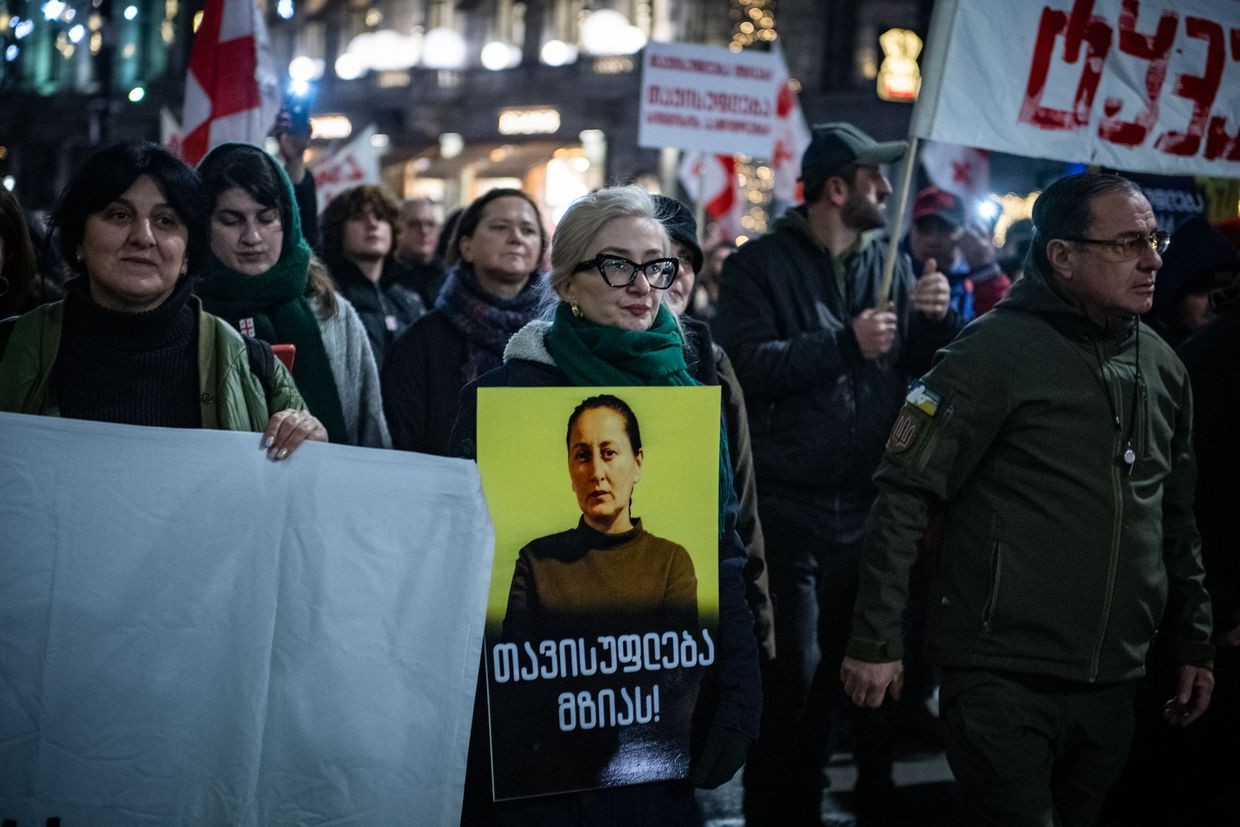
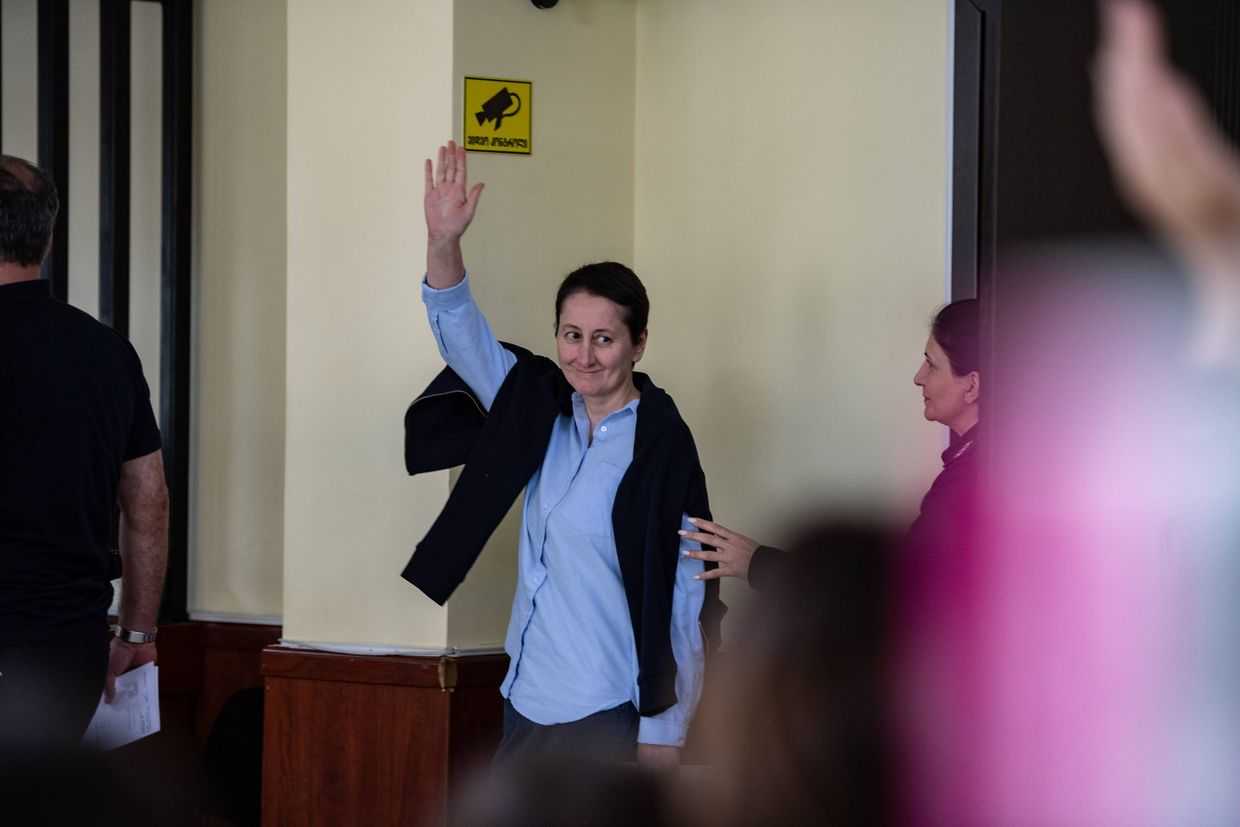
A march has taken place in Tbilisi calling for the release of journalist and founder of Batumelebi and Netgazeti, Mzia Amaghlobeli, marking one year since her detention. She is serving a two-year sentence for slapping a senior police officer in a case widely seen by government critics as a symbol of the country’s democratic backsliding.
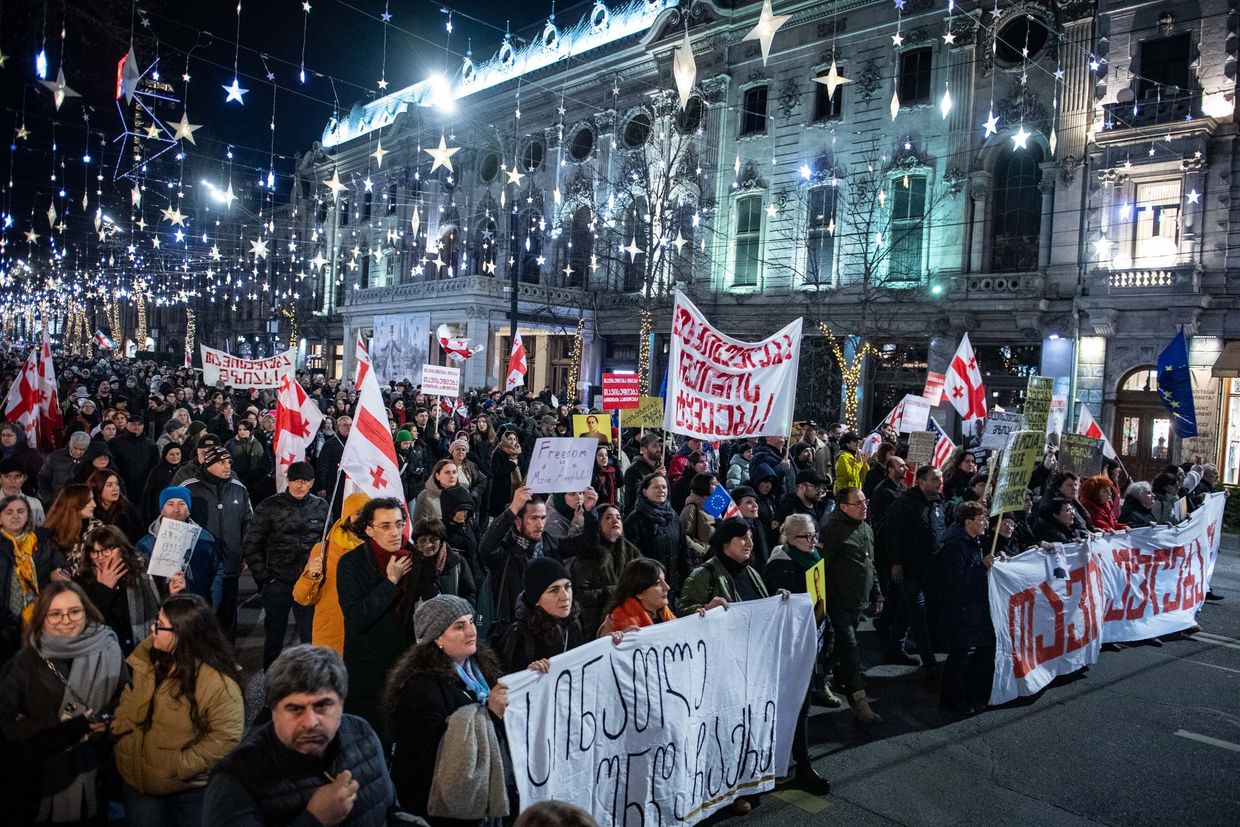
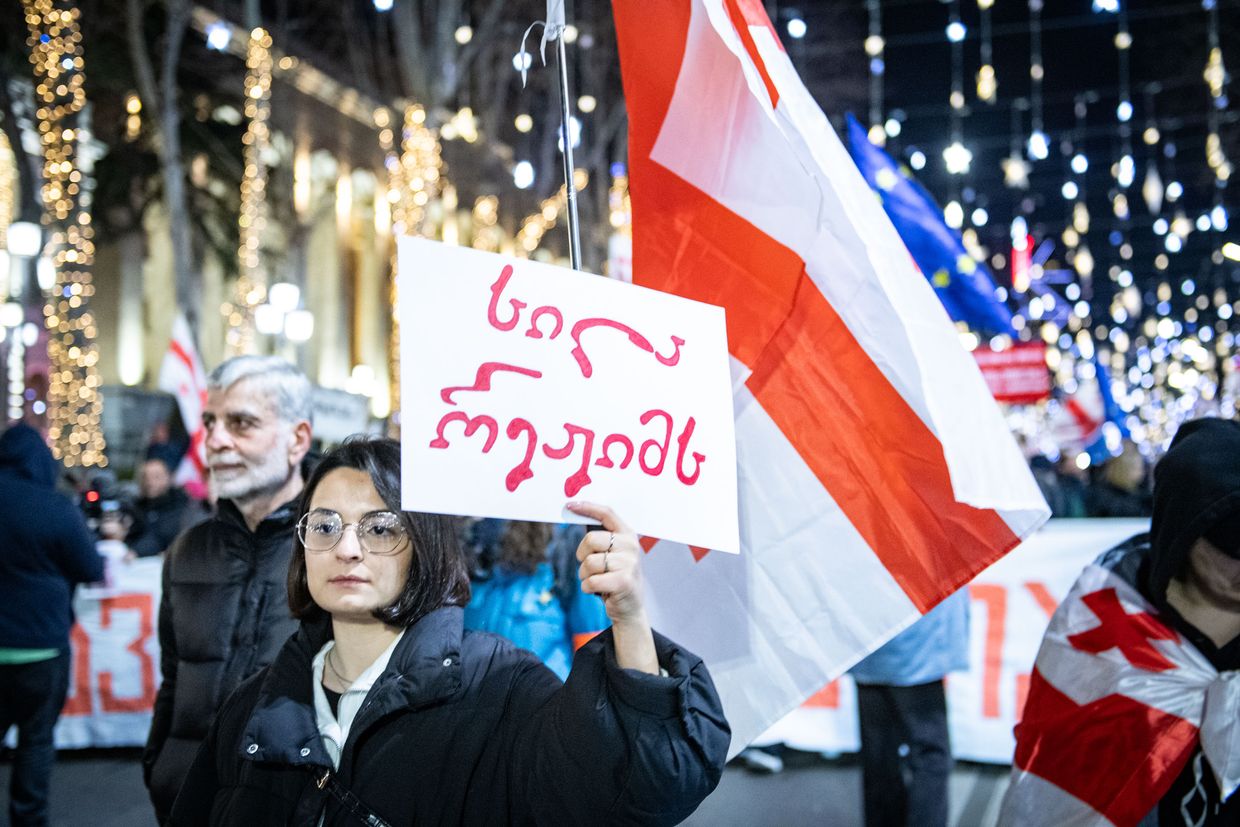
Several thousand demonstrators set off from Marjanishvili Square on Monday evening, carrying banners in support of Amaghlobeli and waving Georgian and EU flags, before marching to parliament. Her family members and colleagues were among those taking part in the march.
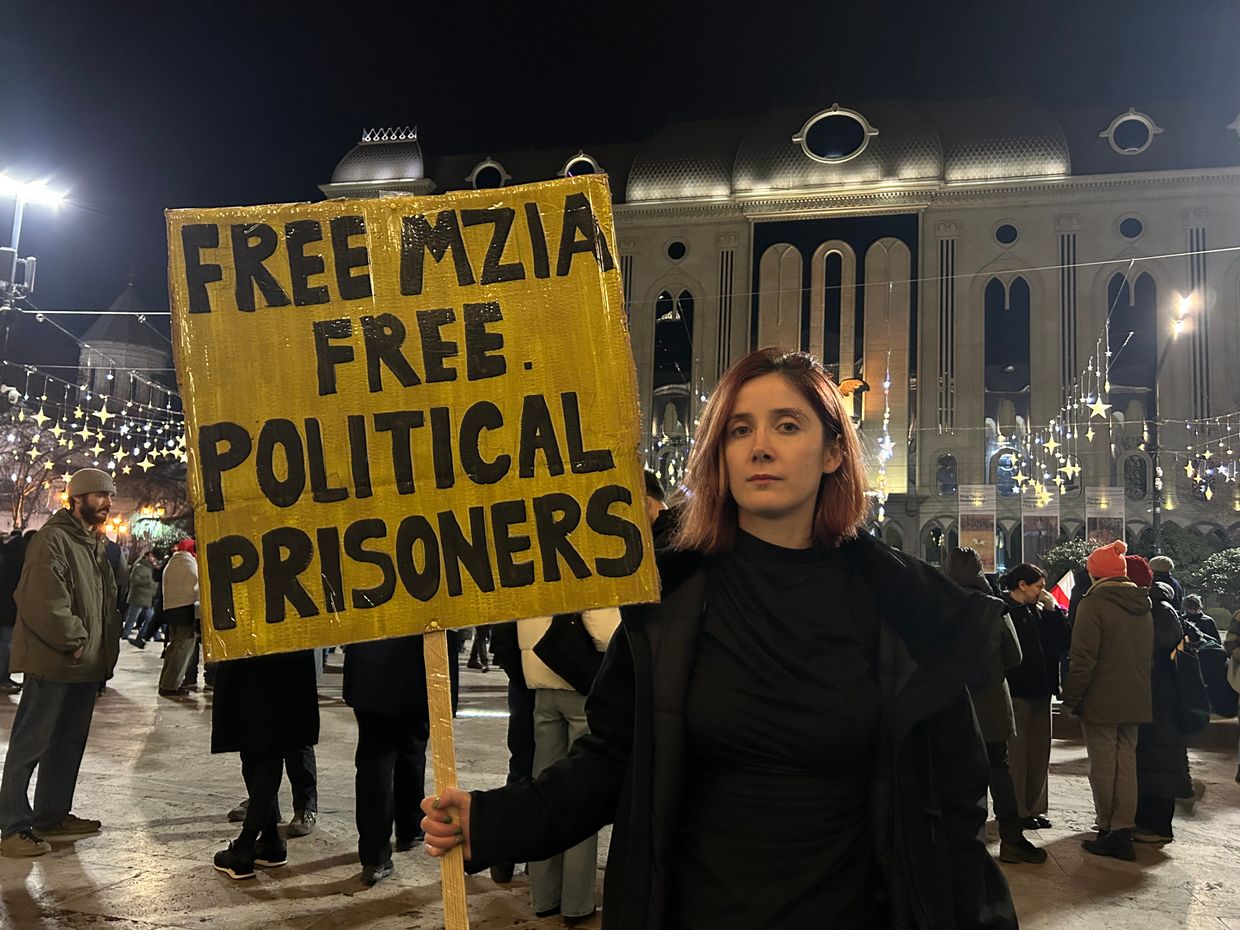
Chants of ‘Freedom for Mzia Amaghlobeli!’ and ‘Freedom for the regime’s hostages!’ rang out during the march, highlighting calls for the release of dozens of anti-government demonstrators detained alongside her. According to Amaghlobeli’s family, this was her request from prison.
‘It is her wish [...] that the rally should be dedicated to all political prisoners without exception’, Amaghlobeli’s niece, Manana Amaghlobeli , told Netgazeti.
Amaghlobeli, the founder of independent news sites Batumelebi and Netgazeti, was originally sentenced in August for slapping the then-Chief of Police of Batumi during a heated exchange amidst an anti-government demonstration. pic.twitter.com/Q7rqUDWjoQ
— OC Media (@OCMediaorg) January 12, 2026
Amaghlobeli was first detained on the night of 11-12 January 2025, about a month and a half after nationwide protests erupted in response to the Georgian government’s suspension of the country’s EU membership bid.
She was first detained by officers after placing a sticker calling for a nationwide strike on a fence outside a police station in Batumi. She had done so in protest against the detention of her colleague for putting up the same sticker on the same street. Shortly after being released, Amaghlobeli was again arrested for slapping Batumi Police Chief Irakli Dgebuadze during a heated exchange outside the police station.
Throughout the court proceedings, Amaghlobeli spoke about the circumstances leading up to the incident, including degrading treatment by the police, as well as the abuse she faced following her arrest after slapping the officer. This included being spat in the face by Dgebuadze, subjected to verbal abuse, and being denied access to a toilet.
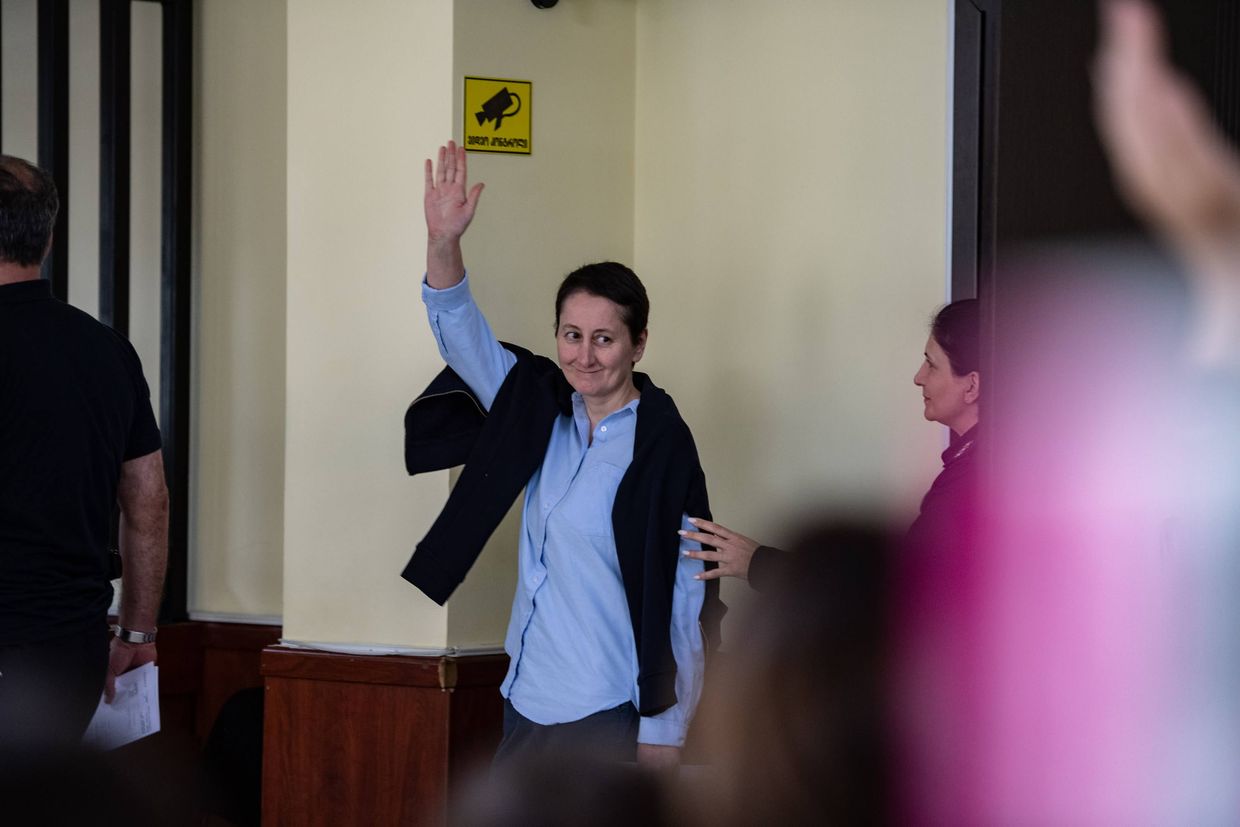
The prosecution sought up to seven years in prison for her under the charge of assaulting a police officer. In August, the Batumi City Court downgraded the charge to a lesser offence but still sentenced Amaghlobeli to two years in prison.
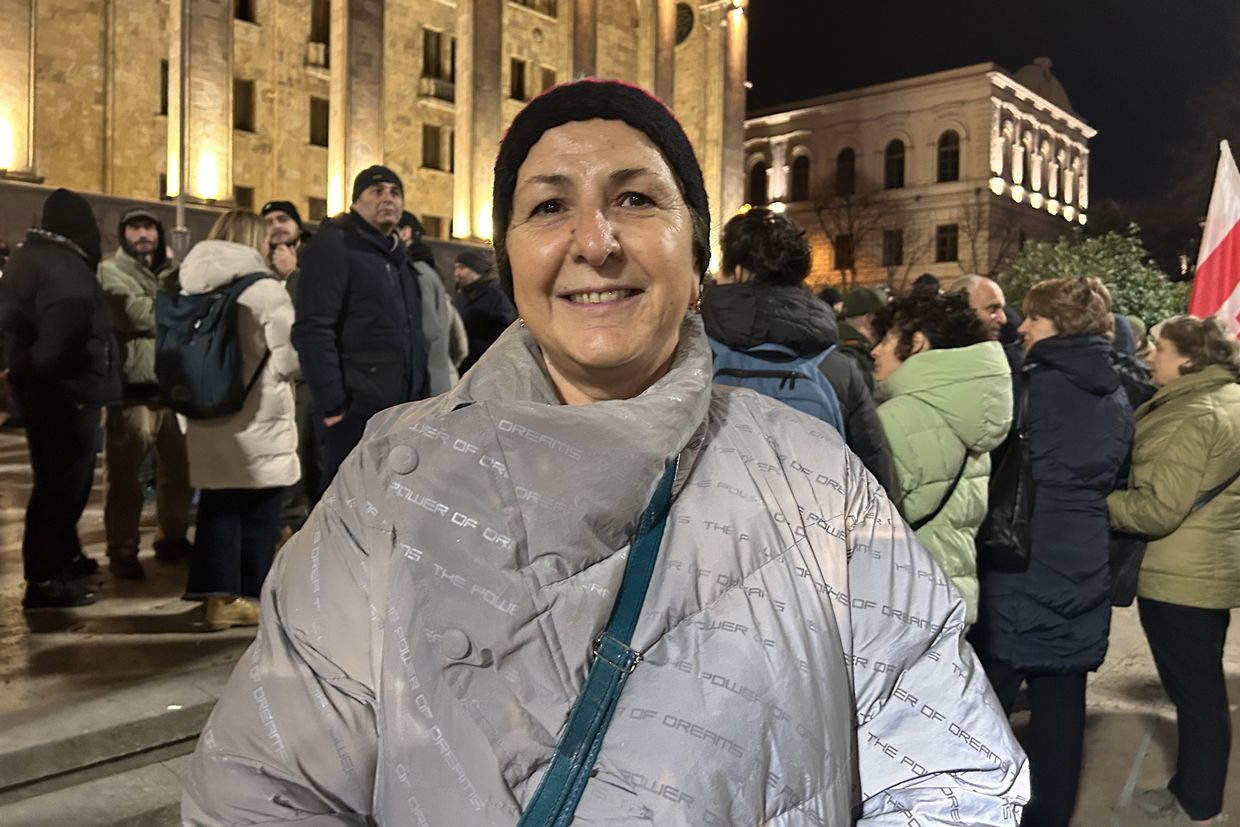
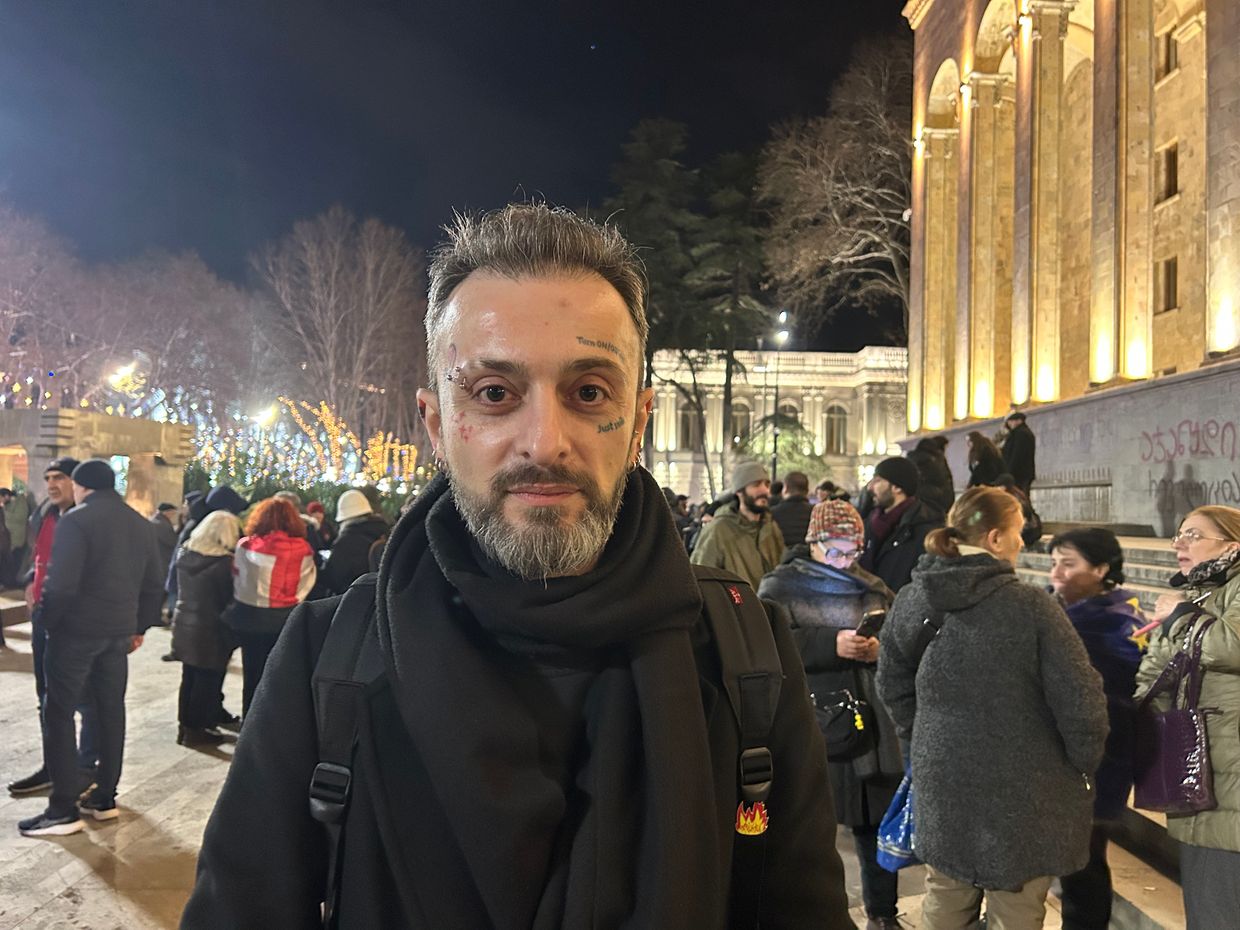
‘Mzia’s slap was not aimed at just one police officer. It was a slap to the regime. For me, there is no crime in that’, Inga Chakhvashvili, a former journalist, told OC Media during the protest.
‘I’ve had some health issues in the past few days, but I had to come here today […] I also attended her trials. This person is our conscience’, the 61-year-old former journalist said.
Amaghlobeli’s case has drawn widespread criticism in Georgia and abroad as disproportionate and politically motivated. Many were shocked by the harshness of the charges and the sentence sought for a single slap, especially since Dgebuadze himself faced no accountability, nor did the police officers who had brutalised anti-government demonstrators in Tbilisi in the months prior to Amaghlobeli’s arrest.
According to a June survey conducted by Institute of Social Studies and Analysis (ISSA), the local research organisation, the majority of Georgians (59%) found the charges against Amaghlobeli unfair — including 70% in Tbilisi, 54% in the regions, and 22% of Georgian Dream’s supporters. Among the ruling party’s voters, 23% either had no answer or refused to respond.
‘This is not only about one woman’
Amaghlobeli has been working in journalism for over 25 years. She founded Batumelebi in 2001 together with her friend and colleague Eter Turadze in the coastal city of Batumi. The outlet was established as an independent media organisation focused on reporting human rights violations and official corruption.
In 2010, the founders of Batumelebi went on to launch Netgazeti, a Tbilisi-based news platform. Both outlets have received numerous local and international awards for their work, along with pushback and hostility from those in power.
‘This is not only about one woman or one person, but it is about freedom of speech, freedom of press, and all sorts of liberties and freedoms that have to be guaranteed for everyone’, Irma Dimitradze, communications manager at Batumelebi, told OC Media.
Dimitradze has been actively involved in raising awareness about Amaghlobeli’s case both in Georgia and abroad. In her words, the detention of Amaghlobeli changed her life, turning her into an advocate who relentlessly engages with diplomats, politicians, international media, and rights organisations.
‘It hits differently when it becomes personal, when it affects your loved ones and this is what happened for me’, she said.
For Amaghlobeli’s family and supporters, it wasn’t just her arrest that sparked concern: in protest, she spent the first 38 days of her imprisonment on hunger strike, and her vision, already been impaired before the arrest, deteriorated severely in prison.
‘I had to fight, our colleagues had to fight and we did what we could’, Dimitradze added while recounting Amaghlobeli’s health condition and her defiant call from prison: ‘fight before it’s too late’.
Amaghlobeli’s case gradually drew local and international attention, with protests organised in her support and representatives of European embassies, as well as local and international human rights and press freedom organisations, repeatedly demanding her release.
Following her detention, Amaghlobeli has received several international awards, most recently the Sakharov Prize, the European Union’s highest human rights honour.
‘For me, Mzia remains a symbol of a principled, resilient, and determined person’, Nika Katsia, a former imprisoned demonstrator, told OC Media.
‘I believe that through her life and her biography, as a colleague, as a person, and as a woman, Mzia is an exemplary figure not only for Georgians but for the world’, he added.
On the anniversary of her detention, the British and European Union embassies stated that they remain committed to their earlier statement condemning the sentence handed down to Amaghlobeli in August.
Amaghlobeli’s lawyers unsuccessfully appealed the first-instance decision in the Court of Appeals. The next stage of the case will be considered by the Supreme Court.
Meanwhile, her administrative case over the sticker that led to her first detention is already under review at the European Court of Human Rights (ECHR) in Strasbourg.
 Mikheil Gvadzabia