What recent Baku–Tehran tensions reveal about Iranian Azerbaijan
Tehran is cautious of alienating its largest ethnic minority, leaving Iranian President Masoud Pezeshkian in crisis mode.

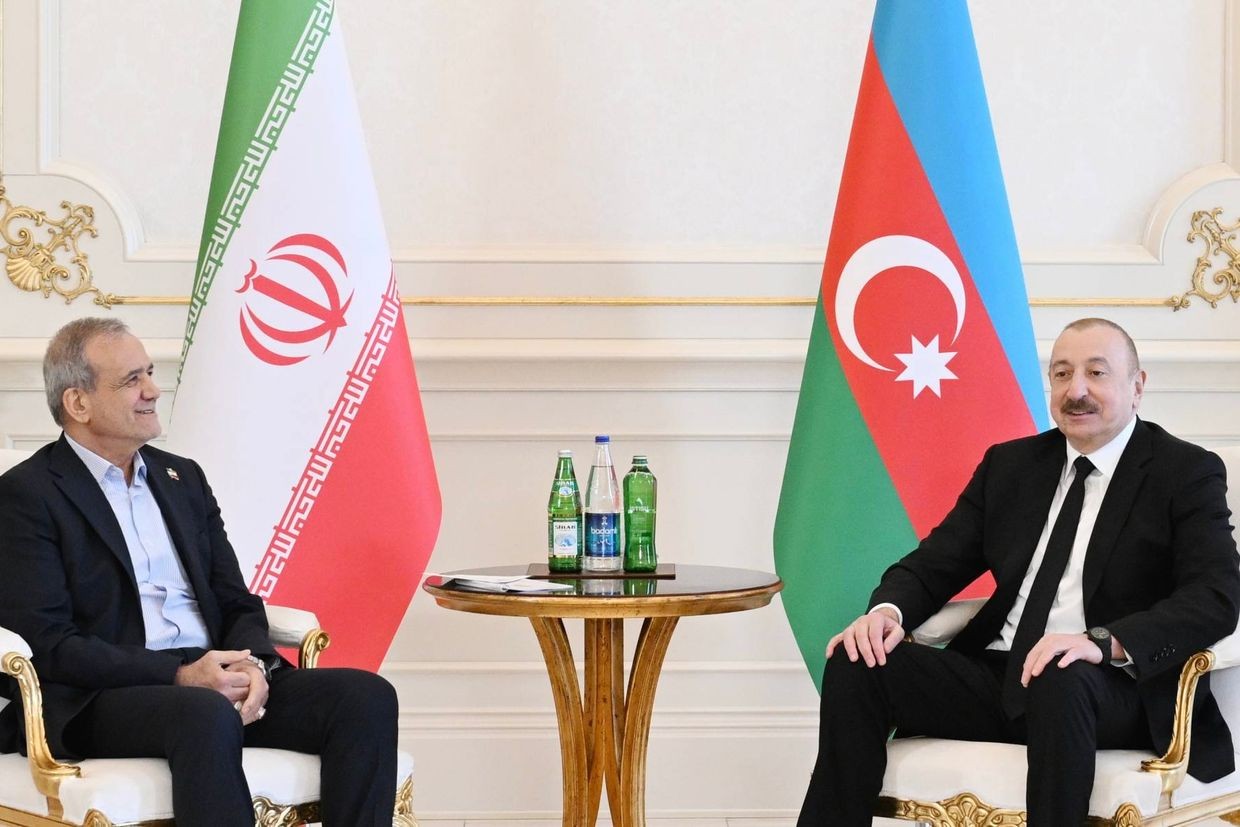
Following a series of drone strikes on the Azerbaijani exclave of Nakhchivan in early March, Iranian President Masoud Pezeshkian apologised to Iran’s neighbours:
‘We didn’t intend to violate neighbouring countries. As I have said many times, they are our brothers. We stand with these ones we love in the region’, he stated.
While the statement was vague, analysts have argued that Iranians interpreted Pezeshkian’s apology as being only directed towards Azerbaijan, a statement made in an effort to avoid triggering the ethnic Azerbaijani population (estimated to be between 15 million to 20 million) living there.
However, Iran’s powerful Islamic Revolutionary Guard Corps (IRGC) later showed disapproval over Pezeshkian’s remarks, warning neighbouring countries instead that Tehran would continue attacks if the US and Israel used their territory to attack Iran.
This was not the first clash between the IRGC and Pezeshkian regarding policies toward Baku and the Azerbaijani population living in Iran. Since his election in 2024, Pezeshkian’s presidency has played the role of a pressure-absorbing mechanism and crisis management tool in a country using long-term oppressive identity politics towards Azerbaijanis.
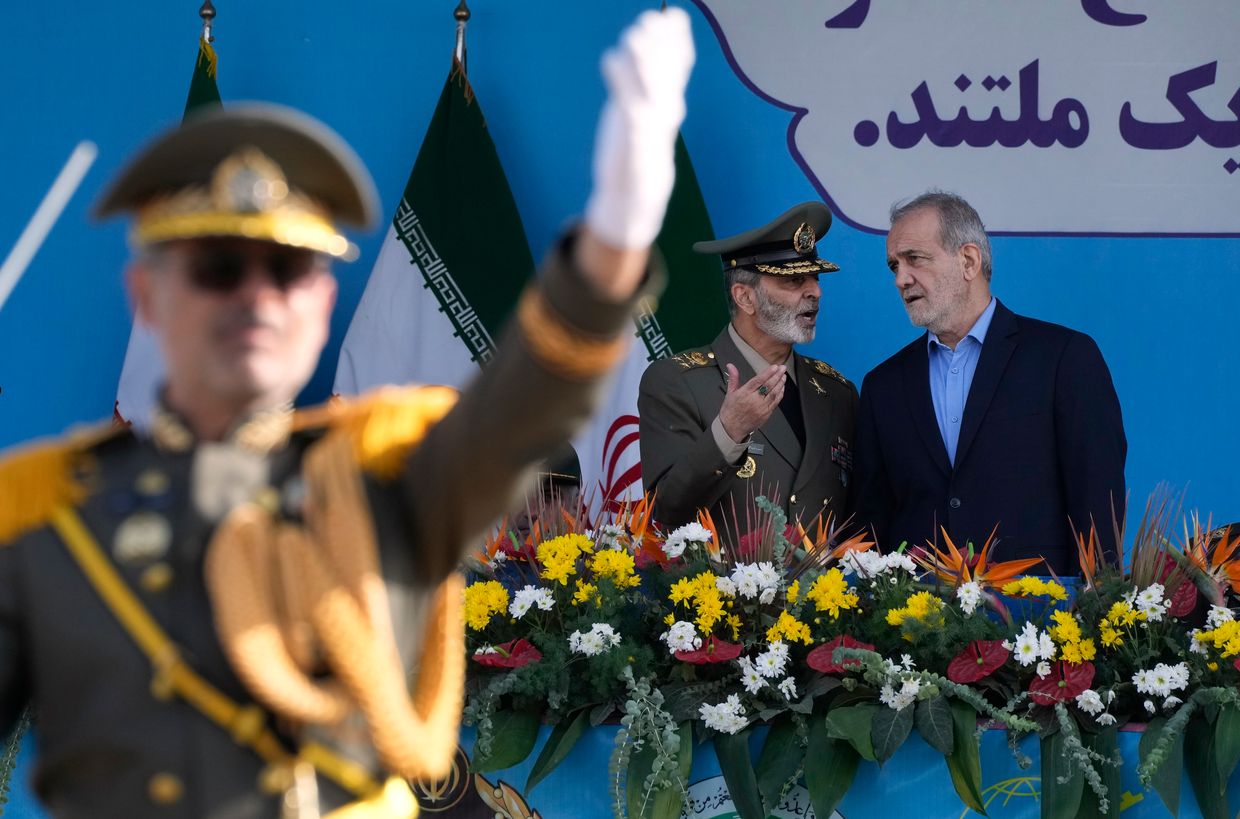
According to Vasa László, a Chief Advisor at the Ludovika Centre for Turkic Studies and Hungarian Institute of International Affairs in Budapest, and a professor at Széchenyi István University, this dynamic reflects institutional design, not temporary dysfunction. Strategic decision-making on security and regional posture remains concentrated around the Supreme Leader and the IRGC. The presidency, even under a reform-orientated figure like Pezeshkian, operates primarily as a diplomatic interface rather than a strategic command centre.
‘In practice, Pezeshkian has been left in a reactive position, managing crises rather than shaping outcomes’, he tells OC Media.
A threat to Iran
With a larger ethnic Azerbaijani population than the entire population of the Republic of Azerbaijan, Tehran has approached its policies cautiously, as missteps could alienate the country’s largest ethnic minority. Baku also closely watches Tehran’s policies towards Azerbaijanis, especially during periods of political tension between the two countries. Azerbaijani President Ilham Aliyev notably touched upon this during a meeting with his Security Council following the drone attack on Nakhchivan:
‘They know perfectly well that the independent state of Azerbaijan today is also a place of hope for many Azerbaijanis living in Iran. In other words, their goal was to tarnish us, slander us, and discredit us in the eyes of the public’, Aliyev said.
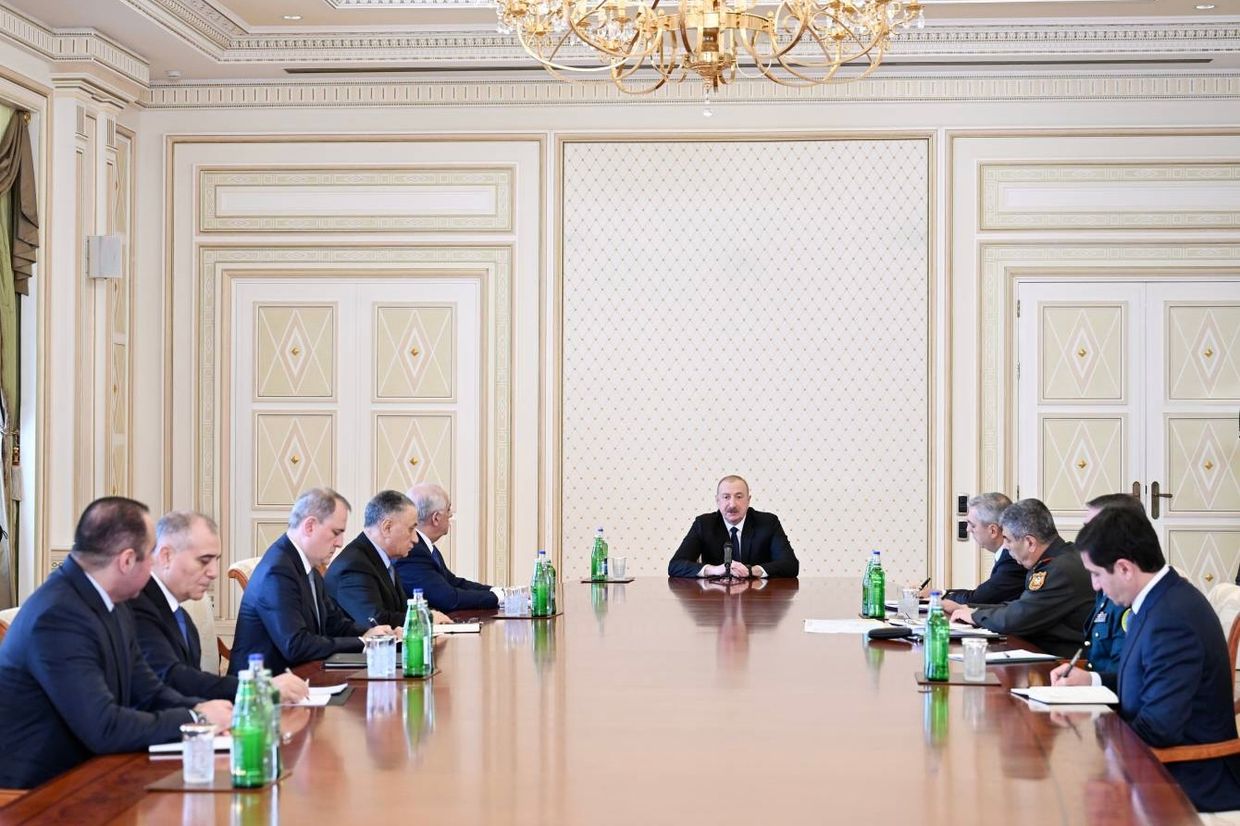
Following Aliyev’s speech, some also speculated the autonomy situation among Iranian Azerbaijanis could be addressed during this turmoil. However, analysts speaking with OC Media have stated this is actually less likely to occur.
‘Under this regime, autonomy is impossible unless ethnic minorities, mainly Azerbaijanis, as the largest and strongest group, force the issue, overthrow the current government, and secure a strong foothold among republicans’, Alirza Ardabilli, an exiled Iranian Azerbaijani activist from Ardabil living in Sweden and the editor of the Stockholm-based, pro-Iranian Azerbaijani journal Tribun, tells OC Media.
Similarly, Piruz Dilanchi, leader of the former separatist South Azerbaijan National Liberation Movement (SANLM) — which aimed to restore the ‘national and personal rights of the Turkish people of South Azerbaijan’ through ‘political forms of struggle’ — emphasises that the Iranian regime would not give autonomy willingly.
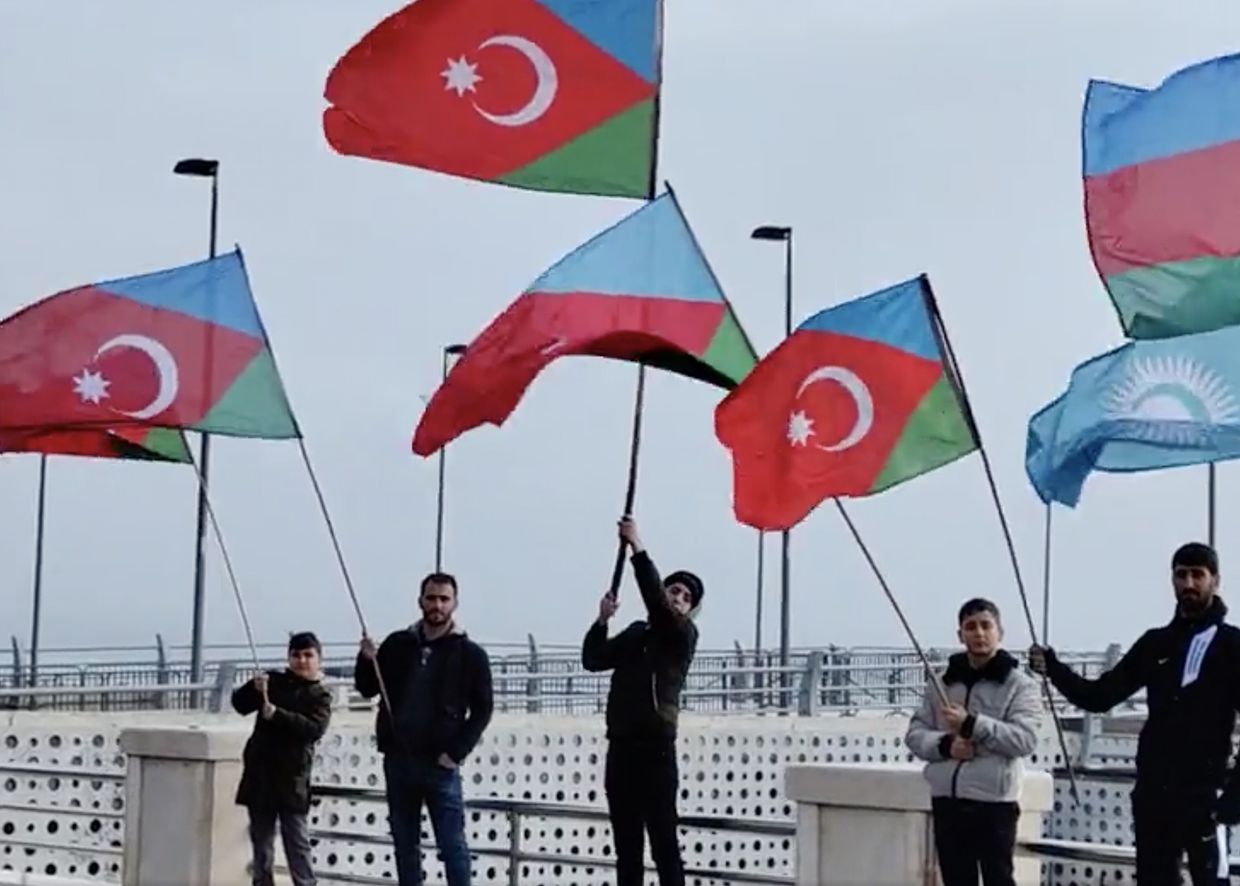
‘The most possible scenario in this case, and what is expected in the future, is pushing towards a federal government system,’ Dilanchi tells OC Media.
‘From a realistic but cautiously optimistic perspective, this community represents not an immediate political force but a latent constraint that shapes Iran’s room for manoeuvre,’ adds László.
Therefore, he says, Pezeshkian’s conciliatory rhetoric towards Baku does not necessarily reflect the direction of Iran’s policy towards Azerbaijan.
‘In addition to the official government, there is what many call the “deep state”, composed of hard-line security services, clerics, and bureaucrats loyal to the Supreme Leader. For Pezeshkian, overcoming these groups would be his ultimate test’.
Pezeshkian as mediator
Pezeshkian was born in Mahabad in Iran’s West Azerbaijan province to an Iranian Azerbaijani and Iranian Kurdish family. This heritage, Dilanchi argues, played a crucial role in his electoral success.
‘During the first round of presidential elections, turnout barely reached 40%. At that time, we had called for a boycott [of the elections] as a movement. That is why Pezeshkian’s presidency was also viewed strategically by the authorities as well’, Dilanchi says.
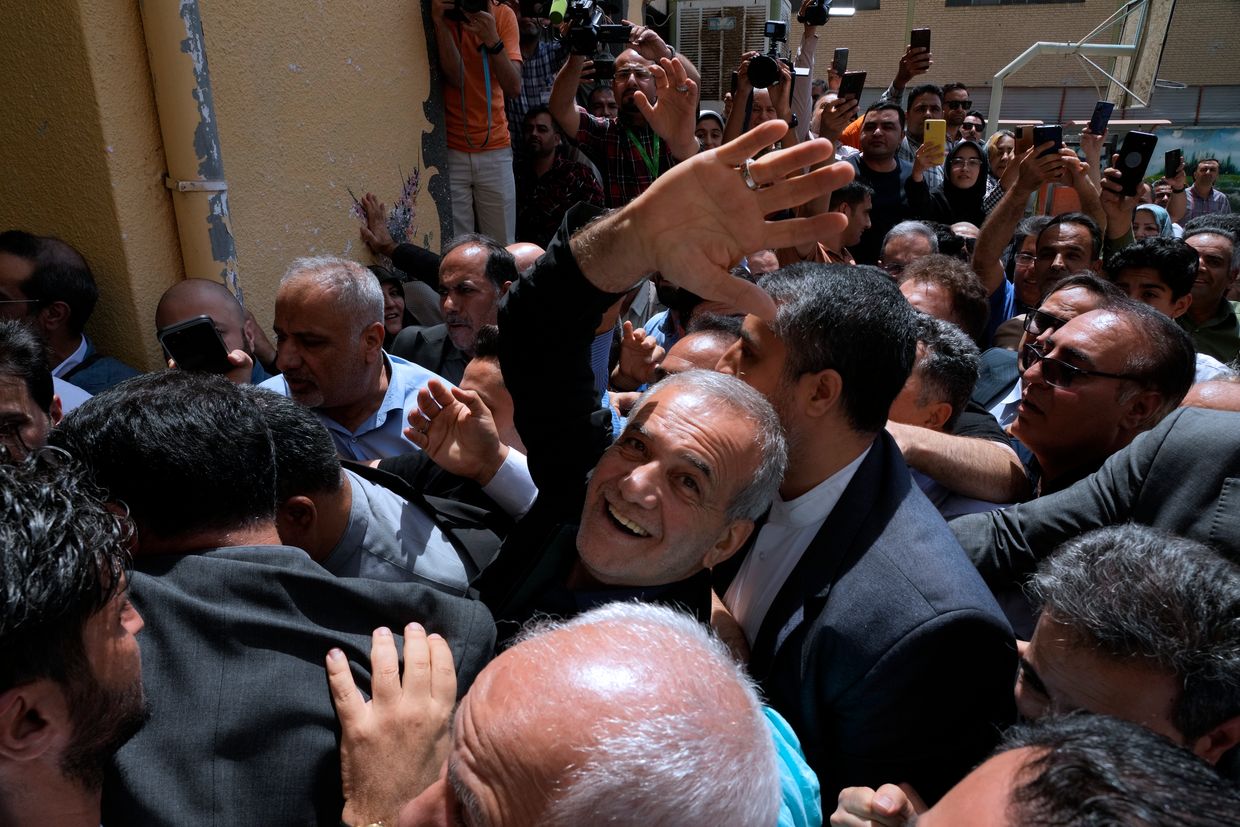
He believes Pezeshkian’s election was the only solution at the time, considering the Mahsa Amini protests endangered the Iranian state, and many people, including the large Azerbaijani population, expressed their dissatisfaction with the current government.
Notably, Pezeshkian had earlier gained prominence as chair of a parliamentary faction consisting of Azerbaijani-Turkic lawmakers. He was also one of the few officials to support granting official status to ethnic languages under Article 15 of the Iranian constitution. The proposal was later rejected by lawmakers under the basis that it threatened Iran’s ‘territorial integrity and national unity’.
‘[The Iranian authorities] know the power of people; in fact, in a simple way, we can see it in the example of the [Tractor Cultural Sports Club]’, Ardabilli tells OC Media.
Following Pezeshkian’s election, the football club won Iran’s national cup, causing thousands of Azerbaijanis to celebrate together on the street — the club had long been considered a symbol of Azerbaijani identity.
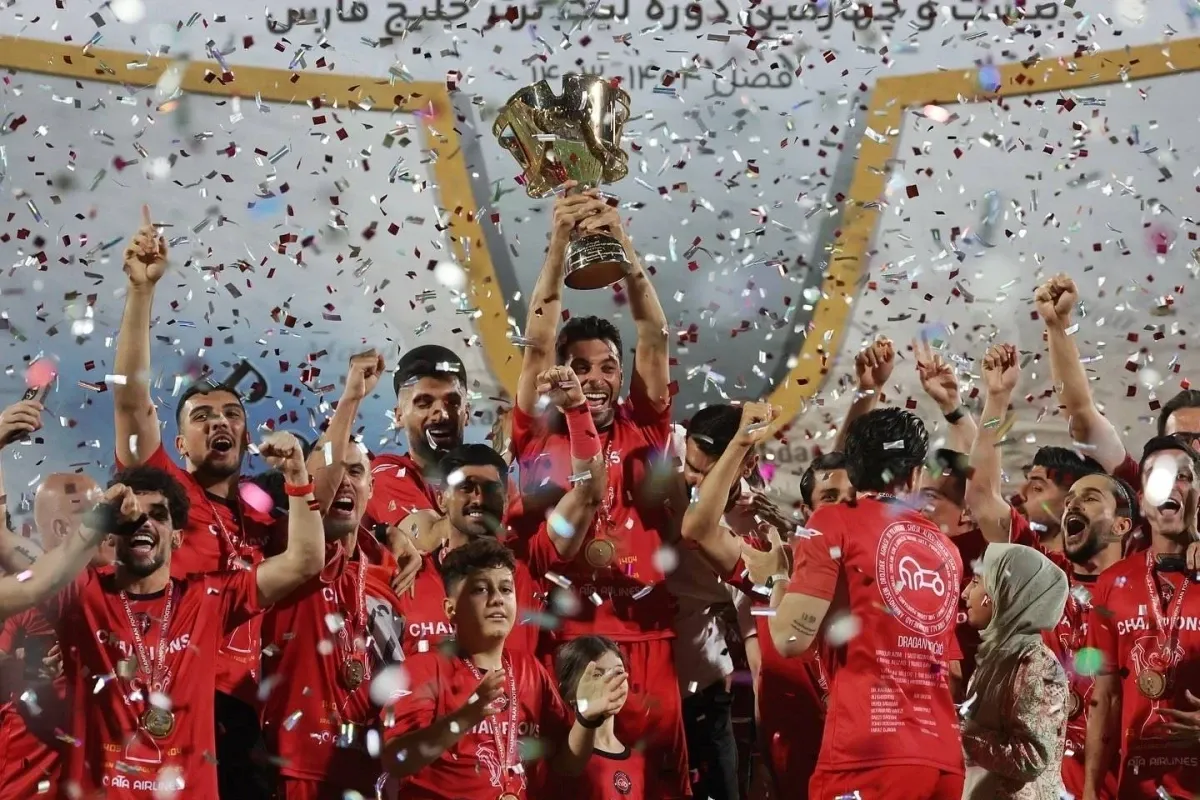
‘Despite requests to harshly punish or shut down this club, the government doesn’t dare to do more. They are scared to trigger the largest ethnic group’, Ardabilli explains.
László agrees that periodic expressions of solidarity with Baku — most notably during the Second Karabakh War — demonstrate not imminent separatism but a critical point: Iran’s policy cannot be formulated in isolation from its internal Azerbaijani ethnic landscape.
He further explains that Iranian Azerbaijanis are politically influential as individuals, even if not as a collective actor. Unlike other non-Persian groups, Iranian Azerbaijanis are deeply embedded in the governing positions of the Islamic Republic and have historically been well represented in the political, clerical, and military elites. This level of integration has allowed the Iranian system to present itself as inclusive, while simultaneously preventing the emergence of a unified, ethnically organised Azerbaijani political bloc.
‘This creates a dual reality: while they do not act as a coordinated political constituency, their sheer demographic and societal weight ensures that their sentiments cannot be ignored, particularly in moments of external tension involving the Republic of Azerbaijan,’ László concludes.
To depict the restrictions over political constituency, Ardabilli points out that Persian nationalists across the political spectrum, from royalists to republicans, are more restrictive toward Pezeshkian than the Supreme National Security Council. They keep a close eye on the current president, not only regarding formal policies but also cultural and symbolic topics concerning Azerbaijan and the Azerbaijani population in Iran.
‘The previous president, Mohammad Khatami, also read out the Heydar Baba poem, and everyone clapped. Pezeshkian was not allowed to recite the poem in Azerbaijani during his appearance in Tabriz, even though he has spoken Kurdish with Iraqi Kurds’, Ardabilli recalls.
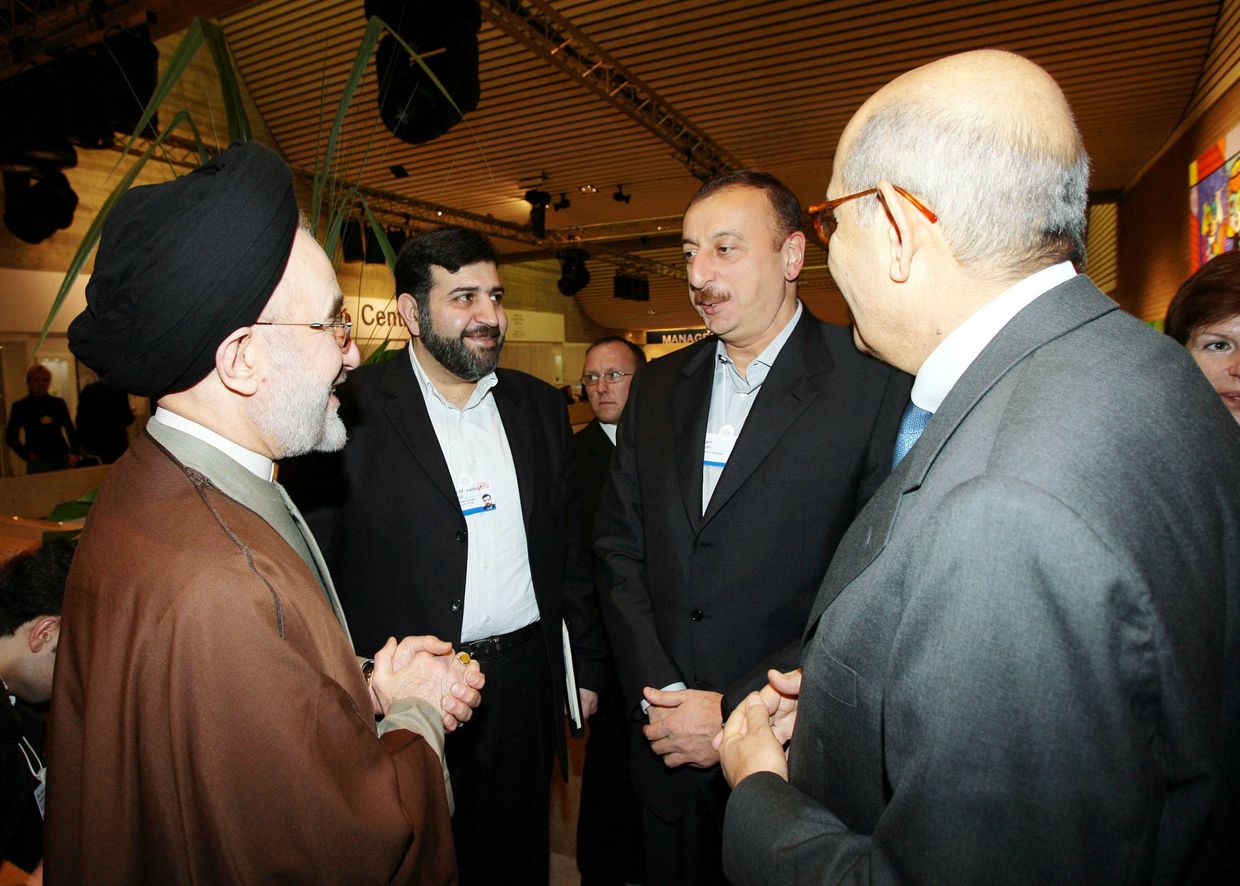
The poem by Muhammad Hossein Shahriar focuses on the separation of what is now Iranian Azerbaijan from today’s Azerbaijan republic, during which a mountain known as Heydar Baba, close to his village, becomes a wall that supports and protects Azerbaijan against its ‘foes’. No wonder why, just minutes after he began, organisers stopped Pezeshkian and warned him not to continue reading in Azerbaijani.
Yet, Ardabilli argues that while Pezeshkian may not act ‘directly or boldly’, ‘he might achieve things in more subtle, roundabout ways’.
Even so, hope remains fragile. Tehran silences any who can trigger dissent among Azerbaijanis, leading activists, protesters, movement leaders, and academics to become government targets, including Dilanchi himself.
‘I do not defend the Iranian regime. Since the age of 17, I have spent much of my life in prisons and detention centres. I am now 61 years old, and my life has been consumed: my youth lost, my spirit broken, and my family devastated. My older brother was killed in an Iranian prison at the age of 40. He was murdered by an oppressive system’, Dilanchi recalls.
‘So no, I cannot and will not defend the mullahs. But neither can I deny the truth that the president of Iran today is not the same as the ones in the past’.