What to know about Georgia’s ‘most dangerous’ legislation yet
Georgian Dream’s latest legislative amendments have deepened fears over the ruling party tightening its grip on power.

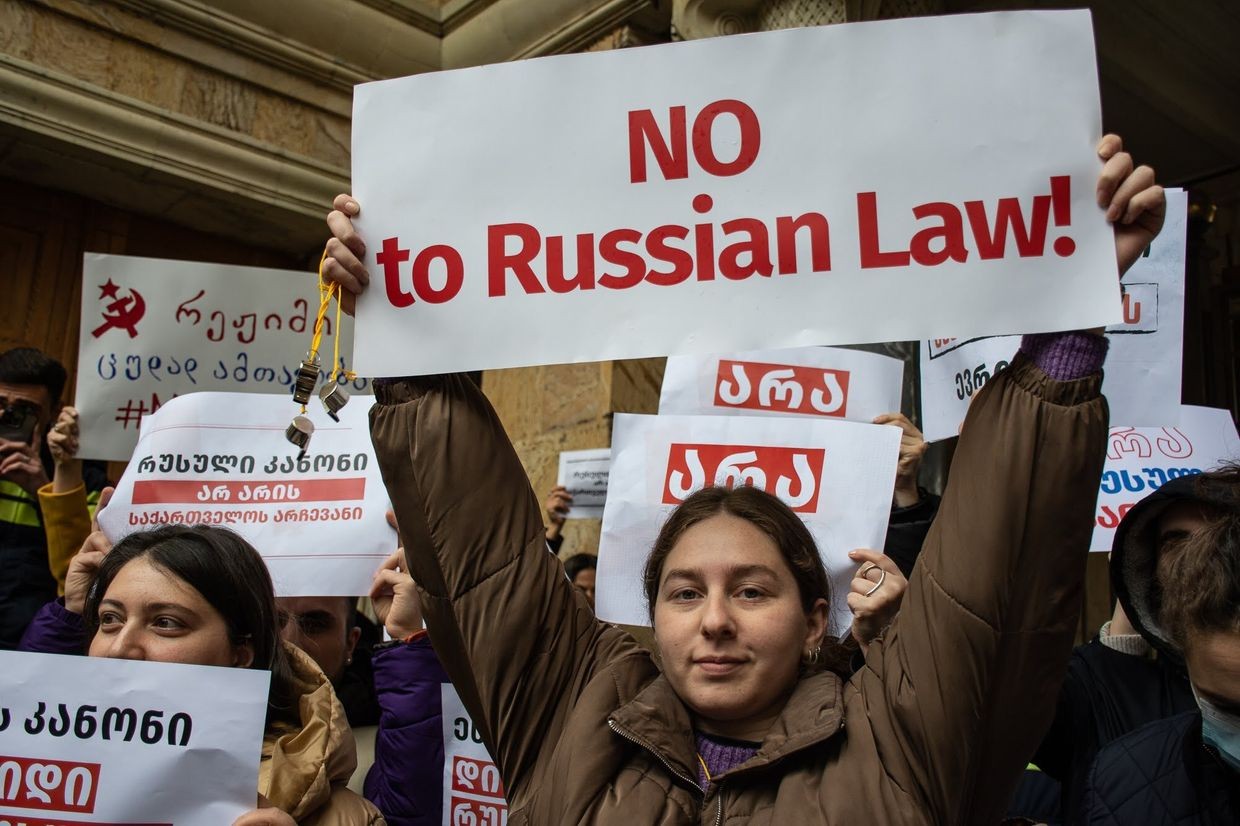
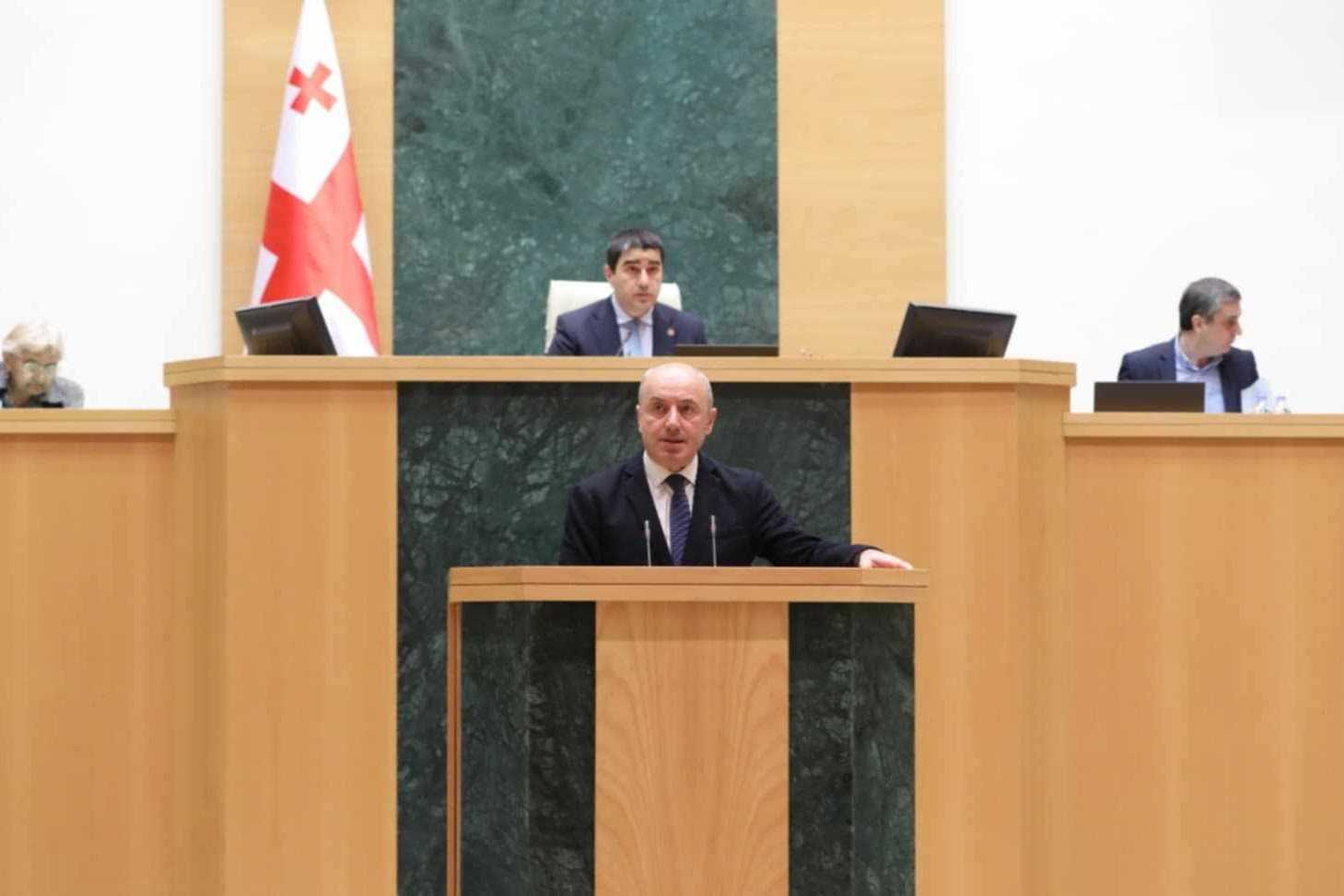
Legislative amendments adopted on 4 March saw Georgia’s ruling party expand its restrictive reach in several directions: significantly tightening control over international funding in the country, introducing new restrictions on political activities, and threatening imprisonment for those who publicly and systematically question its legitimacy.
Although restrictive laws have become an integral part of Georgia’s political life in recent years, government critics have highlighted the severity of the latest amendments, noting that the level of control they introduce — and their potential consequences — exceed those of previously adopted measures.
OC Media spoke with several lawyers to find out exactly what makes these amendments ‘the most dangerous and restrictive law adopted so far’.
Tighter than ever: control over international funding
The latest amendments broaden the definition of a grant in a way that potentially subjects a wide range of resources entering Georgia to government approval — from individual transfers to free seminars.
This continues a legislative process that Georgian Dream began even before the 2024 parliamentary elections, targeting the international funding of independent media and civil society organisations. One of the key turning points came in April 2025, when the ruling party made issuing foreign grants — with few exceptions — subject to government approval and introduced fines for receiving them without authorisation.
 OC Media
Like the previous laws, the ruling party defended the latest amendments as an effort to protect the sovereignty of Georgia and prevent ‘revolutionary processes’, which the authorities claim foreign donors have sought to promote. They have also argued that the new amendments serve to reinforce the old ones, ensuring that their targets cannot circumvent them.
According to the new legislation, in addition to the existing definition, grants will also include funds or in-kind contributions provided by foreign actors — including foreign citizens — to:
- a Georgian citizen,
- a person holding residence rights in Georgia,
- a Georgian legal entity, or
- legal entities from other countries ‘whose activities essentially involve engagement on issues related to Georgia’,
that are used, or could be used, for:
- ‘Activities carried out, or intended to be carried out, with the aim of influencing the Georgian government, state institutions, or any part of society, in order to shape, implement, or change Georgia’s domestic or foreign policy’;
- And ‘activities that derive from the political or public interests, approaches, or relations of a foreign government or foreign political party’.
The amendments also specifically define that technical assistance — in the form of technologies, specialised knowledge, skills, expertise, services, or other types of support, whether paid or free — is considered a grant if the state finds that it serves any of the purposes mentioned above.
All such resources will require prior approval from the Georgian government, including grants received one month before the amendments came into effect, but not yet used by the time they took effect.
Mikheil Gvadzabia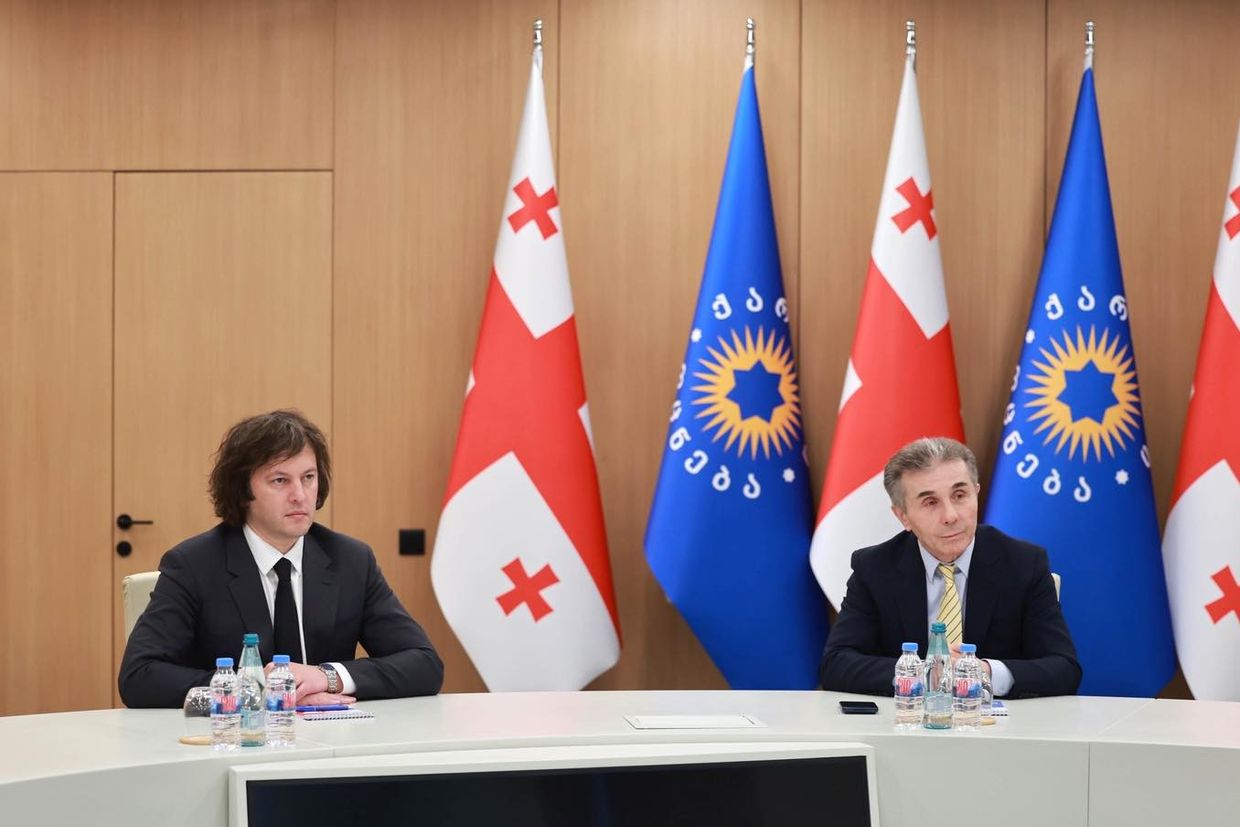
Lawyer Nika Simonishvili, former chair of the Georgian Young Lawyers’ Association (GYLA), argues that the law effectively lets Georgian Dream decide ‘whatever it wants’ to consider a grant and implement subsequent restrictions.
‘Simply put, the [ruling party] is saying that […] if you are politically active and received money from abroad, it will be very easy for them to claim that you used that money for political activity — that it was a grant, that it wasn’t approved by them, and that, for this reason, they can go after you’, he adds.
The amendments allow for violations of the grant law to be punished by imprisonment for up to six years — as well as options for fines or community service.
Evaluating the amendments, Saba Brachveli, a lawyer with the Civil Society Foundation, says that these restrictions and penalties are not even found in the grant laws of countries known for their harsh legislation in this area, such as Azerbaijan or Belarus.
‘It may sound like a cliche, but this is the most dangerous and restrictive law adopted [in Georgia] so far’, he adds, comparing the recent changes to previously adopted restrictive legislation.
Aytan Farhadova
Illustrating the law’s theoretical scope, Brachveli points out that it could cover everything from medication sent to a Georgian citizen by a foreign friend from abroad; books brought into Georgia by a foreign organisation; or a seminar for which a Georgian organisation invites a foreign specialist to the country.
Brachveli also highlights the phrase ‘could be used’ in the provision, meaning that the state could treat a particular resource as unauthorised and initiate punitive proceedings not because of the specific activity stated in a contract or carried out in practice, but simply because the authorities believe it could serve a certain activity.
‘[This] is madness. I don’t know how else to put it’, Brachveli says.
Due to their broad scope, the grant amendments have raised questions about whether they apply to Georgian emigrants — including in the EU and the US — whose remittances in recent years have reached several billion USD annually.
In response, the ruling party has stated that funds sent by emigrants for ‘household purposes’ would not be considered grants. Brachveli, however, does not rule out the possibility that the ruling party could later target these remittances as well — a type of connection between Georgia and foreign countries still not under government control.
‘In autocracies and in states under the control of a single person, you can’t determine when someone will turn against you with a loaded weapon. That’s why this law potentially affects everyone’, he concludes.
Questioning the ruling party — a risk to freedom
Since the disputed October 2024 parliamentary elections, many critics and opponents have refused to recognise or at least questioned the legitimacy of the ruling Georgian Dream party’s government, its parliamentary majority, and the president elected by it.
Against this backdrop, the ruling party introduced a new article to the criminal code prohibiting ‘public and systematic’ actions aimed at ‘establishing the perception of the illegitimacy of Georgia’s constitutional order or constitutional bodies’, if such actions harm or create a ‘real threat’ of harm to ‘Georgia’s interests’.
Penalties include fines, community service, or up to three years imprisonment. The criminal code was also amended to treat a ‘motive of non-recognition of the constitutional order or bodies’ as an aggravating factor, adding one extra year to any sentence if proven.
‘In effect, any statement that questions Georgian Dream’s legitimacy could become grounds for criminal liability’, Simonishvili says. ‘We have never had a law like this before’.
The newly adopted law specifically lists several punishable actions, including systematically and publicly calling for mass violations of the law, widespread disobedience to a government body, the creation of alternative state institutions, or arbitrarily declaring oneself — or someone else — as a representative of the government.
The article also includes one more provision — covering ‘any other public and systematic action by the same person’ — which could potentially be interpreted even more broadly than any specific offence listed.
Mikheil Gvadzabia
‘What falls under this [provision] is really up to imagination’, Simonishvili notes, adding that ‘anyone could fall under it […] it all comes down to how threatening Georgian Dream considers a given statement to be’.
How far can the imagination of those enforcing the law go? Could people be punished simply for publicly and repeatedly emphasising that they do not recognise the legitimacy of the Georgian Dream government?
‘The key factors are systematic nature and publicity. A performance expressed by a single individual, of course, will not be considered a criminal offence’, ruling party MP Archil Gorduladze said while introducing the legislation, claiming the party would draw a ‘clear line’ between freedom of expression and crime.
Brachveli believes that even the lawmakers who passed the amendments may not know who this law will actually apply to, due to its ambiguity.
‘What our parliament has done is create a completely unclear norm, which will be enforced by the executive however it sees fit’, Brachveli notes.
Restrictions on party politics and more
Under additional amendments, the head of any political party that violates the law on political associations by receiving foreign funding will be held criminally liable. This violation is punishable by up to six years in prison, a fine, or community service.
The amendments also established grounds for prohibiting party membership — specifically, anyone employed under a labour contract by an organisation that receives more than 20% of its annual income from a ‘foreign power’ will be barred from being a member of a political party for eight years. The only exceptions are organisations established by a state authority, national sports federations, and blood banks.
Since the majority of Georgia’s civil society organisations have relied on international funding for years, and Georgian Dream’s previous legislations define ‘foreign power’ broadly, the amendments effectively exclude a significant portion of individuals with backgrounds in civil society or the media from the right to engage in party politics.
However, the new restrictions do not apply only to political parties but broader political life. Georgian Dream has also expanded the definition of what — or who — is considered a political actor.
OC Media
The previous legislation recognised the concept of a person or organisation with a ‘declared electoral goal’, meaning that financial and electoral regulations and restrictions established for political parties also applied to individuals and entities who were not officially political parties but sought to gain power through elections.
This term has now been replaced with a person or entity with a ‘declared party-political goal’ defined as: ‘An entity that is not registered as a political party but, by the nature of its activities and public actions, including participation in shaping and exercising citizens’ political will, essentially resembles a party’.
‘You might not even want to run in elections, but if you are politically active, this label could be applied to you’, Simonishvili says, naming the aim of the change ‘to kill and diminish the desire for political activity’.
One more restriction affects entrepreneurs — an entrepreneurial legal entity engaging in ‘public political activities’ unrelated to its core business would be fined ₾20,000 ($7,400). For repeat offences, the criminal penalty for an entrepreneur includes a fine, community service, or up to three years in prison; a further repeat can lead to up to four years, with other options still available.
According to the ruling party, individual entrepreneurs won’t be affected by the law.
Mikheil Gvadzabia
Given the law’s broad definition of public political activity, Simonishvili finds it difficult to say exactly what could trigger penalties for businesses.
‘Anything could be targeted. Not just a public statement, but even a business funding an organisation or media outlet that is undesirable to Georgian Dream’, he adds.
The amendments have been widely lambasted by critics of Georgian Dream both inside and outside the country, including in the EU — whose legislation, the ruling party claims, the changes do not contradict.
Still, there are no exact answers as to against whom — and in what form — the party will apply the amendments.
‘All these laws are written in such a way that no one will ever fully understand what they mean. I think even within Georgian Dream itself they don’t know what exactly is implied. The whole point is simply to use them whenever and however they see fit’, Simonishvili concludes.