After Ilia II’s death, what’s next for the Georgian Orthodox Church?
The Georgian Orthodox Church faces a vacant patriarchal throne, raising urgent questions about succession and change.

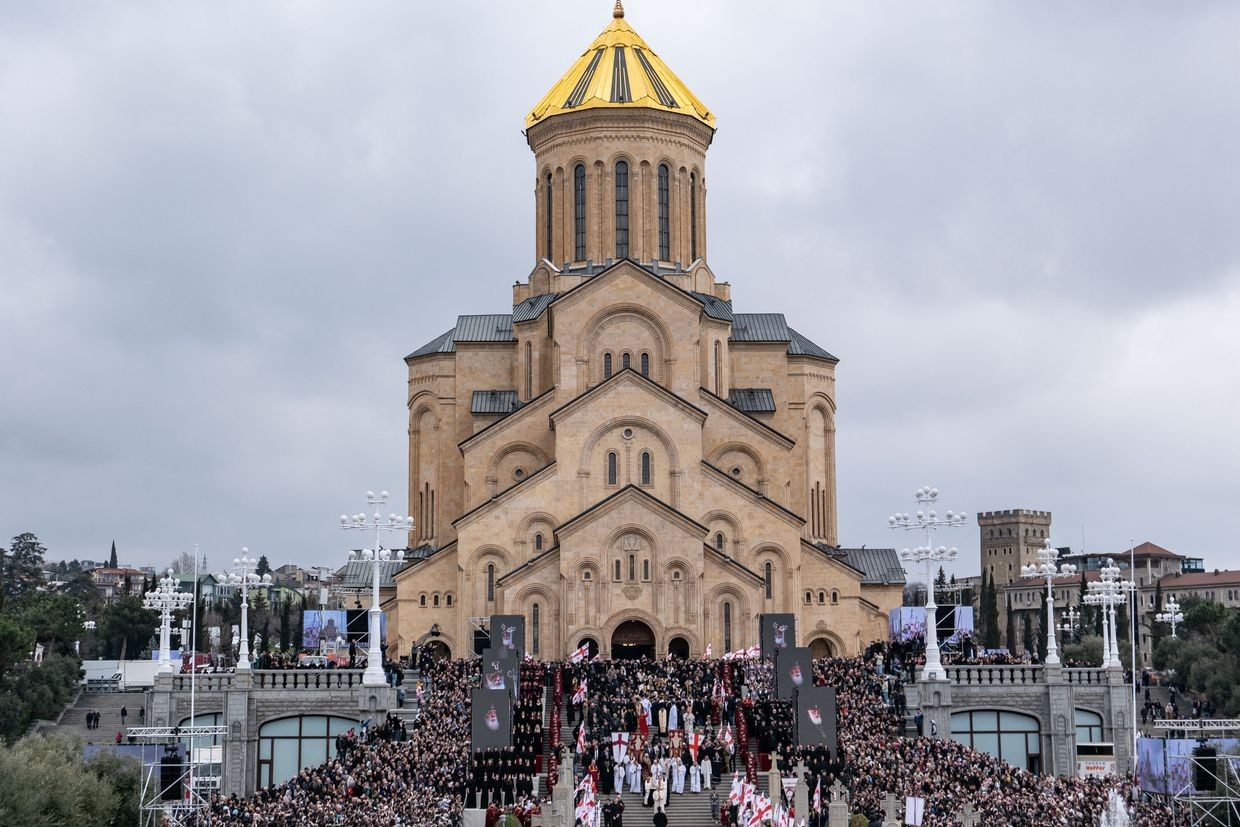
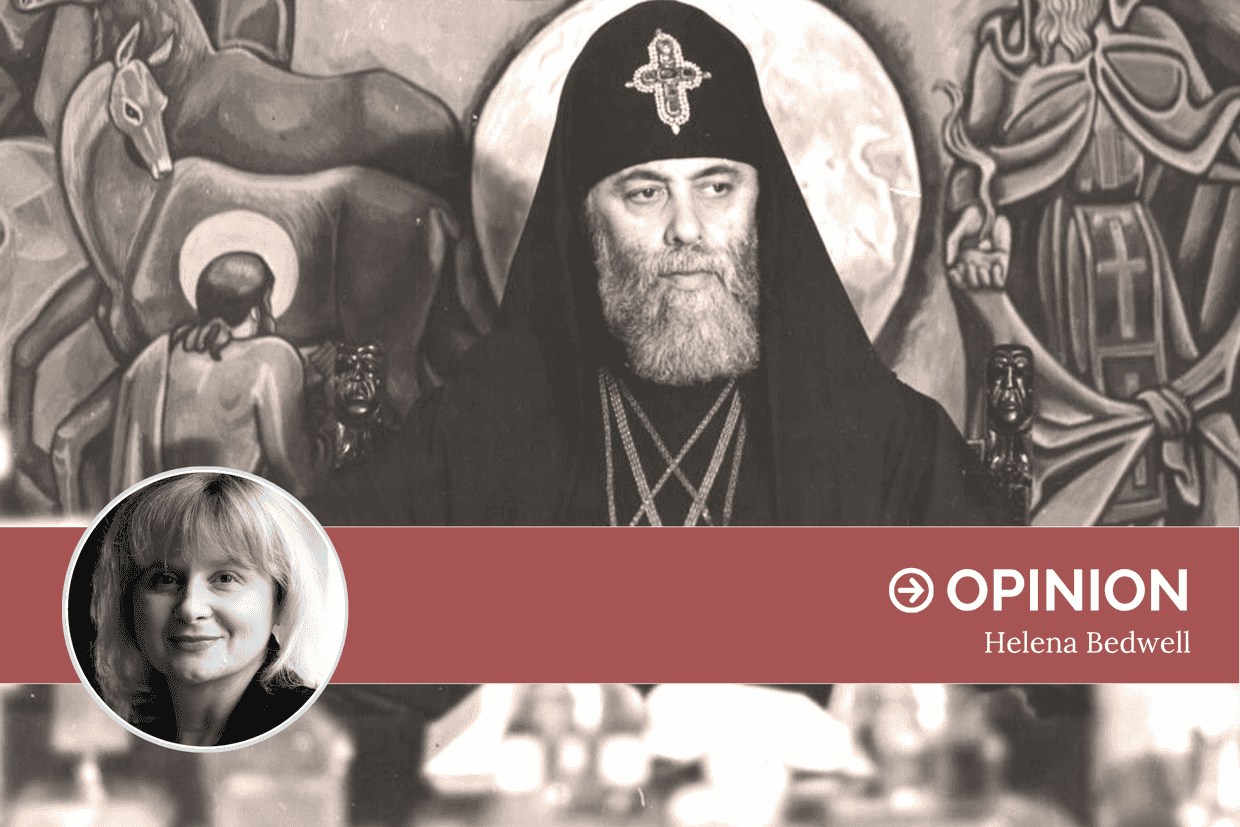
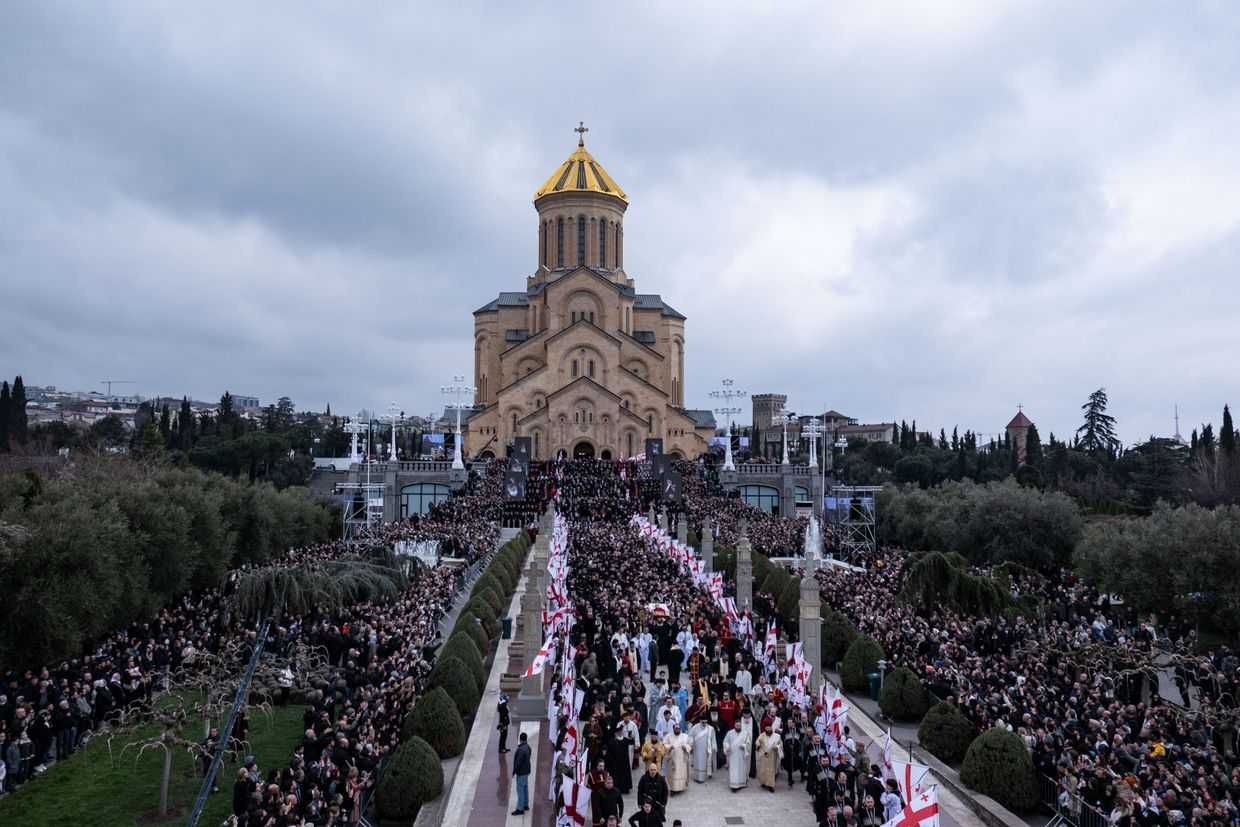
Following the death of Patriarch Ilia II earlier in March, the patriarchal throne of the Georgian Orthodox Church has fallen vacant for the first time in more than 48 years.
Discussions about how a new Patriarch is elected, and what — or more precisely who — will follow Patriarch Ilia II, remained largely beneath the surface during the late Patriarch’s lifetime, constrained by a certain sense of taboo. Now, however, both questions are more pressing than ever.
Although several potential names have been voiced in recent days, most still find it difficult to predict who might emerge from nearly 40 hierarchs, or high-ranking clergy. At the same time, questions are mounting about how the process will unfold and what will, or will not, change following the end of the nearly half-century-long single leadership of the Church.
How will the new Patriarch be elected?
The procedure for electing a Patriarch is set out in the statute on the governance of the Georgian Church, adopted in 1995.
Under its provisions, upon the death or resignation of the Patriarch, ecclesiastical governance passes to the incumbent of the patriarchal throne, or locum tenens, appointed by him. In the present case, this is Metropolitan Shio Mujiri, designated to this role by Ilia II in 2017.
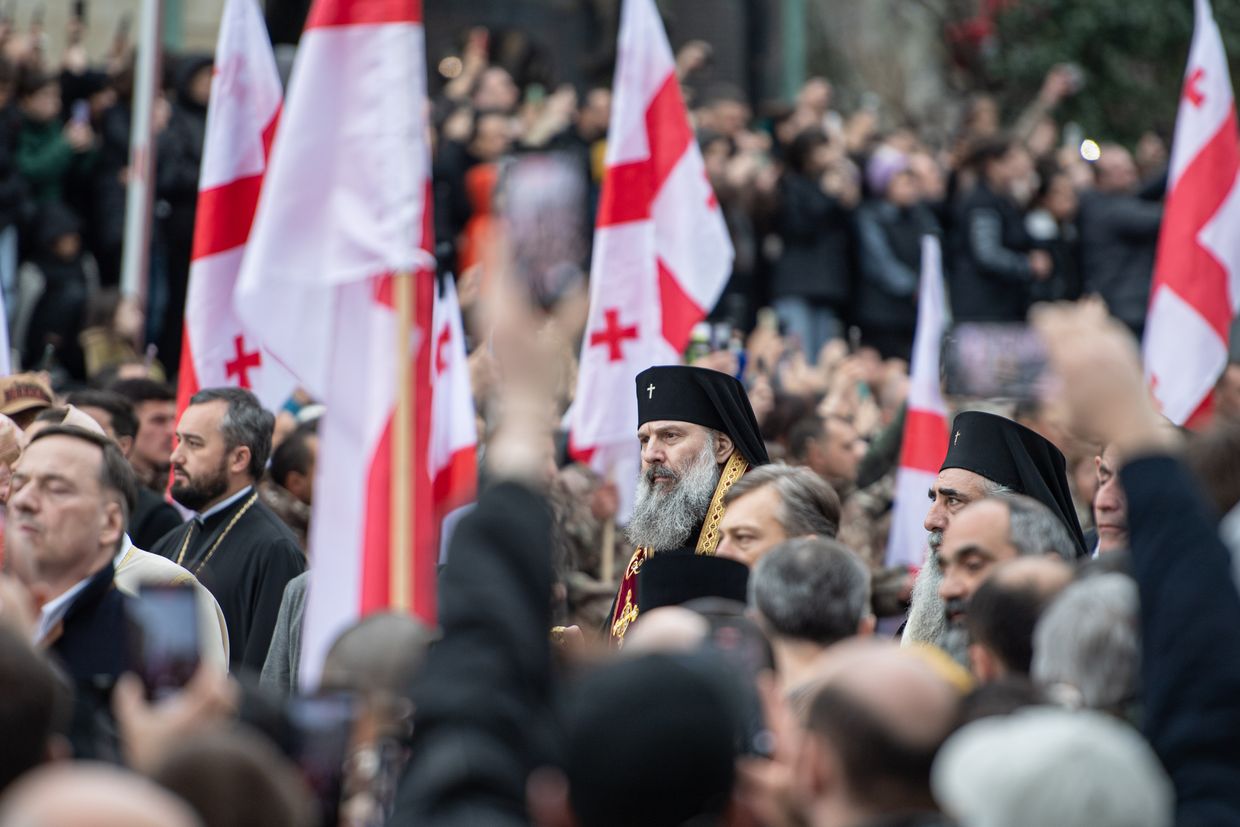
Within a period of 40 days to two months following Ilia II’s death, the incumbent is required to convene an expanded church council, at which the new Patriarch is to be elected.
The process can broadly be divided into two stages.
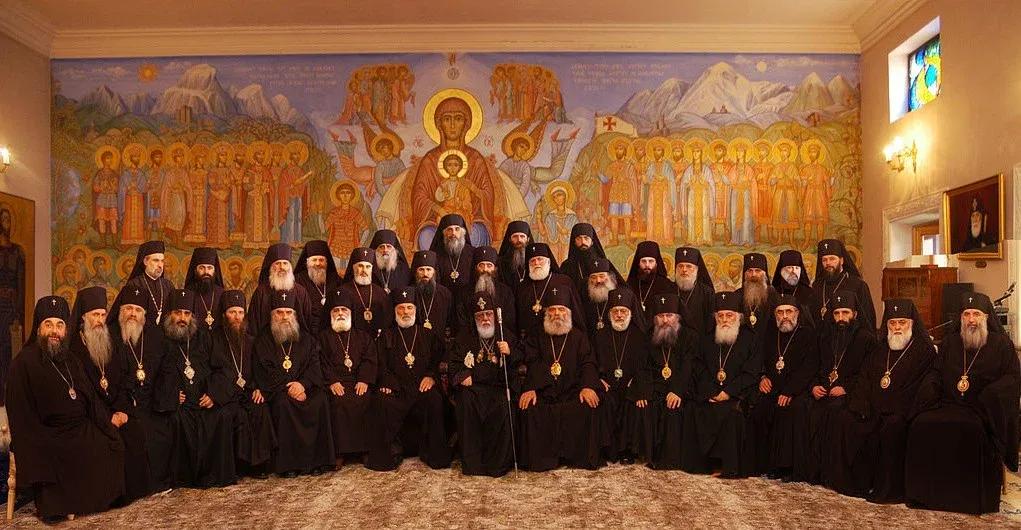
Prior to the convening of this council, the Holy Synod — the Church’s highest governing body, composed of hierarchs — meets to select three candidates from among its ranks, who will then be put to a vote at the expanded council. Each member of the Holy Synod has the right to nominate a candidate, including themselves.
The expanded council is the second and the last stage. It comprises both the hierarchs of the Holy Synod — currently numbering between 39–40 — and representatives from across the Church, including defined numbers of clergy and lay delegates from each diocese, in addition to delegates from monasteries, theological academies, and seminaries. Despite this expansion, however, the right to vote is reserved exclusively for the Holy Synod hierarchs, leaving all other participants with a merely consultative role.
The candidate who secures more than half of the votes is declared the winner. If no candidate achieves this threshold, a second round is held between the two candidates who received the highest number of votes.
Was this how Ilia II was elected?
No — the election of the head of the Church was conducted differently prior to 1995, when the rules were revised under the patriarchate of Ilia II, alongside a number of other changes to the Church’s governance and structure.
Earlier statutes adopted by the Church granted voting rights to lower-ranking clergy and lay participants, and did not restrict by gender either.
‘The expanded council represents the most authentic expression of Church tradition’, theologian Vladimer Narsia tells OC Media, adding that the model involves the ‘full engagement of the Church’s broader ranks in analysing, evaluating, and shaping its affairs and future’.
But then it changed.
‘[Ilia II] was the last Patriarch to be elected by an expanded council,’ theologian Mirian Gamrekelashvili notes, while emphasising the broader scope of voting rights before 1995.
Discussing the reasons behind the change, Gamrekelashvili points to the rise of ‘ultra-conservative’ clergy in the 1990s, who, he says, opposed the previous model and pushed Ilia II to change it, threatening schism — a break from the Church — if it was not revised.
‘So that it would not appear too abrupt, a provision on the “expanded council” was retained’, Gamrekelashvili adds, suggesting that while the term remains in the current statute, its substance has been significantly reduced.
The 1995 statute also introduced eligibility criteria for the Patriarchate, including that the candidate must have previously been tonsured as a monk and be ‘ethnically Georgian’.
The future Patriarch — ‘brother’, not ‘father’
After the Patriarch’s death, questions have emerged over whether his successor could command the same level of public trust as Ilia II — described by Gamrekelashvili as a ‘mythic figure’ towards whom criticism remained taboo for years.
A separate question is whether any future Patriarch will be able to command the same level of authority within the Church as his predecessor.
Some members of the Holy Synod are well known to the public for their political views, wealth, or in some cases, a history of harsh public altercations. Others, however, are barely known outside their own dioceses.
‘Forty-nine years is an immense period — an entire era’, theologian Shota Kintsurashvili tells OC Media.
‘Whole generations, from deacons to bishops, have effectively stood under [Ilia II’s] omophorion [vestment], having been shaped by his ecclesiastical policy’, he adds.
This is clearly reflected in the composition of the Holy Synod: all of its current members, without exception, received their highest clerical ranks — whether as metropolitans, bishops, or archbishops — during the patriarchate of Ilia II.
The issue also extends to the model of governance itself: one sharply centralised under Ilia II and, in Kintsurashvili’s words, marked by ‘monarchical elements’, which made the entire structure and composition of the Church — across virtually all aspects of ecclesiastical life — dependent on the Patriarch.
Even so, some Holy Synod members have openly suggested change is coming:
‘The Patriarch was a father to us all; we were all his children. Now, whoever becomes the next Patriarch will be one chosen from among the brothers, from among the children themselves’, Metropolitan Anton Bulukhia told TV Pirveli, later clarifying in an interview with Formula that the biggest difference is in being told no from Ilia II just once as compared to being on equal footing with brothers, where there is less of a sense of deference.
Another metropolitan, Nikoloz Pachuashvili, has gone even further, voicing the idea that no one should sit on Ilia II’s throne even after his successor is elected.
‘That throne should be left to him — including during Synod meetings — and it should be understood that the Patriarch is present there. He will remain our Patriarch,’ he said.
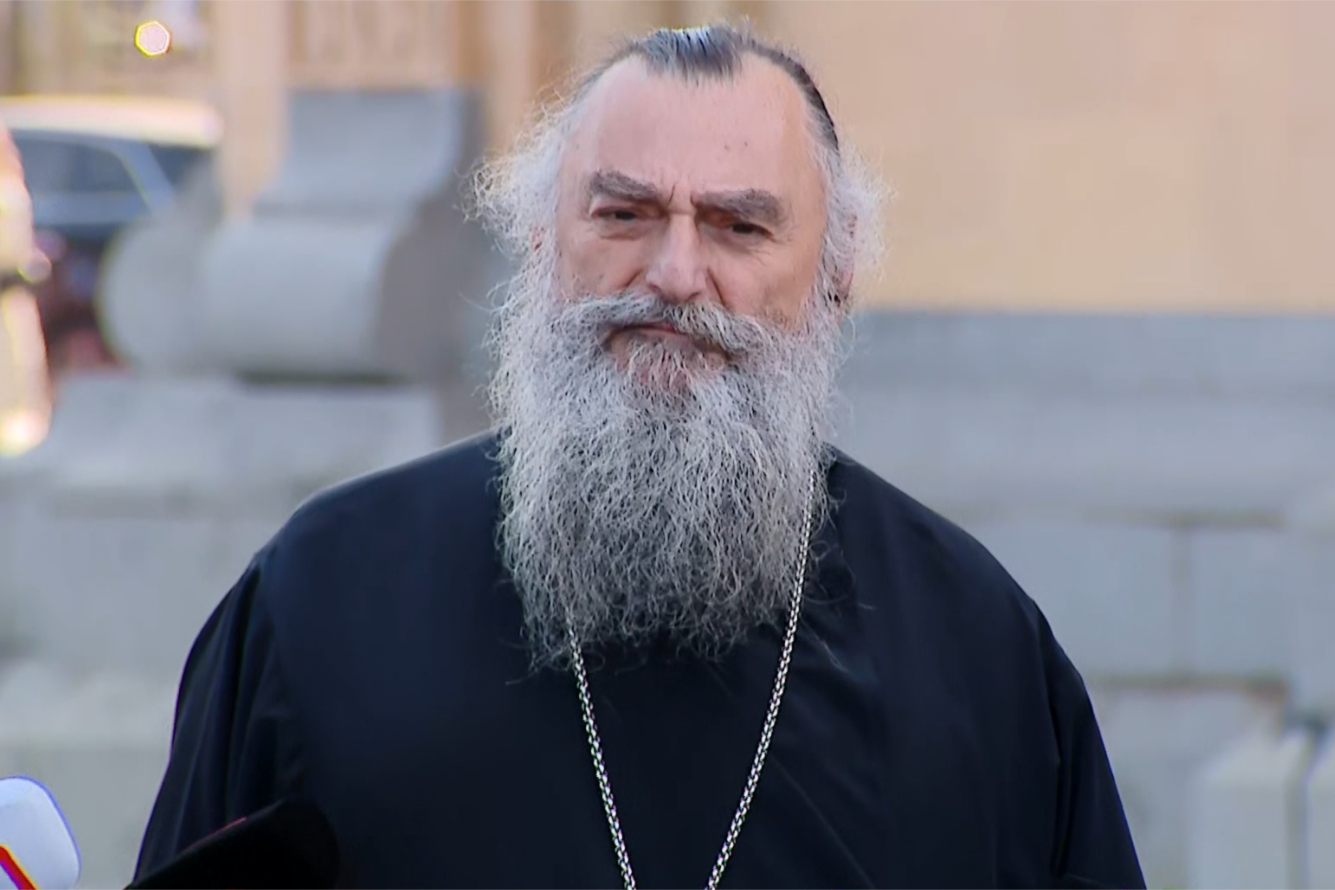
In recent days, Pachuashvili has also been among the most vocal proponents of another idea that emerged shortly after Ilia II’s death: that he should be canonised as a saint.
Separately, Tabula’s editor-in-chief, Levan Sutidze, who is well-versed in ecclesiastical matters, believes increased dissent within the Holy Synod is to be expected, even if a pro-government figure comes to power.
‘There will inevitably be voices and opposition within the Synod, regardless of who is elected. And that these voices and this opposition will become more public is also inevitable’, he said in an interview with RFE/RL.
This will take place against a backdrop of long-standing challenges facing the Church, extending beyond publicly exposed scandals and both internal and external political dynamics.
‘There are a number of issues to which the Georgian Church has yet to provide consistent answers’, Kintsurashvili notes.
‘Today is a different world. The age of authority sustained by inertia is over. Society today is far more critical and free than it was in the Soviet era and in post-Soviet Georgia’.
Shio Mujiri: the controversial man in charge
When Metropolitan Shio Mujiri was appointed locum tenens in November 2017, the then 48-year-old cleric was relatively unknown to the wider public.
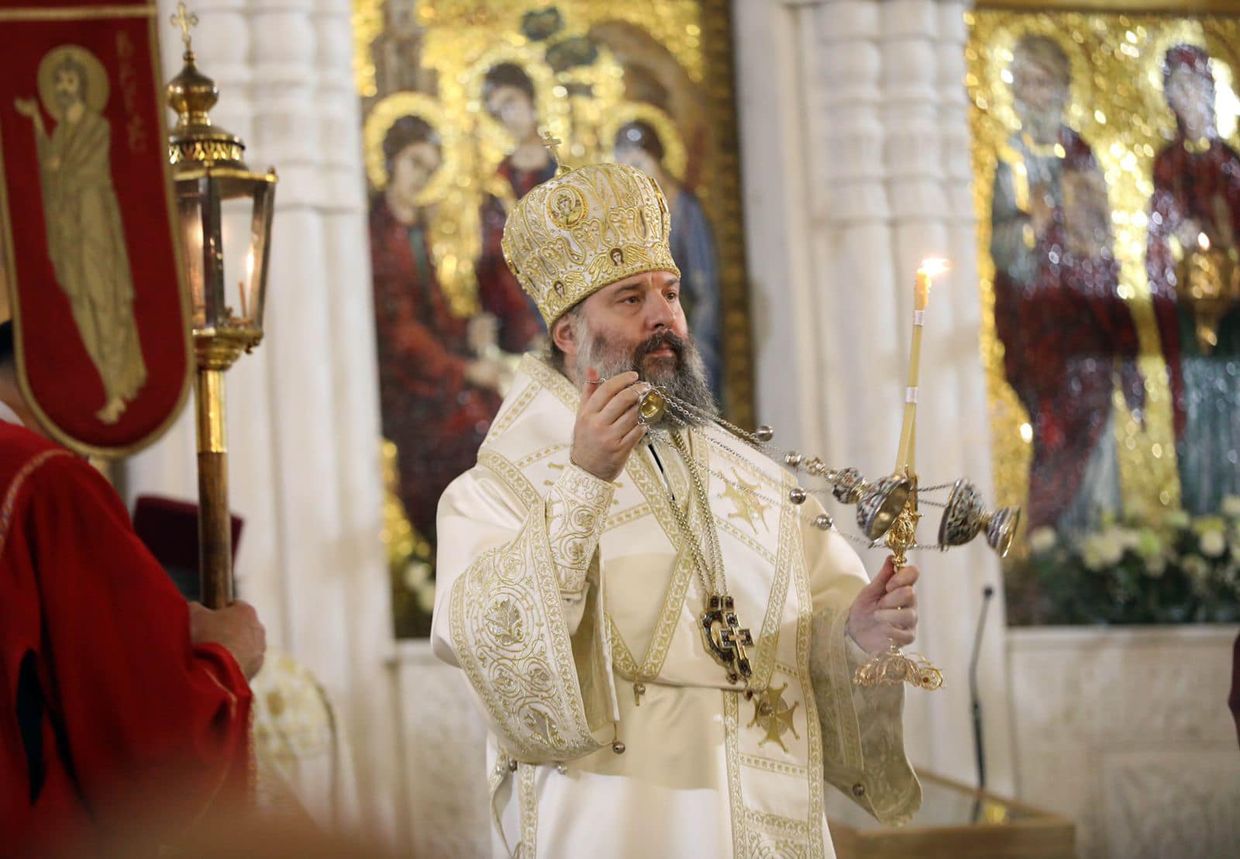
In the years that followed, Mujiri’s visibility — and, in the view of observers, his influence over internal Patriarchate affairs — grew, against the backdrop of a marked decline in Ilia II’s health.
Some observers argue that during this period, Mujiri built what Narsia describes as ‘parallel structures’ to strengthen the group gathered around him.
‘It seemed as though he had the ambition to replace the group that had previously held influence within the Patriarchate, led by Shorena Tetruashvili and others’, Narsia says, referring to Ilia II’s secretary, Tetruashvili, whose alleged internal influence has long been the subject of speculation.
Mujiri’s perceived lack of involvement in the internal scandals that had increasingly affected the Church were among the reasons cited for his selection. However, he later faced allegations over issues often defining Church-related controversies, including its ties to the political authorities and possible influence from the Kremlin-aligned Russian Orthodox Church.
One line of speculation centres on the timing of his appointment, announced just three weeks after a visit to Tbilisi by Hilarion Alfeyev, a representative of Russian Patriarch Kirill. Alfeyev’s meeting with Ilia II raised questions over whether the decision was free from external pressure, claims the Patriarchate rejected.
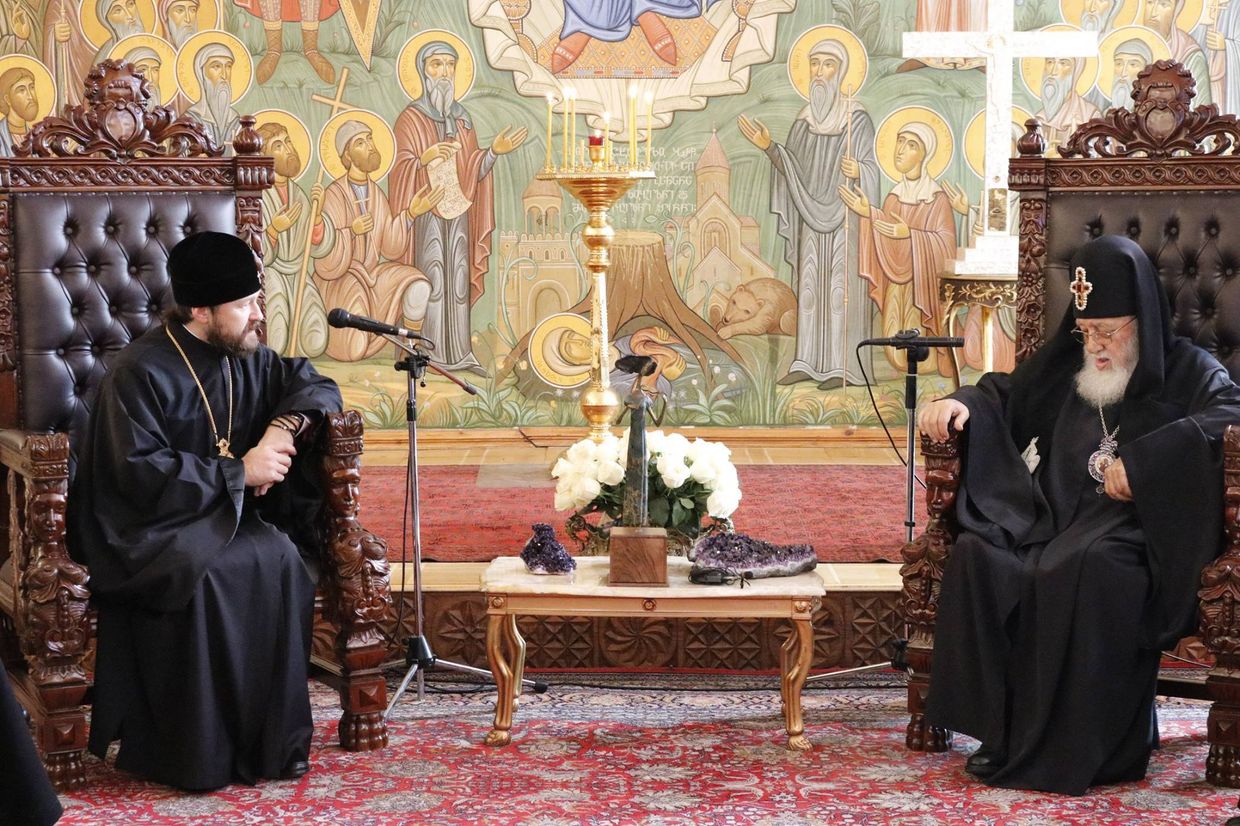
Allegations against Mujiri and his alleged circle intensified amidst Georgia’s democratic backsliding, which critics have linked to the ruling Georgian Dream’s shift towards Russia.
In April 2024, the Patriarchate’s public relations office issued a statement effectively supporting the then-pending foreign agents law — branded by critics as the ‘Russian law’. The Church’s PR office is often seen as aligned with Mujiri’s circle and operates separately from the Patriarchate’s official social media page.
Comparing Ilia II and Mujiri, Gamrekelashvili notes that the former tended to play ‘a balancing, mediating role, even in the political context.’
‘[Ilia II] cooperated with governments while maintaining at least symbolic channels of communication with the opposition’, he adds, claiming that Mujiri ‘has no such diplomacy at all’ and stating that Mujiri’s team had been ‘giving up the Church’s sovereignty’.
Allegations against Mujiri and his circle erupted into open confrontation in late 2025, when some priests supporting the anti-government movement publicly condemned him. One, Archimandrite Ilia Toloraia, called him an ‘exarch’ — a term for a representative appointed by the Russian Church. Toloraia, alongside another archimandrite, Dorote Kurashvili, was later suspended from clerical duties.
 Mikheil Gvadzabia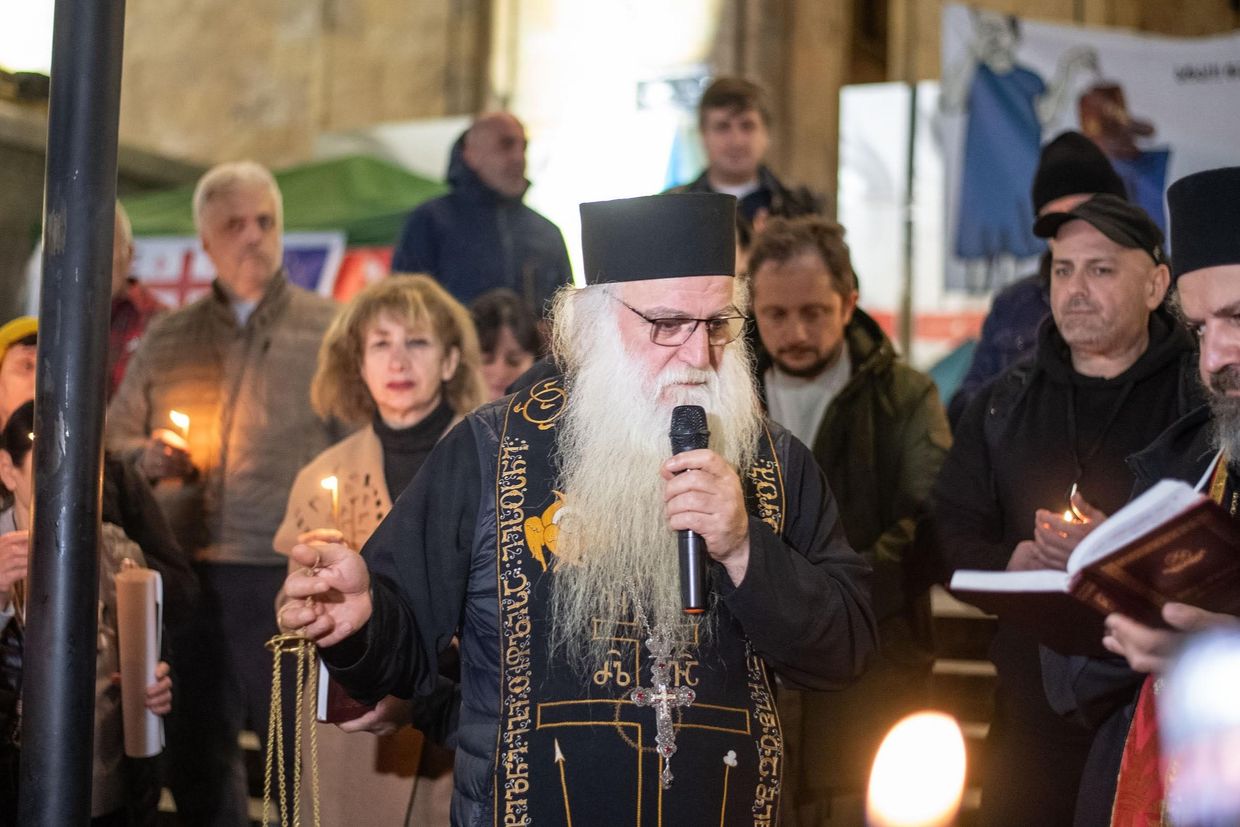
Are there any clear frontrunners?
It’s hard to say. While some interpreted Ilia II’s selection of Mujiri during his lifetime as naming him a successor, serving as locum tenens canonically does not automatically make a cleric the next Patriarch or give them any advantage in the race.
Expectations suggest Mujiri could be one of three candidates, but there are no clear public indicators of his chances. Tabula editor-in-chief Levan Sutidze noted that his sources have not yet confirmed that Mujiri has gathered the necessary votes for a win.
‘Within the Synod, this person failed to win the sympathy of his colleagues. What exactly prevents this is hard to say’, Gamrekelashvili adds, citing one possible reason as Mujiri’s ‘kind of coarseness and lack of diplomacy’.
Speaking about possible candidates, Gamrekelashvili notes that Ilia II’s prolonged period of poor health ‘gave all potential candidates plenty of time to think about the future’, and accordingly, ‘any high-ranking hierarch may have the desire and claim to the patriarchate’.
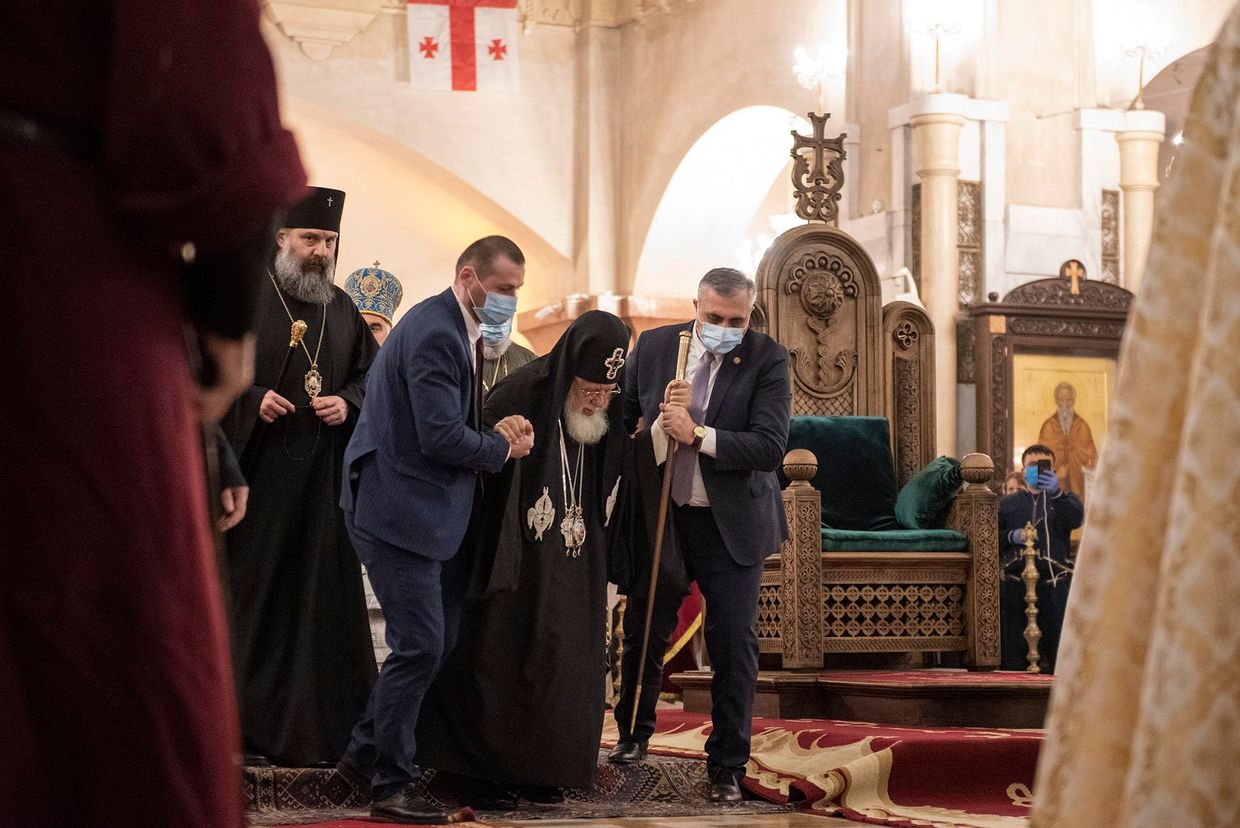
What is certain is that at least nine members of the Holy Synod cannot be nominated, as they are over 70 — the upper age limit for candidacy, with 40 set as the lower threshold.
There is also the question of the internal mood of the Church.
Narsia, who firmly believes that a large part of the hierarchy sees the West as the ‘main threat and enemy’, considers that this mindset will also determine the fate of the vote.
‘They would accept [even] an openly pro-Russian scenario, where someone comes and tells them: “This candidate suits Russia, or else your Church could be fundamentally changed by some Western powers” ’, Narsia says, noting that ‘this propaganda has worked for a long time’, and that critical voices are limited to ‘a handful of people’.
He believes that the Georgian Church in its current form was ‘shaped during the Soviet era’, when its ‘essential task and purpose was to serve the Soviet system’.
‘This Church was inherited with inertia by Catholicos-Patriarch Ilia, and that inertia has not slowed down’, he notes.
OC Media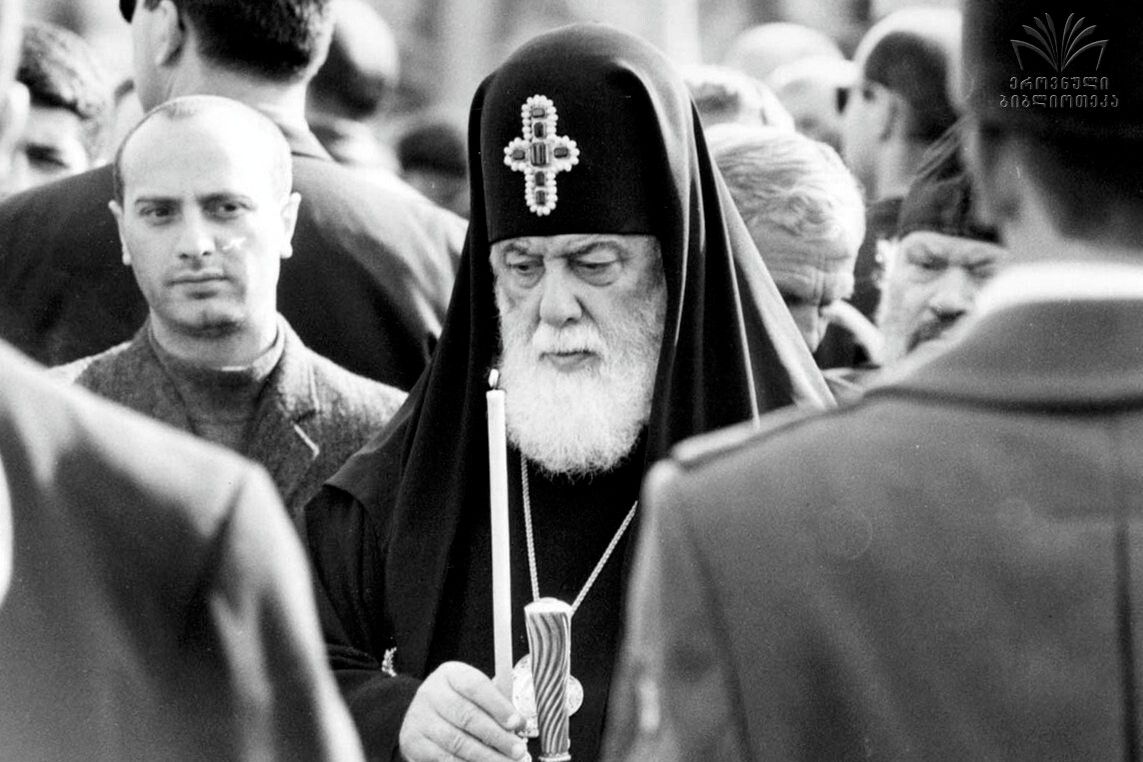
Although Kintsurashvili agrees that part of today’s clergy was shaped during the Soviet Russian times, he emphasises that the Holy Synod includes ‘bishops with different viewpoints’ and ‘many of their members are not particularly favourable toward either the [current] authorities or Russia’.
‘It is very difficult to assess the bishops, because in the Georgian Church […] we neither know their writings, nor is any of them a theologian-author, [almost] none of them write. We only know a number of sermons, and you cannot discern [their views] from the sermons’, he adds.
When discussing what will guide votes, Kintsurashvili does not rule out that their choice may settle on a ‘transitional era’ candidate — that is, a relatively older candidate who will not remain on the throne for decades and will also maintain a degree of ‘stability’:
‘There are bishops who want to maintain their current positions and are neither willing nor prepared for certain painful changes’.
Another question is whether members of the Holy Synod will be fully free in their decision-making. Concerns about possible government interference in the selection of the next Patriarch are not new, and were notably reinforced by data allegedly leaked from the State Security Service (SSG) back in 2021.
Just hours after the death of Ilia II, Metropolitan Zenon Iarajuli publicly urged the authorities ‘not to allow themselves to interfere in the Church’s internal election.’ He added that, to his knowledge, the state was unlikely to intervene, though his warning nonetheless stood out.
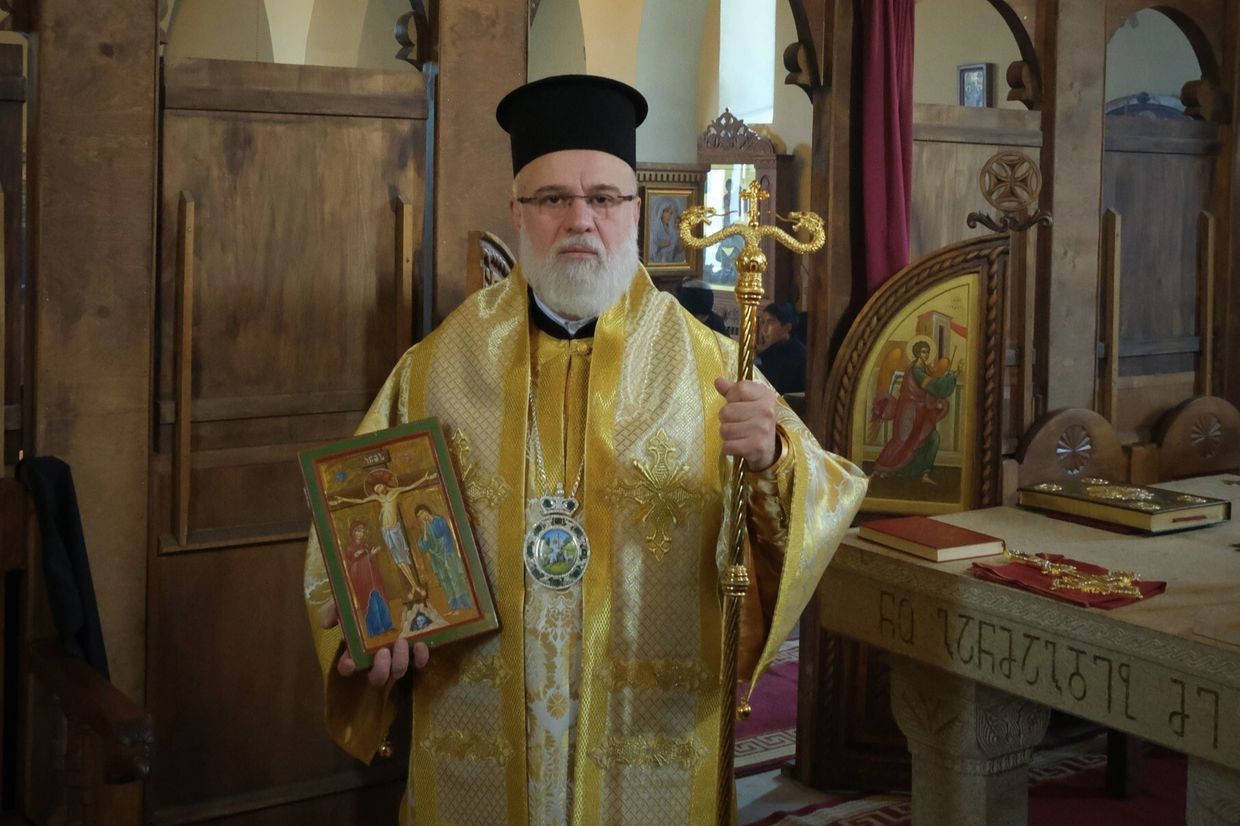
While ruling party leaders have avoided openly backing any metropolitan, pro-government TV host Gia Gachechiladze drew attention by claiming on air that Ilia II had effectively named Mujiri as his successor, and that any hierarch who does not withdraw in his favour would be a ‘traitor’.
‘The government has the means to approach each bishop and tell them: if you don’t step aside and withdraw from the contest, we will go ahead and make something [negative] public about you’, Gamrekelashvili says while assessing the state pressure possibilities.