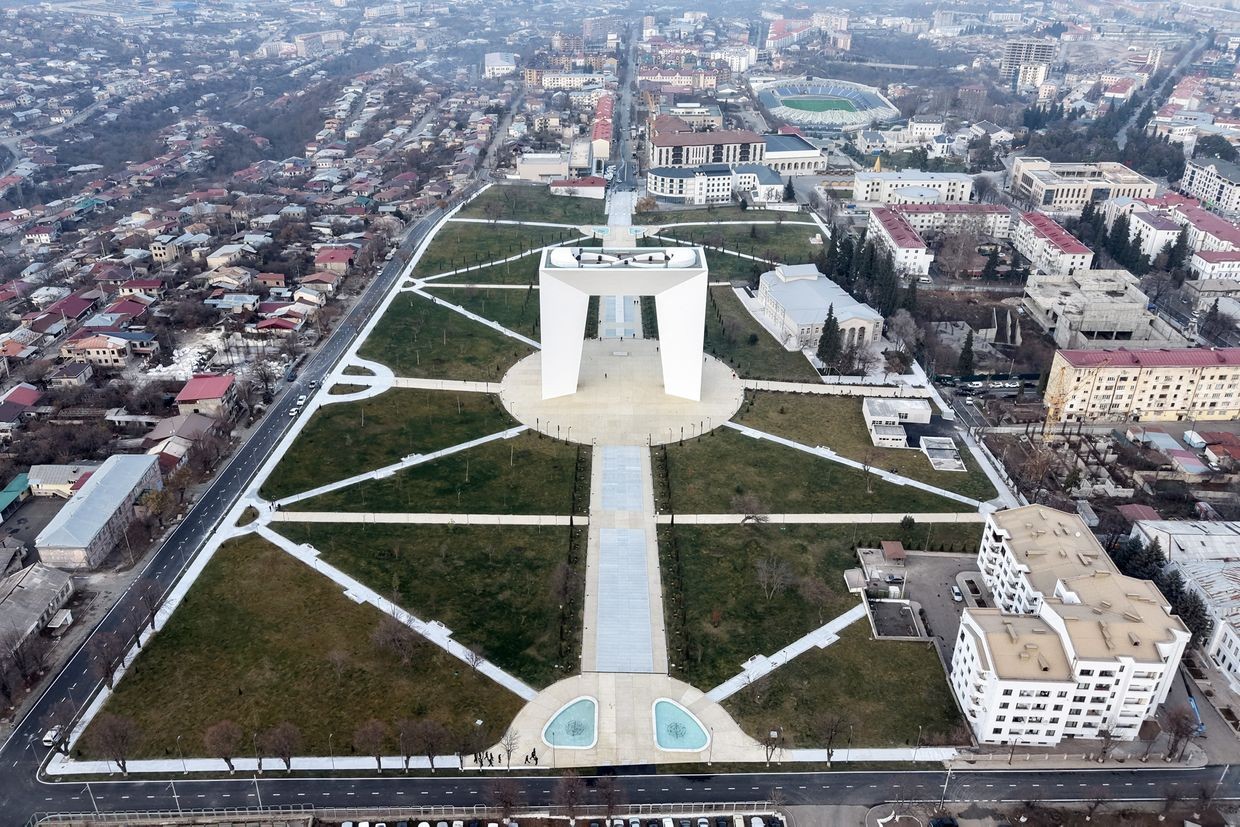
Azerbaijani President Ilham Aliyev presided over the inauguration of a new ‘Victory Park’ in Stepanakert, Nagorno-Karabakh, on Wednesday. The park commemorates both Azerbaijan’s victory in the Second Nagorno-Karabakh War in 2020 and the final offensive in 2023 that resulted in the exodus of virtually the entire Armenian population of the region.
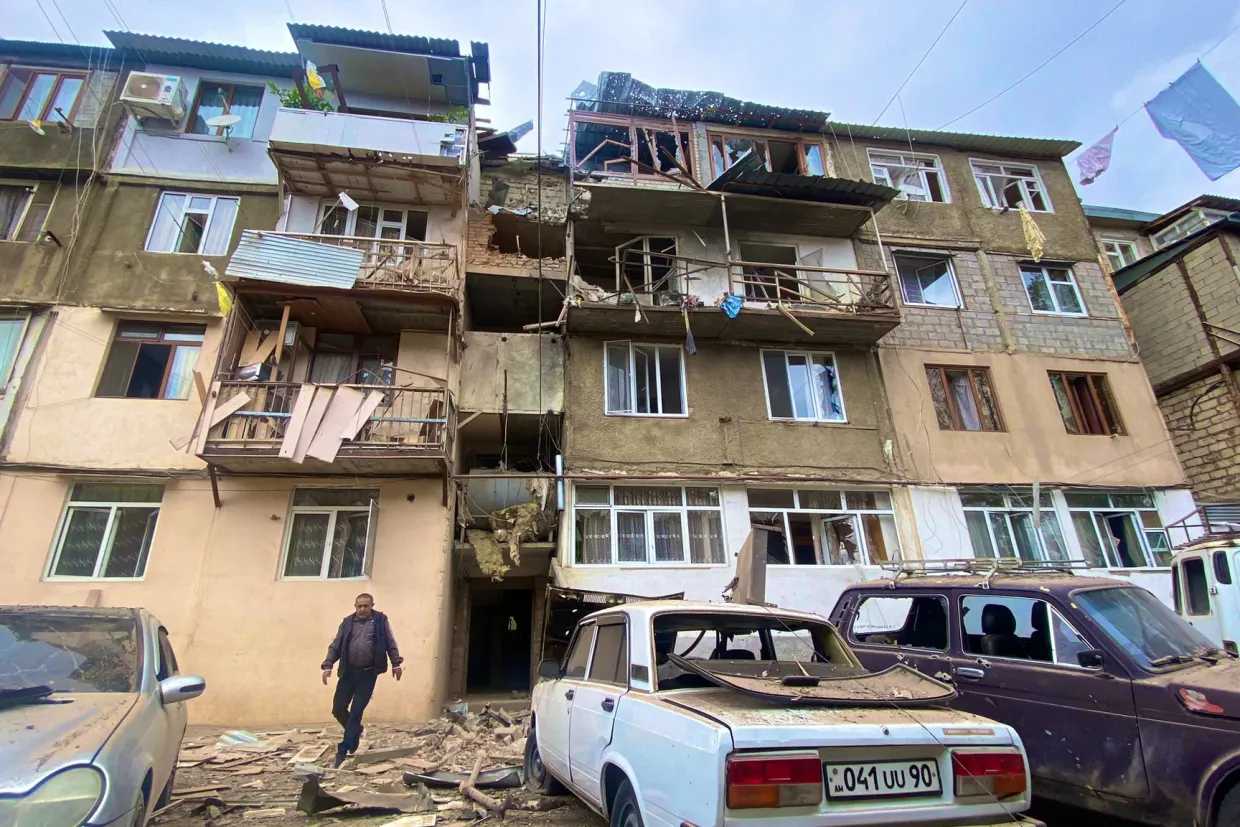
Stepanakert, as well as the wider region, has undergone major changes since Azerbaijan took full control over Nagorno-Karabakh, demolishing residential areas and former government buildings.
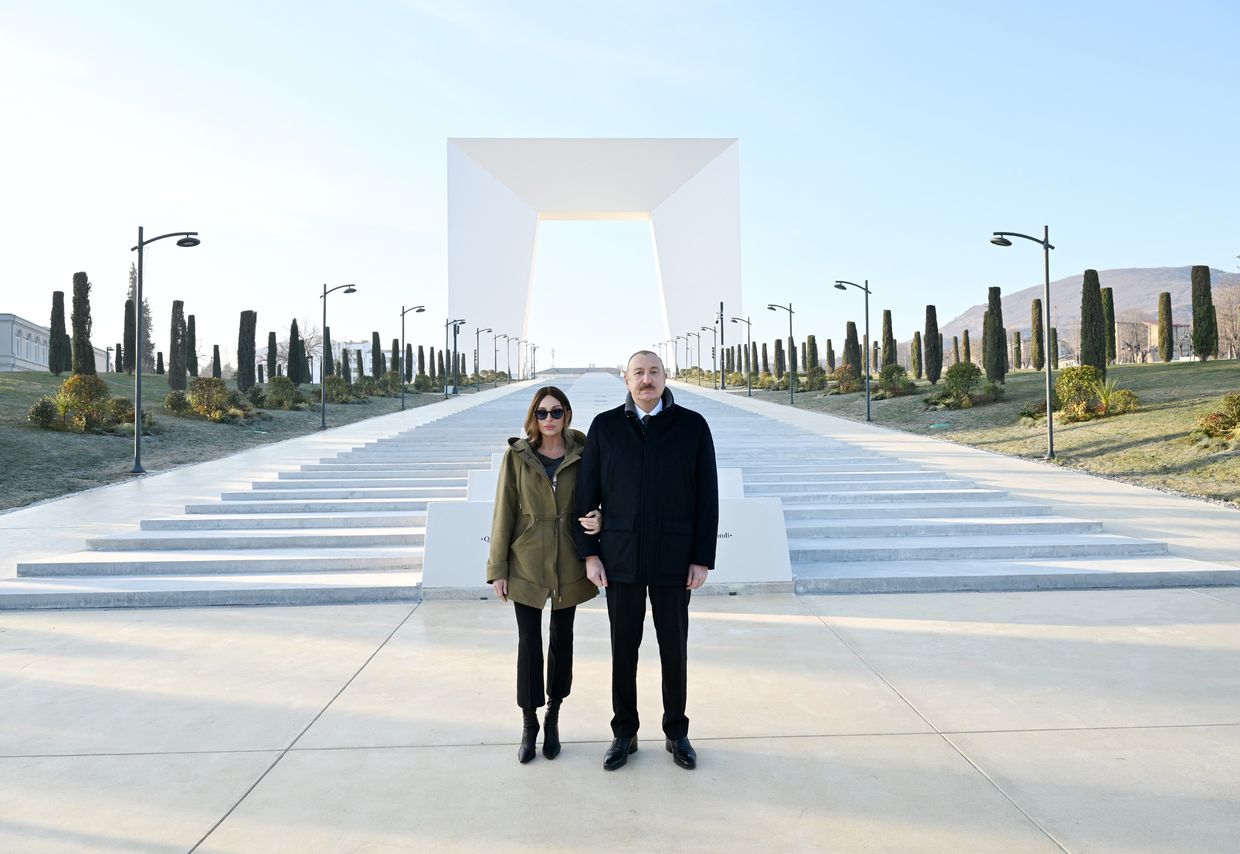
The park is situated across nine hectares in Stepanakert, and ‘features 44 steps leading from the entrance to the Victory Arch, symbolising the 44 days’ of the Second Nagorno-Karabakh War, Azerbaijan’s presidential website wrote.
The arch is also 44 meters tall, and consists of ‘10 floors and a terrace’, one of which contains an exhibition hall. Leading up to it are details about the war and 2023 offensive.
The presidential website wrote that the establishment of the park ‘holds profound significance’.
The opening of the park coincides with Aliyev’s 64th birthday.
 Yousef Bardouka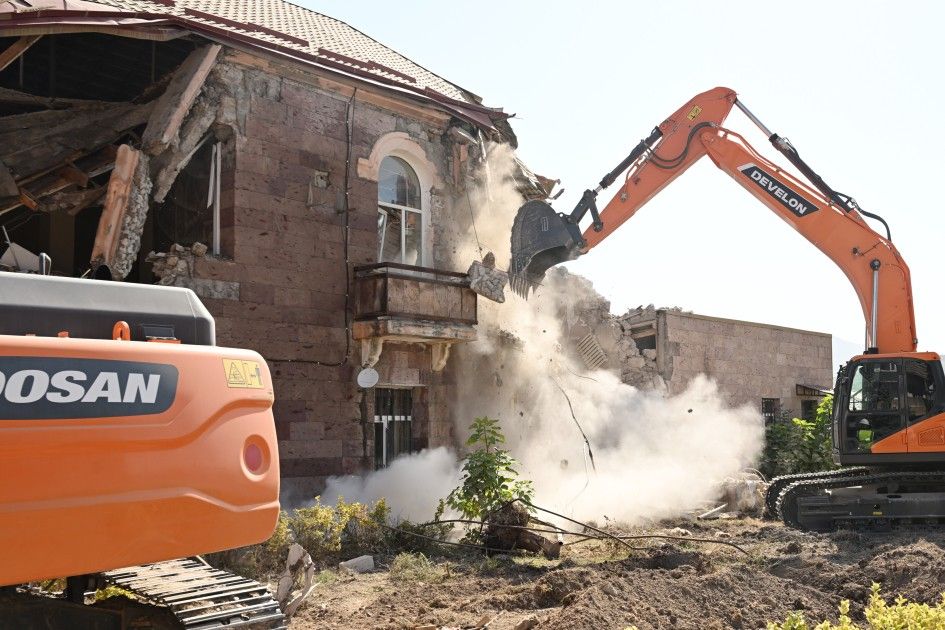
The park is located in an area of the city where the historical neighbourhood, dating back to the 19–20th century, had previously been located.
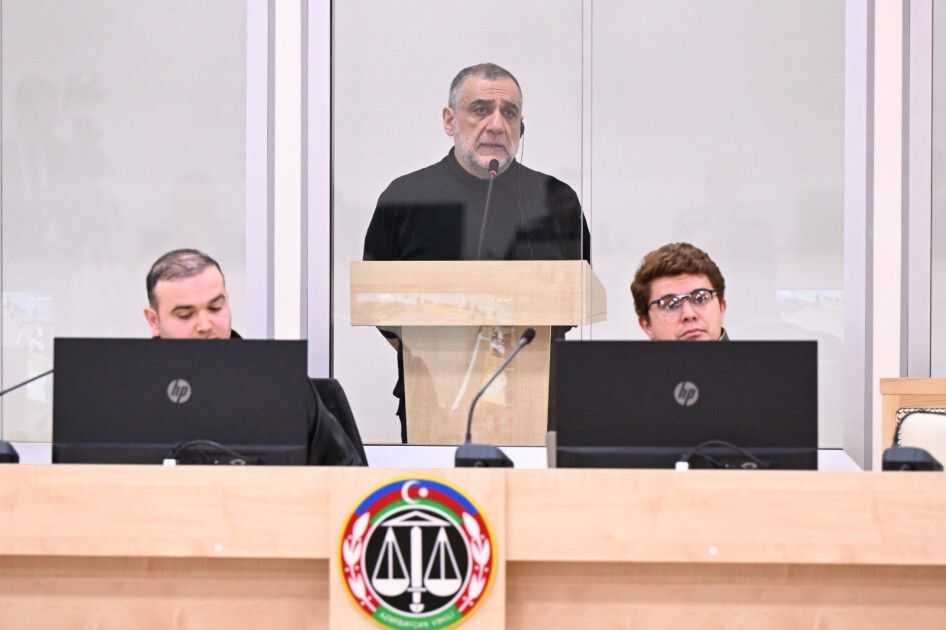
Marut Vanyan, an Armenian journalist originally from Stepanakert, told OC Media that the neighbourhood was home to several officials and high-ranking military officers, including David Babayan, a former Nagorno-Karabakh Foreign Minister and presidential adviser who is currently on trial in Baku.
‘The monument is located in the city square, where the president’s office was located’, he told OC Media.
Footage of its destruction surfaced in October 2024, months before the construction of the park was launched.
The complex is the latest installation created by Baku to commemorate the decades-long conflict between Armenia and Azerbaijan.
In 2021, the Azerbaijani government opened a controversial complex also celebrating the country’s victory in the Second Nagorno-Karabakh War called the ‘Military Trophy Park’.
Installations at the park, which included the bloody helmets actually worn by fallen Armenian soldiers, have been widely criticised for containing dehumanising imagery.
For ease of reading, we choose not to use qualifiers such as ‘de facto’, ‘unrecognised’, or ‘partially recognised’ when discussing institutions or political positions within Abkhazia, Nagorno-Karabakh, and South Ossetia. This does not imply a position on their status.
Javid Agha
This article was translated into Russian and republished by our partner SOVA.