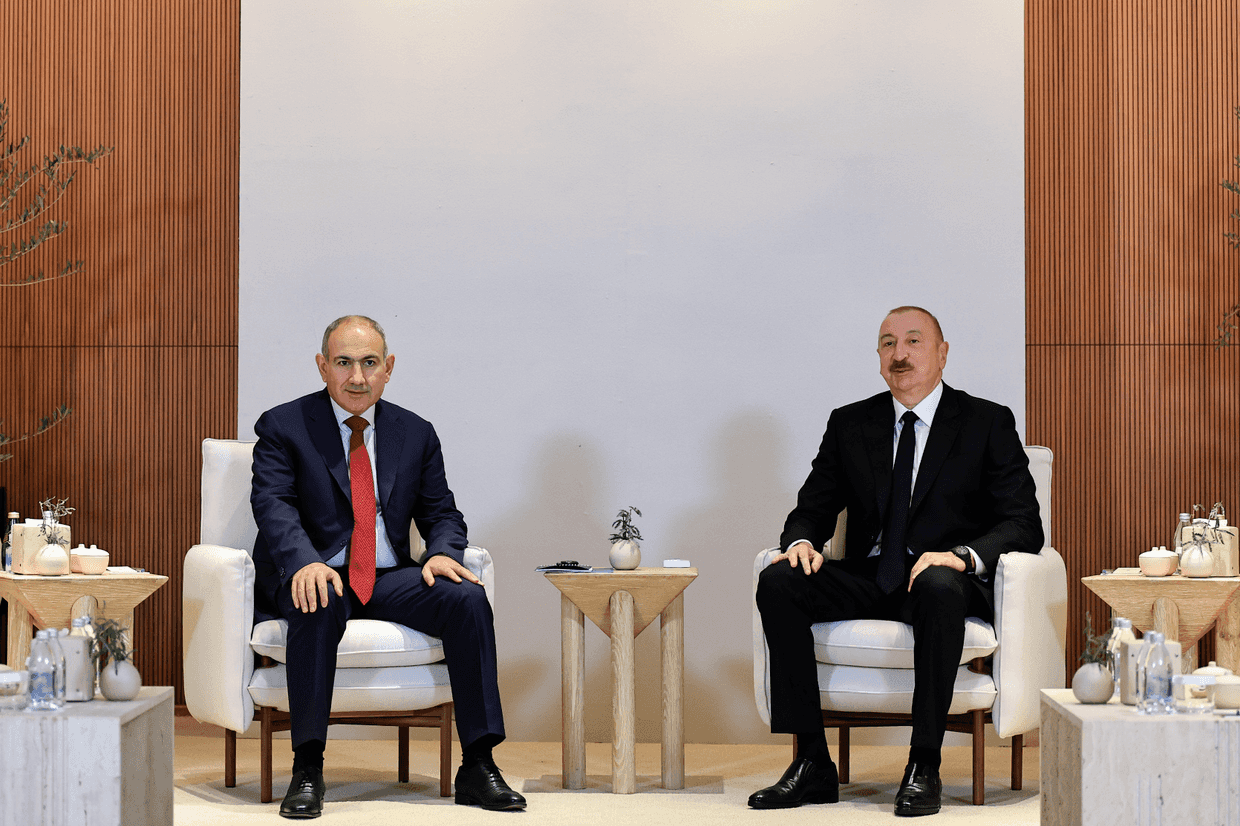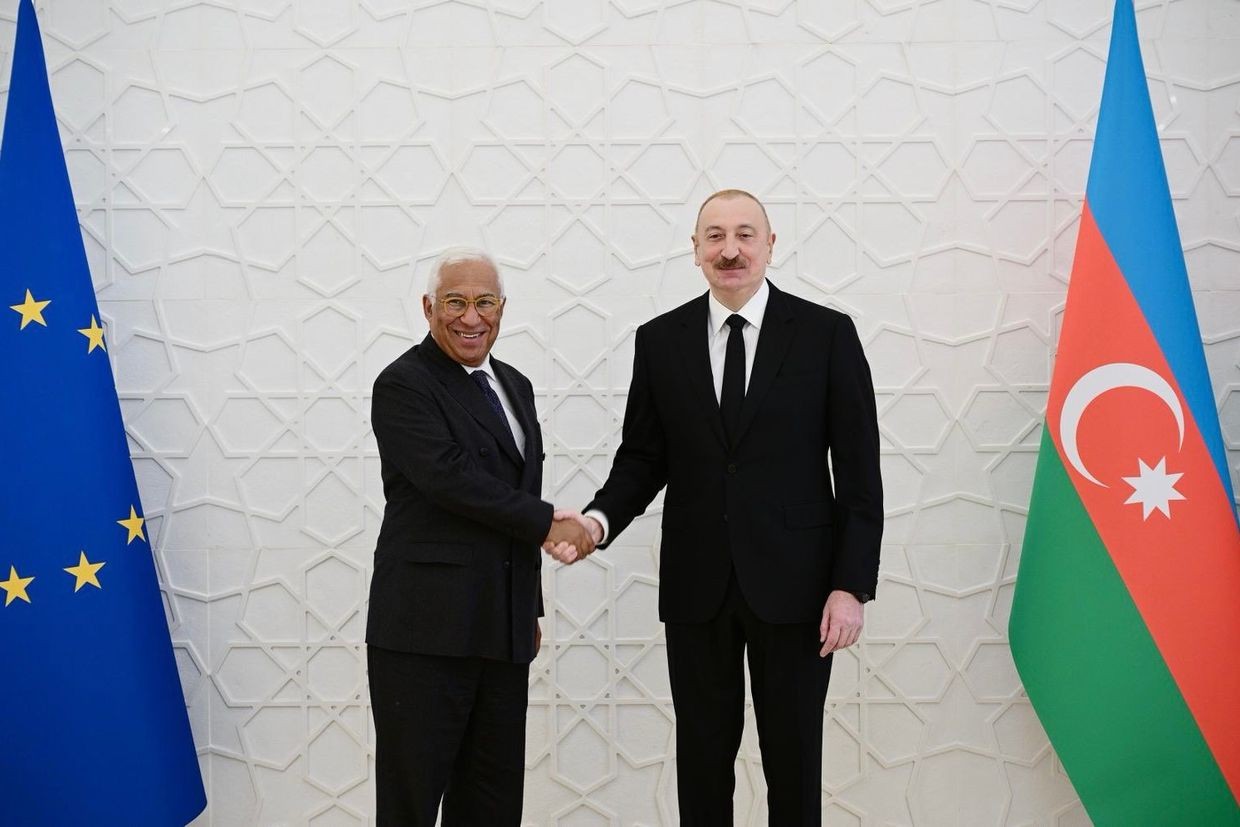
Azerbaijani President Ilham Aliyev met with European Council President António Costa on Wednesday as part of an official visit. The two leaders released a joint 15-point statement on the talks, highlighting Azerbaijan–EU cooperation and the EU’s solidarity with Azerbaijan amidst regional tension spilling over from the war in Iran. There was no mention, however, of Azerbaijan’s human rights situation, even in Costa’s separate comments.
The joint statement covered a range of areas of cooperation, particularly energy and Azerbaijan’s role as key conduit in the middle corridor.
In addition, the readout noted that Costa and the EU at large praised the peace process between Armenia and Azerbaijan, as well as the reconstruction in Nagorno-Karabakh and nearby areas damaged by the conflict.
The two leaders also discussed the two wars currently raging in the region — Russia’s full-scale invasion of Ukraine and the war in Iran — although there were no details provided as to what this discussion entailed.
In a separate message shared on Twitter, Costa thanked Aliyev for his ‘warm welcome to Baku’, and said the ‘EU stands in full solidarity with you and your people, as the dangerous military escalation in Iran and the Middle East risks having a direct impact on Azerbaijan’.
‘With rising global tensions and instability, strengthening ties between us is more important than ever’.
There was no mention of Azerbaijan’s human rights situation in Costa’s message, nor any indication he had raised the issue during their talks.
However, human rights issues are rarely mentioned by EU leaders during talks with Azerbaijan, including during a visit by the EU’s top diplomat Kaja Kallas in 2025.
As the EU seeks to fully end its dependence on Russian fossil fuels, it has increasingly turned to Azerbaijan, a move that critics argue has strengthened Aliyev’s hand and reduced the EU’s leverage regarding human rights in the country.
 OC Media