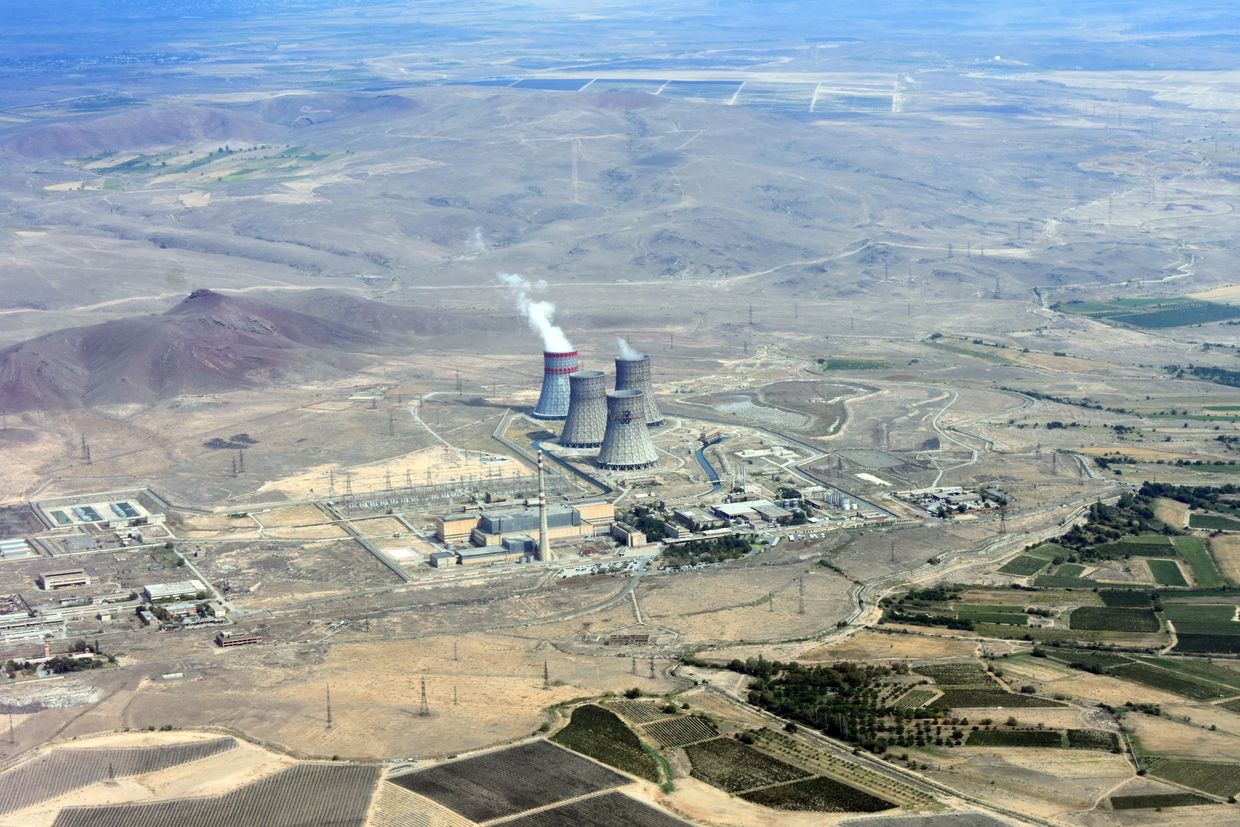
Armenian Prime Minister Nikol Pashinyan has said the operation of the Metsamor nuclear power plant (NPP) could be extended until 2046, following a previously approved extension until 2036. He added that the Armenian government should use this period to make decisions regarding the construction of a new NPP.
The remarks were made on Wednesday during a Q&A session between the Armenian government and parliament.
Armenia signed a contract with the Russian state nuclear agency Rosatom in December 2023 to extend the operation of Metsamor NPP Reactor 2 until 2036. This marked the reactor’s second extension, after which Pashinyan said its operation could potentially be extended for an additional 10 years until 2046.
 Arshaluys Barseghyan
During this period, the Armenian government will need to make decisions regarding the construction of a new NPP, having already relevant discussions with five countries — Russia, the US, France, China, and South Korea.
‘This is a decision of crucial strategic importance. When making a decision, we must be certain which proposal best meets the interests of Armenia’, Pashinyan said on Wednesday.
He also stressed the importance of conducting a thorough and accurate study of the nuclear energy market. While noting that electricity from the Metsamor NPP currently has the lowest tariff in Armenia’s energy system, he added that the known reserves of nuclear fuel are estimated to be sufficient for around 70 years.
‘This means that there is a need to calculate how much 1 kilowatt-hour of nuclear energy could cost in 40 years’, Pashinyan said, adding that any new NPP must be based on an economic and financial model that guarantees the return on investment.
Without naming any country, Pashinyan announced some partners had been rushing Armenia to make a decision quickly.
‘With all due respect, we need to understand all these nuances’, Pashinyan said.
US vs Russia
In September 2024, Pashinyan announced that Armenia had made ‘a strategic decision’ to switch to a small modular nuclear power plant, citing safety considerations.
As the country has yet to make a final choice in a partner, both Russia and the US have been making public statements regarding their respective offers.
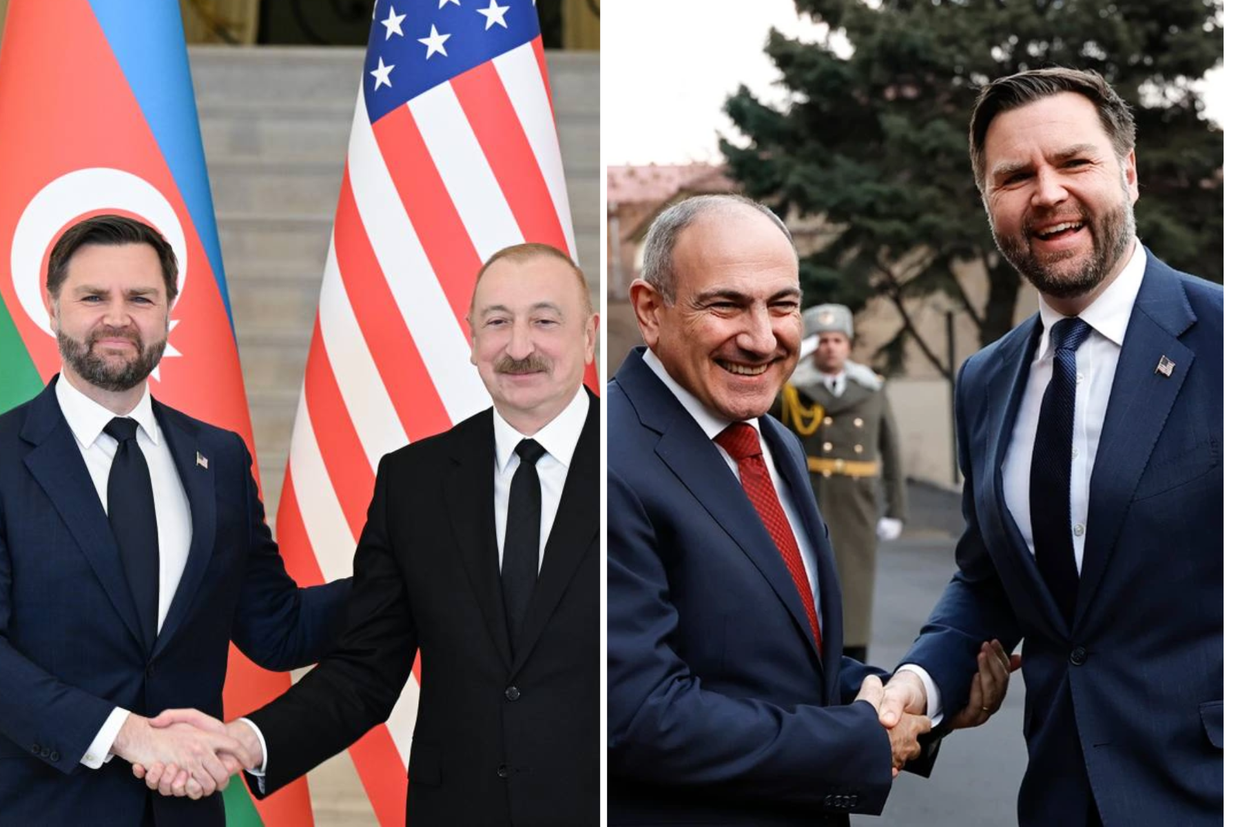
In his historic first visit to Armenia on Monday, US Vice President JD Vance signed a joint statement with Pashinyan announcing the completion of negotiations on an intergovernmental agreement between Armenia and the US on cooperation in the peaceful use of nuclear energy.
Citing the completion of the negotiations, Vance stated it would pave the way for US and Armenian companies ‘to strike deals on civil nuclear projects’ and further suggested that the US would likely build small modular reactors in Armenia.
Arshaluys Barseghyan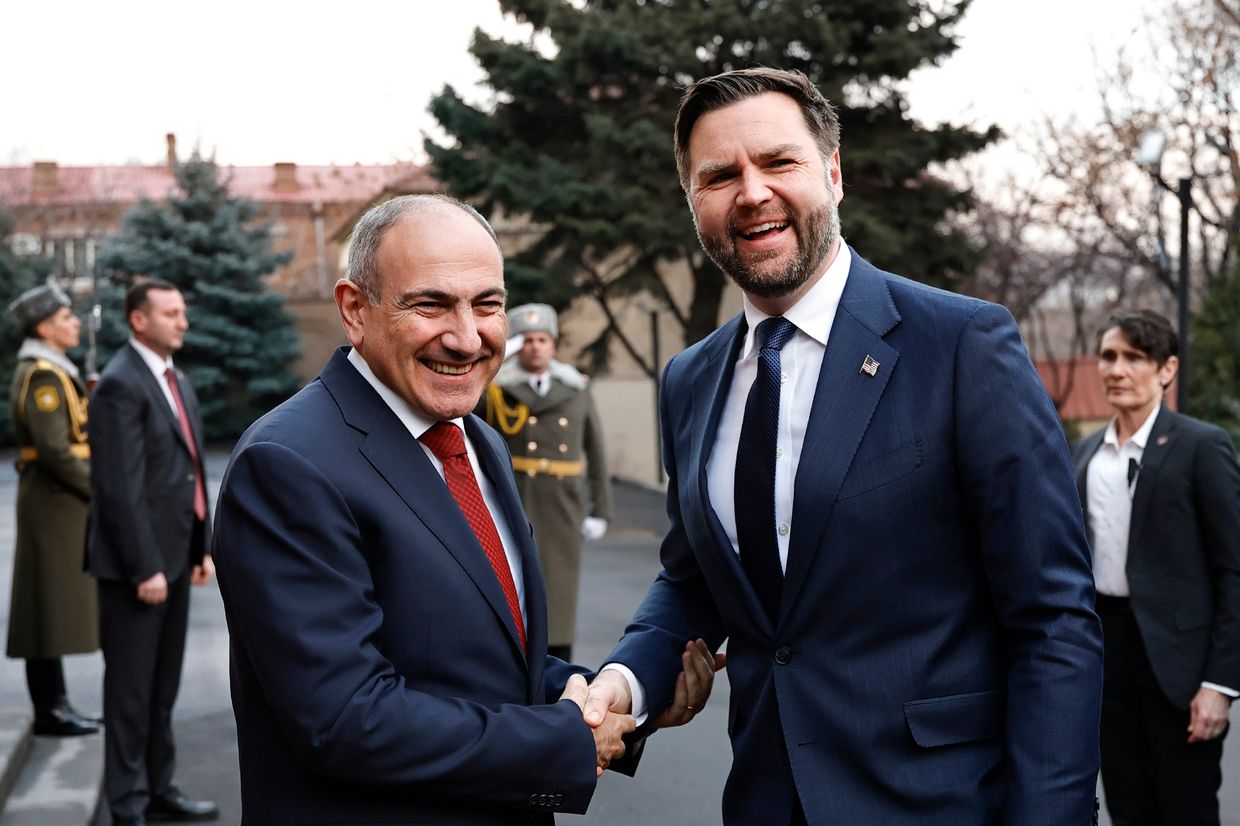
Both ahead of and following Vance’s visit, Russia repeatedly reiterated its own offer to Armenia in public statements, emphasising its competitive advantages.
According to the US Energy Department, light water-cooled small modular reactors ‘are under licensing review’ by the Nuclear Regulatory Commission and ‘will likely be deployed in the late 2020s to early 2030s’.
‘As the most advanced country in the world in this field, Russia is capable of withstanding the highest level of international competition if such competition is demanded by its partners’, Kremlin Press Secretary Dmitry Peskov said on Wednesday.
‘This means that Russia can provide better quality for many years to come at a lower cost’, Peskov added.
Arshaluys Barseghyan
Prior to Peskov’s statements, and shortly after Vance’s statement in Yerevan, Russian Deputy Foreign Minister Mikhail Galuzin reiterated the Kremlin’s readiness to build a nuclear power plant in Armenia ‘in the shortest possible time’.
He also claimed that ‘real alternatives are not visible’, in terms of having ‘reliable, already proven technologies, as well as attractive financial parameters, including construction, further operation, and the need to train and retrain specialists’.
On Thursday, Russian Foreign Ministry Spokesperson Maria Zakharova further stated that ‘these issues and topics are not something to joke about’, adding that they are ‘a matter of energy security’.
Nate Ostiller