Did an Azerbaijani state-funded documentary dupe experts into taking part?
A documentary on Ruben Vardanyan by Azerbaijan’s AnewZ included prominent experts and Armenians, but why did they agree to take part?
Editor’s note: This article has been updated to include a comment from former Lithuanian Foreign Minister Gabrielus Landsbergis.
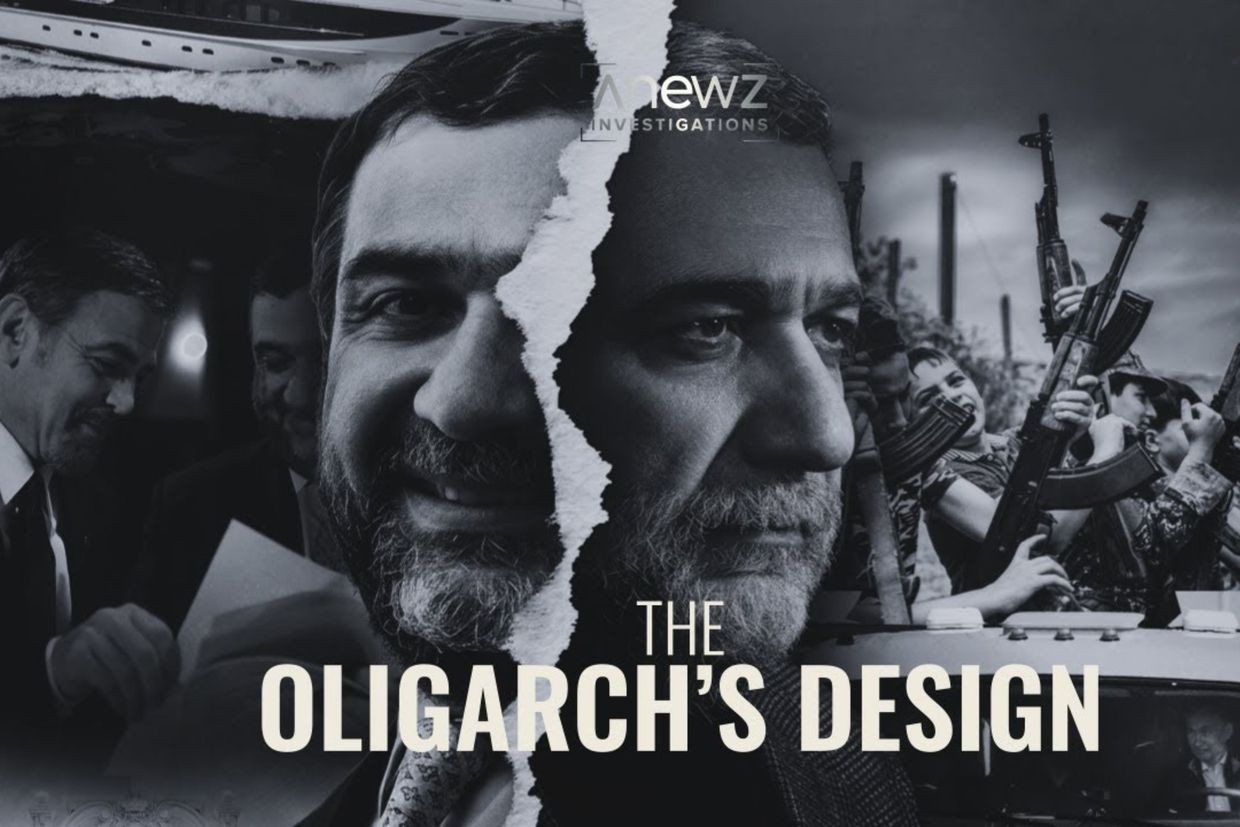
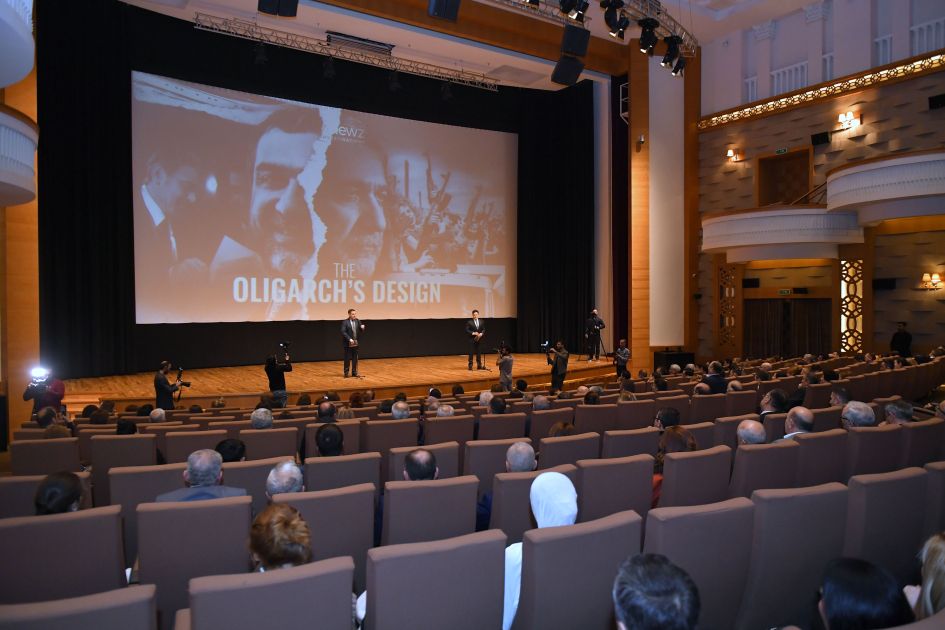
When the documentary ‘the Oligarch’s Design’ premiered in Baku on 20 December, it was attended by a host of state representatives and Azerbaijani MPs. The channel’s management stated that more than 100 people had worked on the production, which was also broadcast in late December on AnewZ, a state-funded channel.
‘We conducted the investigation in accordance with international standards’, said AnewZ director Rufat Hamzayev, who according to JamNews added that the production started in January 2025.
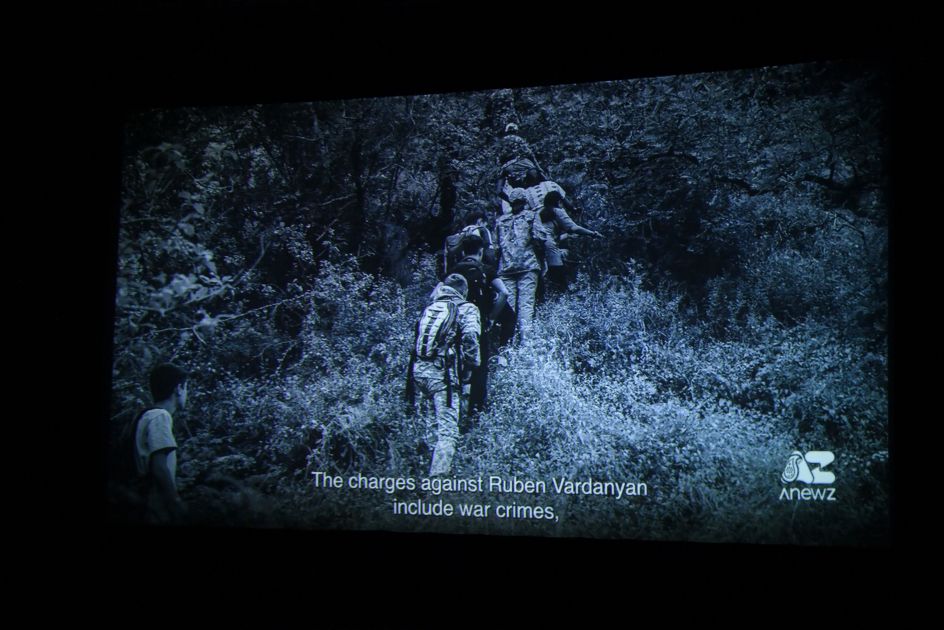
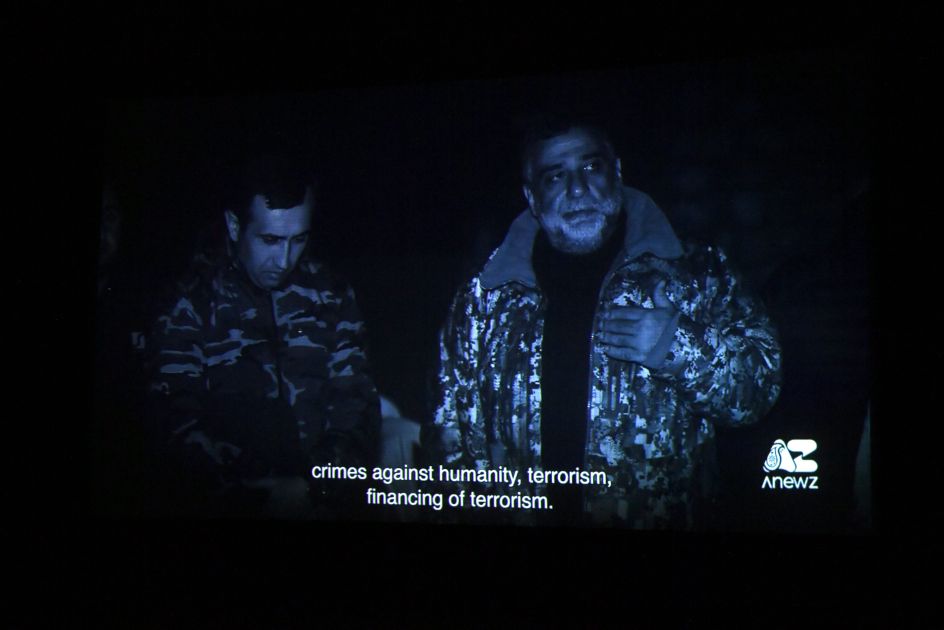
The film features interviews with foreign experts, prominent investigative journalists, and Armenian public figures. Framed as an investigative documentary, it presents Ruben Vardanyan, a Russian–Armenian businessperson currently facing trial in Azerbaijan, in strongly negative terms.
It suggests that Vardanyan was the central figure behind the Karabakh movement until its collapse in September 2023, when a lightning Azerbaijani offensive triggered the mass exodus of more than 100,000 Armenians.
Vardanyan served as the State Minister of Nagorno-Karabakh and is currently charged with more than two dozen crimes in Azerbaijan, including crimes against peace and humanity, terrorism, financing terrorism, and attempted murder.
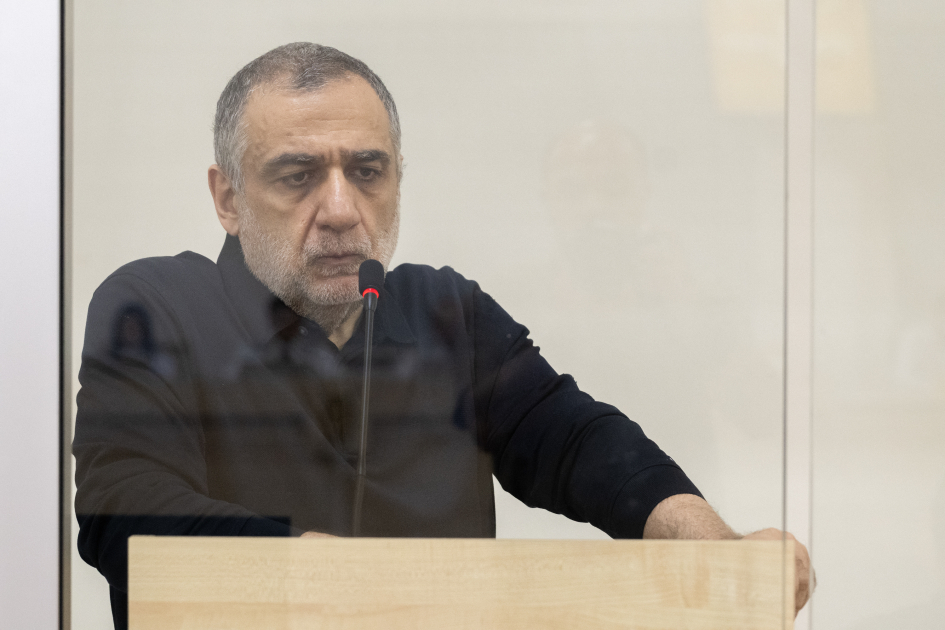
His international legal team, which has not been permitted to enter the country, has raised concerns that the proceedings do not meet the standards of an independent judiciary. Images of Vardanyan show significant weight loss, and his lawyers have alleged that he has been subjected to mistreatment.
An investigation by OC Media suggests that many of the interviewees appearing in ‘the Oligarch’s Design’, as well as subcontractors who worked on the film, may have been misled about the nature of the documentary — and for whom production was being made.
A Turkish-Spanish-Azerbaijani production?
The documentary, as broadcast, did not include any production credit list. However, documents obtained by OC Media — including internal work materials and parts of the crew lists — show that a team of Turkish media workers with close professional links to Azerbaijan was central in the production.
One of them, Atakan Kerkuklu, has previously presented several documentaries endorsed by the Azerbaijani government and toured Azerbaijani embassies to screen them, including a film focused on the Nagorno-Karabakh conflict. Another was Ömer Faruk Tunc, a senior producer at the Anadolu Ajensi, the largest Turkish state-run media outlet.
Also key in the production, according to internal documents as well as production staff who spoke to OC Media, was Carmen Marques, a Portuguese director, along with her production company, TPTM Media.
Marques has a background as a producer in the prominent Turkish state-run media outlet TRT World.
Speaking to OC Media on condition of anonymity, one producer who was subcontracted to work on the project but who was not involved in the project’s planning, said he became concerned about the direction the film was taking when he noticed that nearly everyone on the production team used Turkish phone numbers. This, he said, included Marques, who he said was presented as the documentary’s director at that time. This was despite the introduction of a different, EMMY award–winning individual, as the lead creative.
When reaching out to that supposed lead creative, he told OC Media that he had never even heard of the production. He speculated that his name could have been used due to a previous collaboration with TRT World. OC Media has not found any evidence that he was involved in the project, other than that his name is stated in different pitches presented by TPTM Media and the Turkish team.
The aforementioned subcontractor said he grew further suspicious when the production team refused to provide a contract, stating that ‘mutual consent’ was standard practice. According to the source, the Turkish media team, who was responsible for payment, also insisted on paying in cash.
Participants misled?
OC Media spoke to around a dozen individuals who appeared in the documentary or who were involved as subcontracted producers. Of these, none said they were aware that the film was being produced for Azerbaijani state media.
All of the subcontractors and non-Armenian expert contributors who spoke to OC Media said that they were instead told the documentary would focus on the Troika Laundromat — a major investigation into corruption in Russian banking networks in which Vardanyan was implicated.
And despite the finished product, pitch documents sent to individuals appearing as experts about the production which have been reviewed by OC Media contained no reference to the Nagorno-Karabakh conflict. They also made no mention of the involvement of Azerbaijani state media. Instead, they spoke of TPTM Media Spain as the production company. They also suggested they were in negotiations with major international streaming services to broadcast the finished product.
One of the interviewees to appear in the documentary was Vitalijus Gailius, a member of the Lithuanian parliament and the parliamentary anti-corruption committee, who was interviewed in the summer of 2025.
‘Since my participation was based purely on legal and corruption prevention evaluation, rather than political or national interests, I believe the authors should ensure that the film is objective, accurate, and fact-based’, Gailius told OC Media.
‘The content should adhere to legal and ethical standards, avoiding any misleading or distorted legal interpretations’.
Another interviewee told OC Media that her interview was conducted in 2019 for a different context and for another production. She said she never gave consent for the material to be used in an Azerbaijani production.
One pitch was made public by Samvel Babayan, a former official in the Nagorno-Karabakh administration who appeared in the documentary. Babayan wrote that the interview was conducted by Marques of TPTM Media. He cited a pitch provided to him by the documentary-makers, saying it was introduced to him as aiming to explore ‘Armenia at a historic crossroads with deep cultural roots and global aspirations’ and with no mention of the Vardanyan case. Other Armenians appearing in the documentary who OC Media spoke to said they were interviewed in September 2025.
The final result
The Spanish production company that worked on the film, TPTM Media, along with Carmen Marques (who is listed in open sources as the company’s director), appears to have left the production in late October 2025, around two months before it premiered on AnewZ.
Despite TPTM’s last minute exit from the project, internal documents appear to show that this was not the point at which the documentary’s core focus came about.
A concept note apparently used for internal planning from the summer of 2025, several months before the interviews in Armenia, closely mirrors the structure of the final product, including the appearance of a majority of the interviewees and presentation of facts, even though some details differ.
The concept note was circulated by the Turkish media team, as well as TPTM Media. While the concept note’s opening section focuses on the Troika Laundromat, the majority of the description centres on the Nagorno-Karabakh conflict from an Azerbaijani government perspective. It concludes that the trial against Vardanyan upheld international juridical standards.
Moreover, several sources cited in the note’s background research originate from EU Reporter, a publication that has been accused of operating as a pay-for-publication outlet that has repeatedly given Azerbaijan favourable coverage.
One thing that noticeably changed throughout the project was the name — the presented name in 2025 in the pitch to Babayan is different from the concept note, and lastly from the final product.
Marques refused to comment for this story. Kerkuklu and Faruk Tunc, from the Turkish production company, did not respond to a request for comment.
‘A propaganda exercise’
After being presented with OC Media’s findings, Aidan White, president of the UK-based Ethical Journalism Network, questioned the ethics of the production.
‘For legitimate expert voices to be taken out of context and used in a propaganda exercise is shocking’, said White.
‘In this case, the TV network should remove the comments from the broadcast until the sources agree to their comments being used in this way’.
‘It is clearly unacceptable behaviour’, White said, when asked about subcontractors and the non-Armenian expert contributors being told the documentary would focus on the Troika Laundromat investigation, while making no mention of the Nagorno-Karabakh conflict,
‘A cardinal principle of ethical conduct when dealing with sources is transparency — to reveal the purpose of the journalism and to be open about how the information will be used’, he said.
International ambitions
AnewZ was launched shortly ahead of the COP29 climate summit in Baku in late 2024, where it served as one of the event’s main media partners. Its management includes several foreign journalists, lending the outlet an international profile. One of them is Guy Shone, the editor-in-chief, who has a background from Euronews and BBC.
The channel is part of Global Media Holding, a media consortium linked to the Azerbaijani state oil and gas company, SOCAR. The outlet was initially awarded a contract worth ₼5 million ($2.9 million), a sum that was later increased to ₼11 million ($6.5 million) shortly ahead of COP29.
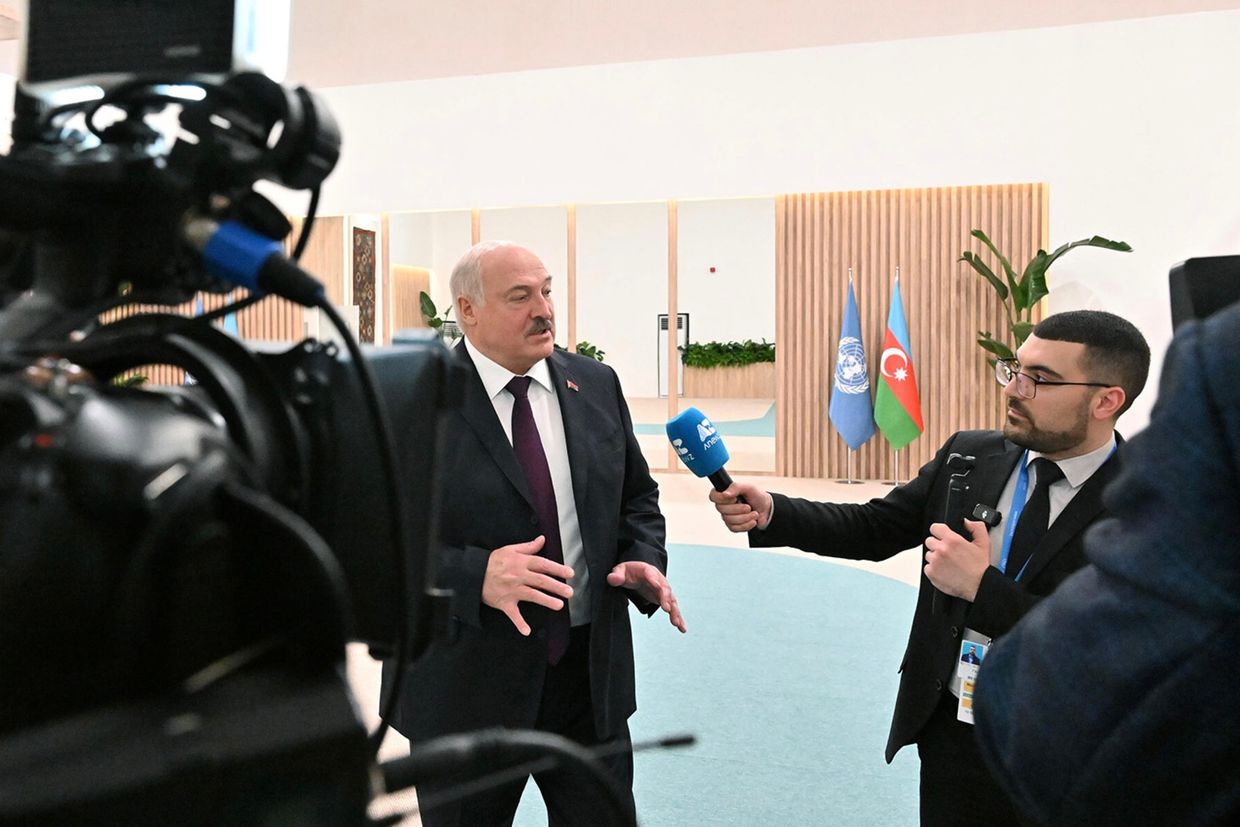
One of its founders, Orkhan Amashov, previously worked for Caliber, a platform known for its close ties to the Azerbaijani government and its vitriolic, often-conspiracy minded coverage of Armenia and Armenia’s allies. Amashov is the son of the chair of the Press Council of Azerbaijan. He was also interviewed in the documentary as an expert voice.
Critics have suggested that AnewZ is an attempt to create an English speaking international platform similar to RT (formerly Russia Today).
A few days before the planned publication of this investigation, AnewZ broadcasted another documentary, this time focusing on Armenia’s alleged role in Russian sanctions evasion. OC Media confirmed that this documentary too partly involved the same media teams as in the Oligarch’s Design — and as with Oligarch’s Design, OC Media could also confirm that several of the cited foreign experts were not aware that it was produced for AnewZ.
AnewZ did not respond to a request to comment.
After publication, former Lithuanian Foreign Minister Gabrielius Landsbergis, who was featured in the sanctions evasion documentary, reached out to OC Media, confirming that ‘it was not [his] intention to participate in an Azerbaijani propaganda piece’.
For ease of reading, we choose not to use qualifiers such as ‘de facto’, ‘unrecognised’, or ‘partially recognised’ when discussing institutions or political positions within Abkhazia, Nagorno-Karabakh, and South Ossetia. This does not imply a position on their status.
 Aytan Farhadova
This article was translated into Armenian and republished by our partner CivilNet.