Georgia’s ruling Georgian Dream party has sought to further tighten protest-related legislation with another draft law which would require protesters to ‘notify’ the state in advance if a demonstration is held in areas designated for ‘people’s movement’. Authorities could then ‘offer’ changes to a protest’s location or timing, with penalties for non-compliance.
The new draft law, first reported by IPN on Monday and later published on the parliament’s website, was condemned by government critics as yet another restrictive measure aimed at silencing dissent, while the authorities rejected the claims and defended the yet-to-pass regulations.
Under the draft legislation, several key amendments would be introduced to the law on assemblies and demonstrations. One of the changes would make the Interior Ministry responsible for prior notifications applied by protest representatives and the subsequent review of them, whereas under the current law, this falls under the authority of municipal bodies.
Currently, the law requires the authorities to be notified only if the planned protest will disrupt traffic. If the new draft is adopted, the same requirement would extend to areas designated for ‘people’s movement’ — apparently referring to public spaces, including pavements, where no vehicles operate and only pedestrians move.
According to the bill, the ‘responsible person’ for a protest would have five days to submit a ‘properly signed notification’ to the relevant police department, depending on the protest’s location. The ministry would then be required to issue a response ‘within a reasonable time’, although it would not be compelled to grant approval: If deemed necessary, the authorities would have the power to suggest an alternative location or route for the demonstration.
The draft law would retain the concept of ‘spontaneous gatherings’, which are difficult to notify the authorities about in advance due to their nature. In such cases, the bill would allow the notification to be submitted to the police outside of the standard deadline, but it would still be required to be done as soon as possible.
‘In such cases, the Interior Ministry may determine a different form and procedure for submitting the notification’, the draft law read.
If adopted, the police’s authority to open or restore movement — currently limited to vehicle traffic — would extend to ‘people’s movement’ too. It remains unclear how the police would assess whether pedestrian movement on pavements is obstructed, and, if demonstrators are removed not only from roads but also from pavements, where they would be expected to go.
If protesters do not clear the ‘traffic or pedestrian area’ within 15 minutes of a police order, the authorities would be allowed to stop the demonstration ‘using measures provided by law’. However, the draft adds a separate clarification stating that giving protesters 15 minutes ‘does not mean that if participants stop violating the law during this period, the violation is not considered to have occurred’. If the police declare a protest illegal, its participants would be subject to administrative punishment in any case, even if they disperse within the allotted time.
Under the draft law, failure to comply with its provisions would result in imprisonment on the first offence. Protest participants could face up to 15 days in jail, while the ‘organiser’ could face 20 days. Imprisonment would be replaced by a fine only for those who are pregnant, mothers of children under 12, minors under 18, or persons with ‘severe or significant’ disabilities.
‘Criminalisation of the freedom of expression’
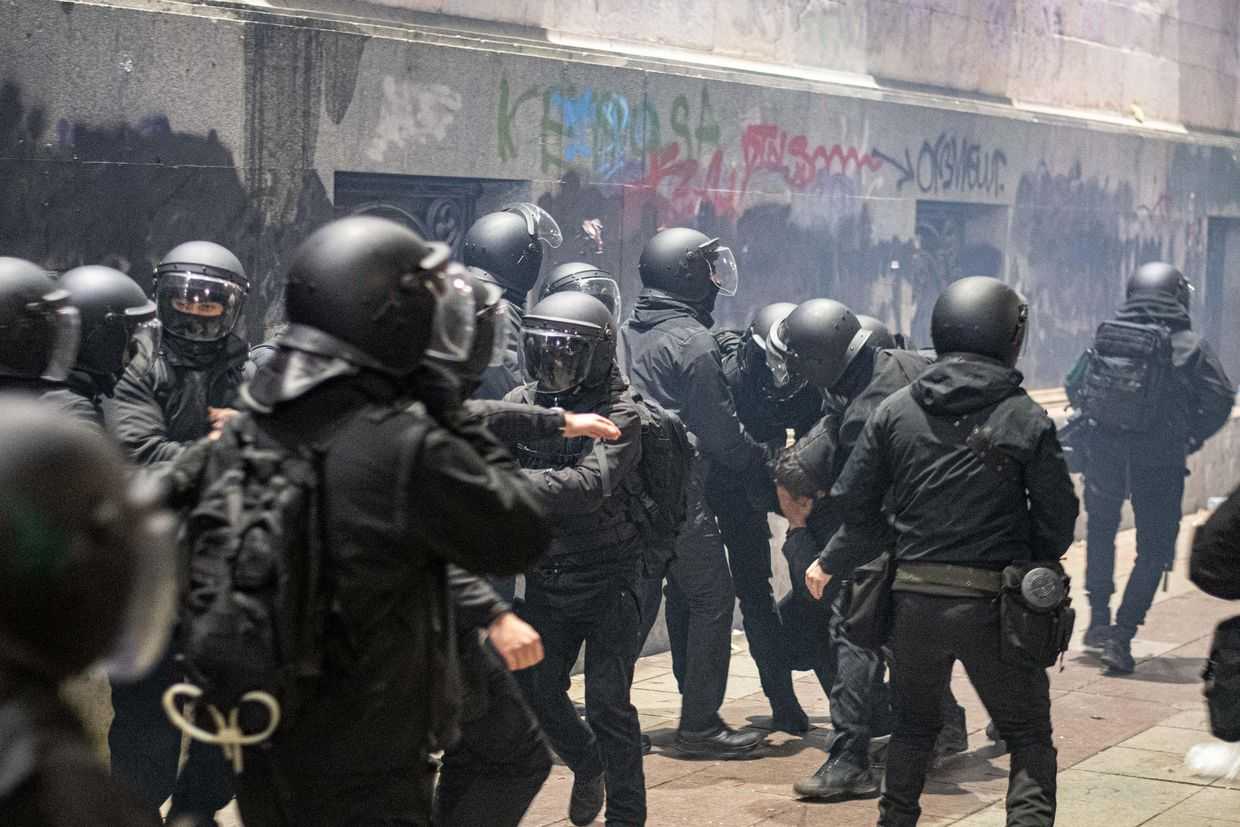
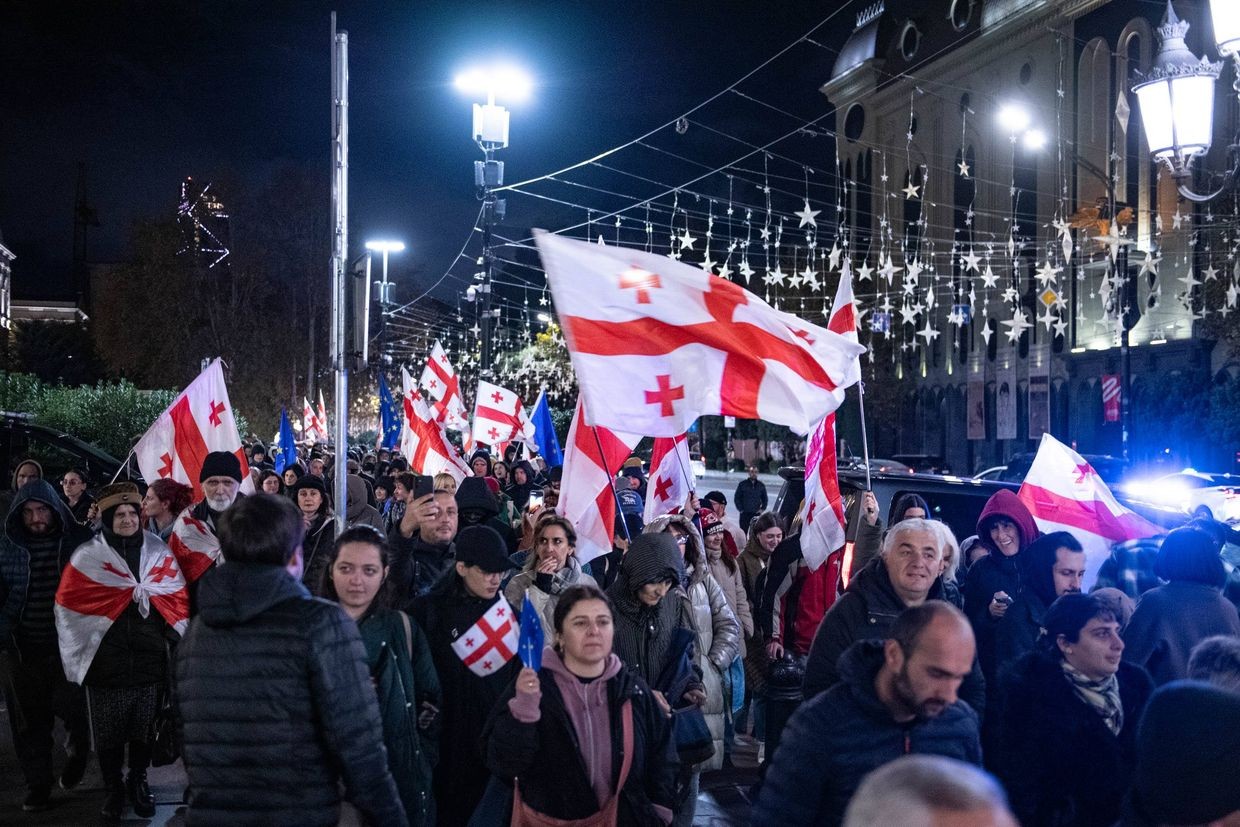
The parliament, controlled by the ruling Georgian Dream party and its allies, is considering the new legislative amendments against the backdrop of daily anti-government protests that have been ongoing since the government’s EU U-turn in November 2024. Tbilisi’s central Rustaveli Avenue, more specifically the area surrounding the parliament, is the main protest hotspot.
In recent months, several restrictive legislations passed by the ruling party have directly or indirectly targeted street protests, including harsher penalties for blocking roads, covering faces during demonstrations, and other actions.
Following amendments adopted in October — which made blocking the road punishable by imprisonment on the first offence — and heavy police interventions, the authorities were finally able to curb this form of protest. Nevertheless, demonstrations have continued on the pavements in front of parliament, as well as along narrow adjacent streets and pavements.
 Mikheil Gvadzabia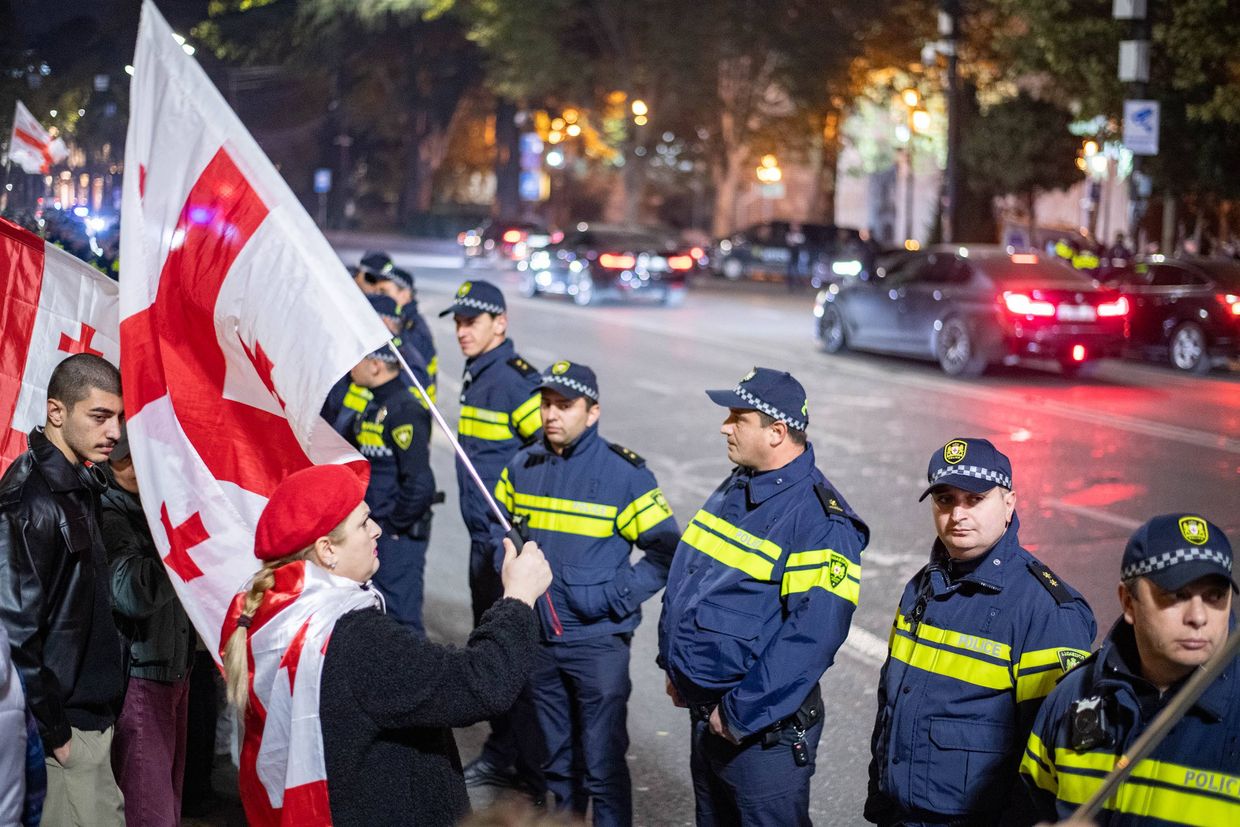
Now that the authorities intend to restrict protests even on pavements, this amounts to ‘criminalising freedom of expression’, according to Nona Kurdovanidze, the chair of the Georgian Young Lawyers’ Association (GYLA).
‘Imposing such restrictions in areas where no vehicles operate is completely unacceptable and unconstitutional’, she told Palitranews, adding that ‘it will have a strong chilling effect, and the purpose is clear’.
According to Kurdovanidze, although the authors of the draft law use the term ‘notification’, the new rules, given their restrictive nature, are effectively equivalent to requiring prior approval for protests.
‘This is a continuation of the [legislative] changes that have already taken place’, she noted, referring to past restrictive amendments. Kurdovanidze said the draft law could be challenged in the Constitutional Court after its adoption, though she expressed doubt that the court would take any action.
Mikheil Gvadzabia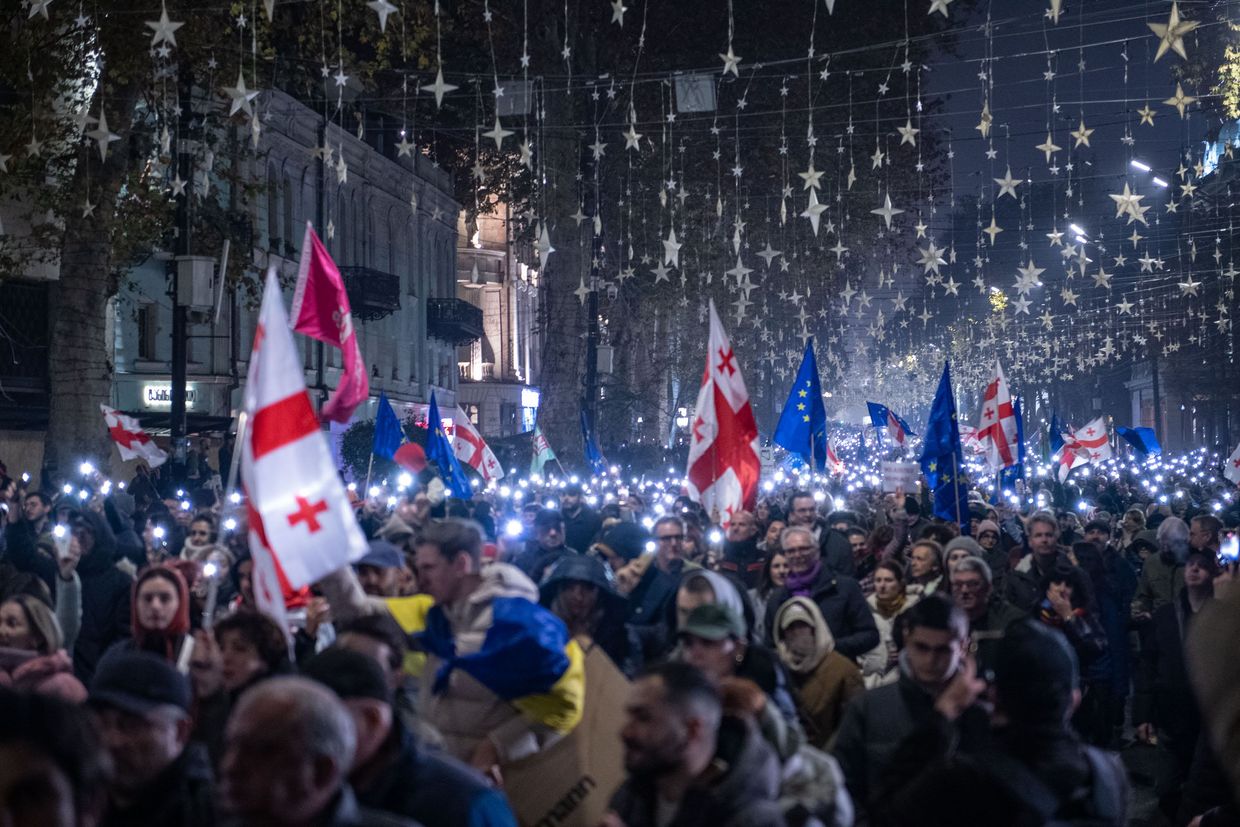
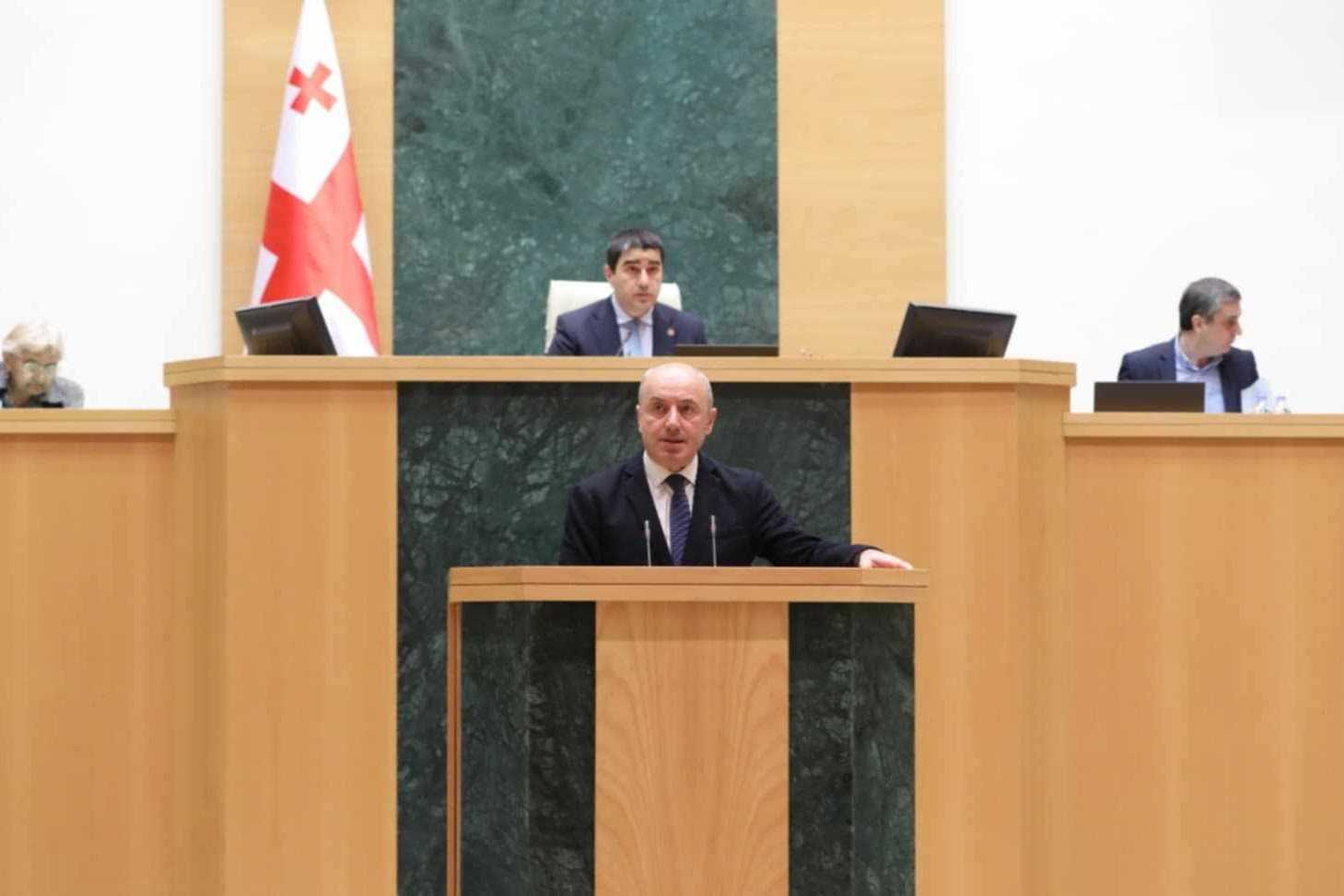
Defending the draft law, Georgian Dream MP and Parliamentary Speaker Shalva Papuashvili said that the bill ‘has no legal flaws’.
‘If motorists should not face unnecessary inconvenience, roads should not be blocked when there are not enough people [...] the same applies to pedestrians — if there is insufficient number [of protesters], they should not obstruct other citizens’ movement. Blocking should not happen artificially’, he stated.
‘Anyone who wants to express a protest has every opportunity to do so, provided they do not impede the rights of other citizens’, Papuashvili added.
In recent months, Georgian Dream officials have repeatedly targeted participants of daily protests, labelling them a small group of ‘radicals’ and ‘foreign-funded agents’ who cause inconvenience to other citizens moving through the city centre.
‘We have zero sympathy for these people’, Prime Minister Irakli Kobakhidze said during an October interview, targeting the protesters.
OC Media