The State Security Service of Georgia (SSG) has launched an investigation and summoned several individuals for questioning over statements regarding Iran’s allegedly growing influence and activities in Georgia. The move followed sharp criticism from the state toward such claims.
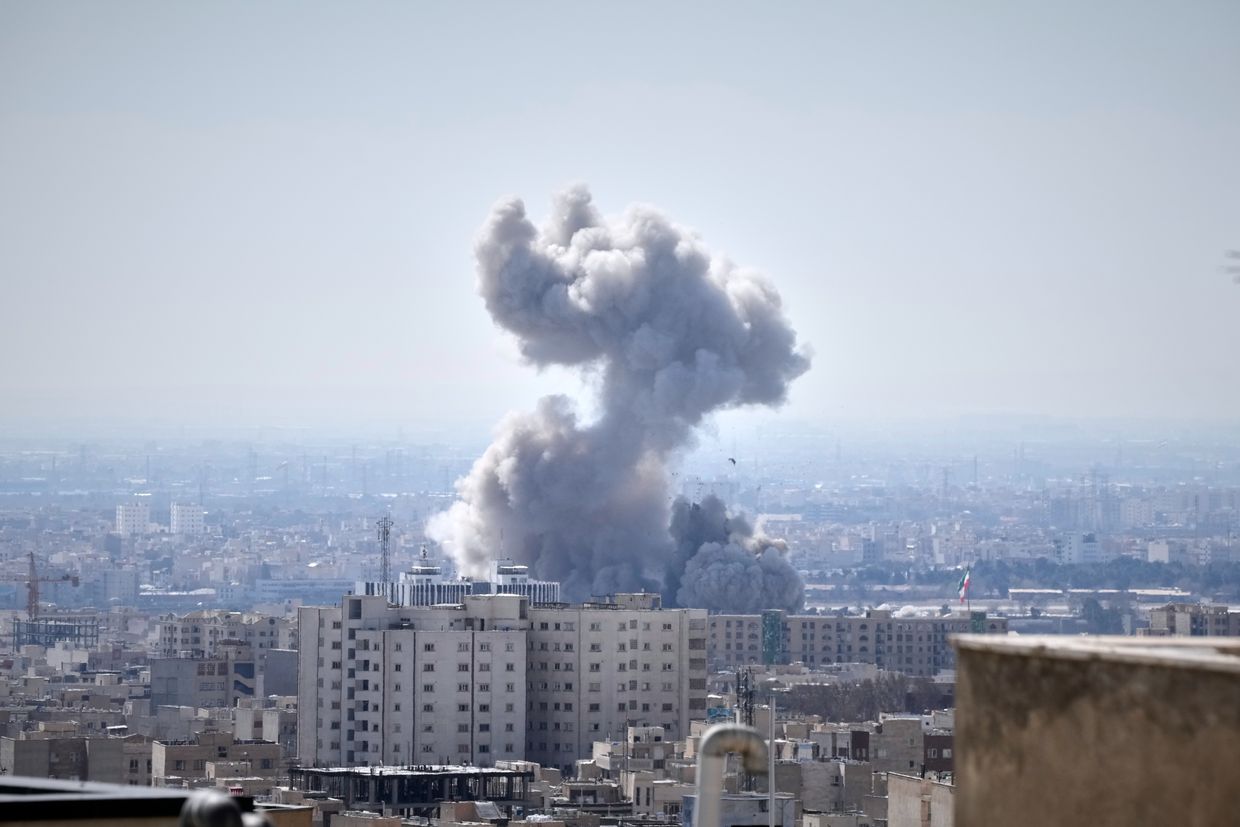
Discussions surrounding Georgia–Iran relations intensified against the backdrop of a regional conflict that began on 28 February. The debate has focused not only on the Georgian state’s attitude toward the conflict, but also on the Iran-linked business and religious entities operating in the country.
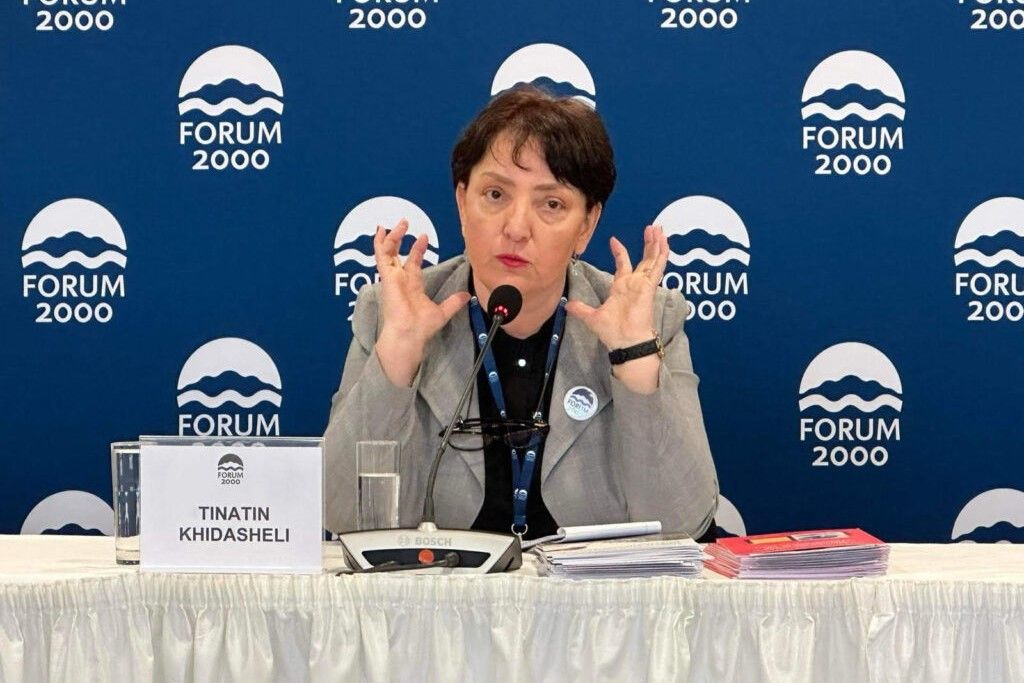
Over the weekend, several individuals who commented the matters were summoned for questioning, including former Defence Minister and founder of the Georgian think tank Civic Idea Tinatin Khidasheli, former MP and current representative of the Soviet past research laboratory (Sovlab) Giorgi Kandelaki, former MPs Givi Targamadze and Gubaz Sanikidze, as well as former Chief of the General Staff, Major General Vakhtang Kapanadze.
Before being summoned, almost all of them were targeted by state-affiliated outlets, the ruling party politicians and their allies, with accusations of spreading disinformation against Georgia’s interests.
Khidasheli came under the spotlight for her 3 March comments on opposition-leaning TV Pirveli, regarding the Al-Mustafa International University branch in Georgia — an Iranian religious institution sanctioned by the US in 2020 for allegedly facilitating recruitment for the Quds Force, a branch of the Islamic Revolutionary Guard Corps (IRGC).
‘Everyone should know this clearly: it is not a university — it is a terrorists’ school, where people are trained with the mindset of “Death to America” and “Death to Israel” ’, she said, adding:
‘Yes, it has no accreditation and is officially not a university, but despite that, it operates, has students, and is located in one of our minority-populated districts, which could also pose an additional problem for our country’.
A February op-ed published in the US outlet The Hill titled ‘Georgia is becoming Iran’s sanctions evasion hub’ also sparked state backlash. The author, researcher and analyst Keti Korkiya partly relied on the 2026 study of Khidasheli’s Civic Idea, which reported that 72 Georgia-registered companies imported Iranian oil and petroleum products between 2022 and 2025.
A report by the US Hudson Institute, titled ‘Georgia’s Iranian Turn: Tehran’s Rapid Expansion of Influence in a Once-Committed US Ally’ and co-authored by Giorgi Kandelaki, also drew attention. It was condemned by the pro-government TV channel Imedi as ‘yet another anti-state research’ about Georgia’, while Korkiya’s op-ed was criticised as ‘another attack and baseless accusations’ against the country.
In response to questions about Kandelaki and Khidasheli, Kakha Kaladze, the Secretary-General of Georgian Dream and Mayor of Tbilisi, accused the two of betraying the country and added that the ‘relevant authorities should take an interest’ in those spreading such claims.
Shortly thereafter, pro-government media also singled out Major General Kapanadze, who, during an interview on TV Palitra News, was asked whether he considers it possible for Iran to strike Georgia directly. He replied that it is possible and noted that the most vulnerable section of the Baku–Tbilisi–Ceyhan (BTC) pipeline runs through Georgia.
As for Targamadze and Sanikidze, both made remarks regarding Iran on TV, with the latter speaking about the activities of Iranian clerics in regions of Georgia populated by the Azerbaijani ethnic minority. Targamadze, meanwhile, referred to the ‘terrorist university’ operating in Georgia.
‘They are the ones “recruiting” these people, so to speak. They invite them, teach them this work, and send them to commit specific crimes in various locations around the world’, Targamadze said.
‘Statements contrary to the factual record’
The SSG told RFE/RL it was taking an interest in statements about Iran on 6 March.
The outlet had asked the agency how it handled cases of Georgian citizens detained abroad on espionage charges, as well as whether it detected any foreign recruitment cases in the country.
In response, the SSG told RFE/RL that it ‘fully controls the situation’, but also noted that the outlet’s questions raised topics ‘that do not fall within Georgia’s national security interests’ and called on it to ‘refrain, during the current period, from amplifying topics that are counterproductive to these interests’.
The agency then shared its position regarding what it described as ‘recent information disseminated by various individuals in Georgia about the recruitment of personnel by other countries for stated or implied purposes’.
‘We are closely monitoring and studying both the content of these statements, which contradict the factual record, and the motivation of their authors to accuse Georgia of such matters’, the SSG said, adding that ‘none of the authors of such statements have ever been requested to provide any information to law enforcement authorities’.
‘The investigation is started and the authors of the statements will be questioned in all relevant areas, including being given the opportunity, within the scope of the investigation, to finally point to any specific facts’, it concluded.

The investigation is reportedly being conducted under Article 319 of the criminal code, which covers providing assistance to foreign countries or organisations in hostile activities.
All those summoned for questioning appeared on Sunday, except for Targamadze, who said he was out of the country. Kapanadze went directly to the SSG, while Khidasheli, Kandelaki, and Sanikidze chose to be questioned before a magistrate judge.
‘There is no problem in asking questions’, Khidasheli said.
‘My goal has been achieved: I wanted, as happens in normal, civilised countries, for someone to raise the alarm about a potential threat, and then for the investigative authorities to look into it’, she added.
When asked whether she thinks her summoning was a form of intimidation, she said ‘I don’t know what anyone has in mind’, but emphasised that she could not be intimidated.
Speaking about the interview that led to her summons, Khidasheli said that she never stated that ‘terrorists are being trained in Georgia’.
Speaking about his summons, Kandelaki told journalists that the SSG should not ‘waste time’ on him, instead pointing to activities on Georgian territory he said were in support of Iran’s ruling figures and their allies.
‘The Hudson Institute is a leading, conservative think-tank in the US, quite close to the [US] administration. Everything is publicly known; nothing there, nor in other studies, in Tina Khidasheli’s research […] is unknown’, Kandelaki said.
‘It is a fact that Georgia has a serious problem. The problem has simply become more visible now, but it has existed for years’.
Israel apparently condemns Georgia for offering Khamenei condolences to Iran
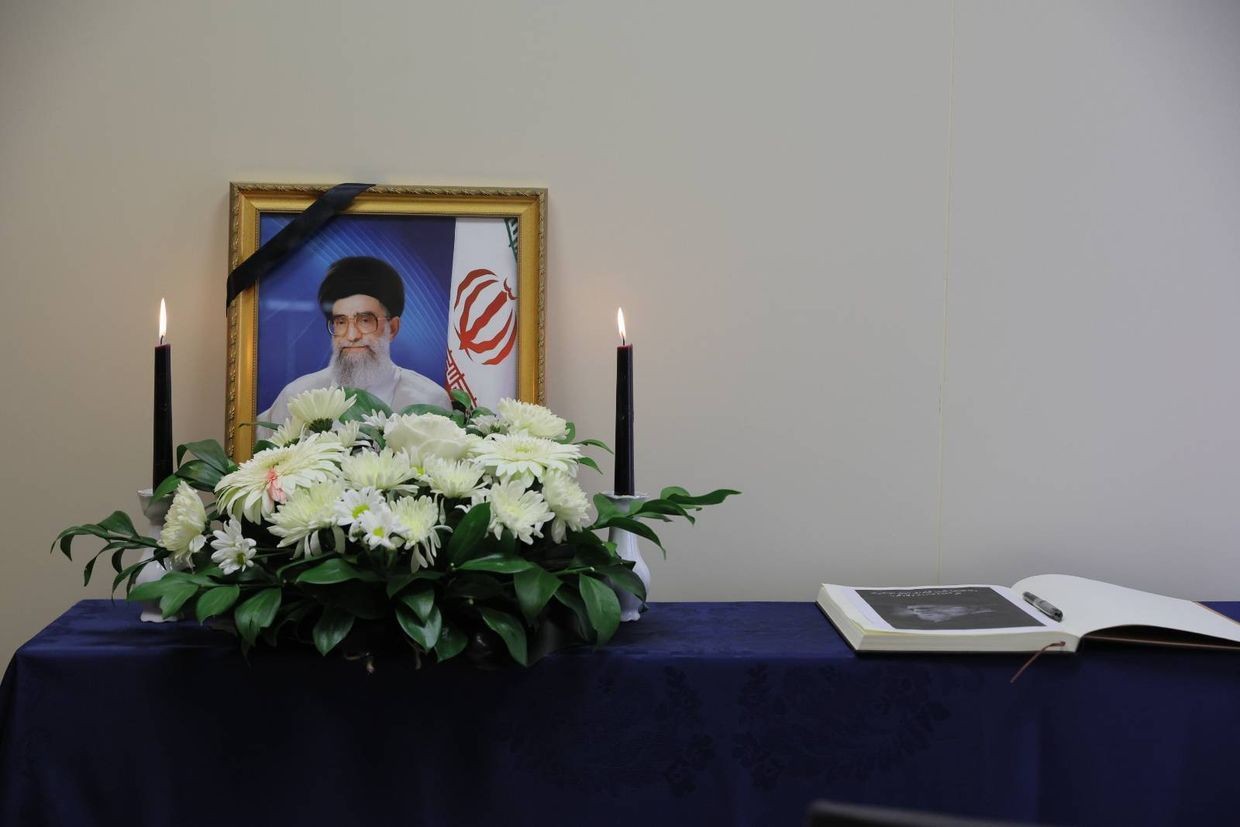
On Friday, Iran’s ambassador to Georgia, Ali Moujani, thanked an unnamed official of the Georgian authorities for leaving an entry in a condolence book opened at the embassy.
The condolence text reflected in the photo Moujani shared was virtually identical to an earlier statement by the Georgian government, which had noted that ‘the ongoing military activities have claimed the lives of many individuals, including the Supreme Leader, other political leaders, numerous innocent civilians, and dozens of children’.
‘A friend is tested in times of hardship’, Moujani wrote, hinting at Georgia.
The Georgian Foreign Ministry later told local media that the entry was made by one of the minister’s deputies, though it did not specify which one.
At the same time, the Israeli Embassy issued a statement, saying ‘some friendships are tested not only through kind words, but also in complex moments’.
Condemning Iran as a producer of ‘terror’ against Israel, the embassy stated that ‘true friendship between peoples is measured by the ability to distinguish between those who choose the path of life, stability, and cooperation, and those who continue to cultivate terror, extremism, and violence’.
‘It is true that neighbours are not chosen, but friends are. And a friendship of 2,600 years, like the one between the Georgian people and the Jewish people, based on mutual respect and shared values, should be reflected today as well, especially in times of trouble’, it concluded.
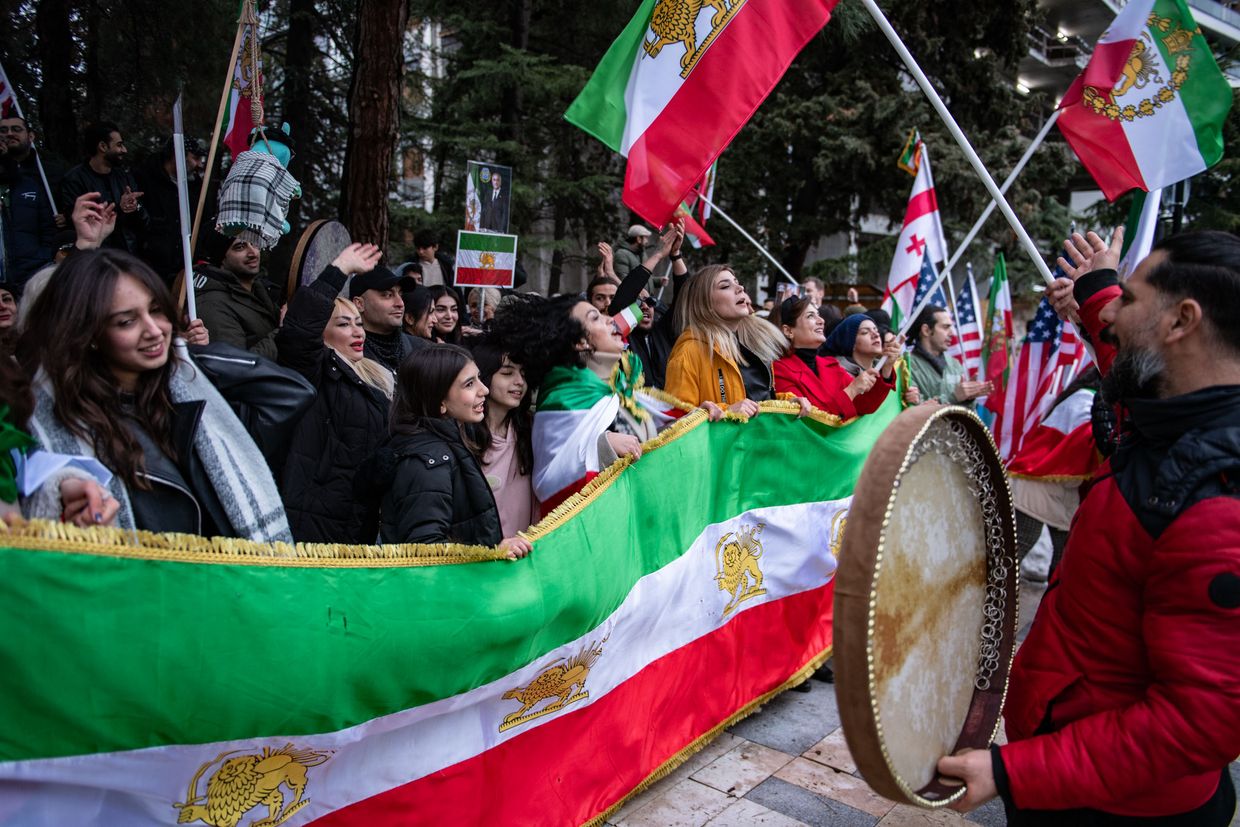
On the travel warnings section of the website of the Israeli National Security Council, Georgia, alongside Armenia and Azerbaijan, has been assigned a medium threat level, with a recommendation to avoid non-essential travel. According to the Israeli TV channel i24NEWS, the council has tightened the warning level for several countries bordering or close to Iran, including those in the South Caucasus.
The Israeli Embassy has previously criticised Georgian authorities for their ties to Iran, including the 2025 visit of Georgia’s Deputy Foreign Minister Aleksandre Khvtisiashvili to an event at the Iranian Embassy, which, according to the embassy, paid tribute to the ‘martyrs who died during the Israeli regime’s armed attack against Iran’s territorial integrity’ during the 2025 June war.
This also happened recently, in February, when the Tbilisi TV tower was lit in the colors of Iran’s flag to mark the 47th anniversary of the Iranian Islamic Revolution. On the same day, the Iranian Embassy hosted a reception attended by Georgia’s Deputy Foreign Minister Lasha Darsalia.
 Arshaluys Barseghyan