Editor’s note: The article has been updated to include the latest court decisions.
A Georgian court has handed down its first detention sentences to anti-government protesters for standing on the pavement under recently passed legislation further restricting protests.
The decisions were issued on Friday by judges of the Tbilisi City Court. Judge Davit Makaridze sentenced Sandro Megrelishvili and Dimitri Jamburia to four days in detention, and Luka Nagliashvili to five. Judge Zviad Tsekvava handed Mikheil Zakareishvili five days, while Judge Manuchar Tsatsua gave Nukri Kakulia four.
Two other demonstrators, Ani Akhmeteli and Natia Chichinadze, were given verbal warnings.
The rulings are related to December 2025 amendments to the law on demonstrations and the administrative offences code, which introduced an obligation to notify the police before holding a protest in ‘people’s movement’ zones, including on the pavement.
The police have the authority to change both the location and timing of a protest. Failure to comply with the law would result in imprisonment on the first offence. Protest participants could face up to 15 days in jail, while the ‘organiser’ could face 20 days.
‘If you are standing on a sidewalk, drinking beer or eating ice cream, gossiping with neighbours or talking about football, you are not breaking the law’, Megrelishvili’s lawyer Irakli Abesadze told Formula TV, commenting on what he called an ‘absurd’ law under which the demonstrators were detained.
‘But if you are standing on the same sidewalk, holding the Georgian flag and talking about the country’s future, discussing plans for its better development, then you are a serious offender and may end up in administrative detention’, he added.
In recent weeks, the police have filed administrative offense reports against up to ten demonstrators for ‘obstructing’ pedestrian movement, although none had been sentenced so far.
Furthermore, some demonstrators targeted by the reports may face criminal charges. This applies to those who were previously penalised for administrative violations related to protests, as actions described as ‘obstructing public movement’ may now be treated as a repeat offence, giving rise to criminal liability.
The court has already halted at least two such cases, highlighting the potential for criminal liability, and sent them back to the police for further action.
A new reality
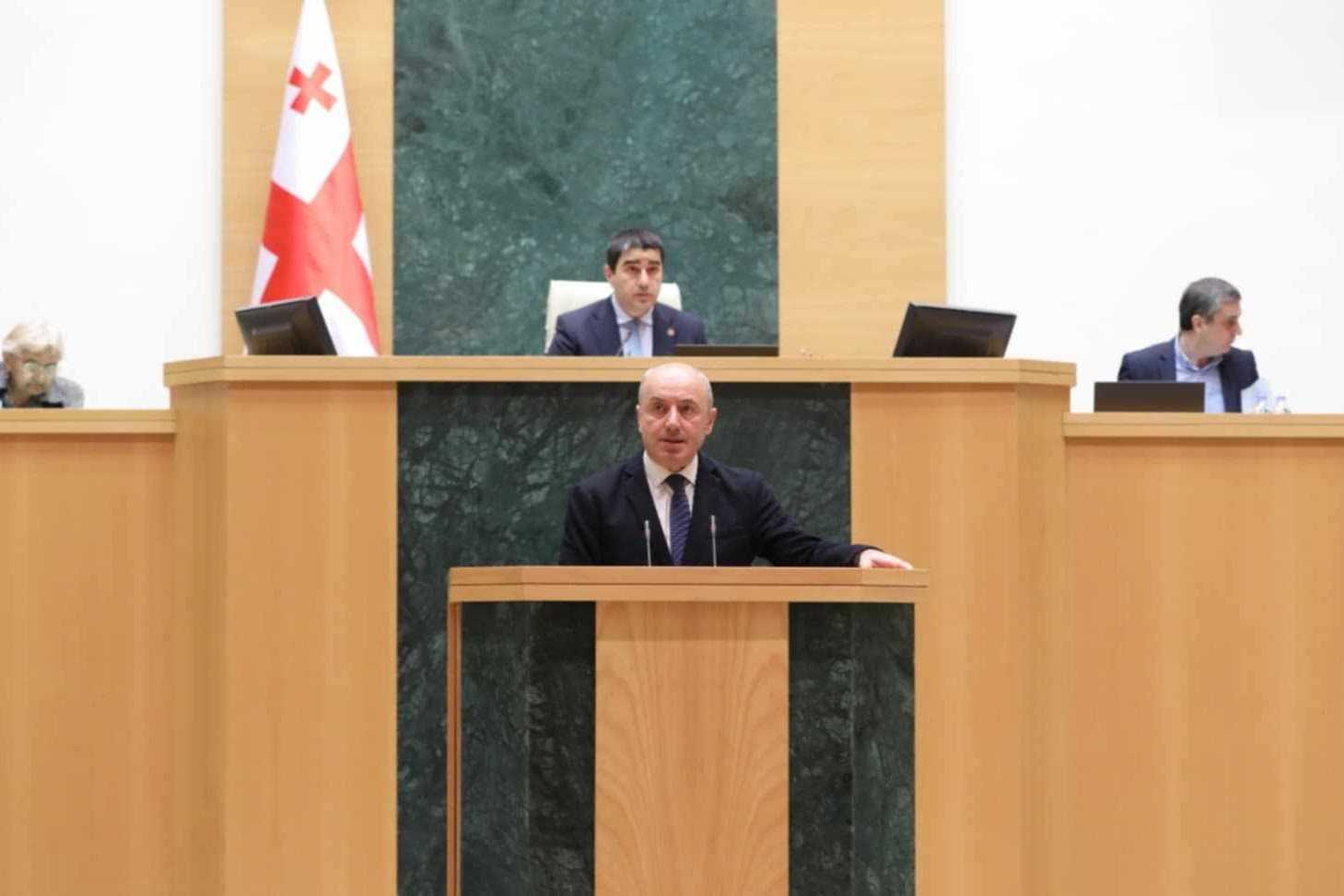
The legislation was rushed through by the ruling Georgian Dream party and its allies, passing it with final hearing on 10 December. It created a new legal reality for anti-government protesters who have been holding daily demonstrations in central Tbilisi since November 2024.
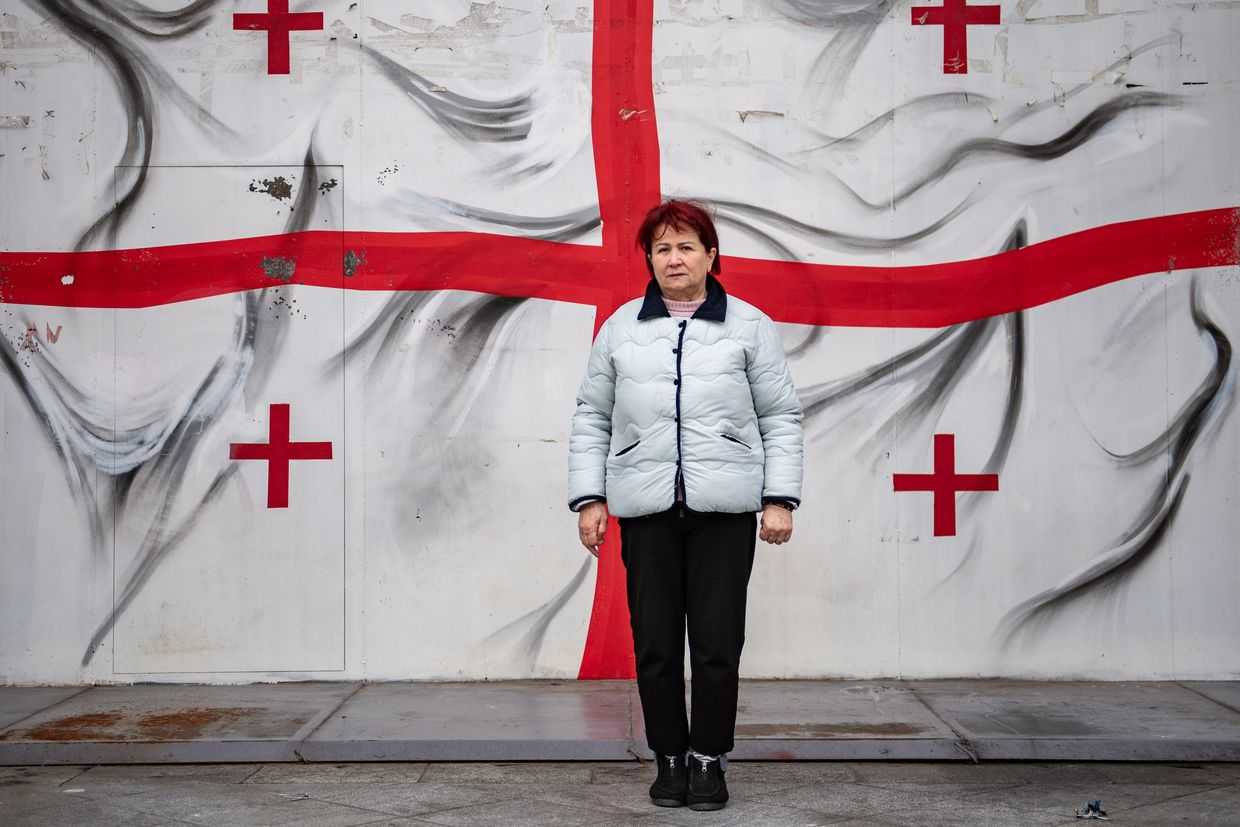
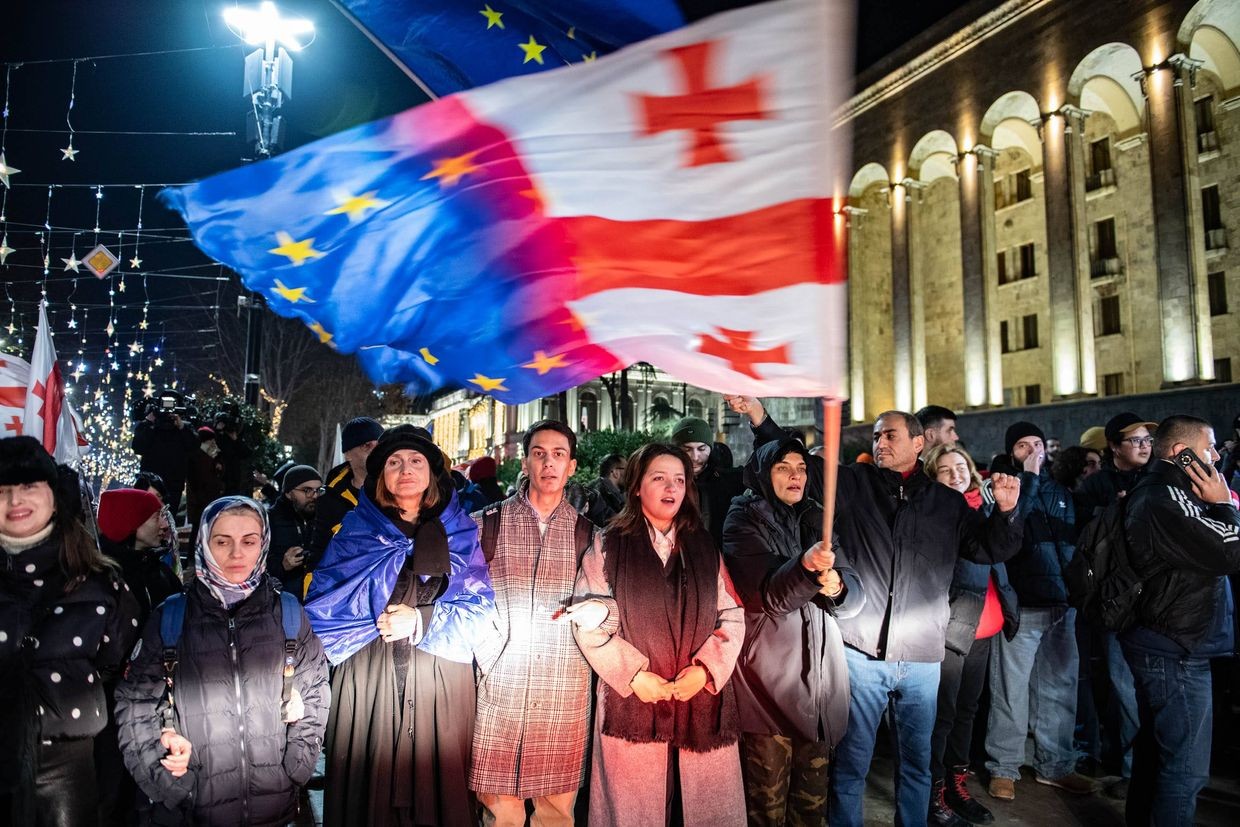
After the police recently succeeded in preventing them from blocking the roads, the main focus of the protests has shifted to pedestrian areas — primarily the pavement around parliament and the surrounding streets.
Although it was sharply criticised as yet another attempt to further restrict protest rights, some anti-government personalities decided to engage with the authorities through the new legislation and filed notifications with the Interior Ministry.
The ministry later responded to the notifications and began publishing information about planned protests on its website, along with the ‘mandatory instructions’ for protesters. However, any protests in mid-December for which the ministry did not publish information were considered illegal and participants began receiving administrative offense reports.
Condemning the legislation, critics emphasised that what ruling party MPs called a ‘notification’ in fact serves to bring protests under a permit system in the country.
Daily protests have been taking place in Tbilisi and other cities almost continuously since 28 November 2024, when the authorities halted Georgia’s EU membership bid.
In parallel, several restrictive legislations passed by Georgian Dream have directly or indirectly targeted street protests — from harsher penalties for blocking roads to bans on face coverings and other actions.
The ruling party has also targeted civil society, independent media, and the political opposition through laws adopted alongside those focused on curtailing demonstrations.
 OC Media