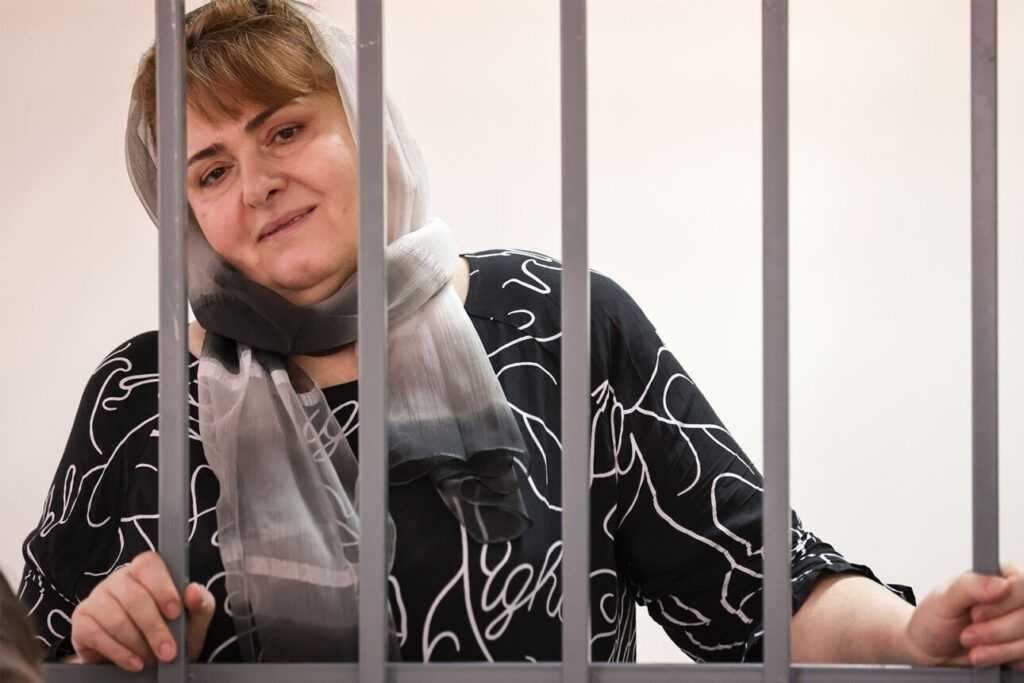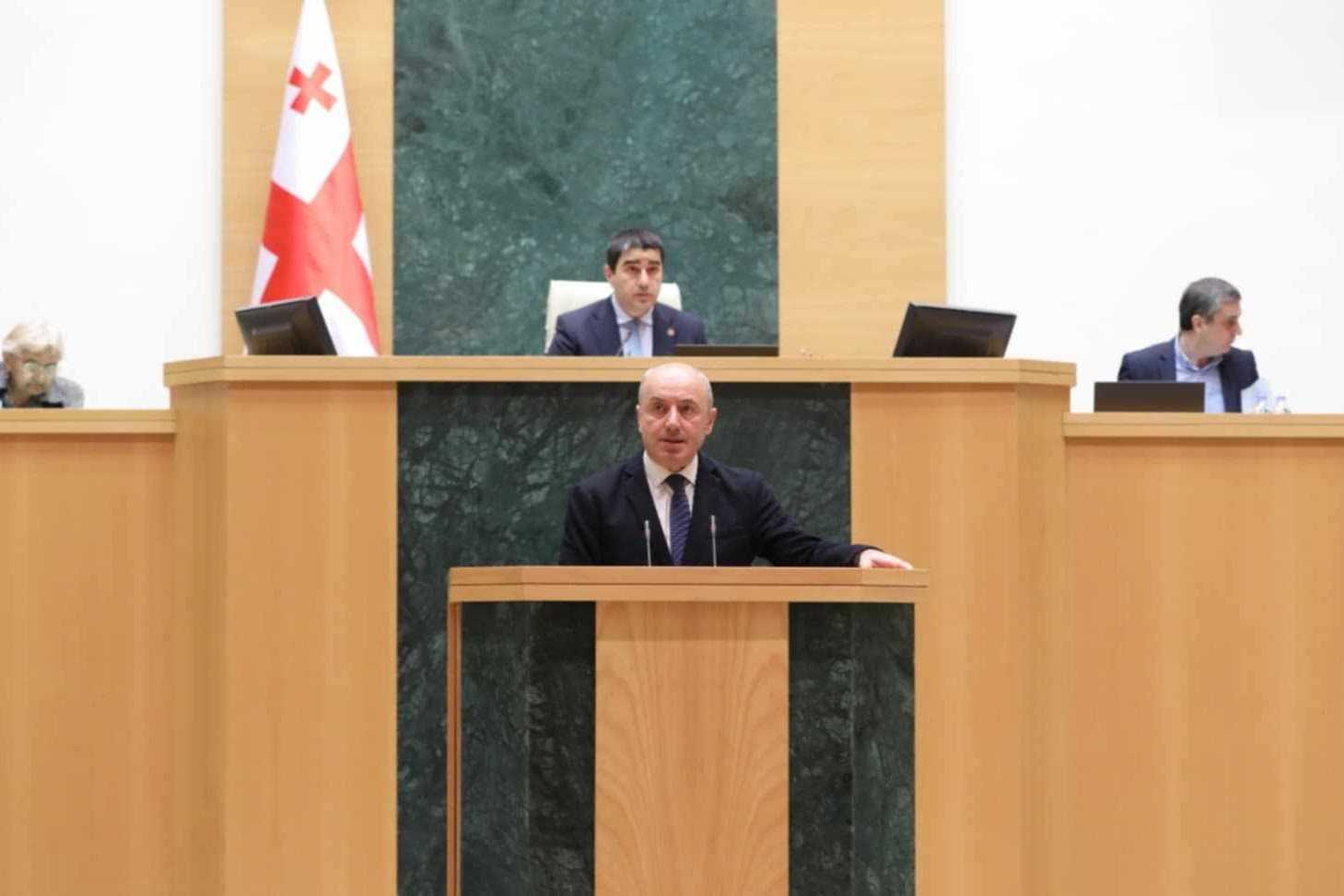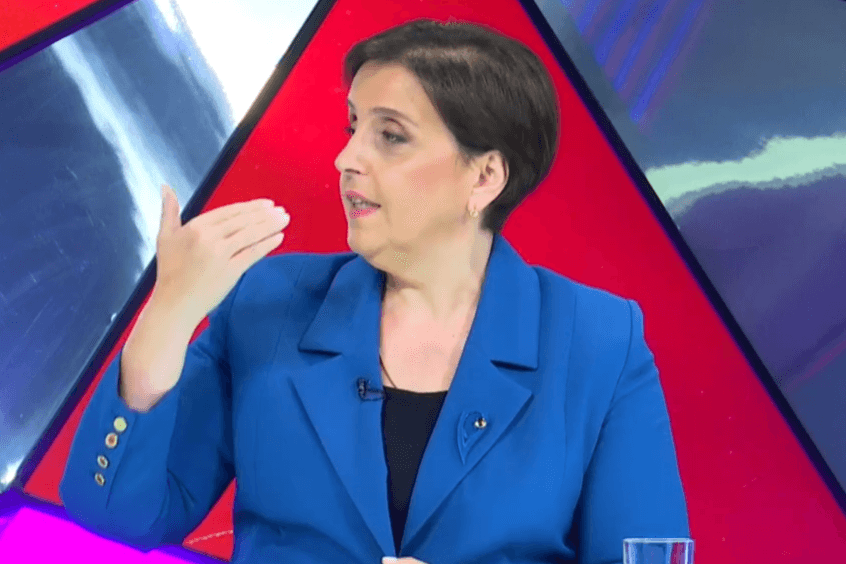
Eliso Kiladze, the founder of the Georgian media outlets Qronika+ and CNews, was detained in Tbilisi as part of a case involving fraudulent call centres. The Prosecutor General’s Office claimed she was a member of an ‘organised criminal group’ related to Georgia’s disgraced former Prosecutor General, Otar Partskhaladze.
In footage circulated on social media on Wednesday morning, Kiladze was seen in handcuffs, surrounded by masked law enforcement officers. She was apparently asking unidentified individuals to call her lawyer.
News of Kiladze’s detention was soon followed by a briefing from the Prosecutor General’s Office, which stated that criminal proceedings had been launched against her and nine other individuals on charges of fraud and money laundering committed by an organised group — offences punishable by nine to 12 years in prison.
According to the agency, those under investigation also included Georgia’s former Prosecutor General, Otar Partskhaladze, who has previosly been charged with organising the murder of Levan Jangveladze in Tbilisi in March 2025. Jangveladze, the brother of an influential member of the post-Soviet mafia, was shot dead in the capital’s central Chavchavadze Avenue.
Among the defendants were also Giorgi and Davit Mikadze — apparently the same Mikadze brothers who are being tried alongside Partskhaladze in the Vake murder case. Of the two brothers, one is in hiding, while the other, Giorgi Mikadze, is currently in prison.
 Yousef Bardouka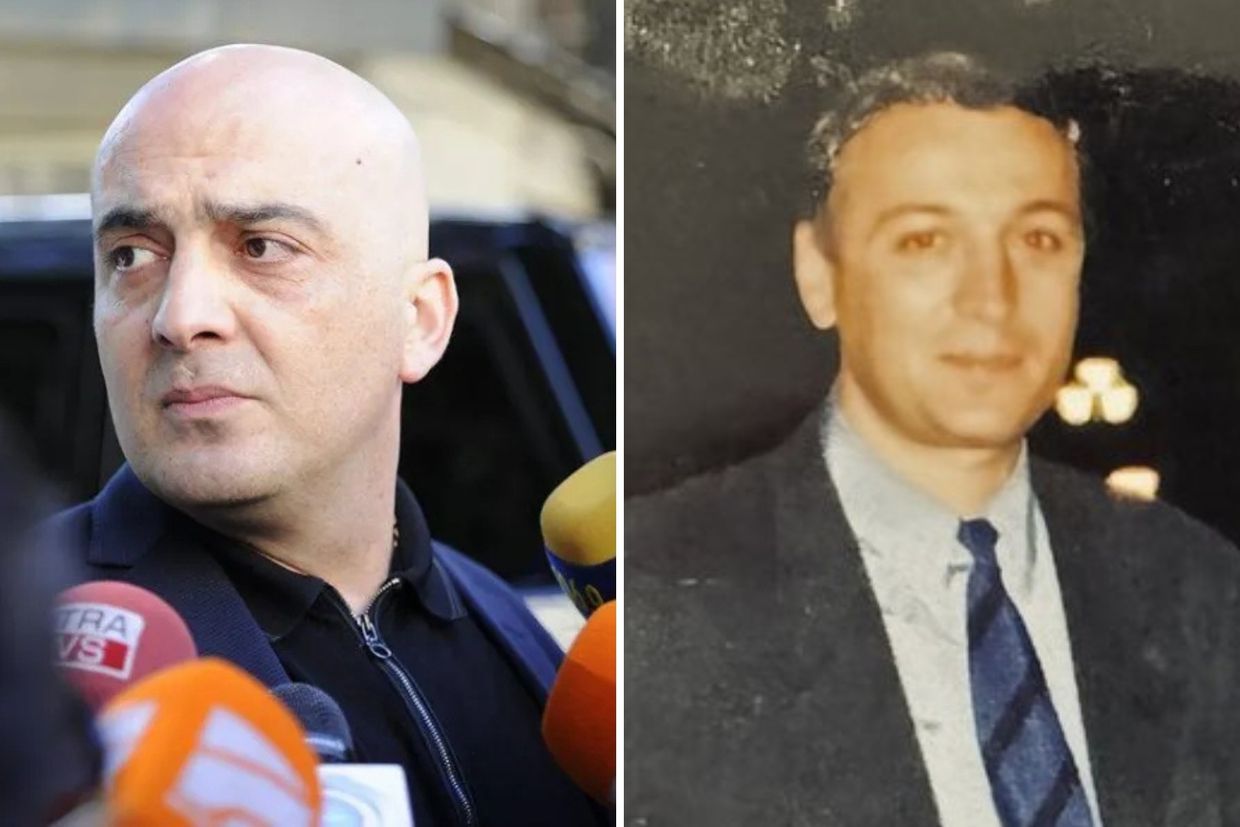
The agency also named Irakli Sekhniashvili, Mikheil Chokheli, Givi Jibladze, Ben Anor, Tornike Janelidze, and Giorgi Kamladze among those being charged. According to the Prosecutor General’s Office, the last three cooperated with the investigation and not only admitted their involvement, but also ‘substantially contributed to the uncovering of a transnational crime’.
What are Kiladze and others accused of?
It was said during Wednesday’s briefing that ‘despite the state’s declared legal fight in this direction’, there were still ‘several dozen fraudulent call centres’ operating in Georgia between 2020 and 2023.
The agency reiterated its earlier claim that the majority of these centres were owned by a group of individuals who ‘used part of their proceeds to finance various opposition media outlets’, while a ‘smaller portion’ were allegedly patronised by the now-jailed former head of the State Security Services (SSG), Grigol Liluashvili, as well as Partskhaladze.
Mikheil Gvadzabia
According to the Prosecutor General’s Office, the group operating under Partskhaladze’s alleged protection set up call centres at various locations of the country, with Russian, English, and German-language departments.
‘Call centre operators, acting on the instructions of their supervisors, attracted customers to fake trading platforms, lured them into making supposedly profitable investments, and fraudulently misappropriated large sums of money or cryptocurrency invested by the customers. They then proceeded to place, layer, and integrate the illicit assets’, the statement read.
The office further claimed that the individuals involved in the case had divided roles. Kiladze — whom the prosecution, like the others, referred to as a ‘member of an organised criminal group’ — was allegedly tasked with ensuring that the group’s criminal activities ‘were presented as lawful’.
‘At the same time, in order to expose competing call centres that were not under their influence, Eliso Kiladze planned, threatened, or carried out the public dissemination of information about their locations and employees, and subsequently created the appropriate conditions to coerce them into submission through blackmail’, the agency added.
According to the statement, the Mikadze brothers, Sekhniashvili, and Chokheli were responsible for protecting the call centres’ operations ‘through Partskhaladze and his network of influence’, while Jibladze, Anor, Janelidze, and Kamladze were tasked with ensuring the ‘smooth functioning’ of the centres, as well as managing income and expenses and distributing salaries.
The agency claimed that between 2020 and 2023 the individuals involved in the case fraudulently obtained cryptocurrency worth a total of $9.5 million, which they later laundered.
The Prosecutor General’s Office has vowed to demand that Kiladze and Giorgi Mikadze be placed in pre-trial detention. It is seeking the same measure against Partskhaladze, Davit Mikadze, Sekhniashvili, and Chokheli — all of whom, according to the agency, are currently in hiding. The agency has also demanded that bail be set for Jibladze, Anor, Janelidze, and Kamladze, reflecting the ‘quality of their cooperation with the investigation’.
Kiladze dismissed the accusations
Kiladze is a media figure critical of the government. Throughout her career, she has repeatedly published exclusives and sensational exposés citing anonymous government sources.
She has previously stated that Davit Mikadze, accused of organising the Jangveladze murder, is a long-time friend of hers. Kiladze has questioned the official version of the investigation regarding the murder.
By early Wednesday evening, it was reported that Kiladze had been transferred to a temporary detention facility in Rustavi. In a letter sent from a detention facility, she denied the charges.
‘There was no criminal group, and I had no knowledge of any “call centres” operating in the building’, she said, apparently referring to a building where her offices are situated.
According to Kiladze, she does not know Partskhaladze or Chokheli, both named in the case by the Prosecutor General’s Office. She said she met Giorgi Mikadze during a court hearing, while once again acknowledging that she is friends with Davit Mikadze.
Speaking about the reasons for her arrest, Kiladze claimed that ‘the case of Levan Jangveladze’s murder has collapsed’ and that ‘all the fabricated charges have been exposed by me’. She also said that this week she had planned to speak about details surrounding the suicide of an SSG employee, whose body was found in a car near his workplace on 26 January.
‘To the journalists of my media outlets, I want to say — the fight will continue to the end! Strength to my family’, she concluded.
Past accusations and Kiladze’s response
In the past years, Kiladze herself has repeatedly commented on the issue of fraudulent call centres operating in Georgia. Among others, she accused Davit Kezerashvili, a businessperson, founder of the opposition-leaning TV Formula, and former Defence Minister under the previous United National Movement (UNM) government, of owning some of these centres.
In April 2023, pro-government media reported that Kiladze herself allegedly owned a call centre, which was reportedly located in Tbilisi in the same business centre that housed the offices of media outlets founded by Kiladze. The same reports said the law enforcement officers had visited the office to conduct inspections.
At the time, Kiladze confirmed that law enforcement had indeed arrived at the business centre and seized equipment, but she denied owning any call centre. She suggested that the anonymous call to the investigators against her may have involved Kezerashvili.
Tata Shoshiashvili
Scam networks in Georgia
Fraudulent call centres operating in Georgia have repeatedly attracted attention from both local and international media in recent years.
One high-profile case involved a 2023 BBC investigation into Kezerashvili’s alleged links to fraudulent networks. Kezerashvili denied the claims, and by late 2024 the investigative film had been removed from BBC platforms. He said this was due to a court case he initiated, while the channel stated it had reached an out-of-court agreement with the businessperson.
Later, in 2025, an OCCRP investigation exposed a scam call centre located in downtown Tbilisi believed to have scammed $35 million out of victims in Europe and Canada between 2022 and 2025.
Following the investigation, the Prosecutor General’s Office seized the assets of some individuals allegedly involved in fraud, as identified by journalists. However, there is still no public information about any of them charged or being detained.
According to the OCCRP, some members of the group resumed their fraudulent activities even after being exposed.
OC Media