‘He learned to live on his own’: the hidden toll on Georgia’s women protesters
In a country where rigid gender roles remain, many Georgian women must juggle childcare, housework, and fighting for their children’s future.


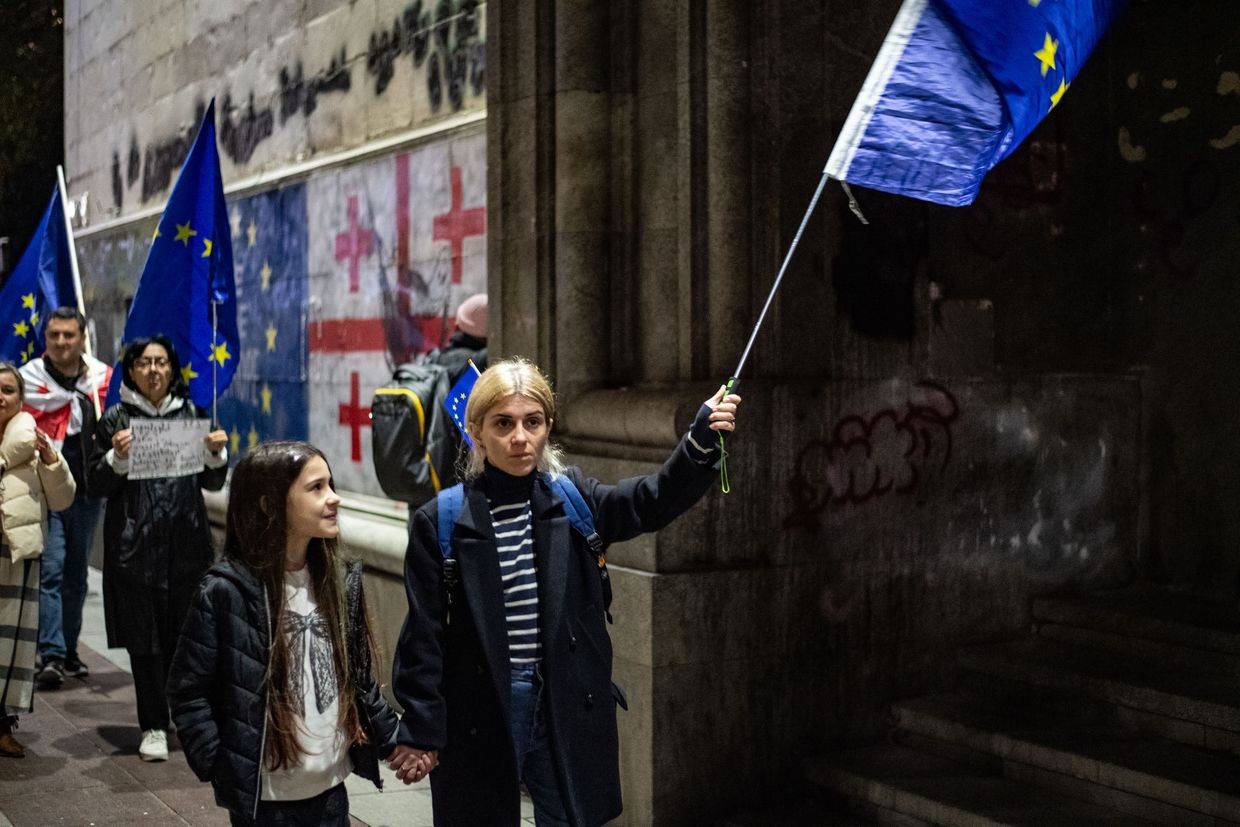
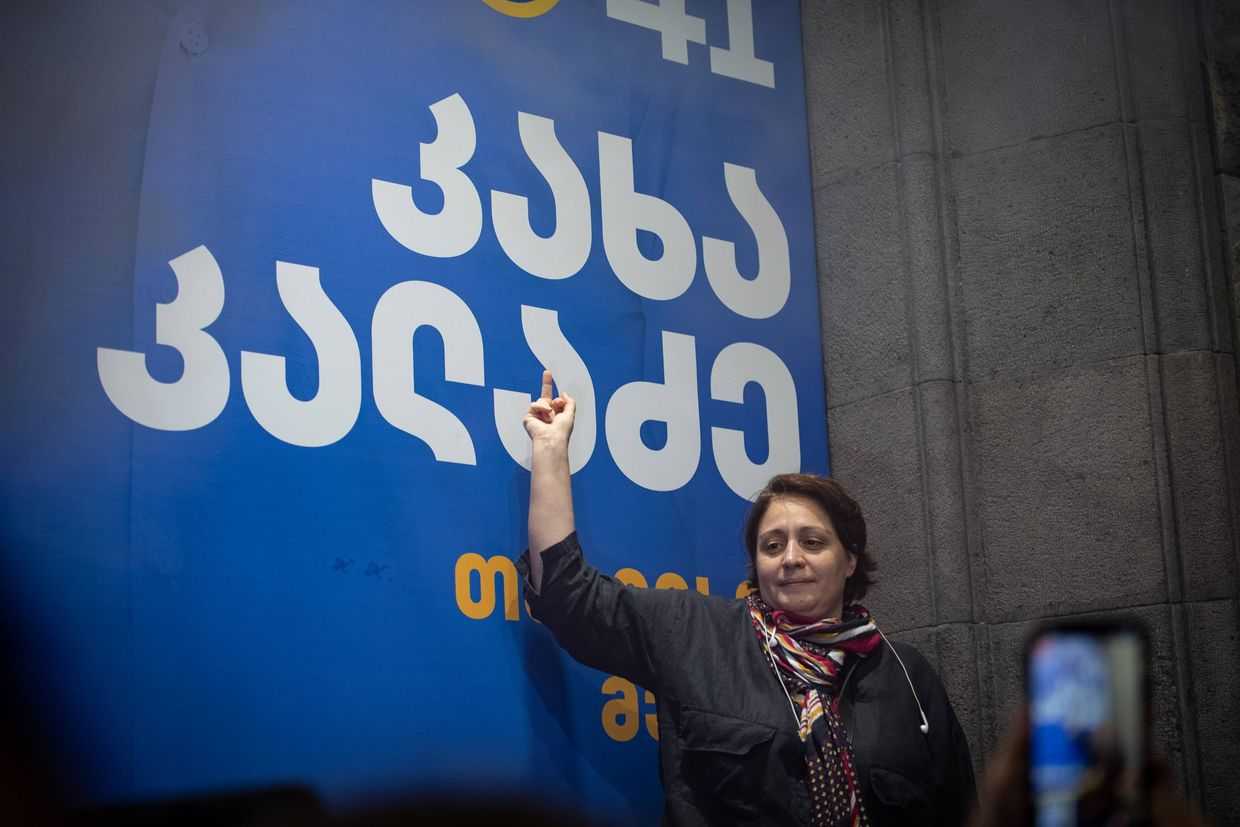
Tatia Melikishvili knows the rhythm of protest almost as well as she knows her son’s school schedule. At 33, she has spent the last seven years standing shoulder to shoulder with strangers on Rustaveli Avenue, demanding accountability from governments that rarely listen.
She admits the hardest part is missing time with her child — at the same time, however, she believes she is investing in his future. Whenever she looks at him, or at other people’s children, she reminds herself that she is trying to build a future where these children won’t have to fight like she has had to.
On 28 November 2024, the day Prime Minister Irakli Kobakhidze announced the halting of Georgia’s EU accession bid, Tatia says she left her son home alone for the first time.
‘I didn’t take him to the rally. I used to bring him to peaceful demonstrations, but that day I knew it might not end calmly. There was too much tension, too much risk from the system against its own citizens’, she says.
Taking a deep breath, she continues, noting that it took nine months from that day to understand that her son had grown up in the intervening time.
‘He learned to live on his own, to wait for me, to care for himself. During those days, when the police would disperse us, I would sometimes come home bruised, hit by riot [police] officers. My son started treating me with a kind of protective care — as if he had suddenly become the one watching over me’.
She pauses again, as if weighing every memory she is about to put into words.
‘Before leaving home for a protest, I used to write my lawyer’s number and my full name on my arm’, she recalls. ‘My son would write my blood type on my back’.
‘When I think about it now, I ask myself what we were sending him into — and how all of this will settle in his mind. Back then, I couldn’t process it this way; I was inside the process, completely absorbed in it […] Now I find myself asking: where was my child sending me, when he wrote my blood type on my back?’, she continues.
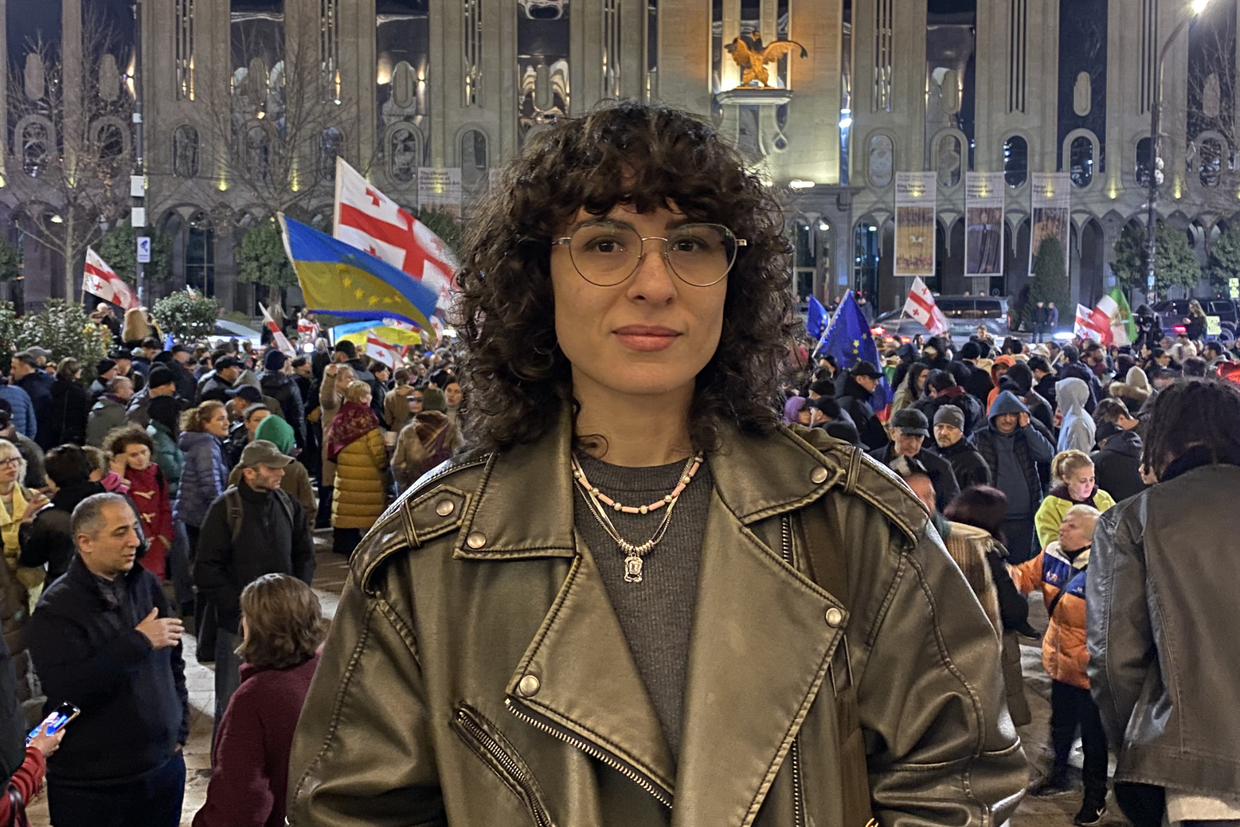
‘Passing that reality on to a teenage boy — that his mother might come back injured or not at all — is something you probably shouldn’t do unless you see no other choice. But then and now, I believed that even one person showing up matters’, Tatia explains.
‘I was that one person […] I went out, no matter the conditions, even when there was no one to leave my son with. He was no longer so small that he might harm himself at home, but he wasn’t old enough to be writing his mother’s blood type on her back, fully understanding that she could be beaten or stabbed. I always tried to shield him from images of physical violence against me, but sadly, even then, my friends were injured’, she says.
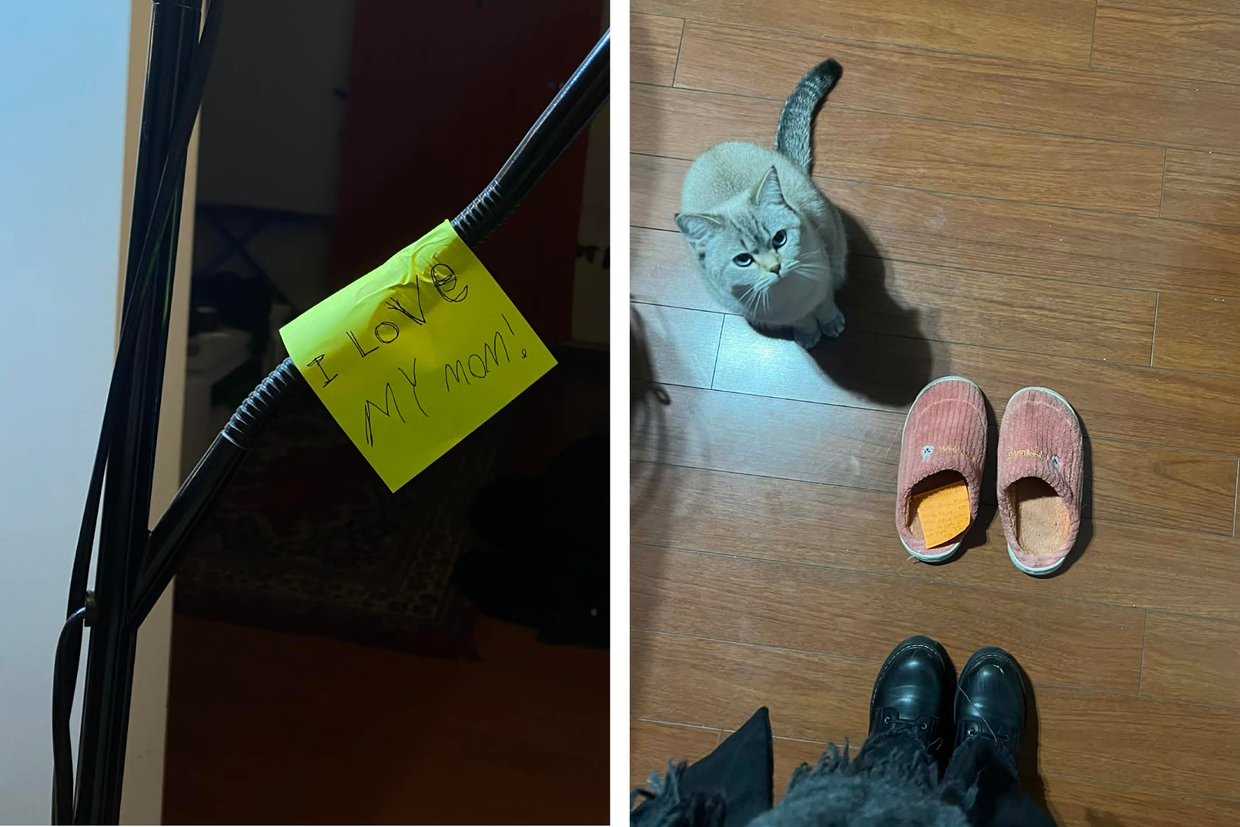
Sometimes, the clearest answer to what her son thought of her would be waiting quietly at the front door. When Tatia would return late at night in December 2024, after hours on the streets, she would find a small ritual laid out on the floor.
‘When Toma went to sleep alone, I would come home and my slippers would always be waiting for me by the door. As soon as I opened it, they were there, and on top of them he would leave little notes. I have so many photos of those moments’, she recalls.
‘Most of them were thank-you notes — telling me he knew why I was out there, that he was grateful for it’, she adds.
Tatia has spent countless evenings talking with him about their country, trying to make sense of politics and fear in a language a child could comprehend and carry.
‘Toma is part of Generation Alpha’, she says. ‘My generation, Millenials, Gen Z, had to go out into the streets. I keep hoping that maybe his generation won’t have to’.
For Tatia, this defiance is almost visible, etched into her face and those of the women who stand around her.
‘You can see the question written on our faces’, she says. ‘Do I look like someone who will step back now?’
She carried that exact message on a banner when the foreign agents law was first introduced, a blunt challenge to anyone expecting surrender.
‘That feeling is so deeply rooted in me’, she adds. ‘I keep asking myself: what could possibly make me turn back?’.
‘In a way, every woman here feels like that’, Tatia reflects. ‘They are dangerous to this system precisely because they don’t retreat. I am sure they will reach their goal, and I think, deep down, they know it too. Strong women almost always manage to win the most fundamental battles, sooner or later’.
Over the past decade, women like Tatia have been at the frontlines of nearly every major protest in Georgia — from demonstrations against political repression and violence to environmental and labour rights movements. While their presence in the public sphere has grown more visible, the personal cost of sustained activism often remains unseen.
Many of these women balance years of civic engagement with the everyday responsibilities of work, family, and care. The lines between public duty and private life blur as activism becomes intertwined with the routines of home — from managing households to raising children amidst police sirens and campaigns for change.
‘We must overcome the fear that has been sown’
Ana Bdeiani believes that change always begins with noise, serving as a signal for action. Since the 2019 ‘Gavrilov’s Night’ protests, the streets have meant more to her than just public space — they have become a responsibility, a promise she made to herself. Going out into the streets has become an integral part of her life — no longer will she just watch the process from the sidelines.
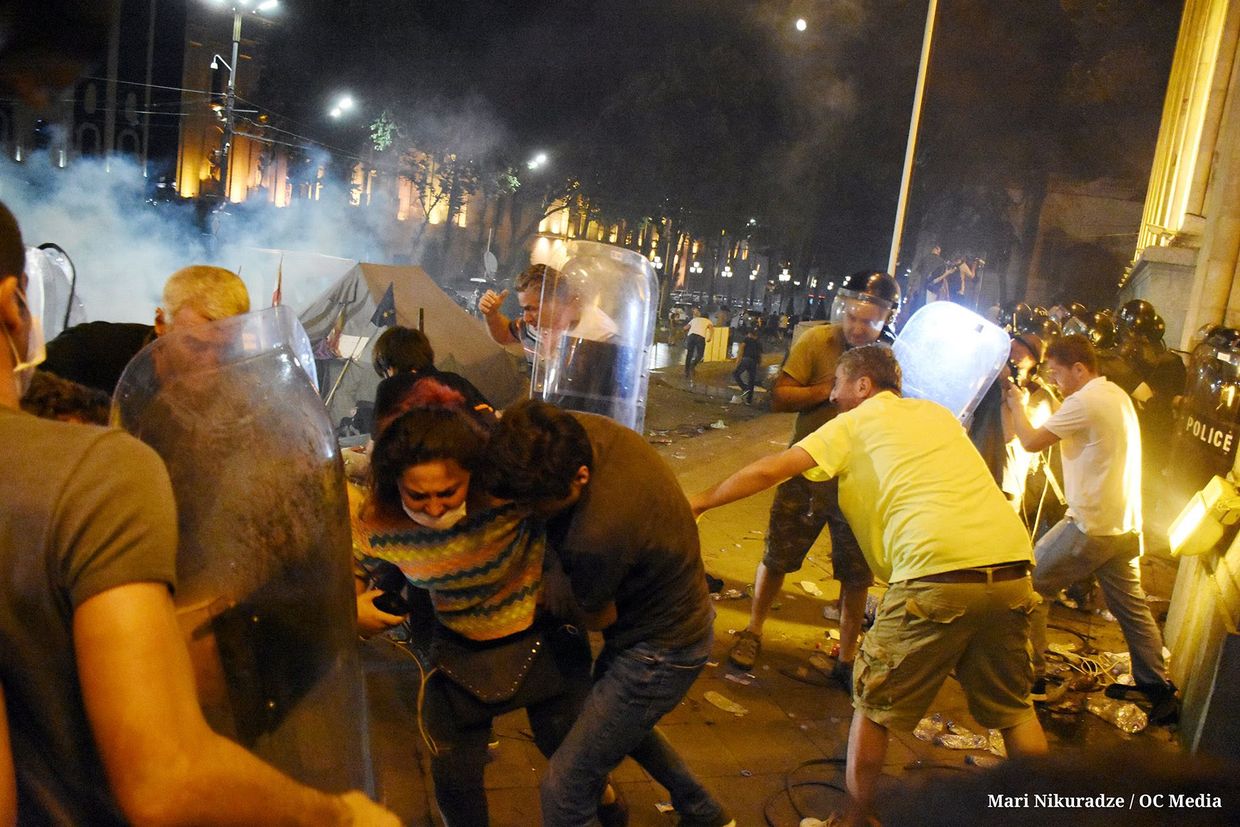
When the foreign agents law was first introduced in 2023, Ana cancelled a family visit to Italy and flew back to Tbilisi. She does not consider herself a hero, nor does she expect anyone’s gratitude — she simply says that if she had wanted to escape, it would have been easy, since her family lives in Italy. But for Ana, emigration is not a choice — it is surrender.
‘If I had put myself and my family first, I would have left’, she says calmly. ‘But I can’t. While I still can, I will stay here — for my country, for the graves of my ancestors, for my home and my city’.
She explains that running away is not in her nature: ‘People beg me to come, telling me not to sacrifice myself or my children, but I can’t. It’s not in me to get up, run, and save myself alone. No’.
Her mother watches all of this — a woman who lived through 9 April 1989, when Soviet troops killed 21 people at a pro-independence rally, and numerous armed conflicts, and who still recognises the tension in her old age — but she understands that this struggle is necessary for her grandchildren. She often expresses pride and tells Ana: ‘You are what I wish I could have been’.
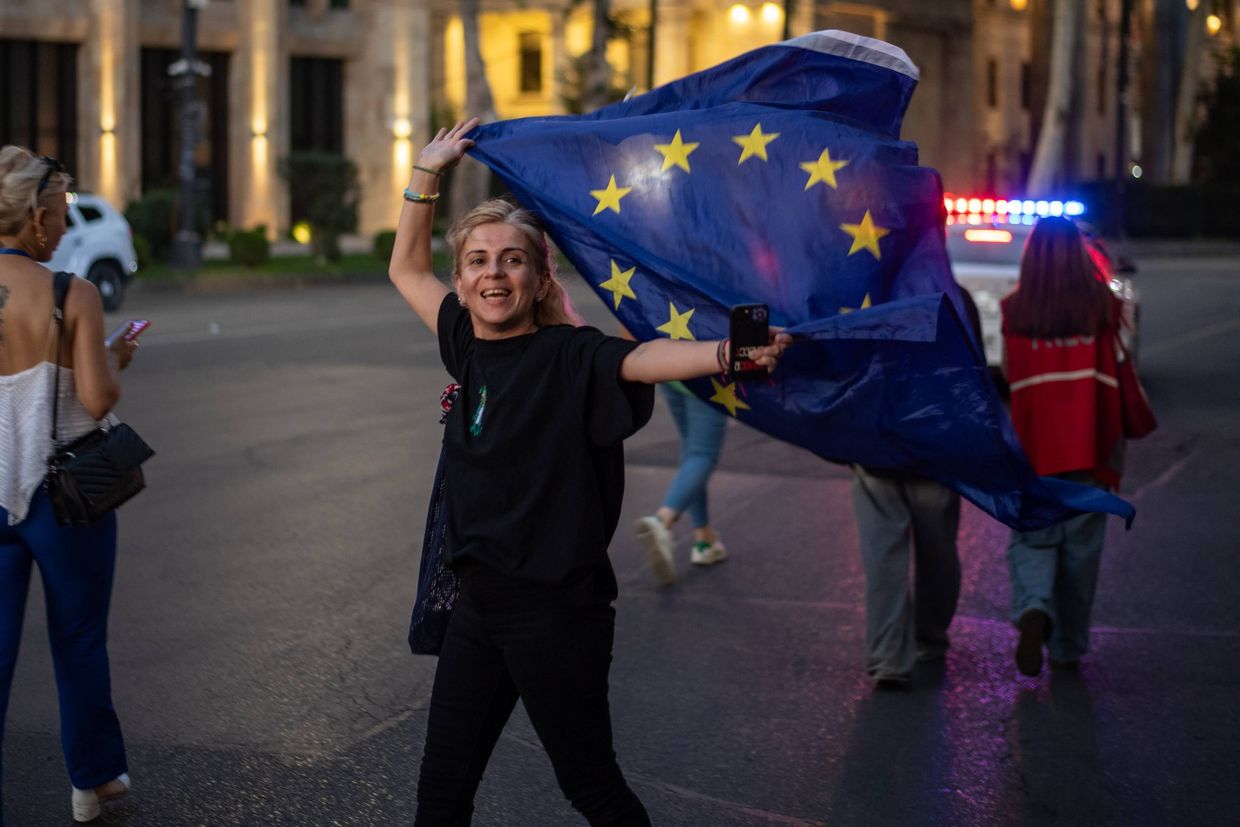
Ana says that her activism is constantly accompanied by threats.
‘Messages keep coming, calls from unknown numbers — sometimes they threaten, sometimes they “advise” me to stay home because I have children. That’s the hardest pressure, when they try to manipulate you through your children. But I always tell them that it’s exactly because of my children that I stand here’.
Ana is a mother of three, two of whom are still children. The word ‘children’ is not a weakness for her, it is her support. She has often brought them to protests, wanting them to know where their mother stands and why. She also wanted them to see the people she fights alongside — principled, unyielding women and men.
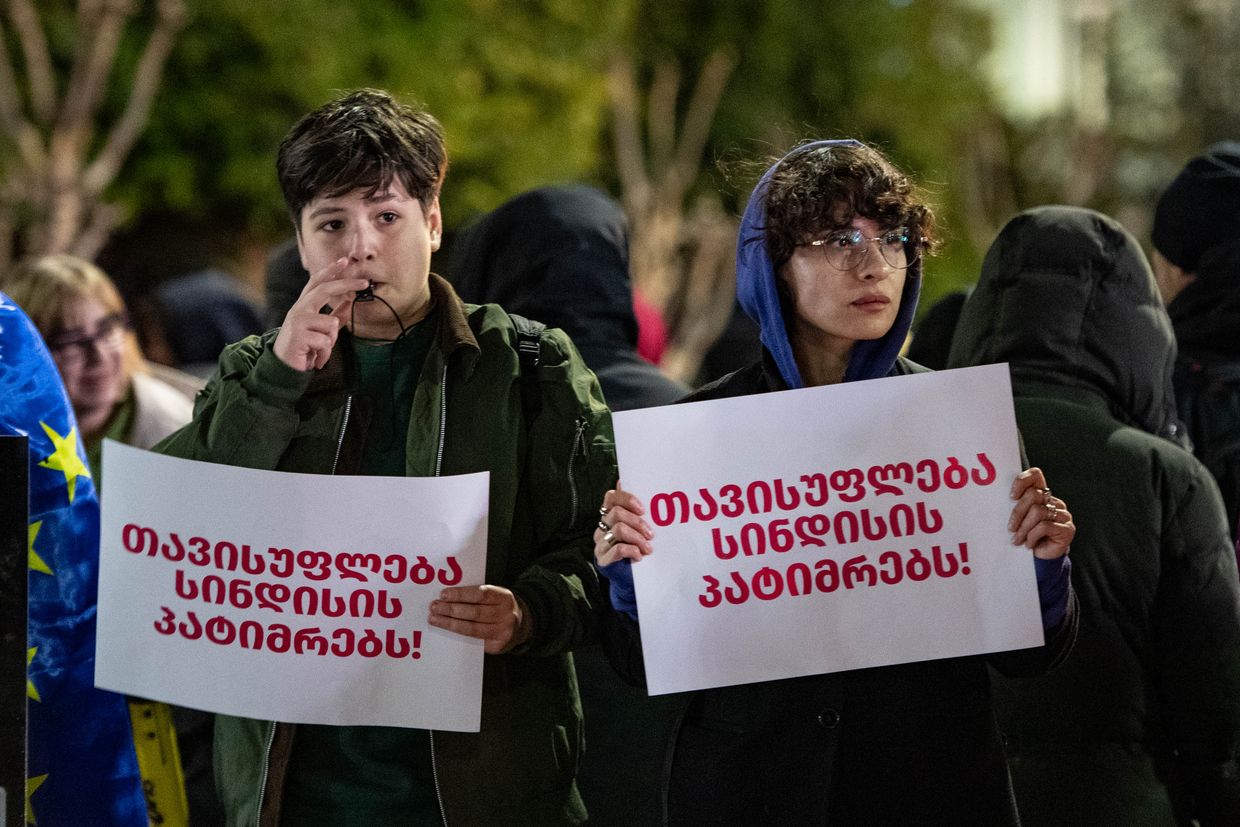
When in December 2025 a group of women founded the ProtestSHE movement (a play on words, meaning ‘in protest’ in Georgian), Ana realised it had entered a different phase. Their goal, she says, is persistent and clear protest until what they see as an illegitimate government is replaced.
‘Apparently, they [government supporters] didn’t like that women came out so organised,’ she says.
Ana already has nearly 60 administrative fines. The court discontinued proceedings in two administrative cases regarding protesting on the pavement and referred them back to the Interior Ministry. According to the judge, the repeat nature of the ‘offences’ meant they could fall under criminal law, which would carry a possible prison sentence. Ana appealed this decision to the Constitutional Court, which has already accepted the case for review.
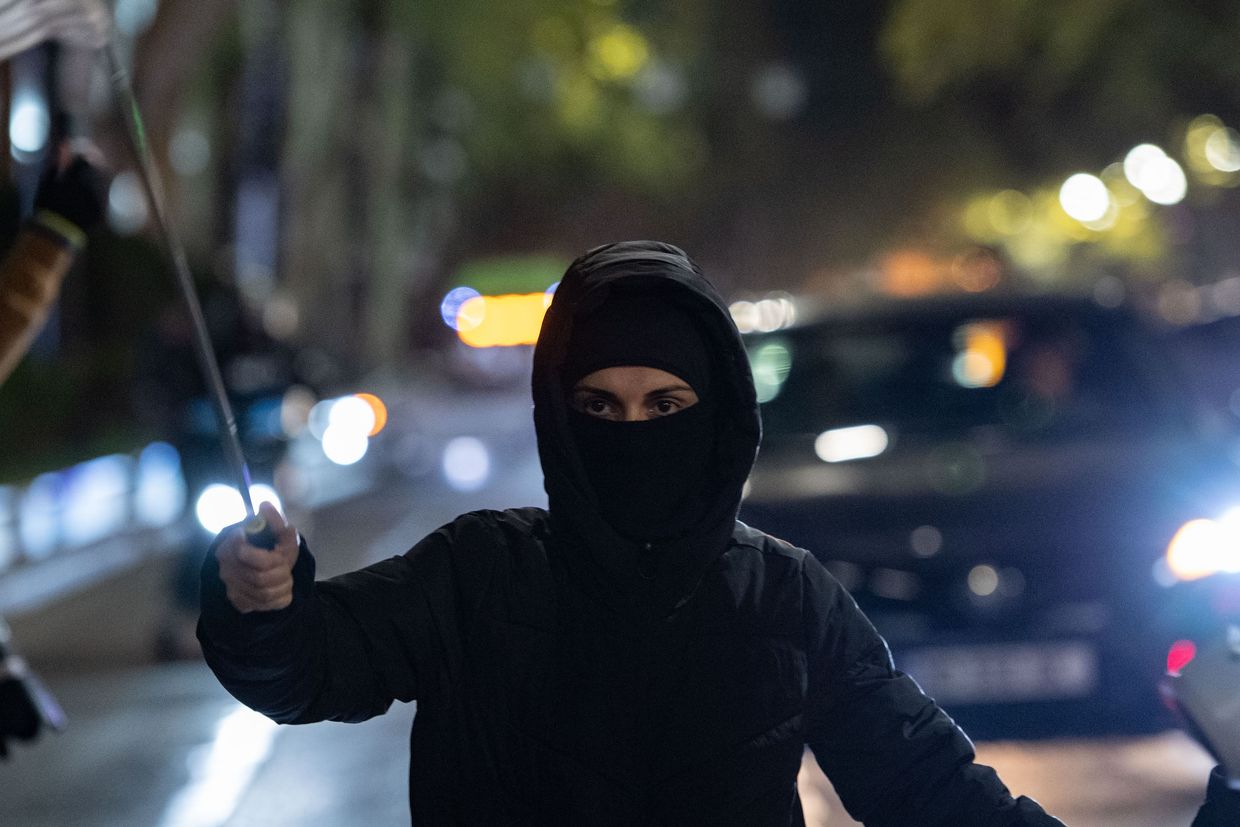
She still has time to cross the border and save herself. She could take her children and her mother with her. But she says she will stay until the end.
Sometimes, at night, when she returns home, she says the silence feels heavier than the noise of the streets. She thinks about the evenings her children missed, wondering what will remain from all of this — trauma or example. But then she asks herself the same question again: if she does not stand here now, where will her children have to stand?
‘We must overcome the fear that has been sown’, she says. ‘I believe our country will survive, and my children will not have to go to Italy or elsewhere just to survive. That is my main motivation’.
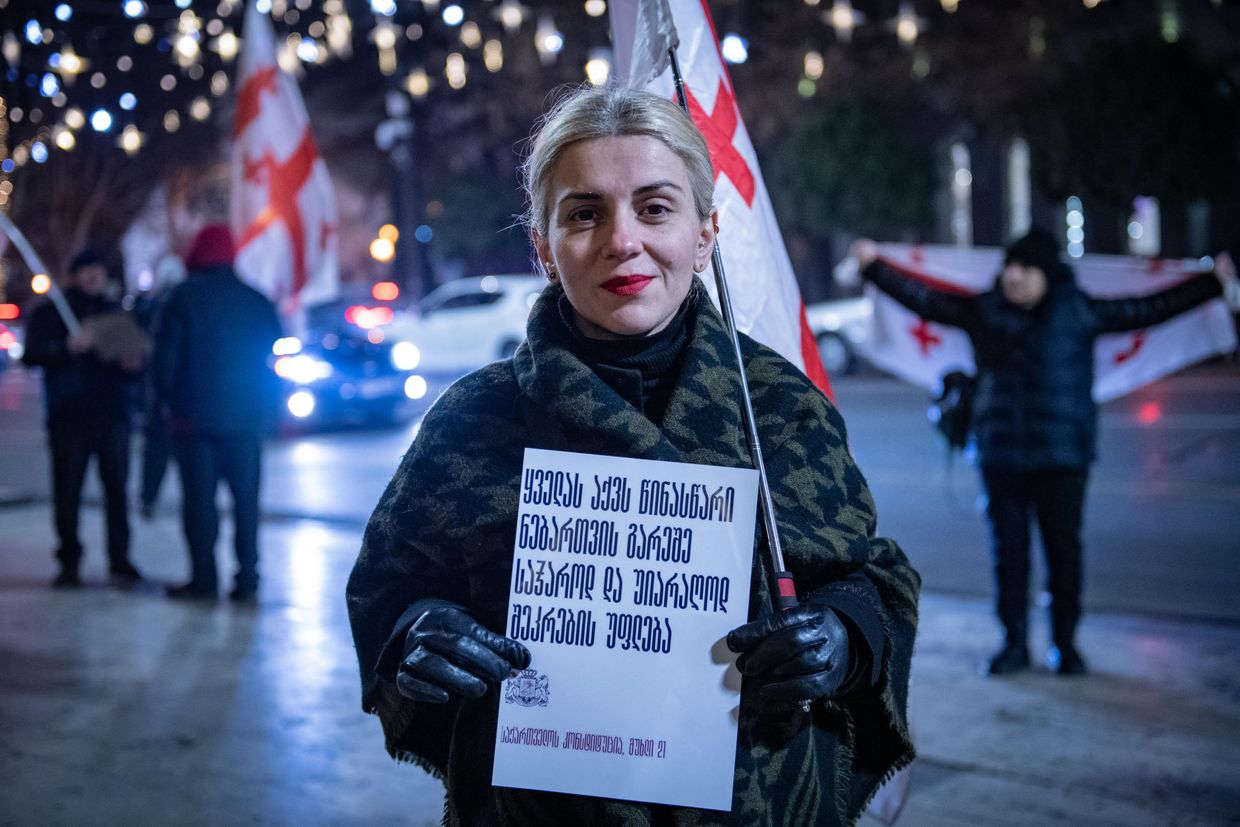
Finding time to stand on the front lines for change
Katie Tutberidze doesn’t just report on Georgia’s battles, she fights them. As a journalist and propaganda researcher, she has spent years covering human rights abuses, from women’s rights to workers’ struggles, always with two young children waiting at home. For her, the line between journalism and activism vanished long ago.
For Katie, the government’s new wave of draconic laws was not an abstract threat — it shut the door on her livelihood. Pushed out of her job for almost six months, she found herself cut off from the newsroom but not from the fight. In that vacuum, her activism only deepened: the street became her beat, and her phone turned into a portable newsroom and megaphone at once.
With no editor’s desk to return to, Katie threw herself fully into documenting and challenging the regime in real time, using social networks as both archive and battleground.
Throughout, her nine-year-old daughter and 15-year-old son are never far from her thoughts, a constant anchor amidst the chaos.
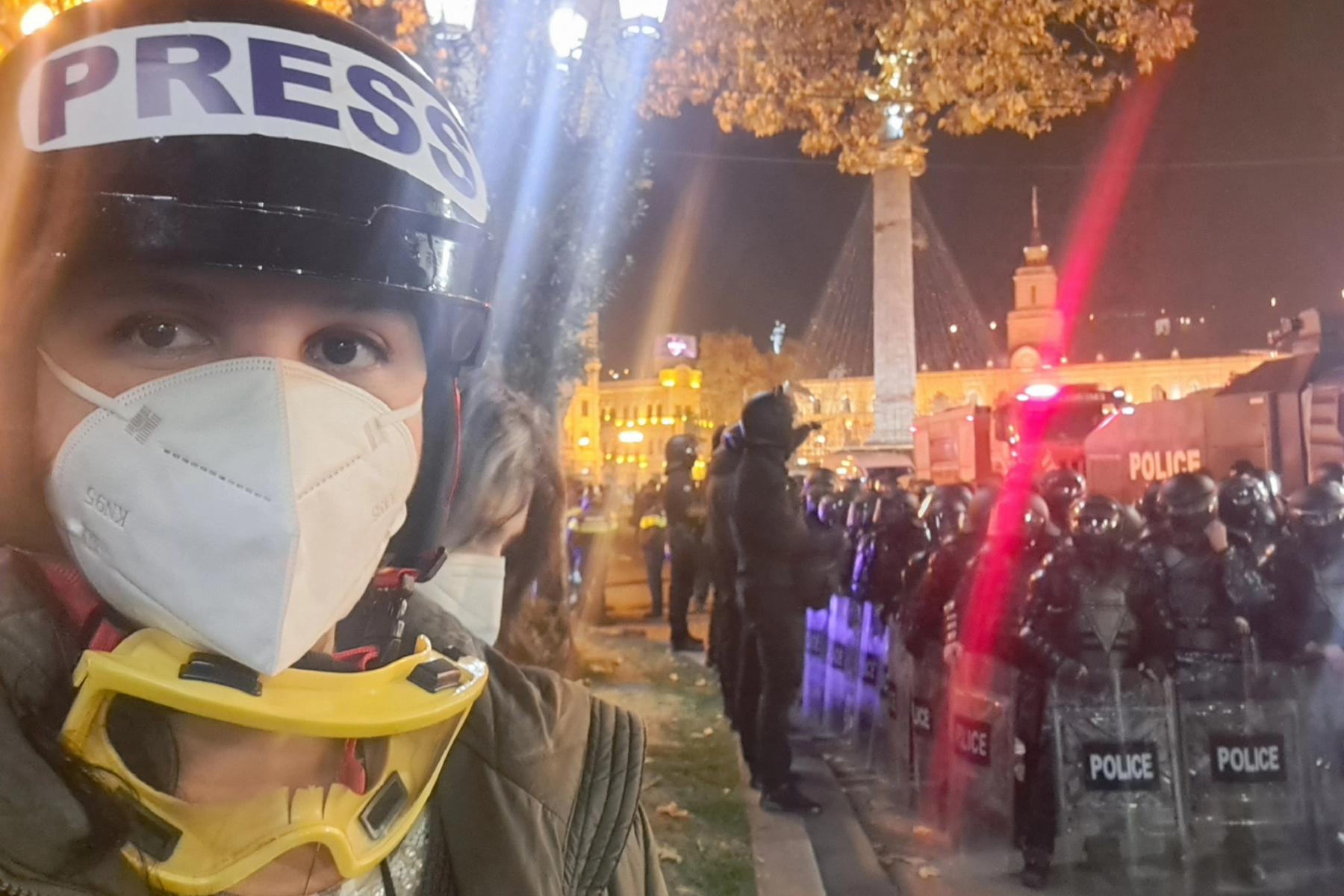
‘It’s genuinely hard — no one should think otherwise’, she admits. ‘When I’m working, my mind drifts to my children; sometimes I’m physically with them, but mentally wrestling with some brutal story I’m covering’.
She notes that some might also dismiss it as sloganising when she says she is out there for her children.
In Georgia’s rigid gender landscape, where traditional roles often pile childcare, housework, and homework help onto women, Katie sees the real battle as juggling it all while protesting.
‘It’s the hardest part for many here’, she says, pushing back against the entrenched expectations she’s fighting to dismantle. ‘You’re helping with schoolwork one hour, scrubbing dishes the next, caring for kids around the clock, working hard, helping marginalised people, telling their untold stories, and still finding time to stand on the front lines for change’.
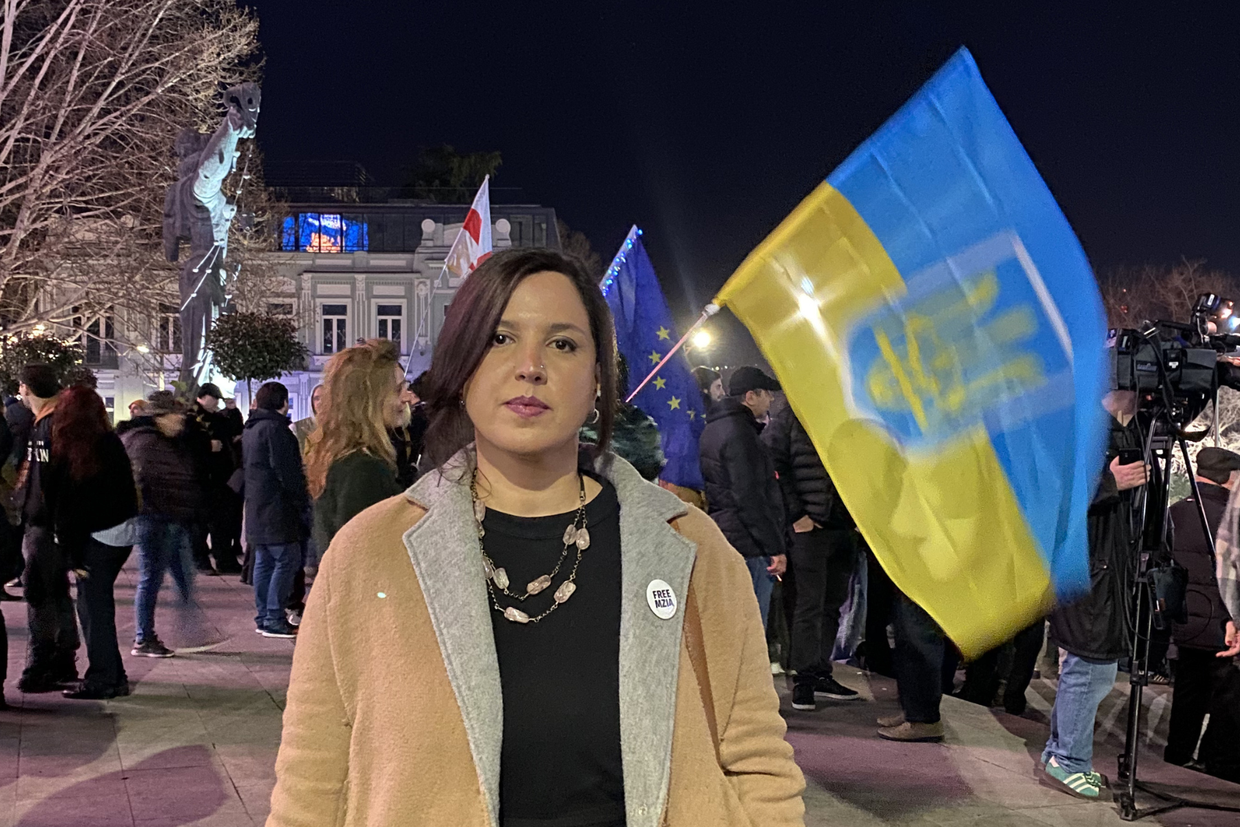
Katie feels the guilt keenly, even as her children tell her they’re proud, giving her a quiet strength that keeps her going through the front-line chaos.
‘I feel it deeply sometimes, missing time with them despite my mind being consumed by their problems’, she confesses. ‘But even then, I can’t always give myself permission to fully savour moments with my children. Something out there always pulls at me, demanding my attention’.
Katie sees the current wave of Georgian protests as unmistakably feminine in character.
‘These protests bear the face of that unyielding spirit’, she says, ‘a mother — or anyone trapped in society’s rigid roles — juggling endless care, schoolwork, and meals one moment, then facing tear gas the next, still emerging as devoted parent, committed citizen, and resilient partner’.
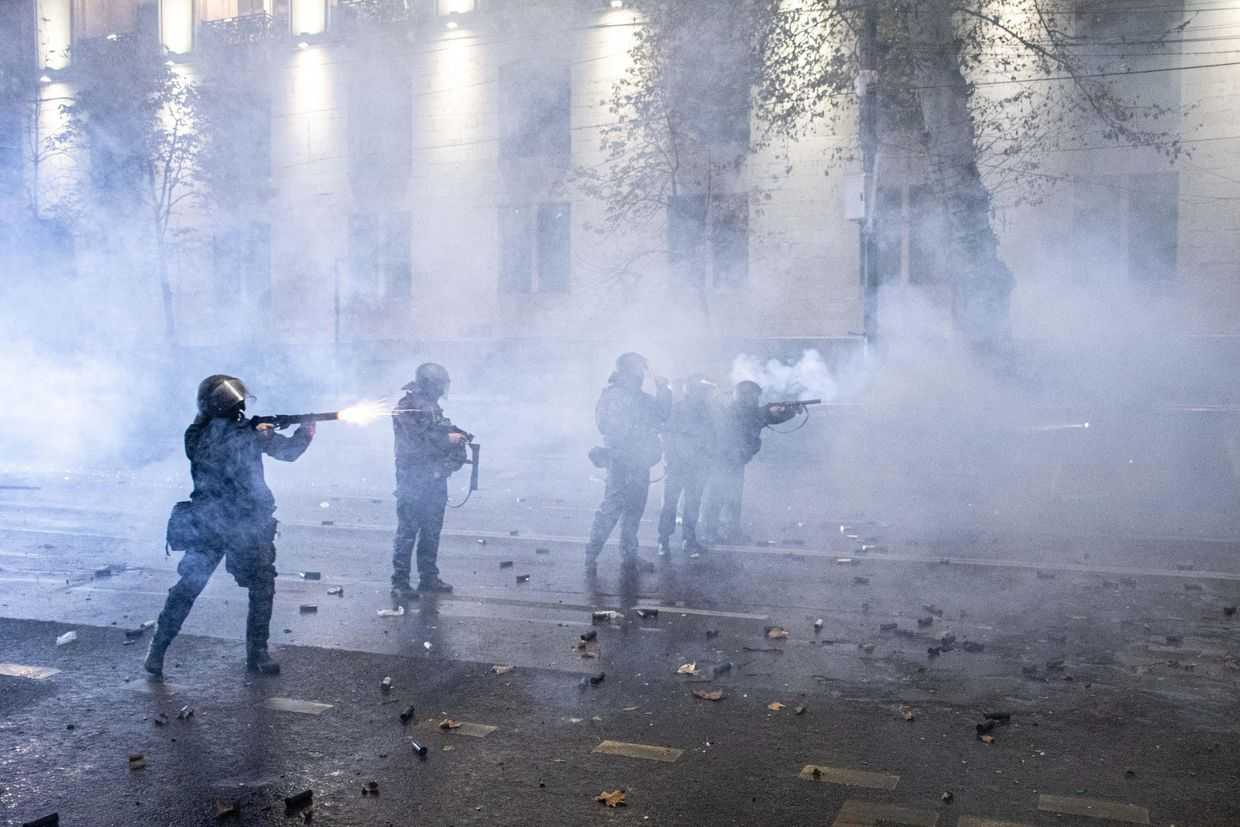
She tries to shield her children from politics, explaining her absences simply: the country needs her as much as they do. But one night, the TV was on, and her daughter — kept off social media to insulate her from distressing news — caught a glimpse anyway. It was the night of 29–30 November 2024, flames and water cannons cutting through the freezing dark as police dispersed protesters.
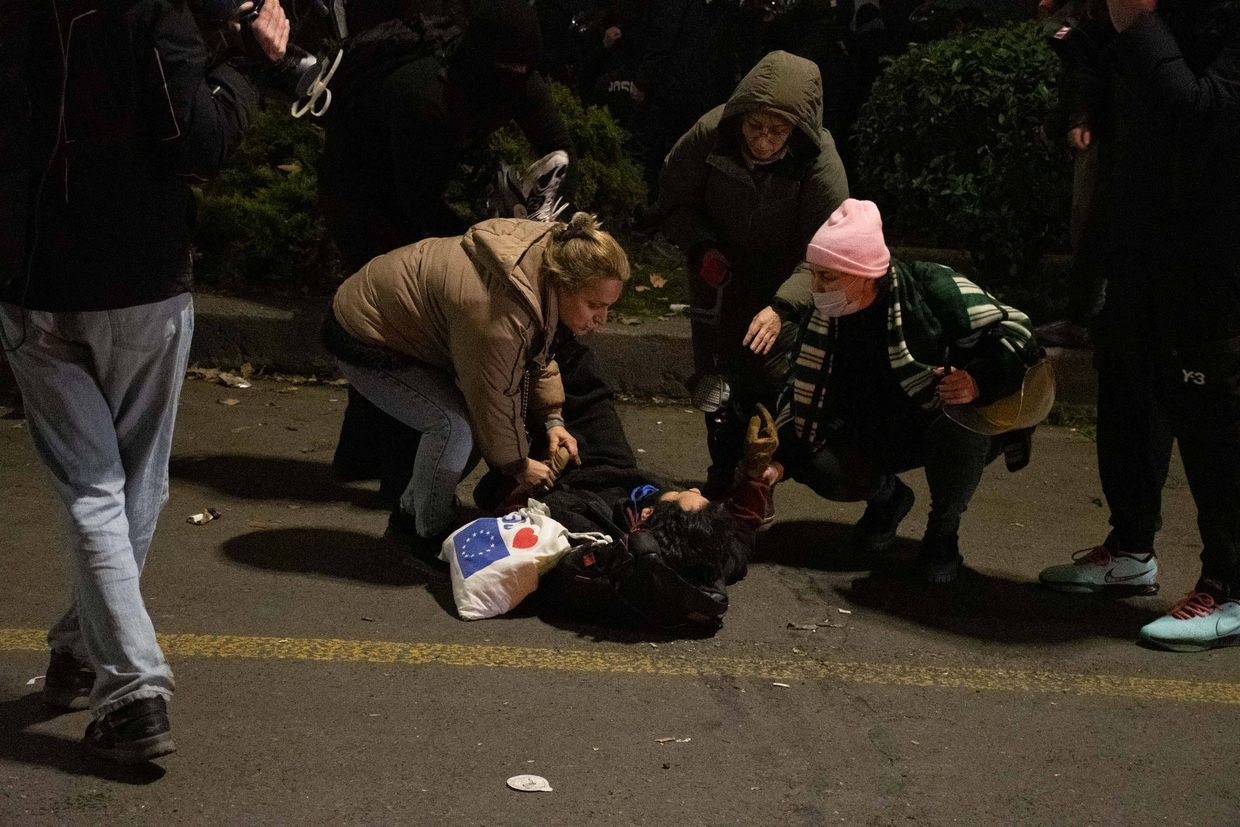
‘She sent me this heartbreaking message’, Katie recalls. Her daughter urged her to be careful before sending a voice note: ‘I can’t sleep. Come home soon’. Katie stumbled in around 03:00, gas still burning her lungs, collapsing into her daughter’s bed, hugging her softly after washing off the poison.
Despite this she keeps going, afraid to ever have her children hear that she was missing when Georgia’s fate hung in the balance. For her, this thinking justifies every missed bedtime.
‘It’s an existential war — not just for our future, but our sovereignty. To put it metaphorically, this fight decides if Georgia’s five-cross flag flies on’.