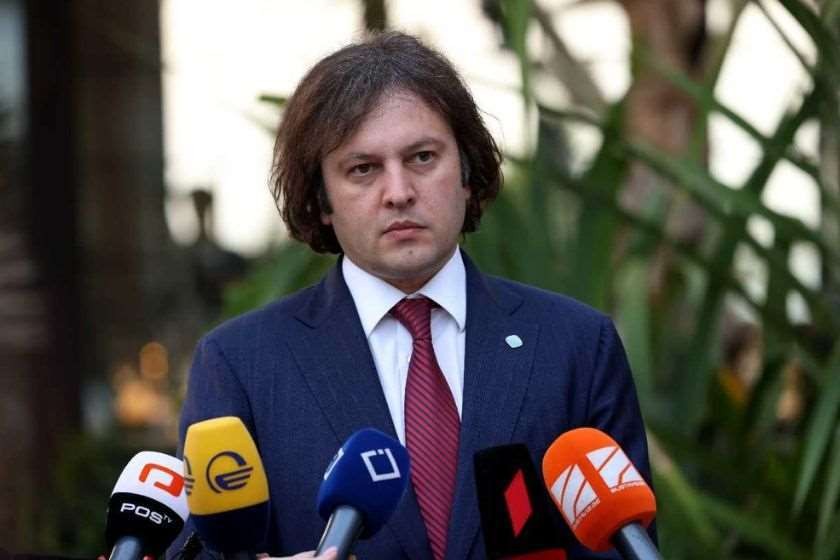
Prime Minister Irakli Kobakhidze has acknowledged high food prices in Georgia, attributing them to large markups and high profits. He promised to work with distributors and retailers on the issue, but also called for law enforcement to investigate possible ‘cartel-like’ practices.
In a video posted on his personal and the ruling Georgian Dream party’s social media pages on Wednesday, Kobakhidze spoke about concerns that ‘food prices in Georgian supermarkets significantly exceed European ones’.
Kobakhidze acknowledged a ‘considerable difference’ between Georgian and European prices, citing the price gaps between the same international chains in Georgia and France as an example. According to him, a specific brand of sunflower oil is 34% more expensive in Georgia, pasta 97% higher, and rice 140% more.
Kobakhidze claimed that the price gap is driven by ‘high markups from distributors and retailers, averaging 86% from Georgia’s border to the shelf’.
‘Research shows that retail chains in Georgia have much higher profits than in Europe. Specifically, the net profit margins of certain Georgian chains are 7%, 8%, and 14%, compared to an average of 2% in Europe’, he added.
Kobakhidze noted that markups and the financial burden on suppliers are so high that ‘it is often more profitable for Georgian producers to export their products rather than sell them in local markets’.
‘That’s why Georgian supermarkets often carry foreign products that local companies export abroad. This is a serious problem, as the state’s interest should be to promote Georgian production and minimise imports’, he noted.
Kobakhidze linked the high profit margins to what he called the ‘rapid expansion’ of retail chains in the country, noting that ‘today there are 113 stores per 100,000 people in Georgia’.
‘It’s logical that the costs associated with a chain’s expansion are directly reflected in product prices’, Kobakhidze added.
In his words, ‘the existing practice raises suspicions that market players may be acting in concert, following cartel-like principles, which requires further analysis’.
He pledged to work with distributors and retail chains to lower prices and, ‘if necessary’, implement ‘anti-monopoly mechanisms tested in other countries’.
Additionally, Kobakhidze hinted at possible intervention by law enforcement, urging authorities to investigate whether ‘signs of criminal activity appear in the operations of certain entities’.
He also called on parliament to establish a commission to examine the issue.
‘Misguided monetary-credit policy’
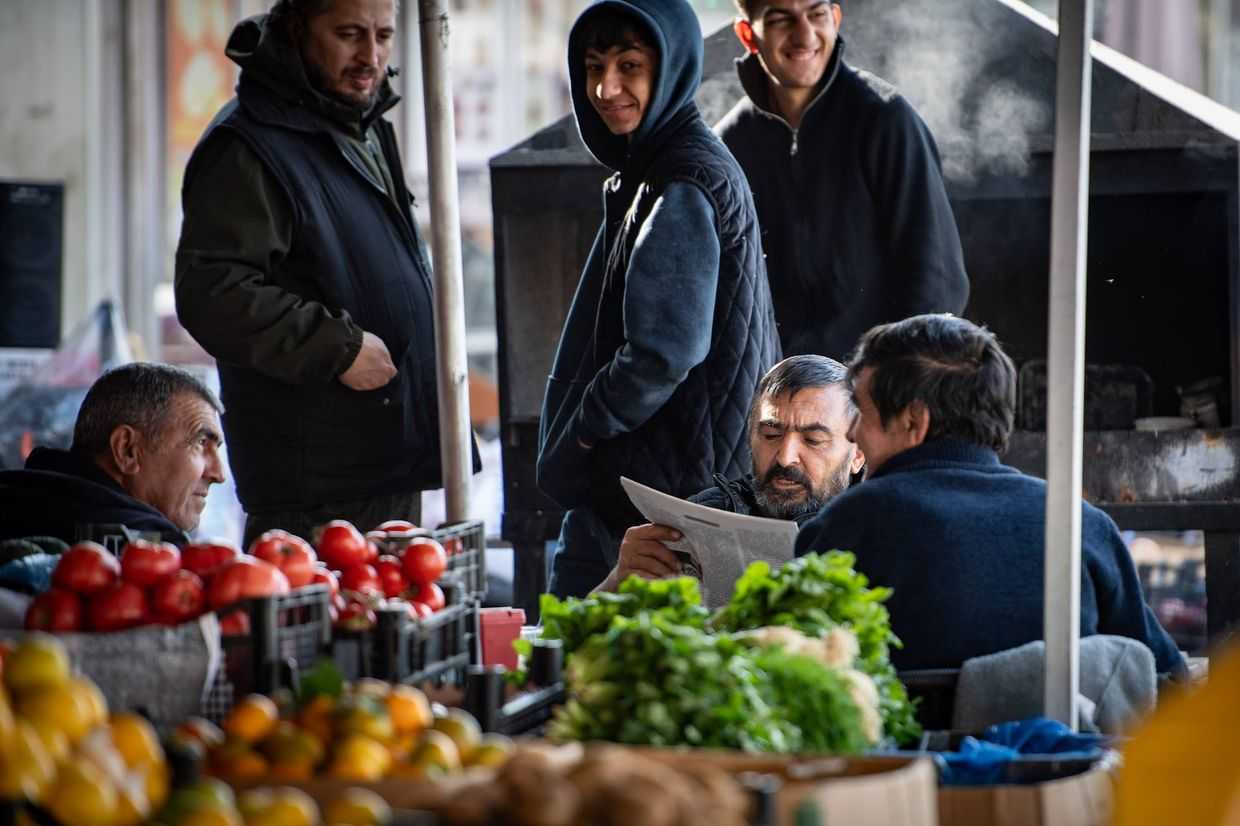
Concerns related to the price differences between local and EU food products have been apparent among the Georgian public well before Kobakhidze’s video.
On Georgian social media, it’s common to see videos where Georgian emigrants or travelers record the prices of basic goods in EU supermarkets. This content often goes viral, prompting discussions in the comments about the high cost of groceries in Georgia.
However, opinions differ on the causes of the problem and possible solutions.
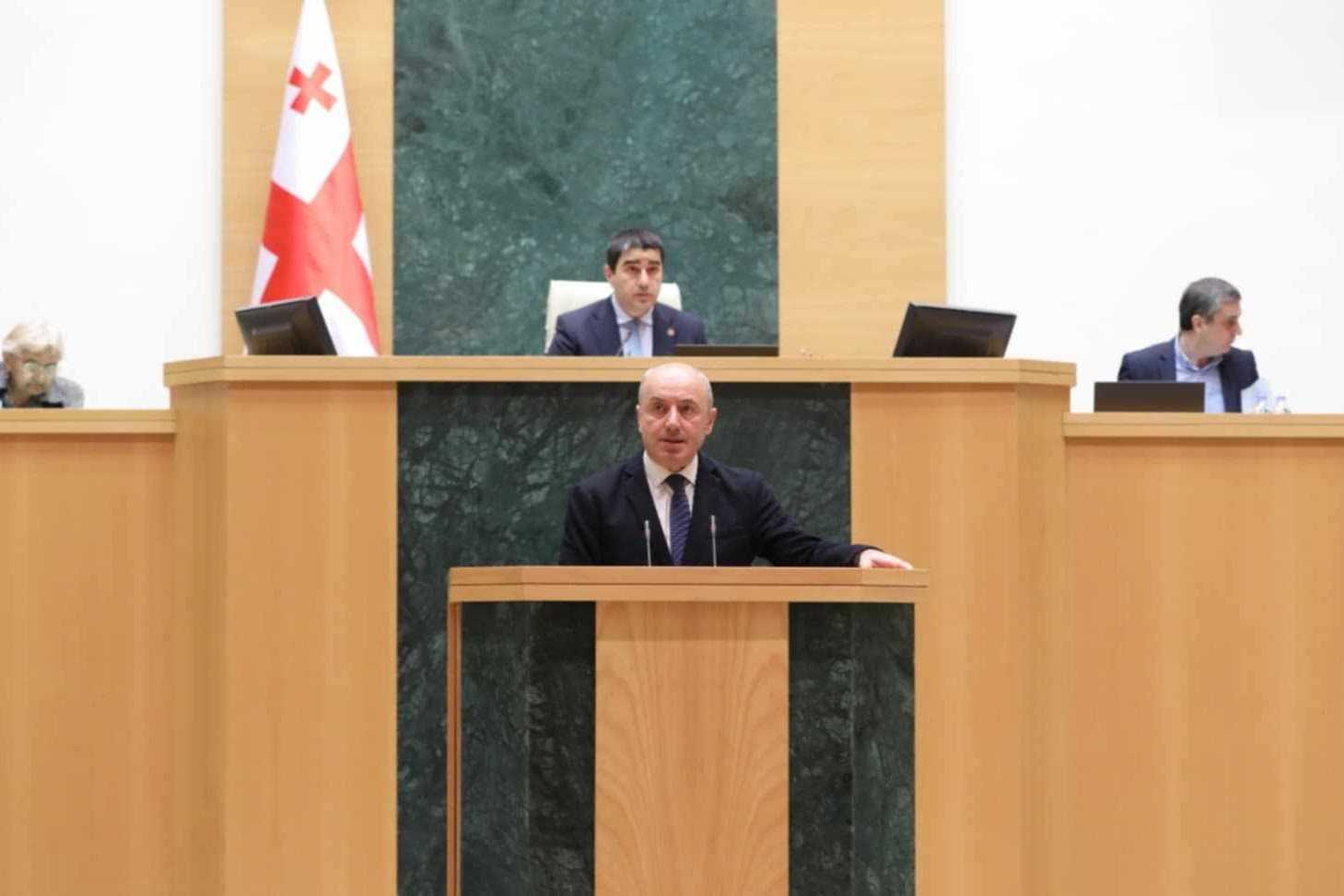
Kobakhidze’s fellow Georgian Dream member and Parliament Speaker Shalva Papuashvili welcomed the Prime Minister’s calls, pledging that ‘with the opening of the spring session, parliament will establish a special commission and begin a public review of the price formation process’.
Meanwhile, former MP Roman Gotsiridze, who served as National Bank president from 2005 to 2007, responded to Kobakhidze’s statement by claiming that the ruling party is beginning ‘reprisals against retail chains’.
According to him, the main cause of price increases is the ‘government’s misguided monetary-credit and fiscal policies’, as well as the ‘total plundering of state resources and elite corruption’.
Focusing on Kobakhidze’s call for law enforcement intervention, Gotsiridze warned that ‘the next step will be imposing state control over businesses, as seen in Belarus and other similar countries’.
The ruling party has previously discussed state intervention in product prices. In 2023, while in office, former Prime Minister Irakli Gharibashvili — now charged for alleged money laundering — proposed setting margins and markups for importers and establishing rules for retailers while he was in office.
Gharibashvili planned to task the Economy Ministry with drafting a bill, but the process did not progress far.
 Mikheil Gvadzabia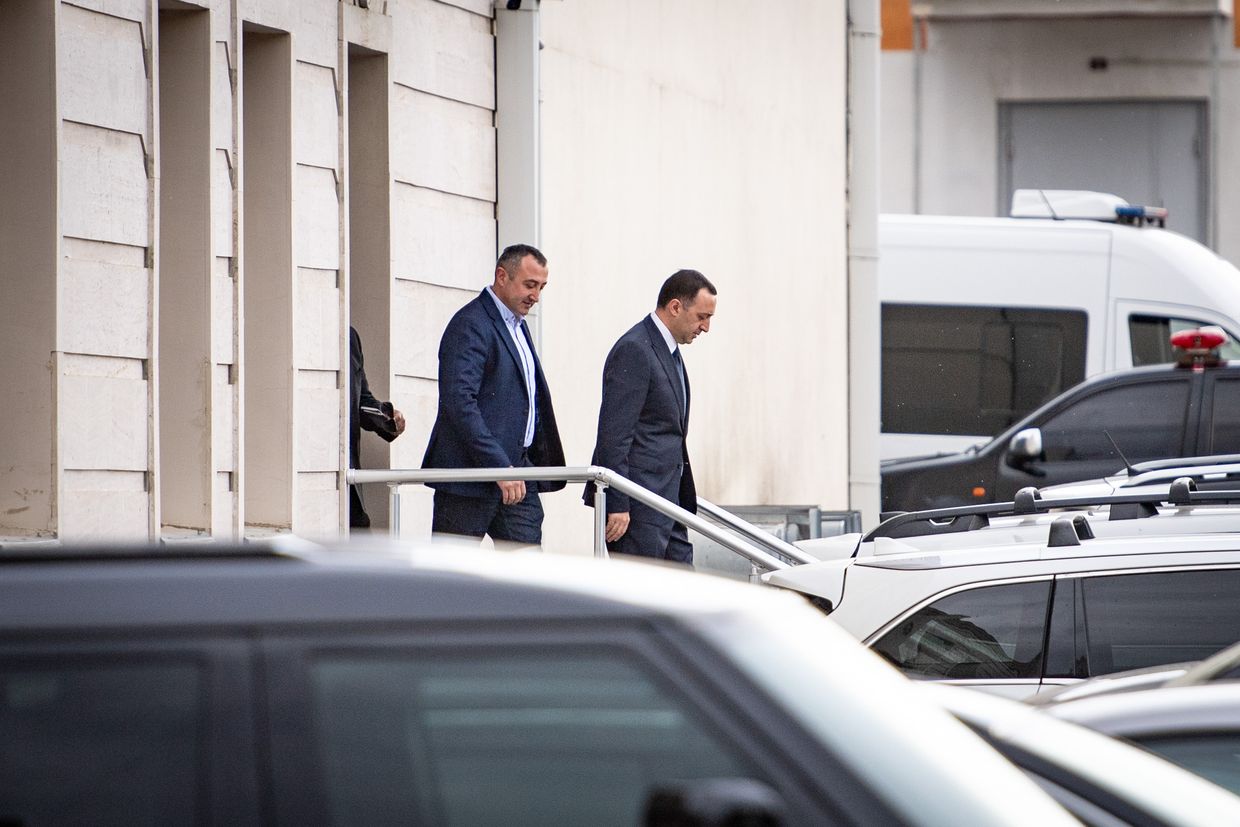
This article was translated into Armenian and republished by our partner CivilNet.