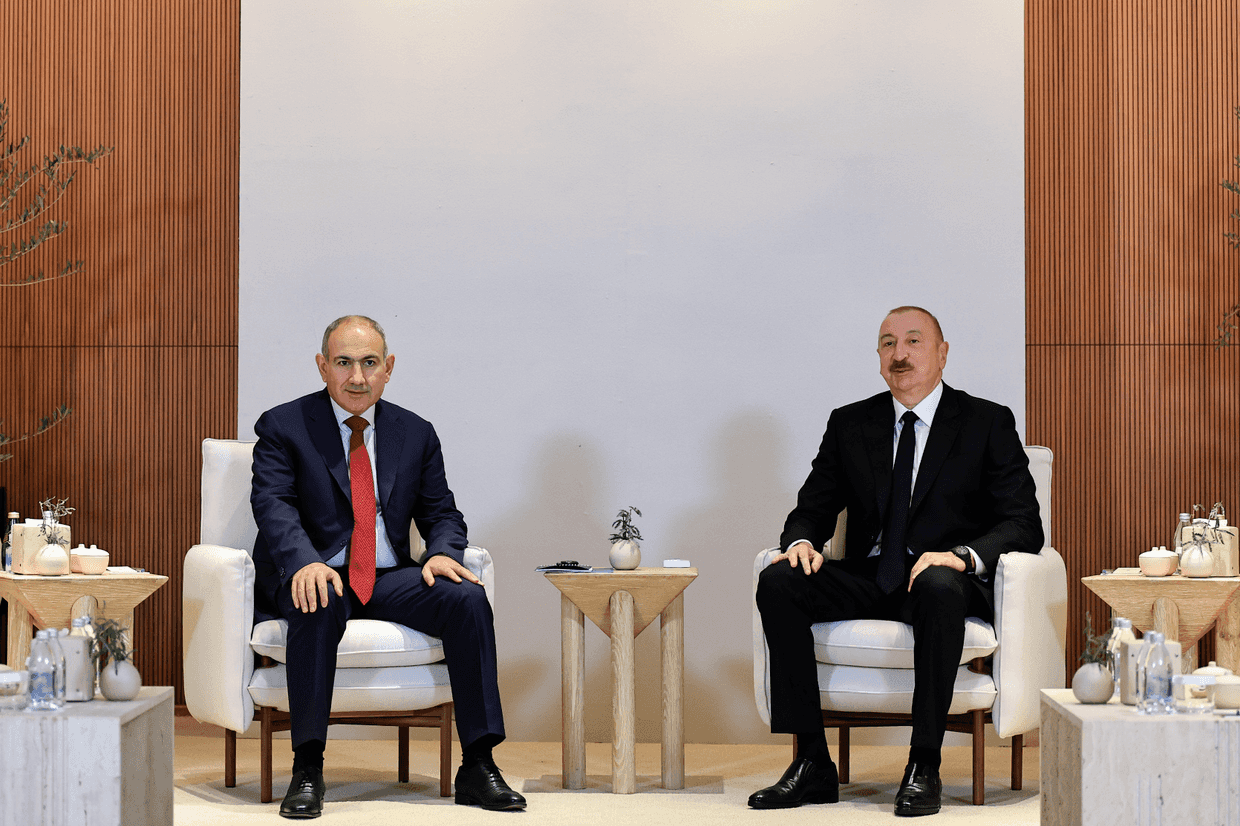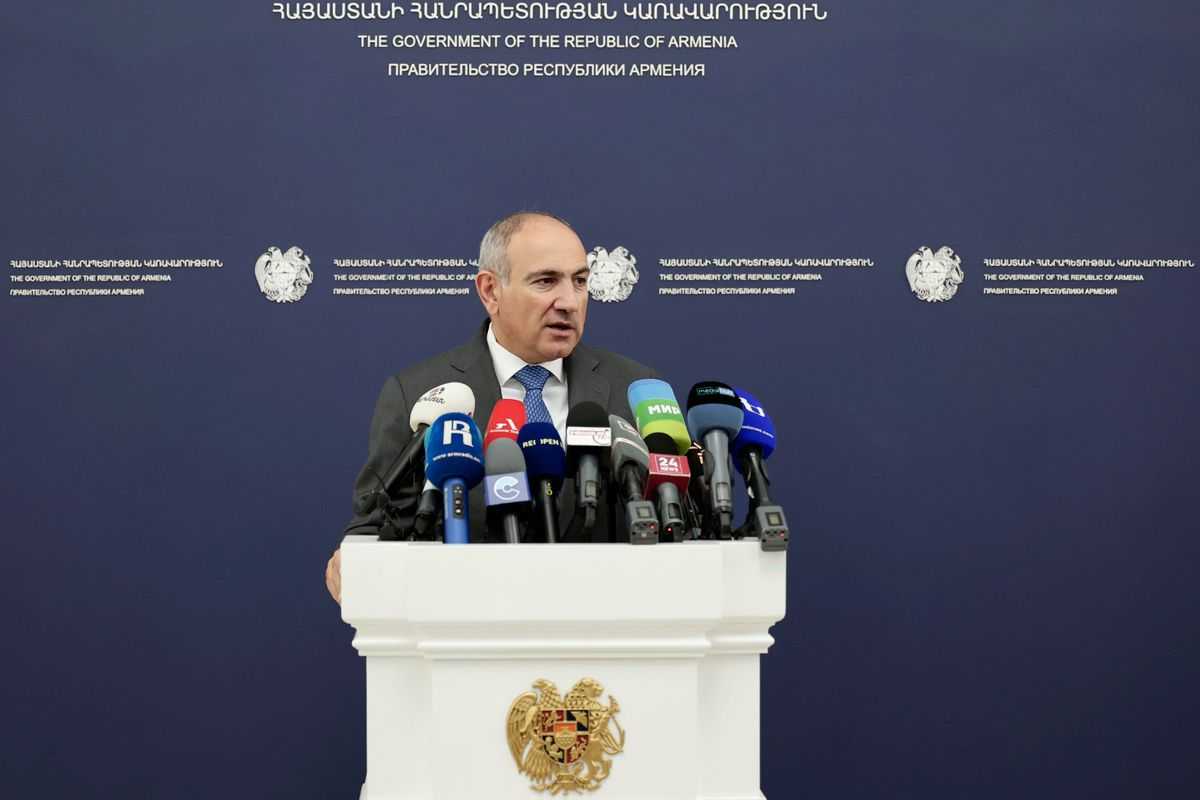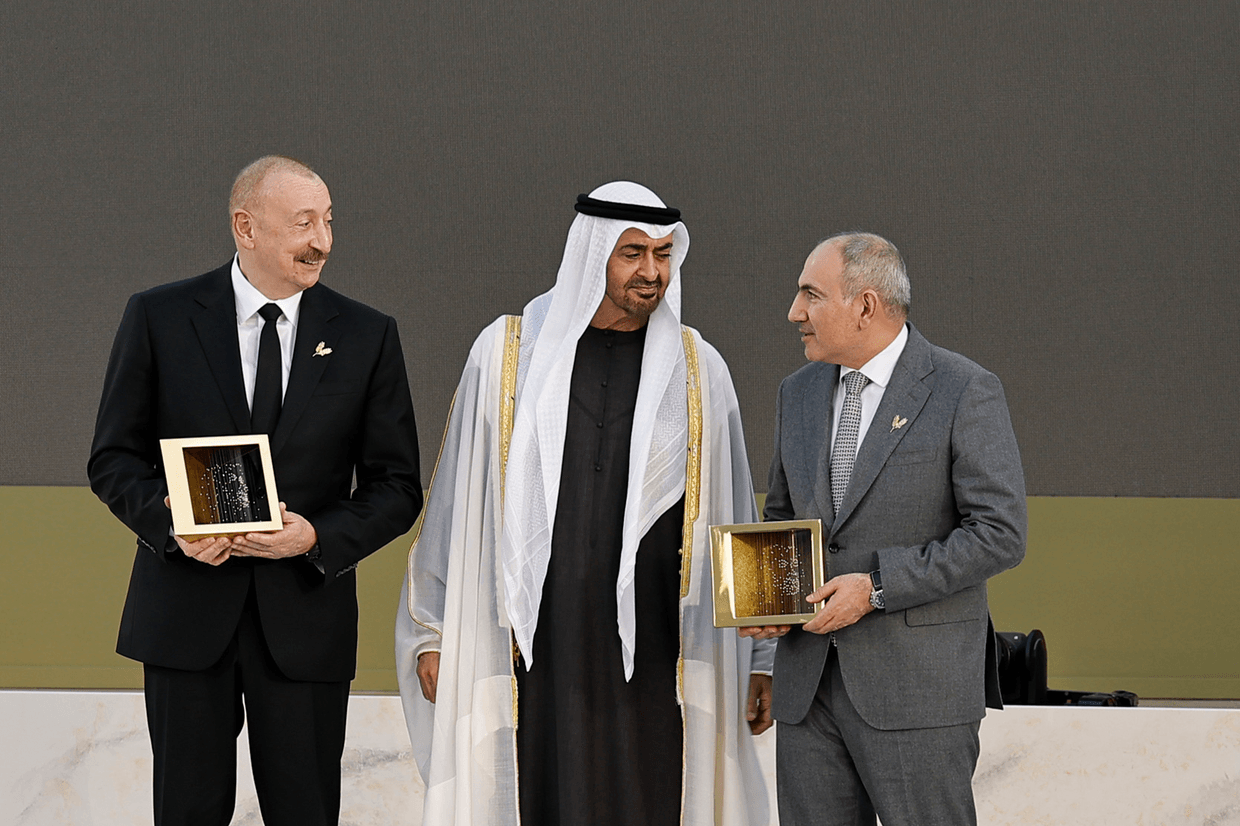
Armenian Prime Minister Nikol Pashinyan and Azerbaijan President Ilham Aliyev have received the UAE’s Zayed Award for Human Fraternity for the initialled, but not yet signed, peace agreement between Armenia and Azerbaijan.
The award honours individuals and organisations who ‘have worked selflessly and tirelessly to advance human fraternity and make significant progress towards peaceful coexistence’.
It is named after the late Sheikh Zayed bin Sultan Al Nahyan, the founder of the UAE. Launched in 2019, the award has so far been granted to 19 laureates from 19 countries, including the late Pope Francis and UN Secretary-General António Guterres.
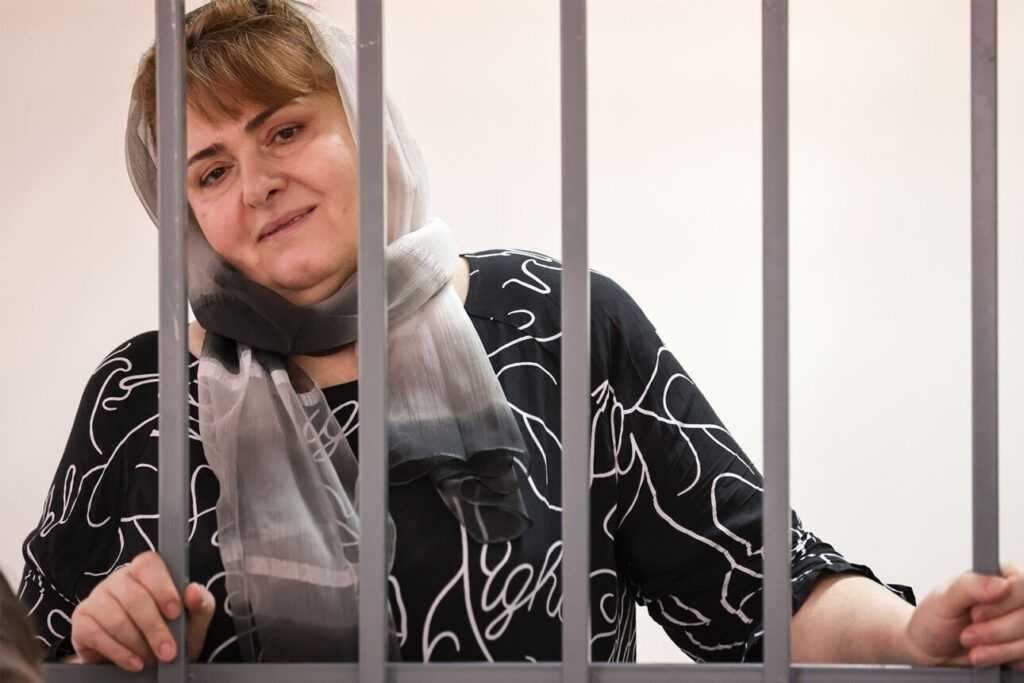
On Wednesday, Afghan girls’ education advocate Zarqa Yaftali also received the award.
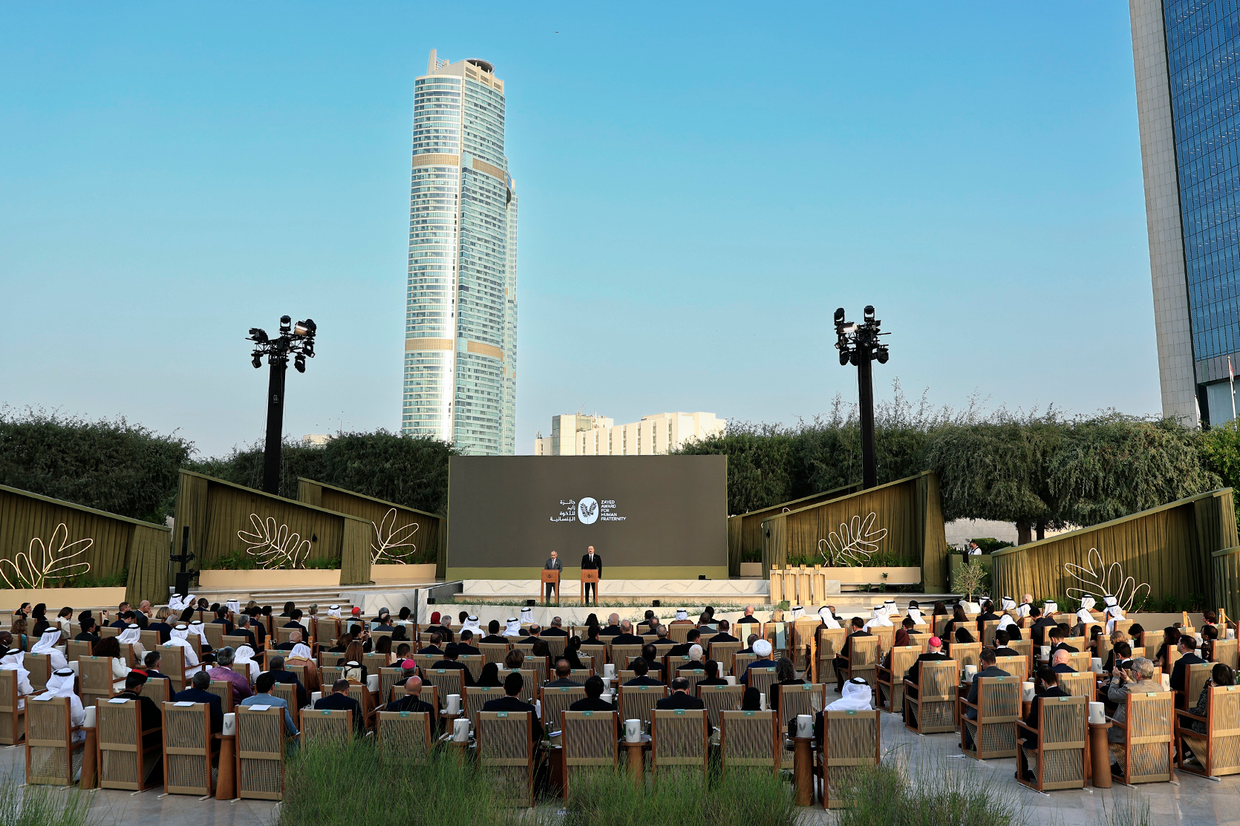
Invited to the stage together behind two podiums, Aliyev and Pashinyan briefly appeared unsure who would speak first. After Aliyev’s comment — ‘we need to agree on who will be speaking first’, apparently made in jest, Pashinyan gestured for him to take the floor.
‘We were at war for more than 30 years. Now we have lived in peace for six months’, Aliyev said, adding that those ‘have been months of partnership, cooperation, and movement toward long-lasting and enduring peace’.
Aliyev added that ‘we are learning quickly’ to live in peace, describing it as ‘a special feeling’, considering that the two nations have not experienced peace since gaining independence after the collapse of the Soviet Union in 1991 and the outbreak of the Nagorno-Karabakh conflict.
 Arshaluys Barseghyan
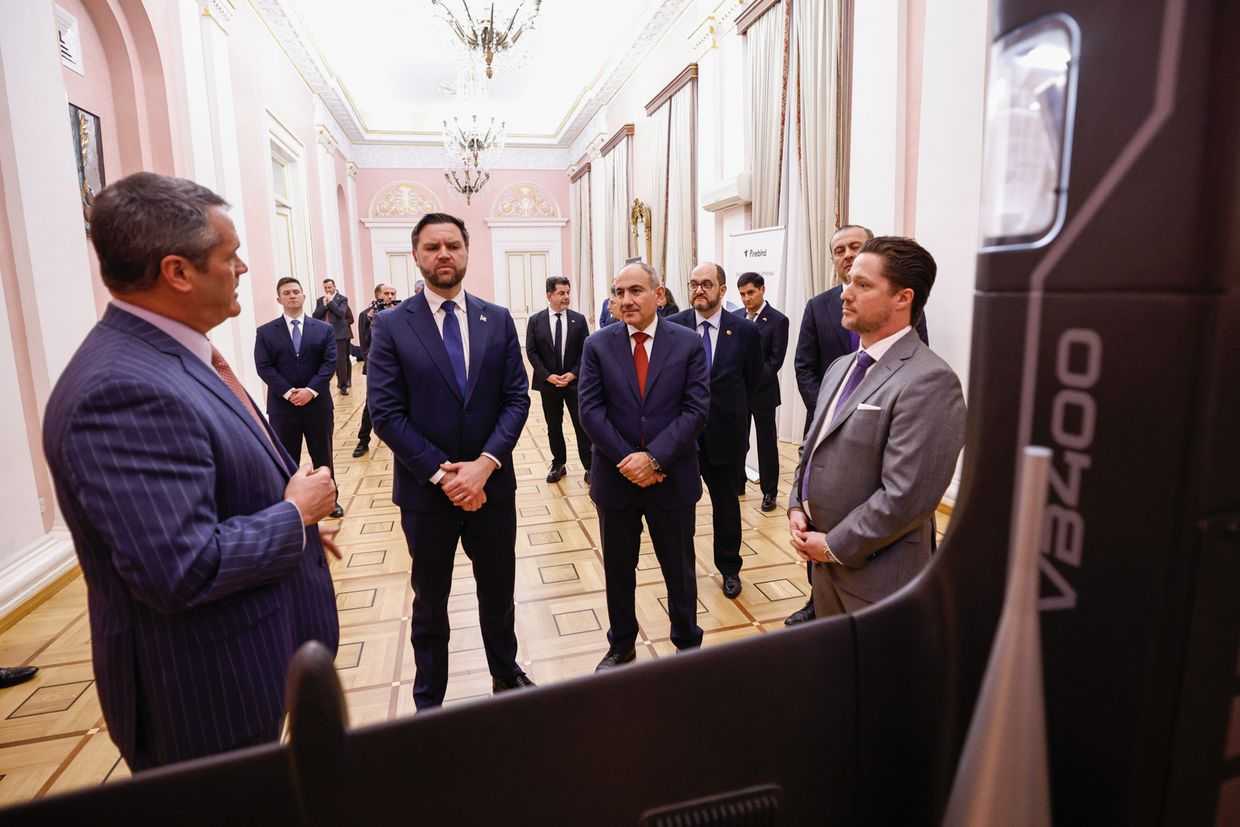
Both Aliyev and Pashinyan expressed gratitude to US President Donald Trump for his contribution to the peace process, in reference to the Washington Summit in August 2025, which saw the initialling of the peace treaty and an agreement to establish the Trump Route (TRIPP), which will connect Azerbaijan to its exclave Nakhchivan through Armenia.
Separately, Pashinyan said he hoped Trump would receive the Nobel Peace Prize for brokering such an achievement — an award Trump has long openly coveted.
Speaking about receiving the Zayed Award, Pashinyan called it ‘unbelievable’.
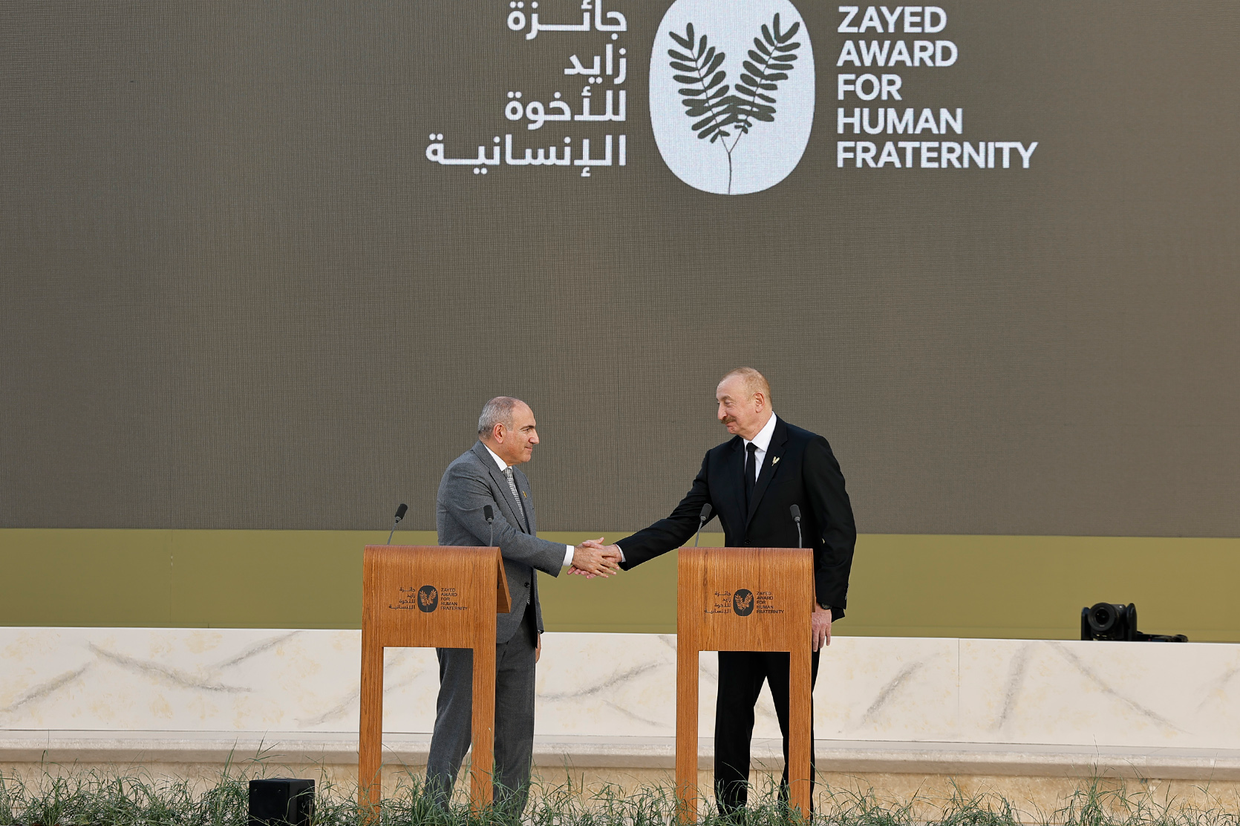
‘But this ceremony is not only a celebration of the peace deal, but it is also a confirmation by both Armenia and Azerbaijan that the page of the conflict is turned’, Pashinyan said, adding that otherwise it would have been ‘meaningless’ for him and Aliyev to attend and accept the prize.
Pashinyan further suggested that even though they were the laureates of the awards, ‘it is, in truth, an achievement that belongs to our people’.
Trade and peace
Ahead of the ceremony, Pashinyan and Aliyev held a meeting in Abu Dhabi on Wednesday morning.
The Armenian delegation included Deputy Prime Minister Mher Grigoryan, Foreign Minister Ararat Mirzoyan, Security Council Secretary Armen Grigoryan, and Ruben Rubinyan, Armenia’s special envoy for the normalisation of relations with Turkey.
The Azerbaijani side included Deputy Prime Minister Shahin Mustafayev, Foreign Minister Jeyhun Bayramov, Presidential Assistant Hikmet Hajiyev, and President Aliyev’s special envoy Elchin Amirbayov.
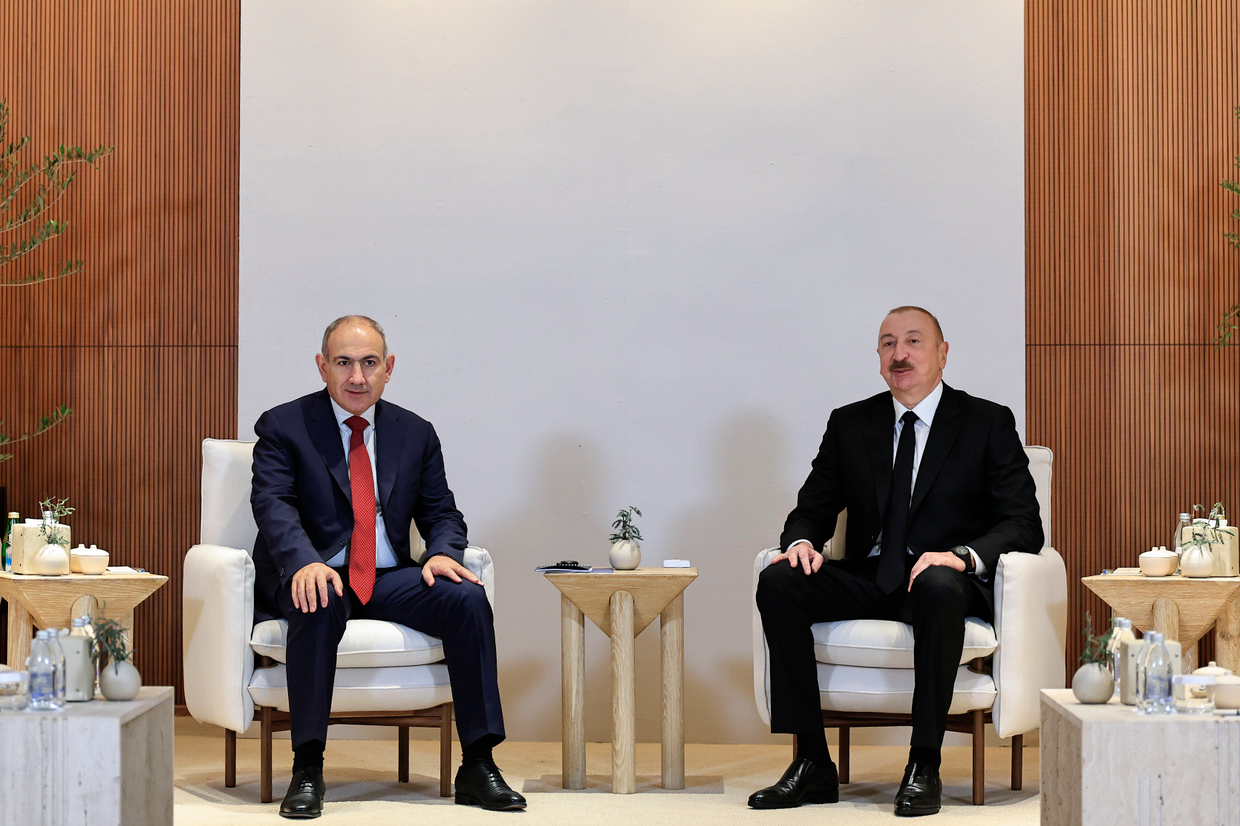
Following the meeting, Yerevan and Baku shared almost identical statements, saying that Pashinyan and Aliyev ‘discussed the implementation of TRIPP’ and ‘reaffirmed their readiness to continue working toward the further strengthening of peace and stability’.
Following the Washington summit, both Armenian and Azerbaijani authorities announced that peace had been established, even though the peace agreement remained only initialled and remains yet unsigned.
Arshaluys Barseghyan
During the Wednesday meeting, the sides ‘acknowledged that both societies are witnessing real benefits of peace on the ground’, expressing ‘satisfaction with the start of bilateral trade’, transit of ‘grain and other goods’ from third countries to Armenia through the territory of Azerbaijan since late 2025.
So far, however, Armenia has not exported any goods to Azerbaijan, despite beginning to purchase Azerbaijani fuel and exchanging lists of potential trade items with Baku.
‘The sides agreed to further explore opportunities to expand bilateral trade and economic cooperation’, the Wednesday statement read.
They also welcomed ‘reciprocal visits by civil society representatives and concurred on the need to broaden confidence-building measures’.
Nate Ostiller