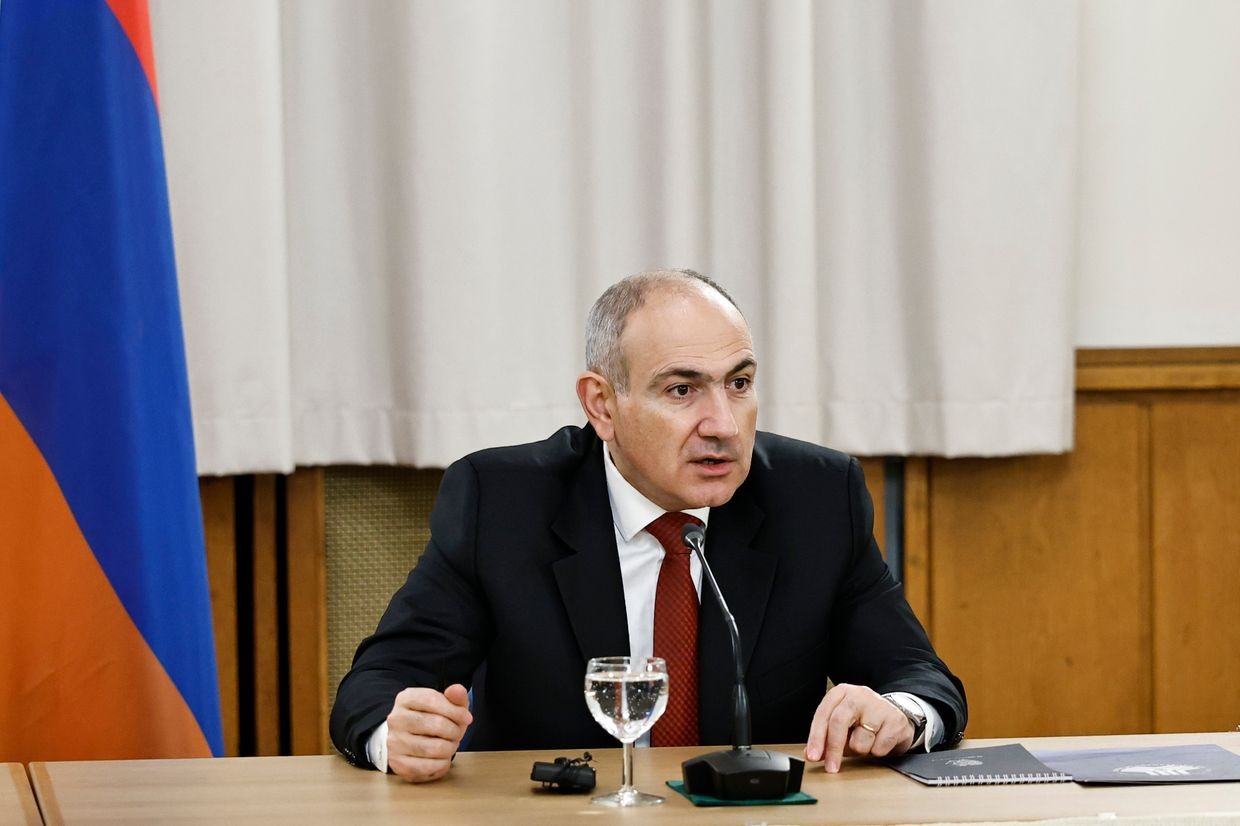
Prime Minister Nikol Pashinyan has announced plans to increase funding for the state housing programme supporting Nagorno-Karabakh Armenian refugees seeking to purchase homes in areas near the capital. The move, announced on Wednesday, comes ahead of the parliamentary elections scheduled for 7 June.
Pashinyan said the relevant decision would be adopted in ‘one to two months’ and would be retroactive for certificates already issued for those communities.
Assistance will rise from ֏3 million ($8,000) to ֏4 million ($11,000) per person in each family in those communities adjacent to Yerevan.
However, allocations for Yerevan itself — currently the lowest — will not increase, in line with the government’s broader policy of encouraging settlement outside of the capital.
 Marut Vanyan
The housing programme, approved in May 2024, has faced criticism from some of its intended beneficiaries, who accuse the government of failing to take their needs into account.
It offers between ֏2–֏5 million ($5,200–$13,000) per person, depending on location, with higher amounts allocated to border and remote settlements. Despite later adjustments following low numbers of applicants to the programme and criticism, many complaints remain.
The increase in the allocation comes ahead of the Armenian parliamentary elections. In a similar manner, Pashinyan has announced plans to increase pensions in the country by up to ֏10,000 ($27) starting in April.
Separately, in March, Armenian authorities also adopted decisions to increase salaries and provide bonuses to state servants ahead of the vote, which critics say is tied to efforts at winning their support ahead of the elections.
Yousef Bardouka
The pledge to increase housing aid was made on Wednesday during a conference conveyed to address the issues of Nagorno-Karabakh Armenian refugees, some of whom were in attendance.
‘I consider it very important that we help our sisters and brothers displaced from [Nagorno]-Karabakh to get out of this psychological state of searching’, Pashinyan said during the conference.
He also underscored the need to ‘help’ them to settle in Armenia and ‘permanently link their and their families’ fate with’ the country.
Pashinyan added that since 2023, when almost the entire population of Nagorno-Karabakh, over 100,000 Armenians, fled following Azerbaijan’s final offensive and the surrender of Armenian authorities, ‘about ֏145 billion ($384 million)’ had been allocated from the state budget ‘under various programs to meet the needs’ of refugees.


Citing Pashinyan’s remark that only 1,700 families have benefited from the housing programme so far, former Nagorno-Karabakh State Minister Artak Beglaryan reiterated earlier criticism of the programme. ‘We were targeted and insulted in every possible way’, he said.
Beglaryan brought up previously stated concerns that the allocated amount for the housing programme did not correspond to the market prices of apartments, arguing that Armenian authorities ‘avoided facing reality’.
Beglaryan described the proposed increase as ‘good for thousands of families, but it is an incomplete and belated decision’. He warned that the secondary market ‘will again respond and largely neutralise the increase in support’.
In turn, a former Minister of Territorial Administration and Infrastructure of the Nagorno-Karabakh, Hayk Khanumyan, criticised the format of the meeting. He said that organising expressions of gratitude by refugees working in local administrations resembled a ‘method that has not been used after the Brezhnev era’, referring to the late Soviet leader Leonid Brezhnev.
‘There is no need to return to Brezhnev-era practices. It is better to work with representatives of the Artsakh [Nagorno-Karabakh] Armenians, ensure participation, make existing programs more effective, and develop new ones’, Khanumyan wrote.
He added that such representatives could include former community and regional leaders, ‘who maintain contact with their populations, are well aware of the issues, and can propose effective solutions’.
As of 1 February, around 15,000 Nagorno-Karabakh Armenians who fled to Armenia in the 2023 exodus have left the country and not returned, according to official statistics.
For ease of reading, we choose not to use qualifiers such as ‘de facto’, ‘unrecognised’, or ‘partially recognised’ when discussing institutions or political positions within Abkhazia, Nagorno-Karabakh, and South Ossetia. This does not imply a position on their status.